Swimwear Fabric Decoder: How to Care for Lycra, Nylon & Recycled Suits
You bought your favorite bikini, wore it twice, and suddenly the cups look saggy and the print has faded. The villain is rarely the swimsuit itself — it’s the care routine. Or more specifically, it’s a one-size-fits-all care routine being applied to fabrics that need very different things. A polyester sporty one-piece doesn’t want what a delicate Lycra triangle top wants. A recycled-blend bikini behaves differently in a hot wash than a virgin nylon set. This guide breaks swimwear care down by fabric, so you can extend the life of every piece in your drawer — whether that’s a $40 chain-store haul or a $200 designer one-piece you’ve been saving for special trips.
Why Fabric Matters More Than You Think
Most swimwear advice treats every suit the same: cold rinse, gentle wash, hang dry. That advice isn’t wrong — it’s just incomplete. Modern swimwear is rarely 100% one fiber. A typical bikini might be 80% nylon and 20% spandex, with polyester linings, polyurethane elastic, and a bonded silicone grip strip. Each of those components has different enemies, and ignoring those differences is why your favorites die early.
The three universal swimwear killers are chlorine, UV light, and heat. Chlorine breaks down spandex and elastane. UV light degrades color and elasticity in nylon especially. Heat melts elastic fibers and warps the shape of molded cups. But how vulnerable any given suit is to each of those threats depends entirely on what it’s made of — which is why a fabric-aware routine beats a generic one every time.
Lycra & Spandex: The Stretch Specialist
If your bikini hugs your curves and snaps back when you stretch it, you can thank elastane fibers — sold under brand names like Lycra, Spandex, and Elastomer. Most fashion swimwear contains 5–25% of these fibers blended into a nylon shell. They’re the reason your suit fits, but they’re also the most fragile component in the entire garment. They’re extremely vulnerable to chlorine, heat above 40°C / 104°F, and the avobenzone-based oils in many sunscreens.
Best wash method for Lycra blends
Rinse the suit in cold tap water within 30 minutes of leaving the pool or ocean. This step is non-negotiable — chlorine and salt continue to degrade the fibers as long as they’re in contact with the fabric. After rinsing, hand-wash in cold water with a pH-neutral detergent (look for one labeled “delicates” or “wool wash”). Skip your regular detergent. The harsh surfactants strip elasticity faster than any single day at the beach.
Common Lycra mistakes
- Wringing the suit dry — this stretches the elastane unevenly
- Leaving it balled up in a wet towel for hours after the beach
- Drying on a radiator, in a hot car, or under a hairdryer
- Using fabric softener — it coats and weakens the elastane
- Sitting on rough surfaces like cement pool decks while wet
Nylon: Durable but Sun-Sensitive
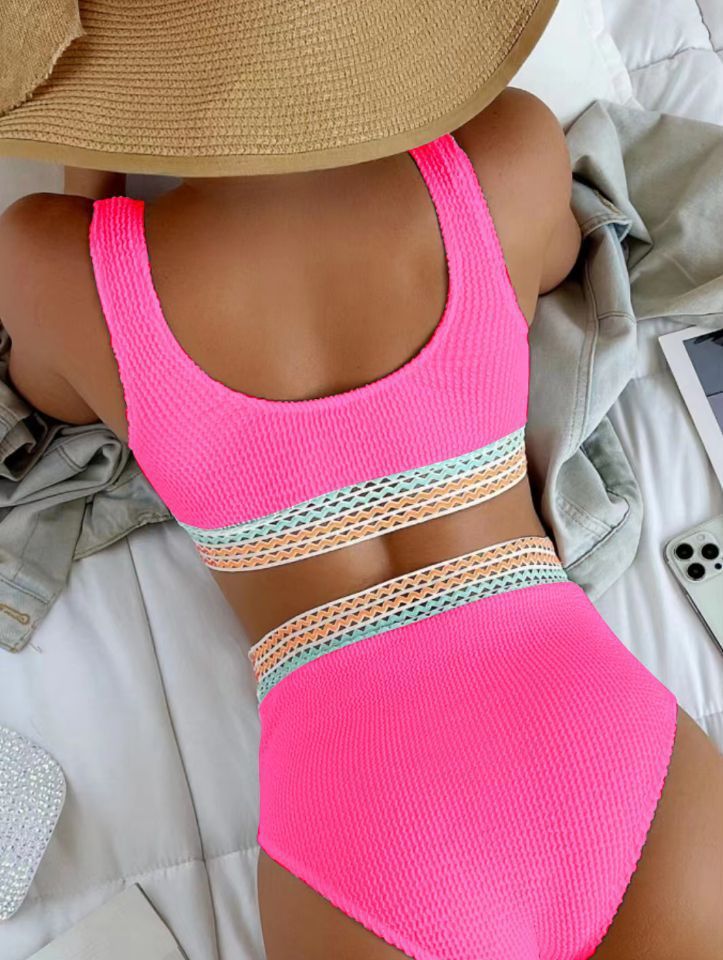
Nylon is the most common swimwear shell fabric — it’s strong, lightweight, dries quickly, and takes color beautifully. The downside is UV vulnerability. Nylon fades and weakens faster than polyester when exposed to direct sun, especially saturated brights like coral, turquoise, deep red, and any neon. If you’ve noticed that hot pink or electric blue suits seem to die faster than your blacks and neutrals, you’re not imagining it.
Best wash method for nylon-dominant suits
Cold water rinse, gentle hand-wash, lay flat to dry in shade. Nylon dries fast on its own and absolutely doesn’t need direct sunlight to dry. If the suit has padding or molded cups, support the cups while drying so they hold their shape. Avoid hanging by the straps — gravity slowly stretches them out.
The sun habit that’s destroying your nylon bikinis
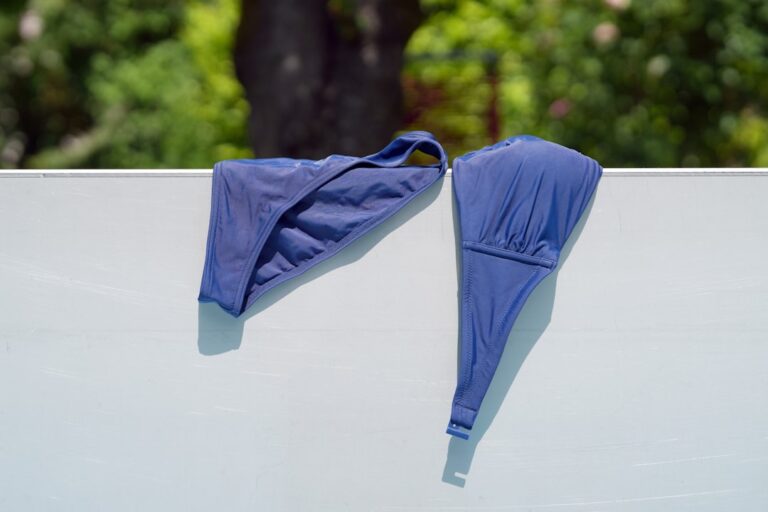
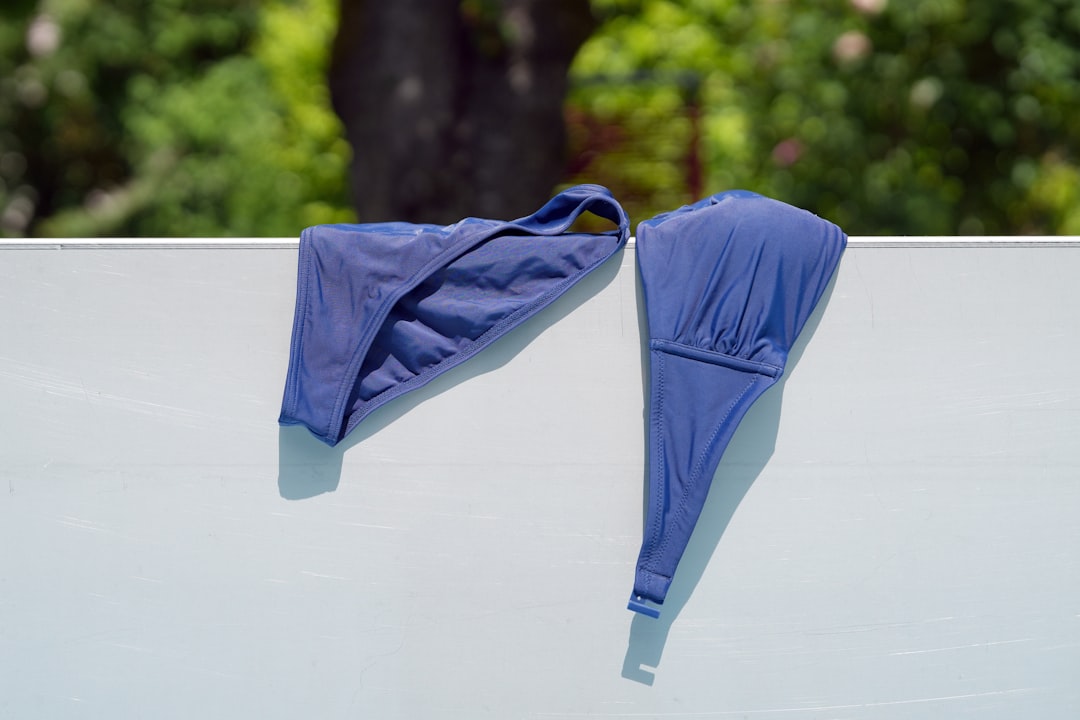
Hanging a wet nylon suit in direct sunlight to dry is the single fastest way to age a bikini. UV plus moisture accelerates fiber breakdown and fades the dye in tandem. Always dry in shade. Your bathroom, a covered balcony, or any indoor air-flow spot is ideal. If you must dry outside, find shade — under an umbrella or eaves works.
Polyester: Chlorine’s Best Friend
Polyester is the workhorse fabric for sporty one-pieces, racerbacks, and anything labeled “training” or “lap swim.” It’s significantly more chlorine-resistant than nylon, holds color much better over time, and shrugs off frequent washing. It’s not as silky-soft to the touch, which is why fashion bikinis use less of it. But if you’re buying a suit you’ll actually swim laps in, polyester is the longevity champion.
Best wash method for polyester suits
Polyester is the most forgiving fabric in swimwear. You can machine-wash on cold delicate (in a mesh bag, please), use mild detergent, and lay flat to dry. It tolerates a wider temperature range than Lycra-heavy fabrics, but heat is still your enemy — never tumble dry, never iron, and never leave it bunched up in a hot car.
Why polyester suits last longer for swimmers
If you’re a regular pool swimmer, choose suits labeled polyester, PBT (polybutylene terephthalate), or Xtra Life Lycra (a chlorine-resistant elastane blend). They’ll outlast a fashion bikini by 4–10x in chlorinated water. A typical fashion nylon-spandex bikini lasts 50–100 swims in a chlorinated pool. A polyester sport suit can last 500+ swims with the same care routine.
Recycled Fabrics: Same Care, Slightly Different Quirks
Recycled nylon (sold as ECONYL) and recycled polyester (REPREVE) are increasingly common in modern swimwear — and we love seeing them. The sustainability benefit is real, and performance is virtually identical to virgin fibers. But there’s a small caveat: recycled blends sometimes have slightly less resilience to repeated heat exposure, simply because the polymer has already been processed once. Treat them like a slightly more sensitive version of the virgin equivalent.
Care tips for recycled-fiber suits
- Skip warm-water rinses entirely — cold only
- Lay flat to dry, no spinning, no wringing
- Avoid sealing in zip-top plastic bags for long-term storage (recycled blends can off-gas slightly in airtight containers)
- Use a breathable cotton bag or open drawer instead
Crochet, Knit & Specialty Fabrics
Crochet bikinis are made from cotton, acrylic, or rayon yarn — a completely different beast from stretch synthetic suits. They have almost no stretch recovery, they soak up water like a sponge, and they sag dramatically when wet. They’re for posing on the beach and styling for photos, not for actual swimming laps or jumping waves.
How to wash crochet swimwear
Hand-wash only, in cool water with mild detergent. Reshape while damp by laying flat on a clean towel. Pat dry — never wring. Dry flat, never on a hanger, because the weight of the wet yarn will permanently stretch the suit out of shape. Store flat as well, ideally in a drawer with tissue paper between pieces so the textures don’t snag each other.
Velvet, metallic, and shimmer fabrics
Velvet swimwear (yes, it exists, and it’s gorgeous) has a pile that crushes and mats permanently if pressed wet. Lay it flat to dry, and never fold it for storage. Metallic and foil-printed fabrics flake when rubbed against rough surfaces, so wash them inside out, in a mesh bag, and store separated from textured fabrics like crochet or sequin pieces.
Trim, Hardware & Embellishments
The fabric of your suit might be in great shape, but it’s the bits and pieces that often fail first. Metal hardware (rings, sliders, buckles) needs a fresh-water rinse after every salt or pool exposure to prevent corrosion. Plastic clips and adjusters tend to crack from UV exposure, so keep them out of direct light when stored. Beading and shells need hand-wash only, ideally with the embellished section facing up to avoid friction. Padded cups should never be folded or compressed in storage — store them flat or in a structured drawer divider.
One small tip that adds months to a suit’s life: untie all knots before washing. Tied wet straps form permanent kinks that won’t fully release once the suit dries. Same goes for tied bottoms — undo them before the rinse, and you’ll keep the ties looking like they did the day you bought them.
Storage Rules That Apply to Every Fabric
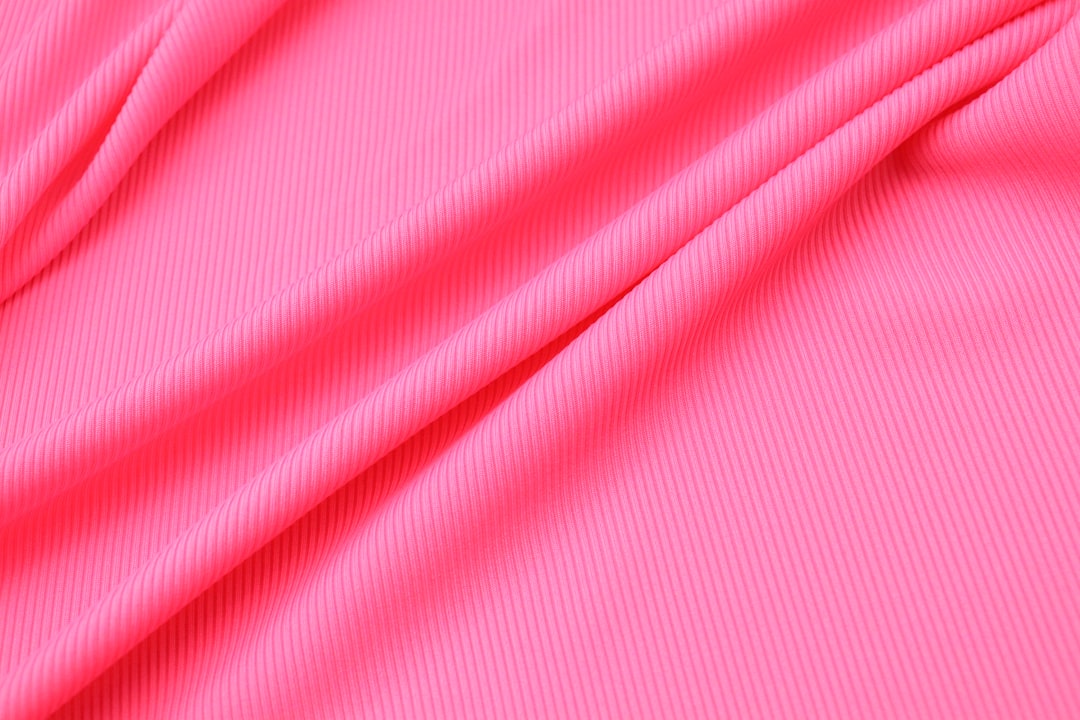
Even women who wash their swimwear perfectly can ruin suits in storage. The universal rules are simple: store completely dry (any residual moisture invites mildew), store flat or loosely folded rather than hanging (hanging stretches Lycra over weeks), keep out of direct sun even in storage, use a breathable cotton bag or drawer rather than sealed plastic, and separate light and dark colors because some dye transfer happens even when fabric is dry.
For long off-season storage — say, putting the bikini drawer to bed for a Taipei winter or stashing summer suits during a cold-climate fall — rinse well, dry fully, fold loosely with acid-free tissue paper, and store in a cool drawer. Skip vacuum-seal bags. Compression damages molded cups and stresses the elastic in ways that don’t fully recover.
When to Retire a Suit (Signs by Fabric Type)
Even with perfect care, swimwear has a finite life. Here’s how to know it’s time to let a piece go:
- Lycra blend: cups no longer hug the body, leg openings gape when you move, fabric looks tired and slightly dimpled in the high-stretch zones
- Nylon-dominant: visible color fade or sun-bleached patches, fabric becomes thinner in stress areas like the seat and bust
- Polyester sport: pilling that won’t comb out, elastic at neck or back loose enough to slip during a push-off
- Recycled blends: similar signs to virgin fibers, but check seam stitching first (often the first thing to give on recycled construction)
- Crochet and knit: yarn breakage, gaps that have stretched open, permanent saggy shape that doesn’t reset when wet
When you do retire a suit, don’t just trash it. Cut it into rags for swimwear-friendly cleaning tasks, donate to a textile recycling program (many H&M and Zara stores accept any-brand textile drop-offs), or repurpose patterned fabric for craft projects, hair scrunchies, or even pet accessories. Every piece you keep out of landfill counts.
Quick Reference: Fabric-by-Fabric Care Cheat Sheet
Pin this list inside your closet or save it to your phone for the next post-beach rinse:
- Lycra/spandex blends: cold rinse within 30 minutes, hand-wash with delicates detergent, lay flat in shade
- Nylon-dominant fashion suits: cold rinse, gentle hand-wash, never dry in direct sun
- Polyester sport suits: cold machine-wash in mesh bag, lay flat or low-airflow dry
- Recycled fabrics (ECONYL, REPREVE): cold water only, lay flat, breathable storage
- Crochet and knit: hand-wash, reshape and dry flat, never hang wet
- Velvet, metallic, sequin: inside-out wash, mesh bag, separate from rough textures
Your bikini collection isn’t disposable. Fast-fashion pricing has trained us to think of swimwear as a single-season buy, but with the right fabric-aware routine, the same suit can last three to five summers — and feel and look good every single time you put it on. Care labels exist for a reason. Now you know how to read them.
Sources
- The Lycra Company — fiber care guidelines
- Aqualpa — chlorine fiber breakdown data
- ECONYL — recycled nylon manufacturing process and care
- Speedo — swimsuit lifespan and chlorinated-pool data
- REPREVE — recycled polyester technical specifications
Shop our full range of bikinis and swimwear at the BikiniCool store →