
Bikini Storage Secrets: How to Make Swimwear Last Year After Year
Most bikinis don’t die at the beach. They die in a drawer. The chlorine you forgot to rinse, the wet bottoms balled up in a tote, the favorite halter shoved next to a metal belt buckle — that’s where the real damage happens. The good news? Once you understand the care, drying and storage rhythm that swimwear actually needs, your bikinis can last three, four, even five seasons looking nearly new.
If you’ve ever pulled out a beloved suit in May only to find faded elastic, stretched cups or pilled fabric — this guide is for you. We’re walking through the complete care and storage system that protects swimwear from the moment you step out of the water through the long off-season. No expensive products, no laundry-room overhauls. Just the small, repeatable habits that decide whether a bikini lasts one summer or five.
Why Storage Is the Hidden Secret
Most swimwear care articles focus on washing — and washing matters. But the part nobody talks about? Where and how your swimwear sleeps between wears. Most suits spend 8–10 months a year tucked away. That’s a lot of time for elastic to weaken, fabric to compress and dyes to oxidize. Off-season storage is where lifespan is quietly won or lost.
Three invisible forces destroy stored swimwear:
- Heat — warps elastane fibers and fades dyes
- Moisture — breeds mildew and breaks down Lycra
- Compression — deforms molded cups and stretches straps
Get those three under control and your swimwear will outlast whatever trends made you buy it in the first place.
Step 1: The Final Wash Before Storage
Whether you’re storing a bikini overnight or for six months, the final wash matters most. Saltwater, chlorine, sunscreen and body oils all keep degrading fabric long after you’re out of the water — even when the suit feels dry. Locking those residues into the fibers during storage is what creates the stiff, faded, brittle suits you find next spring.
The 30-Minute Cold Soak
Fill a clean sink or basin with cool water — never warm. Heat sets sunscreen oils into the fibers and accelerates dye loss. Add a tablespoon of gentle, pH-neutral detergent or a swimwear-specific wash. Submerge the suit, swish gently and let it sit for 20–30 minutes. Don’t scrub. Don’t wring. Don’t twist.
Rinse twice in fresh cool water until no soap residue remains. If the suit was worn in chlorinated water, add a final rinse with a splash of white vinegar (about one tablespoon per liter) — this neutralizes chlorine that has chemically bonded to the fabric and prevents the slow elastic breakdown that turns a six-month-old suit baggy.
When the Machine Is Your Only Option
If you must machine wash, put each piece in its own mesh lingerie bag, use cold water and the most delicate cycle your machine offers, and never combine swimwear with towels, zippers or denim. Skip the spin cycle entirely if your machine lets you — high-speed spinning is one of the fastest ways to permanently warp molded cups.
Step 2: Drying Done Right
This is where most bikinis are quietly murdered. Drying mistakes do more cumulative damage than every beach day combined.
Three drying rules to never break:
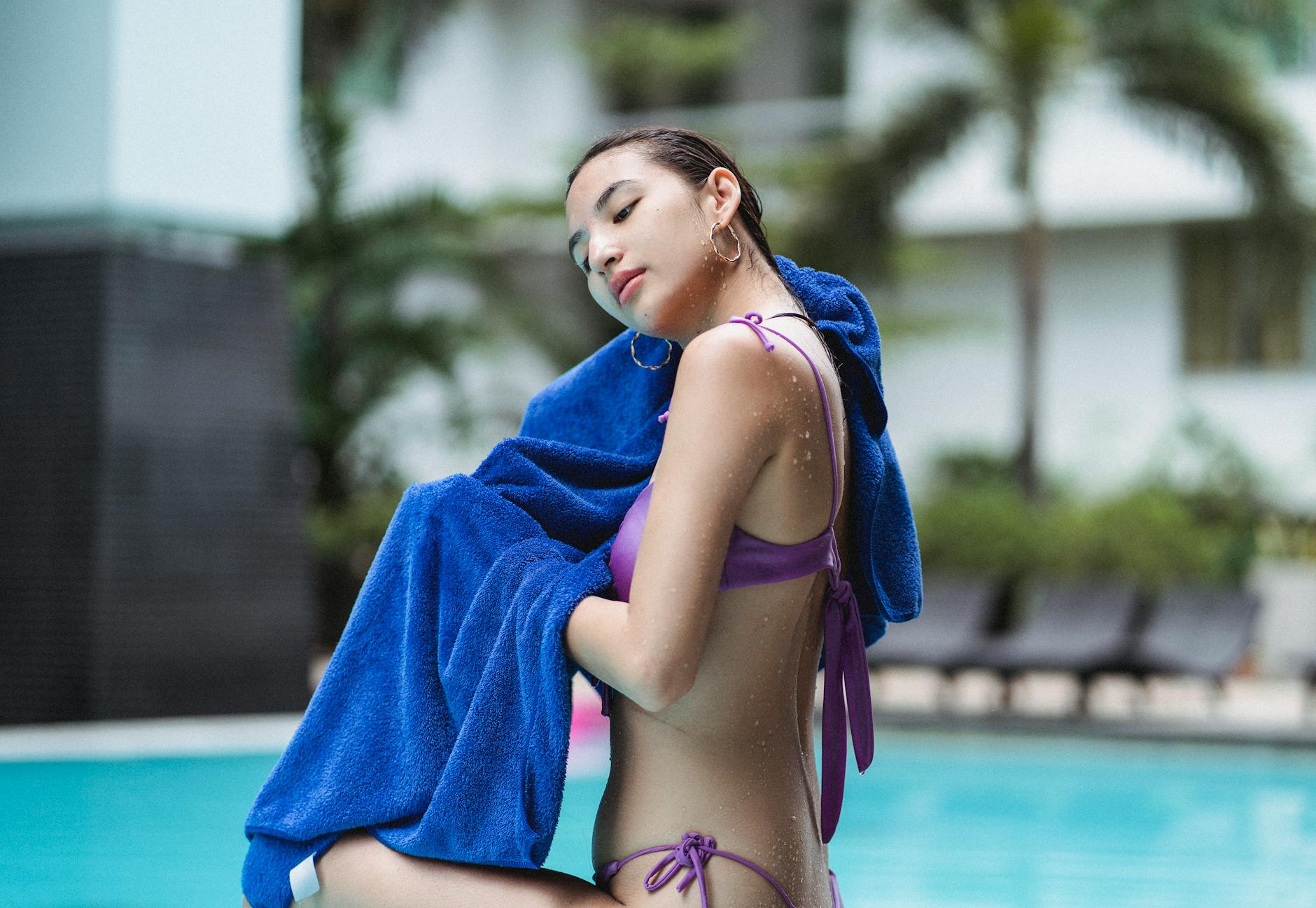
- Never wring or twist. Press the suit gently between two clean dry towels to absorb water.
- Never put swimwear in a dryer. Heat destroys elastane in a single cycle — the damage is invisible and permanent.
- Never hang bikinis by the straps. The weight of wet fabric stretches straps over time, and re-shaping them is nearly impossible.
Instead, lay each piece flat on a clean dry towel, away from direct sunlight, and reshape with your fingers. Tops with molded cups should dry cup-side up so the foam doesn’t collapse. Bottoms should lay flat, not folded. Indirect airflow is your friend — a ceiling fan, a shaded balcony or a breezy open window all work beautifully.
Most suits will be fully dry in four to six hours. Resist the temptation to speed-dry near a radiator, hair dryer or in direct midday sun — UV damage during drying is just as real as on the beach, and it stacks on every suit you own.
Step 3: Choose the Right Storage Surface
The “best” storage method depends on the style of suit. Match the method to the silhouette:
Drawer Folding (Soft Cups, Triangle Tops, Bottoms)
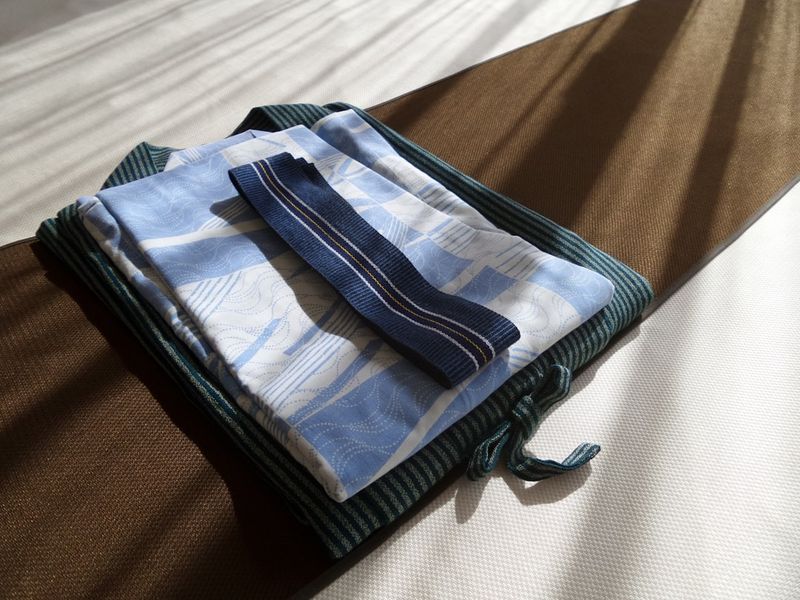
For unstructured bikinis, gentle folding is fine. Stack pieces flat, never overstuffed, in a clean dry drawer. Line wood or particleboard drawers with acid-free tissue paper or a cotton liner — untreated wood can slowly off-gas and discolor light-colored swimwear over a long off-season.
Breathable Bags (Padded Cups, One-Pieces, Structured Suits)
Anything with molded foam cups, underwire, or a complex strap structure deserves a breathable cotton or mesh garment bag — never plastic. Plastic traps humidity, which is exactly what dyes and elastane hate most. A simple cotton drawstring pouch from any home store does the job for under a few dollars per suit.
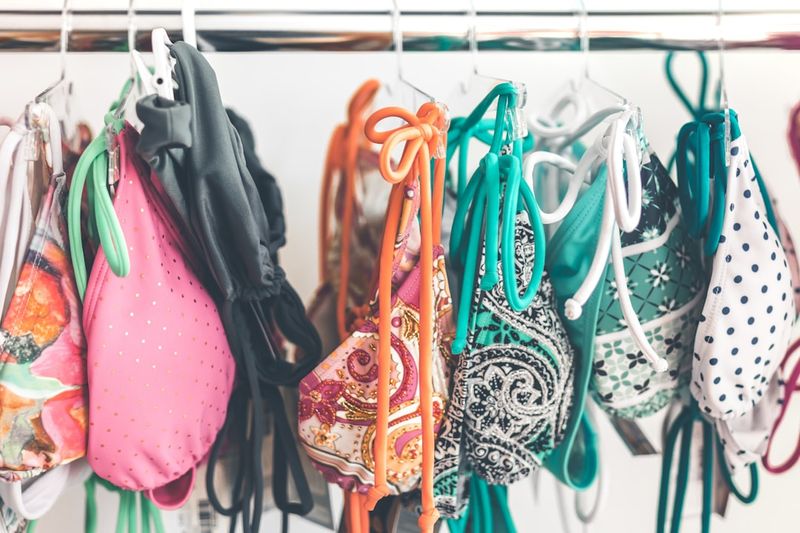
Hanging — But Only the Right Way
If your closet has room and you prefer to hang, use padded hangers and clip the bottom band only — never the straps. Pad the clips with felt or scrap fabric so they don’t dent the elastic over months of pressure.
Step 4: Control the Climate Around Your Suits
Your suits care more about the room than the container. Three climate rules:
- Cool — ideally 60–75°F (15–24°C). Avoid attics, garages and anywhere that gets hot in summer.
- Dry — under 60% humidity. A small silica gel packet or a cedar block in the drawer absorbs moisture beautifully. Skip mothballs — their chemicals stain swimwear and the smell never fully washes out.
- Dark — away from direct light, even ambient daylight. UV slowly bleaches dye and weakens elastic, even through a closed curtain.
If you live somewhere humid year-round, a small closet dehumidifier pays for itself in a single season of saved swimwear. The same goes for tropical apartments without strong air conditioning — the moisture in the air is doing slow, invisible damage to every fabric in your wardrobe.
Step 5: Rotate Your Suits Mid-Season
This is the secret habit of long-suit-lifespan people: rotate. If you wear the same bikini three times a week, the elastane gets no recovery time and starts to permanently deform. Rotating between three or four suits gives each one a 48-hour rest between wears — which is exactly how long elastic fibers need to bounce back to their original shape.
Quick rotation tips:
- Keep your “in rotation” suits at the front of the drawer; rotate fresh ones forward weekly.
- Mark the purchase date on a small fabric tag inside if you have a true favorite — it helps you spot when a suit is hitting its three-year mark.
- Swap heavy-use suits (daily beach, lap swim) every six to eight weeks during peak season so no single piece carries all the wear.

The Most Common Care Mistakes
Even careful bikini lovers fall into one or two of these traps. Catch them and you’ll add years to every suit you own:
- Sitting on rough surfaces. Concrete pool decks, wood docks and rough stone destroy fabric in minutes. Always sit on a towel — even a thin one.
- Hot tubs. The combination of heat plus heavy chlorine is the single most destructive thing you can do to swimwear. Keep one old “sacrifice” suit just for hot tubs.
- Sunscreen over the suit. Apply lotion before you put on the bikini, then wait two minutes for it to absorb. Oils and chemical sunscreens stain fabric and quietly break down elastic.
- Storing damp. The number one cause of mildew, color bleed and weird storage smells. If a suit is even slightly damp at the seams, do not put it away.
How to Revive Forgotten Bikinis
Found a bikini at the back of the drawer that smells musty, feels stiff, or has gone slightly out of shape? You can usually save it with a careful revival routine.
- For mildew smell: soak in cool water with half a cup of white vinegar for 30 minutes, then wash gently with a pH-neutral detergent.
- For stiff fabric: a 15-minute soak in cool water with a teaspoon of gentle fabric softener and a teaspoon of hair conditioner restores some elasticity. (Hair conditioner is genuinely magic on tired Lycra.)
- For light pilling: a handheld fabric shaver — not a battery razor — gently lifts surface pills without damaging the underlying fibers.
- For slightly stretched cups: dampen the cups, reshape them over a small bowl while drying, and they’ll often return to form within a wash cycle or two.
If a suit is severely faded, stretched permanently out of shape, or the elastic feels powdery or sticky to the touch — that’s chemical breakdown, not dirt. No revival routine can bring it back. Time to retire it with gratitude.
When to Let a Bikini Go

Even with perfect care, swimwear has a lifespan. The kindest thing you can do for your beach confidence is recognize when a favorite is past its prime. Signs it’s time to retire a suit:
- Permanent see-through patches from over-stretched fabric
- Sticky or “rubbery” feeling elastic — a sign elastane has broken down chemically
- Color that’s faded unevenly even after a thorough wash
- Cups that won’t hold their shape no matter how carefully you reshape them
- Straps that have stretched more than 20% past their original length
Confidence comes from feeling supported, comfortable and seen in what you’re wearing. A worn-out suit doesn’t owe you any more loyalty — and the right care routine turns each replacement into a much longer-term investment in your beach wardrobe.
The 60-Second Recap
A long-lasting bikini is the result of small, repeatable habits — not expensive products:
- Always rinse in cool water, even straight off the beach
- Hand wash with a gentle, pH-neutral soap
- Air dry flat in indirect light — never in a dryer, never by the straps
- Store cool, dry, dark, in breathable cotton or mesh bags
- Rotate suits with a 48-hour rest between wears during heavy summer use
Your favorite bikinis can absolutely keep up with you for years. The fabric doesn’t decide that — your habits do. Treat your swimwear like the little investment it is, and the next time you reach into the drawer in May, you’ll find every suit ready to go exactly where you left off.
Sources
- The Woolmark Company — Fabric care fundamentals
- American Cleaning Institute — Fabric care basics and detergent guidance
- Drycleaning & Laundry Institute — Elastane and Lycra care notes
- Textile Exchange — Recycled and synthetic fiber durability research
Shop our full range of bikinis and swimwear at the BikiniCool store →