
Bandeau Bikini: 9 Best Styles & Fit Guide for 2026
The bandeau bikini is the one swim style every body type can wear — but only if you understand the engineering keeping it up. A bandeau is a strapless tube top, usually held in place by a silicone-lined back band, a removable underwire, or a thin elastic across the shoulder blades. Get the construction right and it stays put through ocean waves and beach volleyball. Get it wrong and you spend the afternoon tugging at fabric. This 2026 guide breaks down the 9 styles worth buying, who each one flatters, and the small details that separate a $20 disaster from a $60 swimsuit that lasts three seasons.
What Makes a Bandeau Bikini Different
A bandeau is defined by what it doesn’t have: shoulder straps. The top is a single horizontal band of fabric that wraps the bust, with all the lift and support engineered into the back closure and an internal grip layer. That sounds simple, but the lack of straps means every other component has to work harder. Manufacturers that take this seriously add silicone strips along the upper edge, hidden underwire for cup definition, and a back hook closure (not just a tie) so the band stays at the same tension all day.
Cheap bandeaus skip all of this. They use a flat band of fabric with thin elastic, hope friction holds it up, and fail the first time you raise your arms. If a product description doesn’t mention silicone grip, removable padding, or an adjustable back closure, assume the engineering isn’t there. That’s the difference between a top you trust on a paddleboard and one you only wear lying flat on a beach towel.
How a Bandeau Bikini Actually Stays Up
Three components do the real work. The first is the silicone grip strip — a 1–2 cm band of medical-grade silicone bonded to the inside top edge of the bandeau. Reformation and Andie Swim both use this on their premium bandeaus, and it grips skin without irritating it. The second is the back band tension. A proper bandeau pulls slightly tighter than a regular bikini top because the band is doing the job that straps usually do. The third is internal cup structure — molded foam or removable padding that holds the bust forward instead of letting it slide sideways under the fabric.
For anyone above a C cup, a fourth element matters too: a hidden underwire or a wider back band (3+ inches). This isn’t fashion — it’s physics. The wider the band, the more surface area absorbs the weight, and the less the top wants to migrate downward when you move.
9 Best Bandeau Bikini Styles for 2026
The bandeau cluster has fractured into specialty cuts in 2026, each solving a different fit or styling problem. Here are the styles worth knowing.
1. Classic Smooth Bandeau
Plain horizontal band, no embellishments, usually 4–6 inches tall. Best for small to medium busts (A–C). Pairs with literally any bottom. The clean line photographs well and works as a layering piece under sheer cover-ups.
2. Bandeau with Removable Straps
The most-bought option in 2026 because it’s two suits in one. Detach the straps for sunbathing and a strap-free tan line; clip them on for swimming or active beach days. Most include a halter strap option plus a traditional over-the-shoulder pair.
3. Twisted-Front Bandeau
A single knot or twist at the center bust adds shape without straps. The twist creates the illusion of separation between cups, which flatters smaller busts. It also breaks up the long horizontal line, which is helpful for petite torsos.
4. Sweetheart Bandeau
The top edge dips into a soft sweetheart curve instead of running straight across. It mimics the neckline of a sweetheart bra, which is the most universally flattering bra cut. Worth seeking out if you’re between a B and D cup.
5. Ruched Bandeau
Vertical or horizontal ruching gathers fabric across the bust, hiding shape inconsistencies and adding the appearance of fullness. The texture also disguises the silicone grip line, which sometimes shows through smooth fabric on lighter skin tones.
6. Underwire Bandeau
A hidden underwire (not the visible plastic kind from the 2000s) gives true bra-level support to D-cup and larger busts. Look for “molded cups” plus “removable underwire” in the product description. The combination gives shape without sacrificing the strapless silhouette.
7. Asymmetric Bandeau
One side of the top edge runs higher than the other, creating a diagonal line. This is the most “fashion” of the bandeau cuts and works well for square or athletic builds because the diagonal breaks up the straight shoulder line.
8. Bandeau Tankini
The strapless top extends down to the natural waist or hip, blending bandeau styling with full-coverage tankini comfort. Best for anyone who wants the bandeau look without exposing the midsection — common pick for resort moms and women over 40.
9. Push-Up Bandeau
Internal molded cups with extra foam at the bottom push the bust upward and inward. This is the right pick for A and B cups who want visible shape, but oversized push-up foam on a D+ cup ends up creating spillage at the top edge. Our full push-up bikini guide covers how the padding density should match cup size.
Bandeau Bikini for Small Bust vs. Fuller Bust
Bandeau marketing pretends every cut works for every body. It doesn’t. Smaller busts (A–B) have the easiest time because there’s less weight pulling the band downward, so even a simple silicone-lined classic stays put. The styling challenge is creating shape — that’s where twisted-front, sweetheart, and push-up versions earn their place.
Fuller busts (D+) need the engineering. Look for a 3-inch-plus back band, underwire, molded cups, and ideally the option to clip on a halter or X-back strap when needed. The “bandeau bikini for big bust” search hits 260 per month on its own because so many fuller-bust shoppers have been burned by tops that promised “all body types” and delivered nothing. The honest answer is that you can absolutely wear a bandeau as a D cup or larger — you just need one built for it.
Bandeau Top Pairing — Bottoms That Balance
Because the bandeau silhouette is a horizontal line across the chest, the bottom you pair it with controls the whole vibe of the suit. Three pairings that consistently work:
- High-waisted bottoms — the rising waistline visually shortens the torso and balances the wide horizontal band. Best for petite frames or anyone wanting tummy coverage.
- Brazilian-cut bottoms — the cheeky cut counterweights the modest top, creating contrast that flatters most body shapes. This is the most photographed bandeau pairing on Instagram.
- Hipster/full-coverage bottoms — for a relaxed beach day or active swim, a matched-width hipster keeps the proportions even and lets you forget about the suit entirely.
Avoid string-tie bottoms with bandeaus unless you’re staying horizontal. The thin tie ends fight visually with the strong horizontal line up top, and the imbalance looks awkward in photos. If you love string ties, pair them with a triangle bikini top instead — that cluster of styles is built around vertical-line balance.
Bandeau Swimsuit Sizing — Where Most Shoppers Get It Wrong

The most common bandeau mistake is sizing down for a “tighter” fit. Skip this. A bandeau already runs tighter than a strapped bikini top to stay up; sizing down on top of that creates pressure marks, fabric stretch that breaks the silicone bond, and a band that rolls down the moment you move. Buy your true size based on the manufacturer’s chest measurement, then check the back closure — a hook-and-eye with three settings gives you room to dial in tension without compromising the cup fit.
If you’re between sizes, size up and rely on the back closure for tension. Bandeau elastic stretches noticeably after 10–15 wears, and a top that’s slightly loose new will fit perfectly after a month. A too-tight top has nowhere to go but tighter once it shrinks from sun and saltwater.
How to Wear a Bandeau Bikini Confidently
Watch the video below for a quick visual primer on how to style and pose in a bandeau — the small adjustments make a noticeable difference in photos and in real-world comfort.
Confidence with a bandeau comes down to setup. Adjust the top once when you put it on — center the band, even out the cups, check the back closure — and then trust it. The instinct to keep tugging at the band is exactly what makes it slip. A properly fitted bandeau moves with you, not against you.
Bandeau Bikini Styling Tips
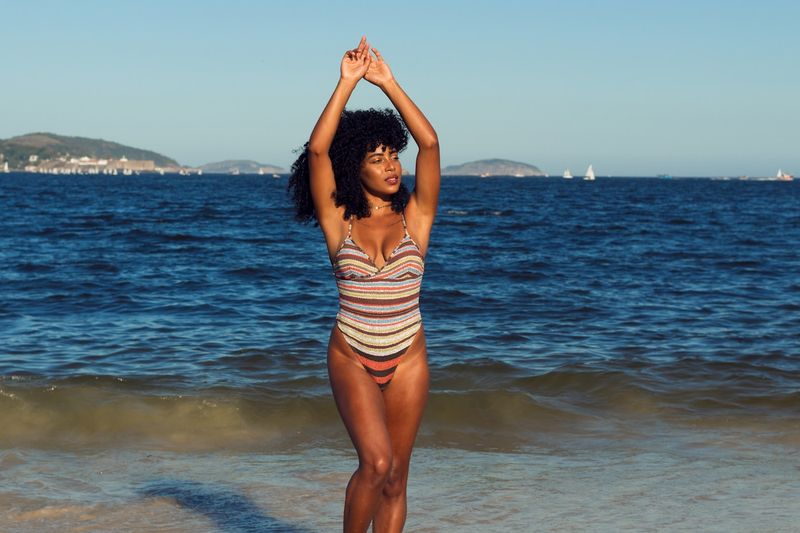
The bandeau silhouette gives you the cleanest neckline of any bikini, which means accessories pop. A long pendant necklace draws the eye down the body’s natural vertical line, balancing the horizontal band. Layered chain necklaces add visual texture without competing with the simple top. Avoid choker-style necklaces — they create a second horizontal line near the bandeau and the parallel lines fight each other in photos.
For shoulder-bare beach days, oversized sunglasses and a wide-brim hat finish the look without adding straps that interrupt the clean shoulder line. If you’re throwing on a cover-up, an open kimono or a button-down linen shirt left unbuttoned both flatter the bandeau silhouette — anything with shoulder straps or a halter neckline visually clashes. For a more structured option, a halter bikini may suit you better if you prefer something that ties at the neck.
Bandeau Bikini Care — Make It Last Three Summers

The silicone grip strip is the first part of a bandeau to fail, and it almost always fails for the same reason: heat. Hot water, hot car trunks, and dryer cycles all break down the silicone bond within 5–10 exposures. Rinse in cold water immediately after use, lay flat to dry in shade, and never wring out the top — twisting destroys the elastic memory in the back band.
Sunscreen, especially oil-based formulas, also eats elastic. Apply sunscreen 15 minutes before you put the suit on, give it time to absorb, and you’ll double the lifespan of the band. According to a Consumer Reports sunscreen analysis, mineral formulas with zinc oxide are notably gentler on swim fabric than chemical sunscreens with avobenzone. For a complete care routine, our how to wash a bikini guide walks through the full process from rinse to storage.

Tube Top Bikini vs. Bandeau — What’s the Difference?
“Tube top bikini” and “bandeau bikini” get used as synonyms, but there’s a real distinction. A tube top bikini is a single uniform band of fabric with no internal structure — no cups, no underwire, no shaping. A bandeau implies some level of engineering inside the band: silicone grip, molded cups, or a sewn-in shelf bra. If a listing just says “tube top,” assume there’s nothing inside. If it says “bandeau,” look for the structural details listed earlier in this guide.
The practical difference: tube tops work for very small busts and lounging; bandeaus work for everyone and active beach use. The price gap reflects the engineering — a $15 tube top and a $55 bandeau aren’t actually the same garment, regardless of how similar the photo looks.
The Final Word on Bandeau Bikinis
Buy the construction, not the photo. A bandeau bikini that lists silicone grip, molded or removable cups, a hook-and-eye back closure, and a wide band is one you can wear into the water. A bandeau that lists none of those things is a tube of fabric you can wear on a towel. The look is identical in product photography; the experience over 12 hours at the beach is night and day. Pick the engineering and the bandeau becomes the most versatile top in your swim drawer — clean for the resort pool, secure for ocean swimming, and ready under any cover-up you own.
Sources
- Vogue: The Best Bandeau Bikini Tops — editorial roundup of premium bandeau styles and fit notes for 2026.
- Consumer Reports: Best Sunscreens of the Year — fabric-safe mineral vs. chemical sunscreen comparison.
- Harper’s Bazaar: Best Bikinis to Shop Now — broader bikini category breakdown including strapless and bandeau cuts.
Shop our full range of bikinis and swimwear at the BikiniCool store →