Best Bikini for Large Bust: 9 Supportive Styles for 2026
Roughly 80% of women wear the wrong bra size, and the number jumps higher for swimwear, where elastic stretches differently and there’s no underwire on most styles. If you’re a D cup or above, the best bikini for large bust is the one that handles your weight the way a structured bra would — anchored shoulder straps, a wide and snug band, real cups (not a flat triangle), and fabric that doesn’t ride down in the surf. Below are the nine cuts that actually deliver that, plus the fit details to check before you swipe a card.
What Makes a Bikini Actually Supportive for a Large Bust
Support comes from the band, not the cup. That’s the rule fitters at Bare Necessities and HerRoom repeat in every consultation. A bikini top can have molded cups, padded liners, and underwire — and still bounce around if the band rides up the back. The band is where 80% of the lift lives. When you try a top on, raise both arms overhead. If the band climbs an inch or more, the cup will drag your bust down the moment you move.
The four features that separate a supportive top from a decorative one: a wide elastic band (at least 1 inch), adjustable straps you can actually shorten without the slider biting your skin, real cup shaping (molded or underwire), and a back closure with at least three eye-and-hook rows. Slip-on tops and tie-back triangles look great on Instagram and serve almost no structural purpose past a B cup.
Halter Bikini Tops: Your Strongest Ally
Halter cuts pull the weight of your bust upward through the neck strap rather than sideways through the shoulders. That redirection matters because shoulder straps slide outward whenever your arms move — every swim stroke, every sunscreen reapplication. A halter holds even when you’re paddling.
The catch: bad halters punish your neck. Look for a strap that’s at least three-quarters of an inch wide, padded if you’ll be wearing it eight hours straight, and adjustable so you can dial in the lift without choking yourself. The classic SUNSETS Muse top is a good benchmark for what a halter cup should feel like at a D-G range. Our halter bikini styles and fit guide walks through the specific cup constructions worth chasing.


Underwire Bikini Tops: Built-In Structure
An underwire bikini top works the same way an underwire bra does — a flexible wire follows the crease where your breast meets your ribcage, creating a foundation the cup can build on. For a DD cup or above, underwire is the difference between a top that holds shape and one that mushrooms over the edge by mid-afternoon.
Two things to verify before you commit. First, the wire should fully encase your breast tissue, not bisect it — if you can feel the wire poking the side of your bust, the cup is too small. Second, the wire needs flexible plastic, not metal, on a bikini. Metal underwire corrodes in saltwater within a season. Freya, Panache, and Curvy Kate dominate this category because they were lingerie brands first and learned to engineer cups before they added a beach print.
The trade-off is comfort during long swims. Some women find that underwire chafes when wet for hours. If you’re at the beach all day, alternate between an underwire top in the morning and a soft-cup or three-piece set after lunch.
Wrap and Crossover Bikinis: Full Coverage Without the Frump
Wrap tops cross panels of fabric over the bust, anchor them at the side seam or under the bust, and create a structured V at the cleavage line. They look more like resort wear than swimwear, which is exactly why so many fuller-busted women keep them in rotation for poolside lunches and boat days.
The key construction detail: the crossover panels should be lined with power mesh — a flat, sturdy mesh that prevents fabric from rolling or twisting when wet. Cheap wrap tops use a single layer of swim jersey and they bunch within twenty minutes. Power mesh adds about $15-25 to the price point but doubles the lifespan of the garment.
Bandeau with Built-In Cups (Yes, Even for Big Busts)
Conventional wisdom says skip the bandeau if you’re a D or above. That’s outdated. The new generation of “structured bandeau” tops from brands like Karla Colletto and Eberjey use boning at the side seams and removable halter straps, which means you can wear them strapless for a tan-line-free hour and clip the strap back on for the actual swim.
Two non-negotiables for a bandeau at fuller cup sizes: silicone gripper at the top edge to stop the band sliding, and a three-hook back closure rather than a single hook or pullover style. If a bandeau lacks both, it’s decorative and you’ll spend the entire day hitching it up.
Three-Piece Sets and One-Piece Hybrids
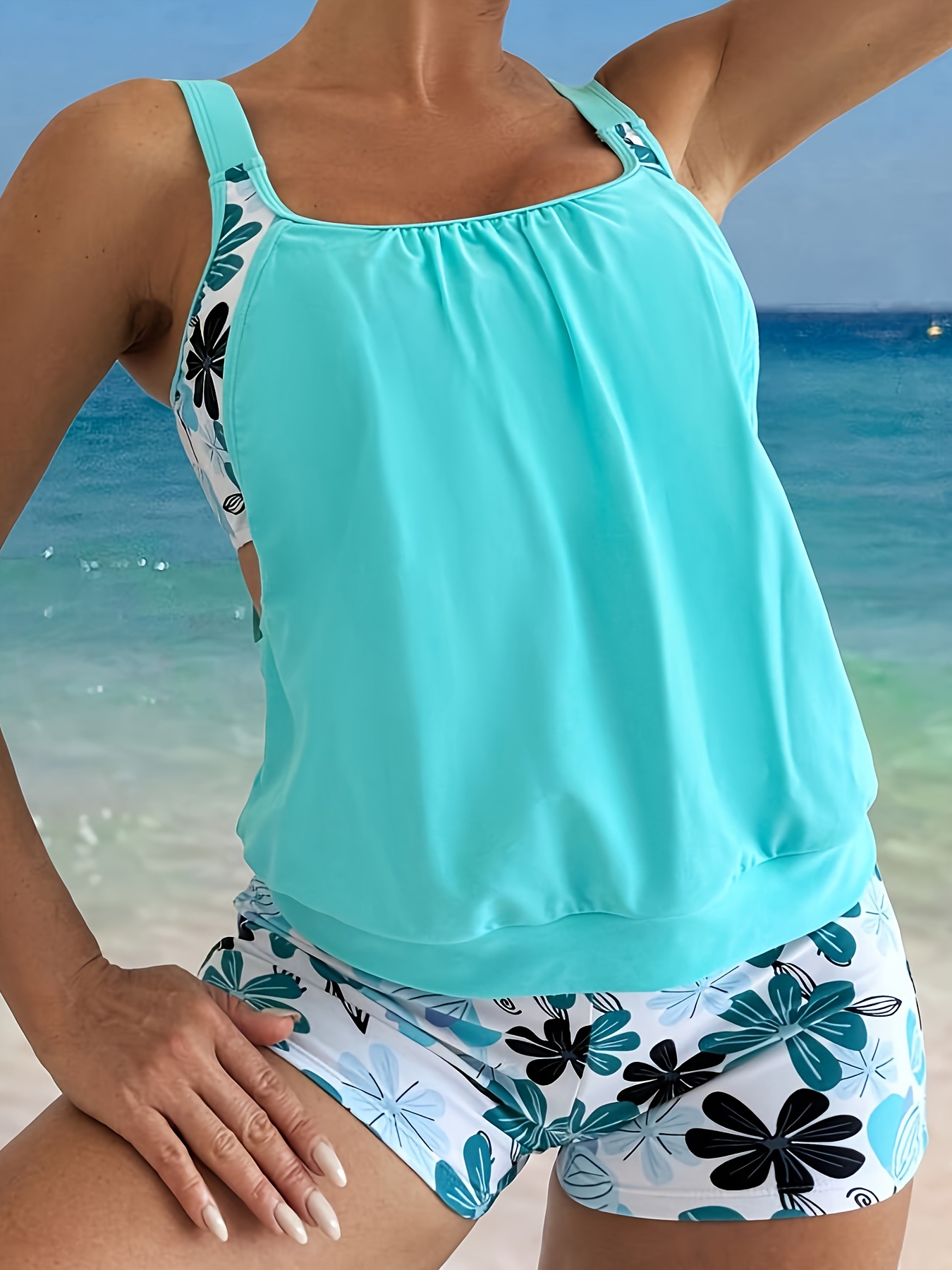
A three-piece set — top, bottoms, and a coordinating skirt, kimono, or kaftan — gives you flexibility. You can wear the top alone in the water and add the cover-up for beach walks, restaurants, or the pool bar. For larger busts, the third piece doubles as a confidence buffer when you’re walking from your towel to the snack bar past a hundred strangers.
One-piece hybrids — cut-out monokinis with halter or wrap construction — give you the structural advantages of a swimsuit and the styling of a bikini. They’re also the easiest category to find with built-in shelf bras and power mesh lining as standard.


Plus-Size Bikinis with Power Mesh Lining
Plus-size swimwear changed in the last five years. Until about 2020, “plus size” meant the same triangle bikini with extra fabric, which solved nothing. The current generation uses architecturally different construction: deeper back bands, wider side wings, full-coverage cups with mesh lining, and reinforced bottoms that hold their shape after fifty wears.
Look for the specific phrase “power mesh lining” on the product page. It’s invisible from the outside but it’s the engineering layer that keeps the top from collapsing when wet. Brands like Swimsuits For All, Curvy Kate Swim, and Cleo by Panache all build this in standard. Generic plus-size sets on Amazon often skip it to hit a price point, and they ride down by hour three.
The Fit Checklist That Stops Spillage
Before you commit to any top, run it through this checklist in the changing room. Most of these failures only show up after you’ve worn the suit in the water for an hour, so it pays to be ruthless on the first try-on.
- Arm raise test: Lift both arms overhead. The band should stay anchored within an inch of where it started.
- Forward bend: Lean forward 45 degrees. Your bust should stay inside the cups, with no spillage at the top or side.
- Cup line: Run a finger along the top edge of the cup. If it digs into breast tissue, you need a larger cup. If it gaps, you need a smaller cup.
- Strap pinch: Pinch the shoulder strap. If you can lift it more than an inch off your shoulder, tighten it. Loose straps transfer all the load to the band.
- Wet weight test: If possible, dampen the cup area with water before judging fit. Swim fabric stretches when wet — a top that fits dry can become loose wet.
Most stores will let you walk around in a top for ten minutes before you decide. Take them up on it.
What to Avoid: Triangle Strings and Stretchy No-Cup Tops
The single biggest mistake I see is buying triangle string bikinis with thin ties for a D cup or above. The math doesn’t work — two pieces of stretchy fabric tied at three points cannot carry the weight of a fuller bust. The top will sag, the bust will spill at the top, and the underbust band will ride up. There’s no “breaking it in” — it’s a structural failure from the first wear.
The other category to skip: pullover tops with no closure. Without an adjustable hook-and-eye row, the band can never be tuned to your exact ribcage. You’re stuck with whatever the manufacturer decided, which is almost always too loose at fuller sizes because manufacturers grade up from a B-cup pattern. If you’ve ever tried on a “size XL” bikini top that fits perfectly across the bust but flops in the band, that’s the cause.
If you love the look of a triangle top, save it for a B or smaller cup, or look for a “triangle-inspired” cut from a fuller-bust brand — they’ll keep the V-neckline but rebuild the structure underneath with hidden cups and a real band.
How to Find Your Real Bikini Cup Size
Swim sizing isn’t bra sizing. Most swimwear runs about one cup small and one band size big, which is why your usual 34DD might translate to a 32E or even a 30F in swim. If you’re shopping a UK brand (Freya, Panache, Curvy Kate), check the size chart because UK and US cup notation diverges past D — a UK F is roughly a US DDD.
Take fresh measurements before each shopping trip. Body weight, hormonal cycles, and rib expansion from breathing patterns all shift your underbust by half an inch over a year. Use a soft tape measure, snug but not compressing, around the ribcage directly under the bust for your band size. Then measure the fullest point of the bust for your cup size. Subtract the underbust from the bust — each inch of difference equals one cup letter.
If you’re between sizes on a particular top, size up on the cup, down on the band. A snug band carries the weight; a too-tight cup compresses the bust unflatteringly. Once you find a brand that fits, stay loyal — switching brands resets the trial-and-error clock.
Watch: Bikini Brands That Actually Work for a Larger Chest
If you want to see real try-on comparisons of supportive bikini brands across multiple cup sizes, this honest review walks through what fits and what doesn’t:
Where to Go Next
Once you’ve nailed the cut, the next decisions are color and styling — both of which compound the flattering effect of a well-fitting top. A wrap halter in a deep saturated jewel tone reads more polished than the same cut in beige, even on the same body. Browse our guide to the best bikini colors for your skin tone to lock in the palette, and if you’re considering a push-up alternative, the push-up bikini top guide compares the two construction approaches side by side. The right bikini won’t make you look like someone else — it makes you look like the most comfortable version of yourself, and that’s the version that has a better day at the beach.


Sources
- A Pilot Study Investigating the Effect of Bra Band Tension on Breast Pain — research on band tension and breast support mechanics
- HerRoom Bra Fitting Room — professional fit guide covering band-vs-cup support theory
- Bare Necessities Fit Guide — sizing notes for swim vs. bra and brand-by-brand notation differences
Shop our full range of bikinis and swimwear at the BikiniCool store →