How to Find Your Bikini Size: Complete Swimwear Sizing Guide
Buying swimwear online can be tricky—sizes vary wildly between brands, and a bikini that’s too big or too small ruins your beach day. This complete bikini sizing guide teaches you how to measure yourself, understand size charts, and find your perfect fit every time.
Why Bikini Sizing Is Confusing
Swimwear sizing is notoriously inconsistent because:
- No universal standard — Each brand uses different measurements
- Stretch varies — Some fabrics have more give than others
- Fit preferences differ — Some people like snug, others like relaxed
- International sizing — US, UK, EU, and AU sizes are all different
The solution? Know your measurements and always check the brand’s specific size chart.
How to Measure Yourself for a Bikini
Grab a soft measuring tape and measure these key areas:
Bust Measurement
- Wear an unpadded bra or no bra
- Wrap the tape around the fullest part of your bust
- Keep the tape level and snug (not tight)
- Record the measurement in inches or centimeters
Underbust / Band Measurement
- Wrap the tape directly under your bust
- Keep it level all the way around
- This determines your band size for bra-sized swimwear
Waist Measurement
- Find your natural waist (smallest part of your torso)
- Usually about 1 inch above your belly button
- Wrap the tape around, keeping it level
Hip Measurement
- Stand with feet together
- Wrap the tape around the fullest part of your hips/butt
- Keep the tape level
Understanding Bikini Size Charts
Standard Sizing (S, M, L, XL)
Most bikinis use standard letter sizing. Here’s a general guide:
| Size | Bust (in) | Waist (in) | Hips (in) |
|---|---|---|---|
| XS | 31-32 | 23-24 | 33-34 |
| S | 33-34 | 25-26 | 35-36 |
| M | 35-36 | 27-28 | 37-38 |
| L | 37-39 | 29-31 | 39-41 |
| XL | 40-42 | 32-34 | 42-44 |
Note: This is a general guide. Always check the specific brand’s size chart!
Bra-Sized Swimwear
Some brands offer bra-sized tops (32C, 36DD, etc.) for a more precise fit:
- Band size = Your underbust measurement (rounded to even number)
- Cup size = Difference between bust and underbust measurements
Cup size guide:
- 1″ difference = A cup
- 2″ difference = B cup
- 3″ difference = C cup
- 4″ difference = D cup
- 5″ difference = DD/E cup
Bikini Top Sizing Tips
Triangle Tops
- Usually run true to size
- Adjustable ties offer flexibility
- Size up if between sizes for more coverage
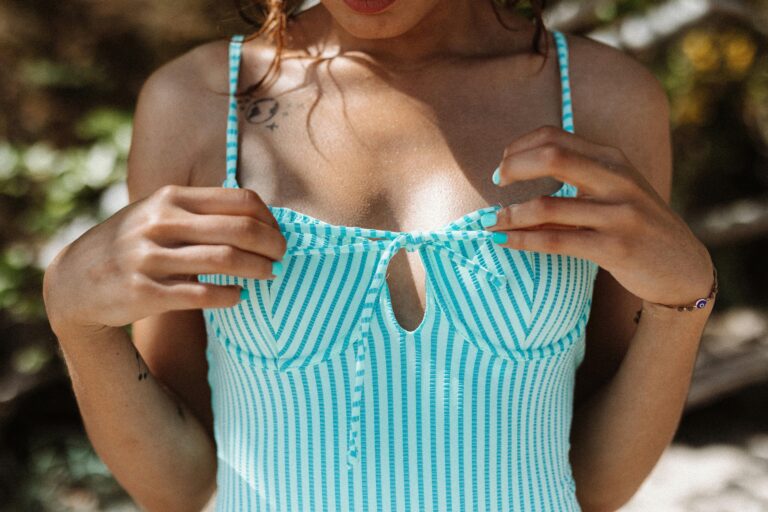
Underwire Tops
- Fit like a bra—use your bra size as a guide
- Band should be snug, not riding up
- Cups should fully contain the breast
Bandeau Tops
- Often run small due to no straps
- Size up if you need more coverage
- Look for adjustable back closures
Halter Tops
- Adjustable straps help customize fit
- Usually true to size
- Check that straps are long enough
Bikini Bottom Sizing Tips
Standard Bikini Bottoms
- Size by your hip measurement primarily
- If between sizes, size up for comfort
- Consider rise (low, mid, high) for fit preference
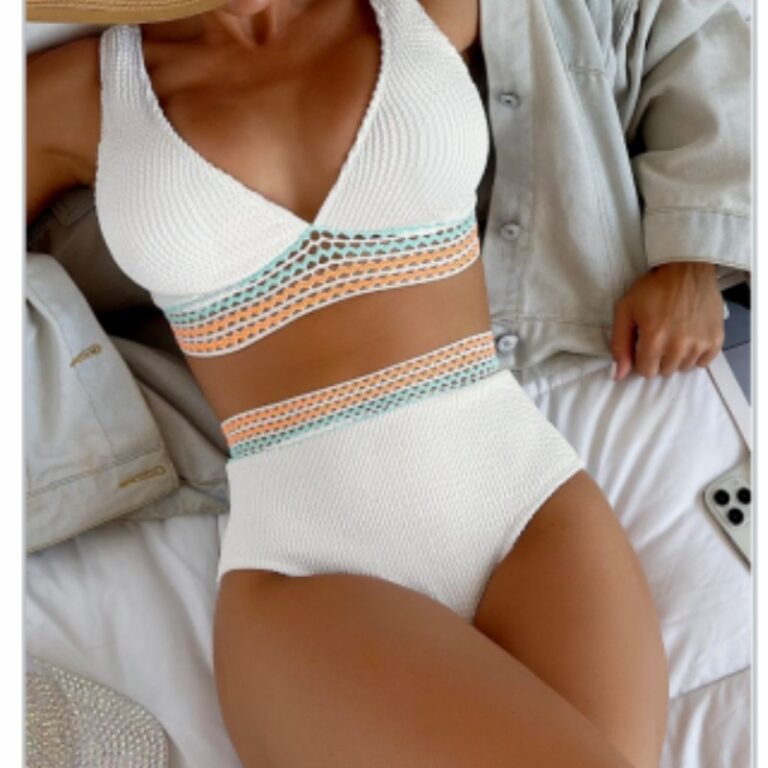
High-Waisted Bottoms
- Consider both waist AND hip measurements
- Should sit at natural waist without rolling
- Look for styles with some stretch
Tie-Side Bottoms
- Most forgiving style—adjustable fit
- Good choice if between sizes
- Can adjust coverage to preference
Brazilian/Cheeky Bottoms
- Less coverage in back—consider this when sizing
- Usually true to size
- Stretchy fabric is more forgiving
Mix and Match Sizing
Good news: Many brands let you buy tops and bottoms separately. This is perfect if you’re:
- Different sizes on top and bottom
- Between sizes in one area
- Want different coverage levels
Tip: Buy your bikini top based on bust size, bottom based on hip size.
International Size Conversion
| US | UK | EU | AU |
|---|---|---|---|
| XS (0-2) | 4-6 | 32-34 | 4-6 |
| S (4-6) | 8-10 | 36-38 | 8-10 |
| M (8-10) | 12-14 | 40-42 | 12-14 |
| L (12-14) | 16-18 | 44-46 | 16-18 |
| XL (16-18) | 20-22 | 48-50 | 20-22 |
Signs of a Good Fit
Bikini Top Should:
- Stay in place during movement
- Not dig in or create bulges
- Fully cover/contain the breast (no spillage)
- Have straps that stay up without digging
Bikini Bottom Should:
- Stay in place without constant adjusting
- Not dig into hips or thighs
- Provide the coverage you want
- Allow you to move comfortably
Signs of Poor Fit
- Gaping cups — Too big on top
- Spillage — Too small on top
- Riding up — Bottom too small or wrong cut
- Digging in — Too small or wrong style
- Constant adjusting — Wrong size or style
Frequently Asked Questions
Should I size up or down in swimwear?
When in doubt, size up. A slightly looser bikini is more comfortable than one that digs in. You can always adjust ties for a snugger fit.
Do bikinis stretch out over time?
Yes, especially with chlorine and sun exposure. Buy a snug (not tight) fit initially, as it will relax slightly with wear.
What if I’m between sizes?
Size up for comfort. Look for adjustable styles like tie-sides or wrap tops that accommodate in-between sizing.
Should I try on bikinis over underwear?
Yes, for hygiene when trying on in stores. The fit will be similar. At home, try without for the truest fit.
How do I know my cup size for swimwear?
Use your regular bra size as a starting point. Measure your bust and underbust, then calculate the difference to determine cup size.
Shop by Size
Ready to find your perfect fit? Browse our complete swimwear collection with detailed size charts for every style.
The right size makes all the difference—shop confidently!