Mix and Match Bikini: 9 Ways to Build the Perfect Set
A mix and match bikini is the easiest way to build a swimwear wardrobe that actually fits your body — pairing a top and bottom in different sizes, shades, or prints rather than forcing yourself into a matching set. The approach works because most women don’t wear the same size on top and bottom, and because separates let you turn three pieces into nine different looks. Below you’ll find nine ways to build your perfect set, the rules that make a pairing look intentional instead of random, and the styling tricks that keep it body-positive from string to sarong.
This is the guide we wish someone had handed us the first time we walked into a swim department. No math, no confusing color theory — just the combinations that work, illustrated on real bodies, with a few product picks and practical tips stitched in along the way.
Why a Mix and Match Bikini Beats a Matching Set
A mix and match bikini solves a very specific problem: bra-size tops and dress-size bottoms almost never live in the same box. A woman who wears a 36DD on top may need an extra-large bottom for her hips, or a small top paired with a medium brief. Buying a fixed “set” forces a compromise somewhere. Separates don’t.
Beyond fit, there’s the wardrobe math. Three matched sets give you three outfits. Three mix-and-match pieces give you nine outfits — and you pack the same amount in your carry-on. It’s the swimwear version of a capsule wardrobe, and it’s the reason style editors have been quietly recommending separates over sets for years.
If you’re new to the concept, start with our flattering bikini styles for every body type before you commit to any silhouettes. It’s a good primer on what shapes read well on which frames.
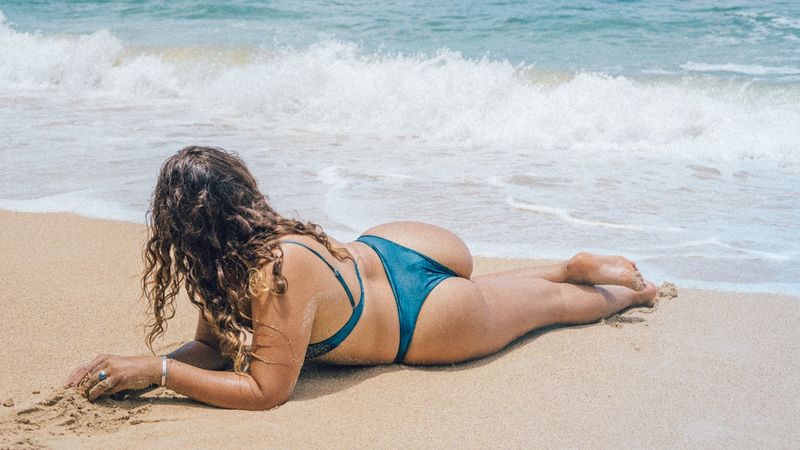
1. Start With One Solid, Then Build Around It
The simplest mix and match bikini starts with a solid-color anchor — black, navy, terracotta, or sand — in the piece that covers the most skin. If you wear high-waisted bottoms, make those the solid. If you’re a bandeau fan, make the top the solid. The anchor piece becomes the “neutral” that every other piece in your drawer can play off.
From there, add one statement piece in a print, a pop color, or a textured fabric. The eye reads the contrast as intentional because the solid grounds it.
2. Use the 60/30/10 Color Rule
Borrowed from interior design, the 60/30/10 rule is the cleanest shortcut for mixing prints. Pick a dominant color that makes up about 60% of your look (usually one of your pieces), a secondary color at 30%, and a pop accent at 10% — which might be your sarong, sunglasses frame, or a scrunchie. Almost every “effortless” beach outfit you’ve admired on Pinterest follows this ratio without announcing it.
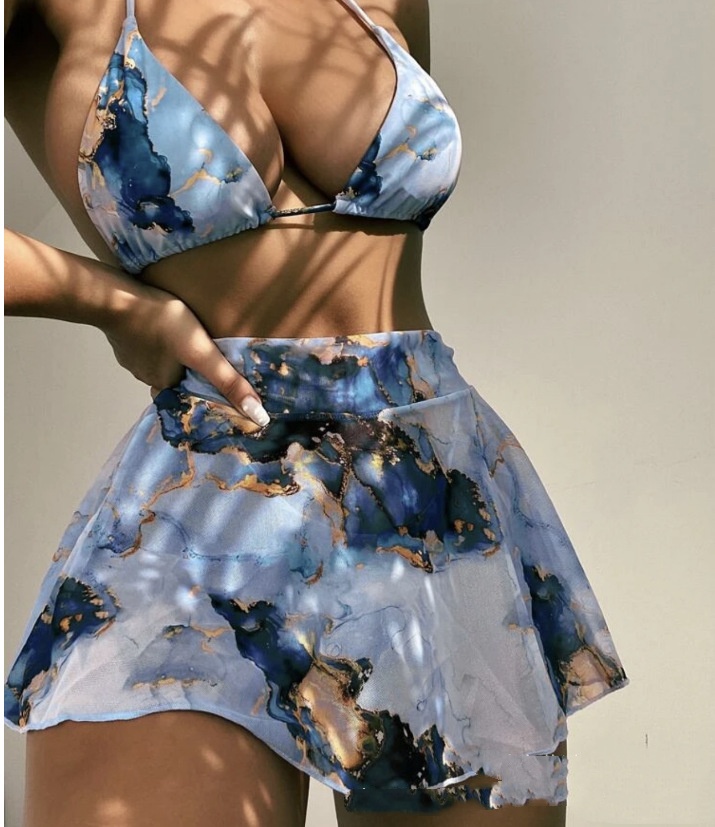
3. Pair Prints With Shared Undertones
The number-one reason mix and match bikini pairings look “off” is clashing undertones. A cool-toned navy floral on top and a warm-toned coral stripe on the bottom will fight each other. Check the undertone — is the base warm (yellow/peach/gold) or cool (blue/gray/silver)? — and keep your two prints in the same temperature family. If in doubt, pull out one color from each print and see if they sit next to each other comfortably.

4. Mix Scale, Not Just Color
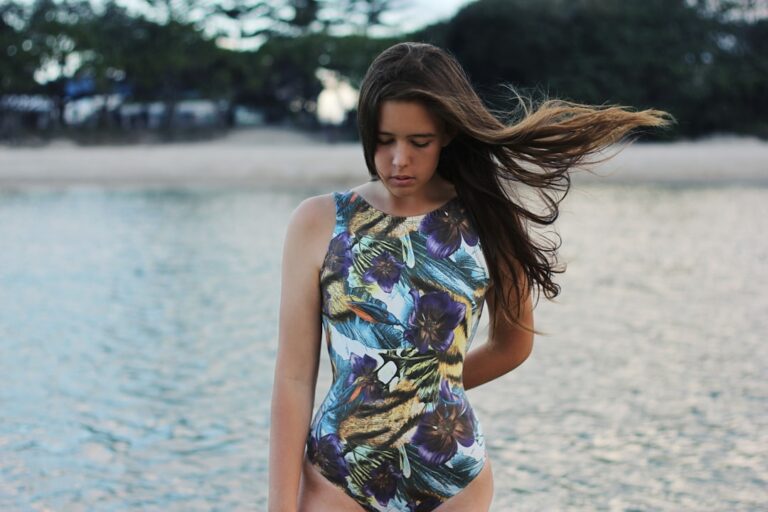
Two prints at the same scale will look busy even if the colors are perfect. A large tropical leaf print on the top works with a small micro-polka dot on the bottom because the eye has somewhere to rest. The rule: one bold, one subtle. If both pieces are loud, the outfit reads chaotic. If both are quiet, you’ve basically just made a matching set again.
5. Size Top and Bottom Independently
This is the core promise of separates — and the reason the mix and match bikini movement took off. Measure your bust and hips separately using a soft tape, then consult each brand’s size chart for that specific piece. Don’t assume your “medium” set size translates across brands. Most swimwear sizing runs 1–2 sizes smaller than regular clothing, and a brand that nails tops can fit bottoms completely differently.
If you’re between sizes on bottoms, size up and pick a tie-side style — the adjustability covers a one-size range. For the top, a halter or tie-back can tighten or loosen by an inch or more, which is often enough to bridge cup and band differences.

6. Match Coverage Levels Intentionally
A cheeky Brazilian bottom under a full-coverage halter top reads as a deliberate style choice. A string bikini top with a full-coverage boy-short bottom, however, feels mismatched because the top and bottom are telling different stories about how you want to be perceived. Either go equal coverage (both high, both low) or go deliberately opposite — never land in the middle by accident.
For curvy bodies especially, a high-waisted bottom paired with a supportive underwire top is a combination that works on almost every silhouette. Our high-waisted bikini guide for curvy women walks through the specific fits to look for.
7. Use Texture as a Pattern
A ribbed top with a smooth solid bottom creates visual interest without committing to a print. Same goes for a crochet overlay, a terrycloth texture, or a crinkle fabric. Texture-on-solid is the softest way to do a mix and match bikini — it still reads as “put together,” but there’s no print-clashing risk.

8. Lean Into the Three-Piece Set
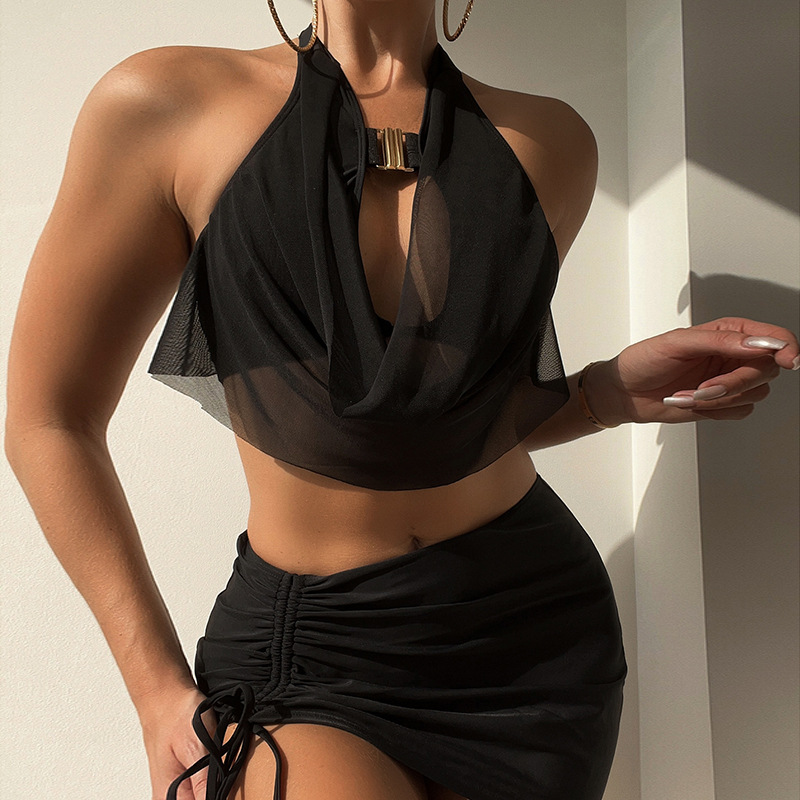
A three-piece set — top, bottom, and a coordinating cover piece like a long-sleeve mesh overlay, a sarong, or a matching beach skirt — is mix and match with a safety net. The third piece pulls the look together even when the top and bottom are deliberately contrasted. It’s also the smartest packing move: the overlay doubles as a lunch-at-the-beach-cafe cover-up so you don’t need a separate outfit.
Three-piece sets have been one of the top-selling silhouettes in 2026 for exactly this reason. They photograph well, they pack small, and they give nervous beginners a way to try mix and match without committing to fully separate pieces.
9. Play With Ties, Hardware, and Details
Ties, rings, buckles, and clasps are the accent jewelry of swimwear. A gold O-ring on the bottom and gold hardware on the top ties two otherwise-different pieces together instantly. Same with matching tie colors — a navy tie on a white top echoes a navy tie on a coral bottom, and the eye reads “intentional.” If the pieces have mismatched hardware, a simple accessory like a gold chain belt or a braided anklet can bridge the gap.
How to Shop for a Mix and Match Bikini Wardrobe
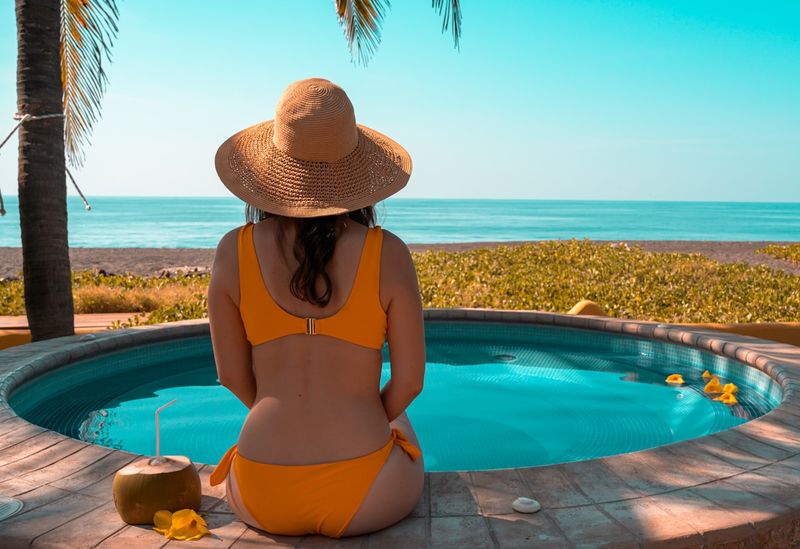
Start with two solids in colors that flatter your skin tone — one light, one dark. Add one print that contains at least one of those solid colors (now both your solids can play off it). That’s three pieces, six combinations. From there, every new piece you add multiplies your options, so long as it shares a color or texture with something you already own.
Budget-wise, separates aren’t always more expensive than sets. They just feel like it because you’re buying pieces at different times. Set a cap — say, three new pieces per season — and the wardrobe builds itself over a summer or two without a wallet shock.
If you prefer structured fits for bigger busts, look for underwire tops with separate band and cup sizing rather than S/M/L. Our bandeau bikini guide is the opposite end of the spectrum — barely-there support for smaller busts or pool lounging.
Body-Positive Styling That Actually Works
A mix and match bikini is body positive because it stops asking your body to match the box. Real bodies are asymmetrical. Real breasts aren’t always a pair. Real hips rarely correlate to bra band size. Separates acknowledge that reality and let you dress the body you have today, not the statistical average the retailer printed on the size chart.
Confidence also comes from fit. A well-fitting piece in a color you love beats a designer piece that doesn’t sit right. Look in the mirror from three angles — front, side, and over-the-shoulder — before you cut the tags. If the top digs, the cup gaps, or the bottom rides up walking ten steps around the bedroom, it’ll do the same in the sand.
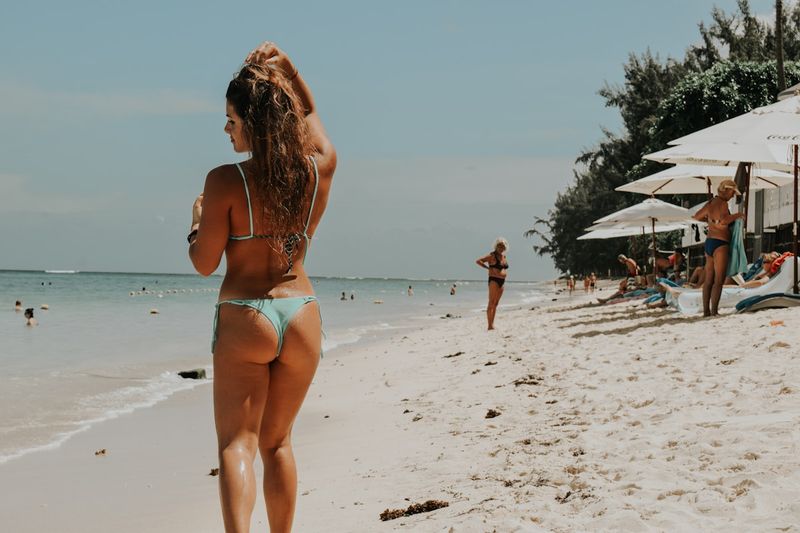
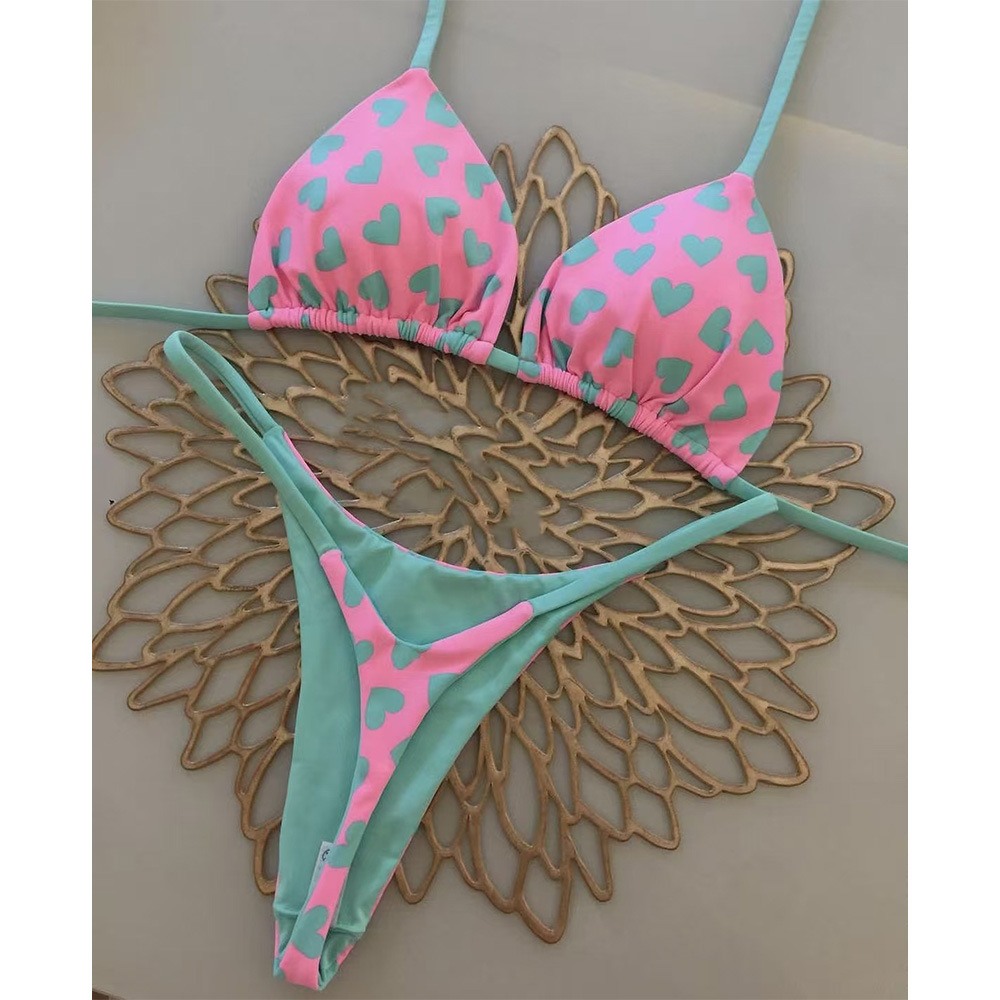
Watch: Mix and Match Bikini Styling Tips
For a visual walkthrough of how stylists approach separates, this quick styling guide covers color theory and silhouette pairing in under ten minutes — worth the watch before your next swimwear shopping trip.
Common Mix and Match Bikini Mistakes
The three failures we see most often: matching scales (both prints loud), clashing undertones (warm + cool colliding), and coverage whiplash (full-support top + string bottom with nothing to bridge them). All three are fixable with a single swap — usually the top, since that’s the piece the eye lands on first.
The other common mistake is buying pieces online without trying them. Swimwear returns are notoriously tricky for hygiene reasons, so order one size up and one size down when you can, and factor the shipping back in if the retailer offers free returns. Reading reviews that mention measurements in numbers — “I’m 5’6″, 140 lbs, D cup” — is more useful than star ratings.
Packing a Mix and Match Bikini Wardrobe
For a seven-day beach trip, two tops, two bottoms, and one three-piece overlay cover every combination you’ll need, with one piece always drying while another is worn. Pack them in a quick-dry bag separate from your main luggage — wet swimwear doesn’t belong on top of your linen dresses. Add one statement sarong and a pair of woven slides and you’ve packed the entire swim section of your vacation in the space of a paperback book.
For a longer trip, swap in a second print once the colors start repeating in photos. Three solids and two prints is the sweet spot for a two-week vacation’s worth of outfits, and still fits under the weight limit of most carry-ons.
Frequently Asked Questions
Can I mix brands for a bikini top and bottom? Yes — sizing will differ, so measure and check each brand’s chart. Brands using the same color name (e.g., “terracotta”) can still have slightly different shades, so order with return policy in mind.
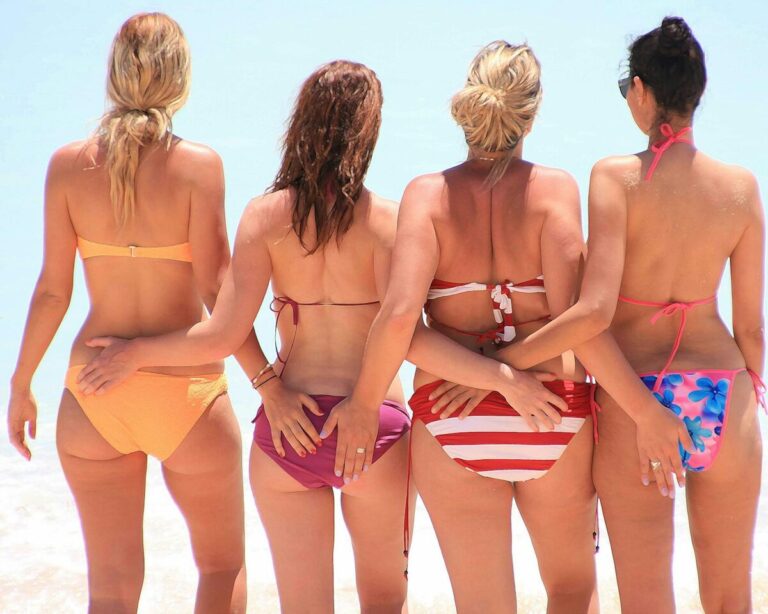
Do two prints ever work together? Absolutely, if they share either an undertone or at least one color in common, and if they’re at different scales. A large stripe and a small floral in overlapping palettes is one of the most classic mix and match bikini combinations in existence.
What’s the safest starter combination? A solid black or solid white bottom paired with any print top. Solid neutrals anchor the look, and almost every print contains black or white in the base.
Sources
- Vogue — Swimsuit Trends Coverage — Editorial trend reporting on separates and set styling.
- The Good Trade — Sustainable Swimwear Guide — Fit and sizing guidance for separates shopping.
- Marie Claire — Fashion — Color theory and styling reference.
Shop our full range of bikinis and swimwear at the BikiniCool store →