
Matching a Sarong to Your Swimsuit: A Pairing Guide by Silhouette
Most sarong advice treats the wrap as a standalone decision — pick a print, pick a knot, done. But a sarong doesn’t exist on its own. It sits directly on top of a swimsuit, and the two have to work together as one outfit, not two separate choices. A gauzy wrap that looks effortless over a triangle bikini can go shapeless and sad over a structured one-piece. A stiff batik sarong that reads chic over high-waisted bottoms can feel like a tablecloth over a barely-there bandeau. The fix isn’t a new tying technique — it’s matching the wrap to the swimsuit underneath before you even pick up the fabric.
Why the Swimsuit Should Decide the Wrap, Not the Other Way Around
A sarong’s job changes depending on what it’s covering. Over a bikini, it’s usually adding coverage and shape to a silhouette that’s already mostly bare — the wrap is doing structural work. Over a one-piece, the suit is already providing shape and support, so the sarong’s job shifts to decoration and movement — it’s there for drama, not function. Over high-waisted bottoms, the sarong is often extending a retro line that the suit has already started, so it needs to continue a silhouette rather than compete with one. Once you think about the wrap as finishing a look the swimsuit already started, the choice of length, fabric weight, and knot gets a lot easier.
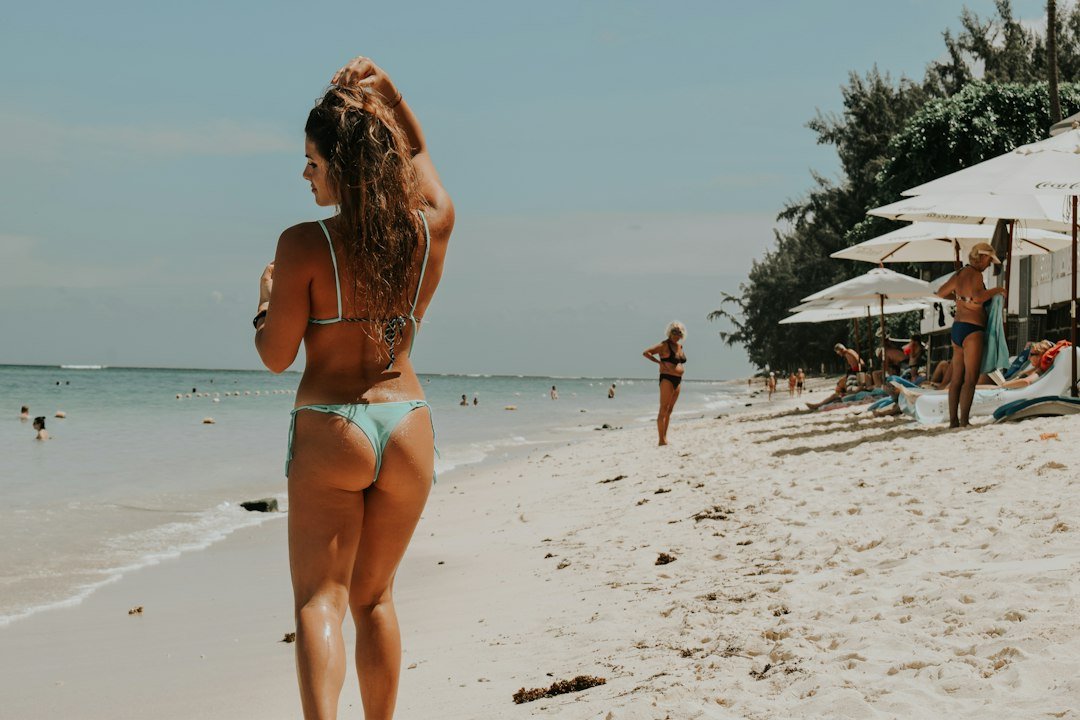
Pairing With a Bikini: Let the Wrap Do the Shaping
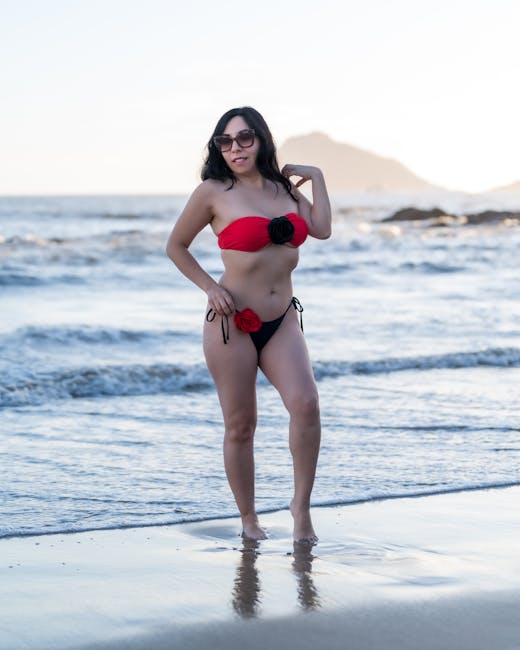
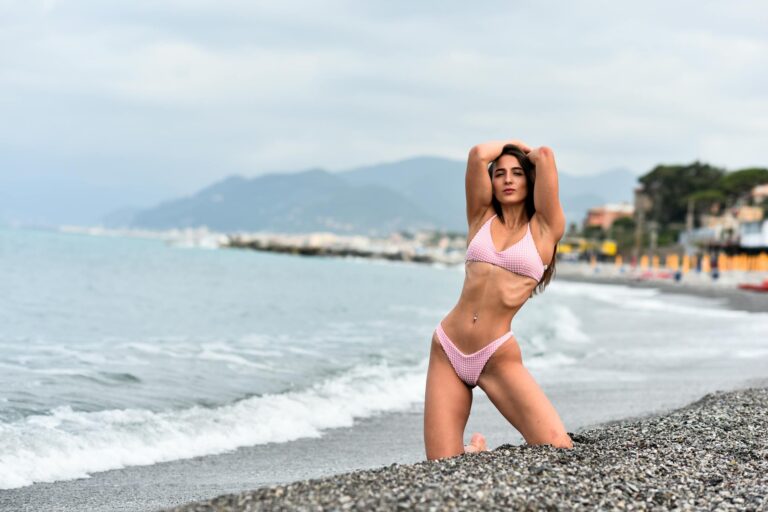
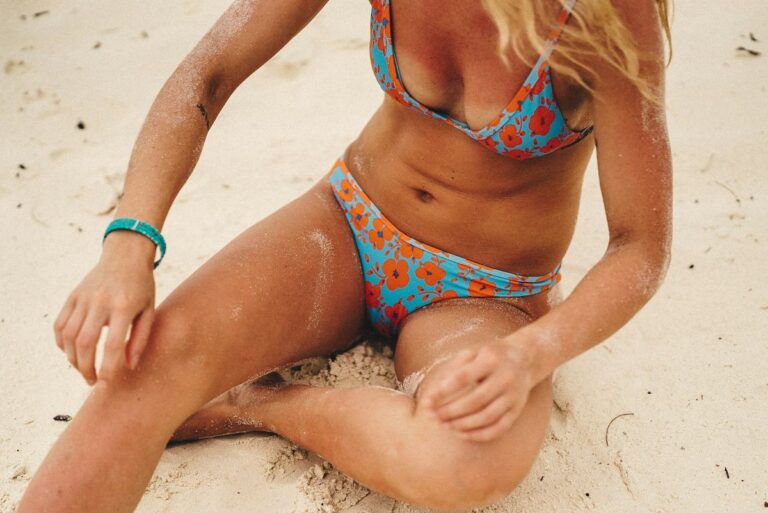
A bikini shows the most skin of any swimsuit style, which means the sarong has the most visual work to do. This is where a lightweight, fluid fabric earns its keep — rayon, viscose, or a light cotton voile drapes close enough to the body to suggest shape without adding bulk on top of bulk.
Triangle and Bandeau Tops
With a minimal top, the sarong tied low on the hip — sometimes called the hip-slung wrap — balances the outfit by adding volume where the bikini has none. Tuck one corner into the opposite hip and let the rest fall loose rather than knotting everything tight; a fully cinched wrap over a bandeau top can make the top half look even smaller by contrast. The goal is proportion, not compression.
High-Cut Bottoms
High-cut bottoms lengthen the leg line, and a sarong tied at the natural waist rather than the hip continues that line instead of cutting across it. A knee-length or midi wrap works better here than a full-length one — a floor-length sarong over high-cut bottoms tends to read as a beach skirt from another outfit entirely, rather than something that belongs with the suit underneath.
Shop Lightweight Beach Sarong Wraps on Amazon →
Pairing With a One-Piece: Add Movement, Not Coverage
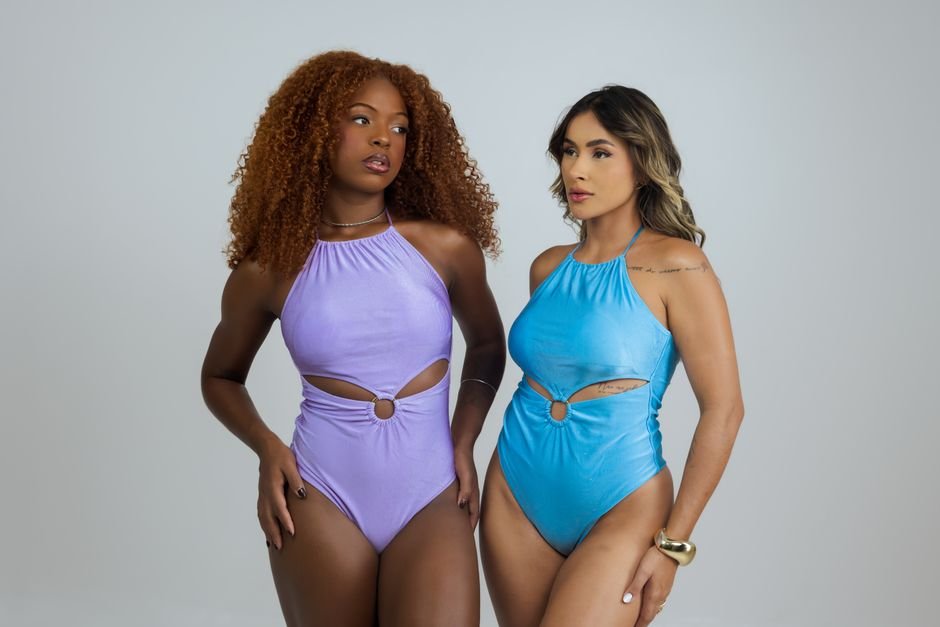
A one-piece already covers the torso, so a sarong wrapped tightly around the waist over it can look redundant — two layers doing the same job. The better move is to let the sarong do something the suit can’t: drape, drop, or catch the wind. This is where a slightly heavier fabric, like a lightweight linen-blend or a textured cotton, actually performs better than a gauzy one, because it holds a shape instead of clinging flat against the suit.
Off-the-Shoulder Draping
Instead of tying the sarong around the waist, drape it over one shoulder and knot it under the opposite arm, letting the rest fall open at the side. This turns the one-piece’s clean lines into a base layer for a cape-like silhouette, which reads far more intentional than another waist-wrap over an already-covered midsection.
The Front-Knot Skirt
If a skirt effect is the goal, tie the sarong at the hip with the knot positioned at the center front rather than the side. A side knot next to a one-piece’s existing side seam can look accidental; a front knot reads as a deliberate design choice and creates a cleaner line when walking.

Pairing With High-Waisted Bottoms: Extending a Retro Line
High-waisted bottoms already reference a retro silhouette, and the sarong’s job here is to continue that line rather than interrupt it. A structured, slightly stiffer fabric — think a woven cotton with some body to it — holds a sarong skirt shape better than a fluid one, which tends to collapse and lose the retro effect entirely.
Tie the sarong just below the natural waistband of the bottoms, not over it, so the high-waisted line stays visible rather than getting buried under fabric. A knee-length or tea-length sarong knotted at the hip with a small pleat at the front gives the look of a fitted wrap skirt — closer to what you’d wear off the beach than the loose, billowy tie that works over a bikini.
Matching Fabric Weight to Swimsuit Structure
A quick rule of thumb: the more structure the swimsuit already has, the more structure the sarong should have too. An unstructured bikini pairs best with an unstructured, fluid sarong because neither piece is fighting for shape. A structured one-piece with built-in support or boning pairs better with a sarong that has some weight and body, since a flimsy fabric will just fall flat against a suit that’s already doing the shaping. High-waisted, often more tailored-looking bottoms pair with a mid-weight woven fabric that can hold a defined fold or pleat.
This also solves a common complaint — that a sarong “disappears” in photos or goes limp within an hour at the beach. Often that’s not a tying problem, it’s a fabric-to-silhouette mismatch. The wrap needs enough weight to hold its own shape next to whatever structure the swimsuit brings to the outfit.
Shop High-Waisted Bikini Bottoms on Amazon →
Color and Print: When to Match, When to Contrast
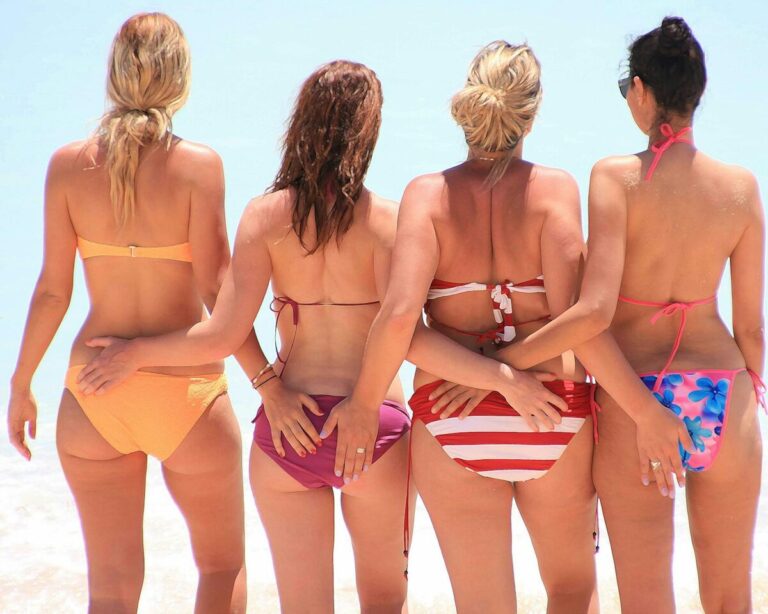
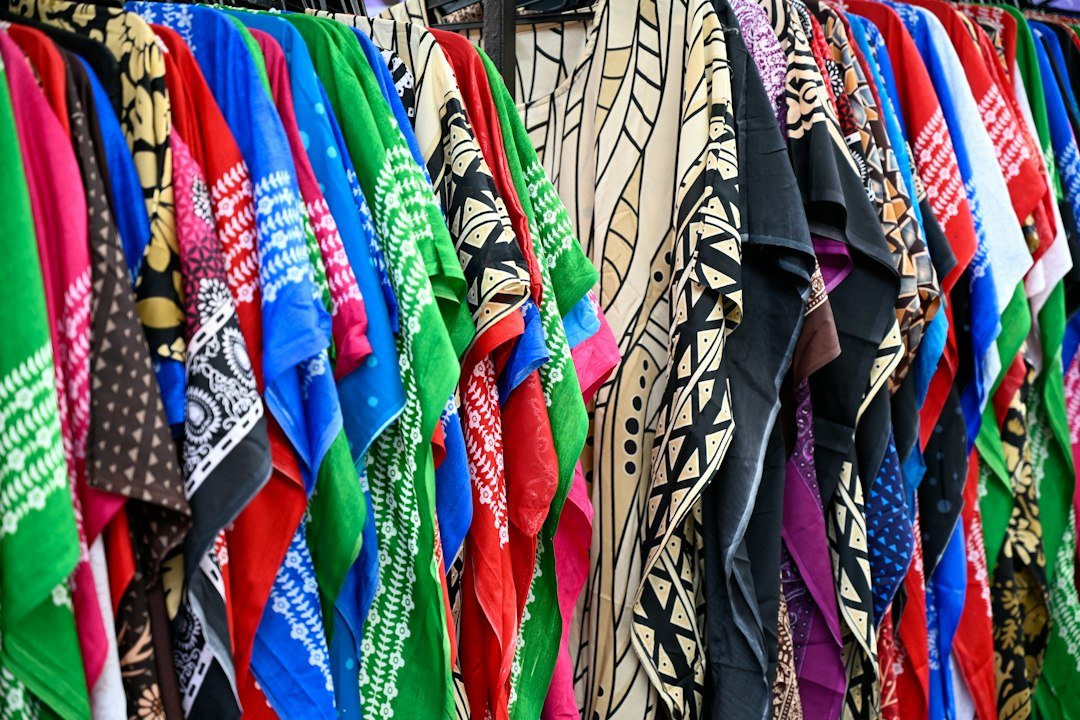
Matching a sarong’s print to a swimsuit’s print rarely looks as good as it sounds in theory — two busy patterns side by side tend to compete rather than coordinate. A more reliable approach is to pull one color from the swimsuit and let the sarong carry that color solid, or nearly solid, so the two pieces read as coordinated without being identical. A striped sarong over a solid swimsuit works because the stripe has somewhere neutral to land; a striped sarong over a striped suit usually doesn’t.
The exception is tonal pairing — a sarong and swimsuit in the same color family but different patterns (a floral wrap over a solid suit in one of the floral’s background shades, for instance) tends to look pulled-together rather than matchy. This works at any body size and any swimsuit style, because the coordination is doing the work, not the fit of either individual piece.
Three Pairing Mistakes Worth Avoiding
The most common mistake is choosing the sarong length first and the swimsuit second, or vice versa, without considering how the two hemlines interact. A long sarong over high-cut bottoms can visually shorten the leg it was supposed to lengthen. The second mistake is over-tying — cinching a sarong tightly at the waist over a swimsuit that already has waist definition just adds a second waistline instead of one clean one. The third is ignoring how the fabric moves in wind or water; a sarong tested only standing still in a dressing room can behave completely differently walking on sand, so if possible, move around in it before committing to a knot for the day.
None of this is about hiding a swimsuit or covering up what’s “wrong” with it — a sarong that’s paired well makes the swimsuit underneath look more deliberate, not less visible. The pairing is a styling tool, not a correction.
Shop One-Piece Swimsuits on Amazon →
Building a Short Rotation
You don’t need a different sarong for every swimsuit in a bag. One lightweight, fluid piece in a solid or tonal print covers most bikini pairings, and one slightly heavier, more structured piece in a neutral solid covers one-pieces and high-waisted bottoms. Between those two, most silhouette pairings are handled without carrying five wraps on a trip. The point isn’t collecting more sarongs — it’s knowing which of the two to reach for based on what’s underneath.