Whitewater Rafting Swimwear: 7 Best Picks
Guides on the Gauley, the Ocoee, and the Nantahala see it every season: someone shows up in a delicate triangle-top bikini, flips in a Class III rapid, and spends the rest of the trip holding their top together. Rafting companies don’t ban swimwear, but most will quietly tell you a string bikini is a bad idea the moment you check in. The fix isn’t complicated. It’s picking a suit built to survive a wave, not just look good on the dock.
What to Wear Whitewater Rafting, Specifically
A swimsuit alone works fine for the water itself, but almost nobody rafts in just a suit. The standard layering on a guided trip is swimwear as a base layer, quick-dry shorts or leggings over the bottom, and a synthetic rash guard or sun shirt over the top. The swimwear handles the actual swimming — if you fall out, which happens on bigger rapids — and the layers on top handle friction, sun, and the chill of 50-degree snowmelt water hitting your skin at 15 mph.
Avoid cotton anything. A cotton t-shirt soaked in river water stays wet and cold for the rest of the trip and offers zero insulation once wet. Polyester, nylon, and merino wool all shed water fast and keep working as insulation even soaked through.
Does the Rapid Class Change What You Should Wear?
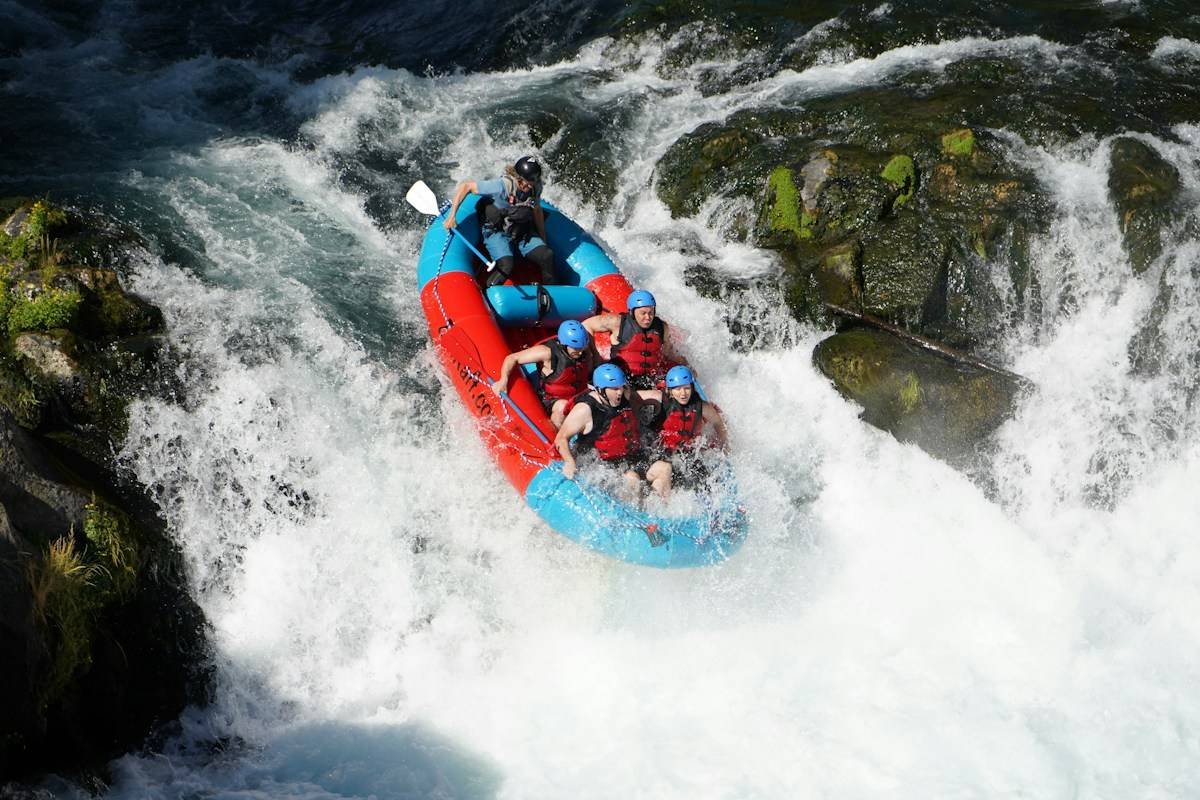
Class I and II water is closer to a lazy river float — gentle current, no real risk of a hard swim, and a string bikini is unlikely to cause a problem. Class III and up is a different situation. Rapids in that range can flip a raft, pull a paddler out over the side, or push someone through a hole where they’re tumbling underwater for several seconds. That’s exactly the scenario where a loose tie or a thin strap gives out, usually at the worst possible moment to be fixing a swimsuit.
Most commercial outfitters grade their trips on this same I–V scale and will tell you the class before you book. If your trip is rated Class III or higher, treat the secure-swimwear advice here as non-negotiable rather than a nice-to-have. A Class V trip is not the day to test a new bikini.
Why Your Life Jacket Needs to Fit Over Your Swimsuit, Not Fight It
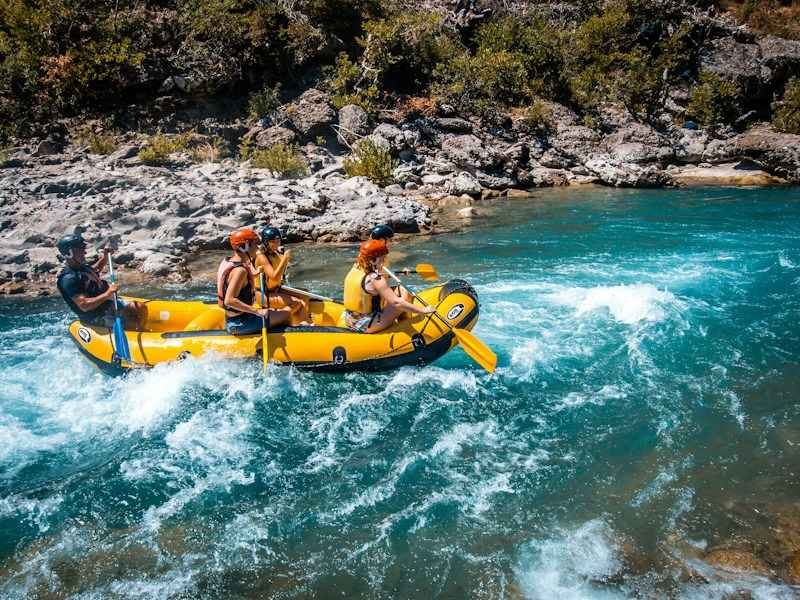
A PFD (personal flotation device) is mandatory on every commercial rafting trip, and it gets cinched tight across the chest and ribs. A regular bikini top with a thin triangle shape and a tie-neck bow doesn’t hold up well under those straps — the PFD rubs the knot loose, or the strap digs straight into a seam that was never built to carry load.
Guides consistently point to a sports-bra-style bikini top, or a one-piece, as the more comfortable option under a PFD. The wider band spreads the pressure instead of concentrating it on two thin strings, and there’s no bow for the life jacket’s chest strap to catch and loosen. If you only change one thing about your rafting outfit, change the top.

Skip the String Bikini: What Actually Stays On in Rapids
A flipped raft, a surprise wave, or just scrambling back in over the tube puts real force on a swimsuit that a pool or a calm beach never will. Thin string ties at the hip and a bow at the neck are the two failure points guides mention most often, because both depend on a single knot holding under sudden, sideways pressure.
- One-piece suits remove the failure point entirely — no ties to work loose, no top to shift.
- High-waisted bottoms with side ties or a solid waistband stay in place better than low-rise cuts that can slide during a hard paddle stroke or a swim through a rapid.
- Thicker, sewn straps on a two-piece top hold up better than thin spaghetti straps, especially once a PFD strap crosses over them.
- Snug, not loose — a suit that fits well on dry land will feel looser once wet and weighted with river water, so size down slightly from what you’d wear at the pool.
None of this means you have to give up a two-piece. A lot of women still prefer one for bathroom breaks on multi-day trips. The point is choosing a two-piece built for motion — a high-waisted, secure-tie set — rather than the thin triangle-and-string suit that’s perfect for sunbathing and terrible for a Class IV wave train.

What to Layer Over Your Swimsuit
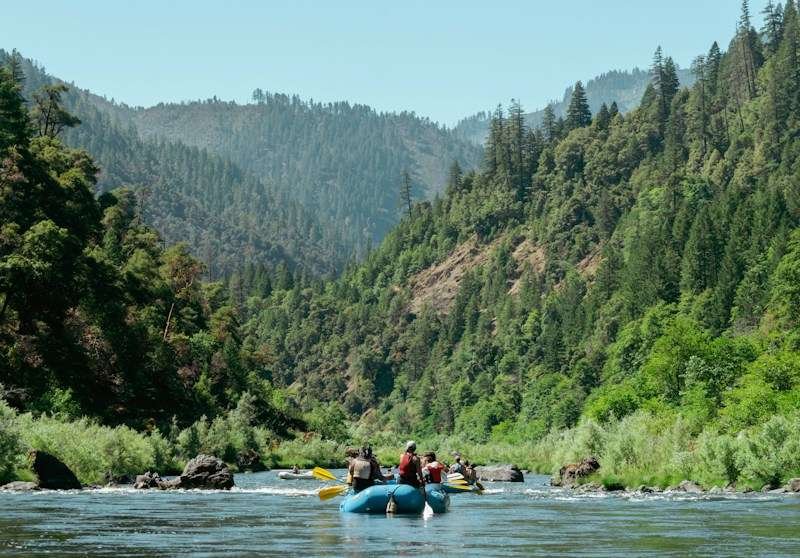
Board shorts or quick-dry athletic shorts over the bottom do two jobs: they keep your suit from sticking to the rubber tube of the raft (which happens more than you’d think, and it’s uncomfortable), and they add a layer of coverage for the river-bottom scramble if you swim a rapid. On top, a long-sleeve rash guard or a UPF sun shirt protects against sunburn that reflects straight off the water and against the chafing a PFD causes when it rubs bare skin for three or four hours straight.
The chafing point is easy to underestimate until it happens. A PFD’s leg straps and chest buckle stay cinched for the entire float, and bare skin rubbing against wet nylon webbing for hours adds up to raw patches by takeout, especially on the inner arms and along the collarbone. A thin, snug rash guard under the PFD solves this without adding real bulk, and it does double duty as sun protection on stretches of river with no shade.



Footwear That Won’t Wash Away
Flip-flops and loose sandals come off the first time a foot gets caught between a rock and the current, and barefoot is worse — rocky riverbeds and submerged debris cut feet up fast. Old sneakers you don’t mind getting wet, or strapped water sandals like Chacos or Tevas, are the two options guides actually recommend. Both stay on through a swim, which matters more than it sounds like until you’re the one climbing out of a rapid missing a shoe.
Long hair causes a smaller but real problem: helmets (required on most Class III+ trips) don’t fit well over a ponytail or a bun sitting high on the head. One or two low braids solve it, and they keep hair out of your face when a wave hits.
Cold-Water and Spring Rafting: When a Swimsuit Isn’t Enough
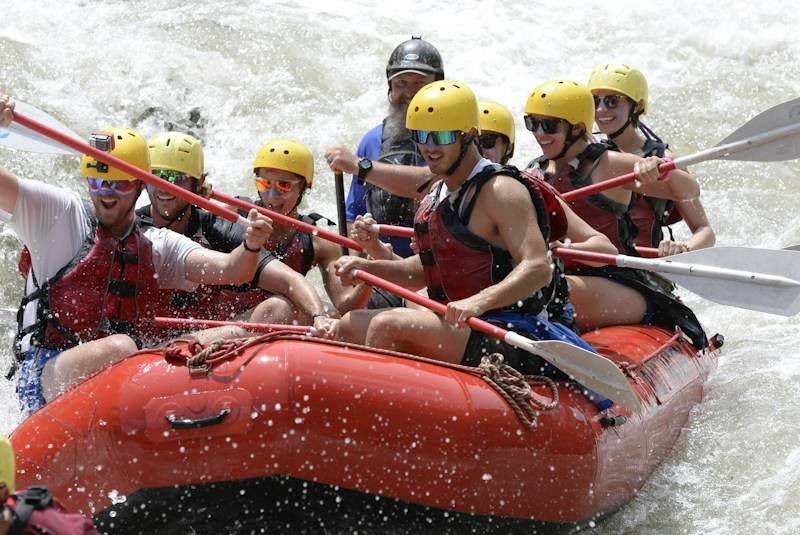
Snowmelt-fed rivers run cold well into June on most Western rivers, and spring releases on dam-controlled rivers like the Gauley can sit in the 50s even on a 90-degree day. On those trips, a swimsuit becomes a base layer under a wetsuit, not the whole outfit. Most outfitters rent farmer-john style wetsuits and splash jackets for exactly this reason — check before you buy a wetsuit of your own, since a one-day rental usually runs less than a decent pair of water shoes.
Wool socks under secured sandals or neoprene booties round out the cold-weather setup. The rule of thumb guides use: if the air temperature plus the water temperature adds up to less than 120, plan on a wetsuit, not just a suit and a splash jacket.
Watch: What to Wear Whitewater Rafting
Can You Wear a Regular Bikini Rafting?
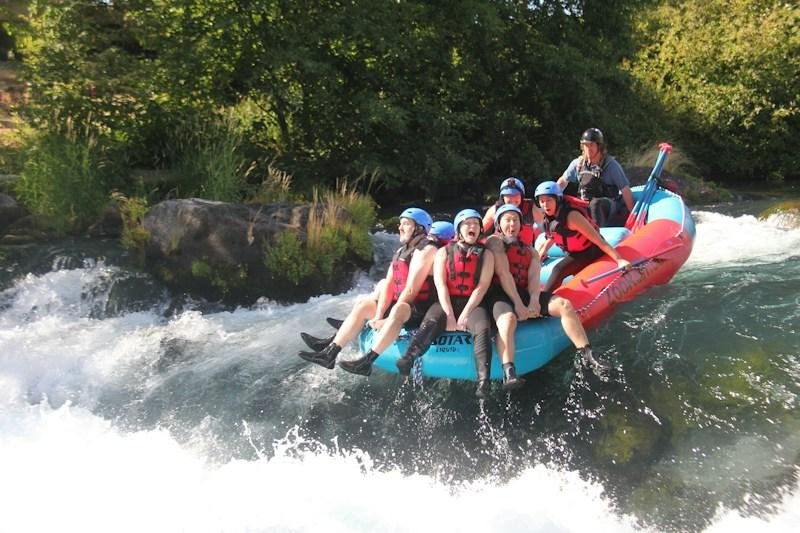
Technically, yes — no outfitter is going to turn you away at check-in for showing up in a triangle-top bikini. Practically, it’s a gamble that depends entirely on the water class. On a calm Class I–II float trip with the family, a regular bikini is fine under a loosely-fit life jacket. On anything Class III and above, the combination of a tight PFD, cold water, and real hydraulic force is enough to work a thin tie loose, and re-tying a bikini top mid-rapid is not a situation anyone wants.
The safer call, and the one most guides will actually say out loud if you ask: bring the cute bikini for the beach afterward, and wear the secure one-piece or sports-bra-top set for the water you’re actually running.
Packing This Alongside Other Water Days
If whitewater is one stop on a bigger trip, the same quick-dry, secure-fit logic carries over to calmer water too. Our kayaking swimwear guide covers suits built for a lower, more seated paddling position, and the boating swimwear picks work well for the float sections between rapids. Pack one secure suit for the whitewater day and save the string bikinis for the beach afterward.
A good rafting suit earns its place in your bag for every water trip after this one — it’s the one piece of swimwear that’s been stress-tested by an actual rapid, not just a lounge chair.
Sources
- What to Wear White Water Rafting (and what not to wear) — Adventures on the Gorge — outfitter guidance on fabric choice and footwear.
- What to Wear White Water Rafting and Advice from a River Guide — Voyageur Tripper — river guide advice on sports-bra-style tops and PFD fit.
- What to Wear Whitewater Rafting — REI Expert Advice — layering and cold-water wetsuit guidance.
- What To Wear To Go White Water Rafting — Andie Swim — swimwear-specific fit and coverage recommendations.