
Waterpark Swimwear: 7 Best Picks That Stay On All Day Long
A regular beach bikini and a water park bikini are not the same suit, even if they look identical on the hanger. A string top that stays put on a calm beach day can come untied in the three seconds it takes to launch down a body slide, and a cheeky bottom that looks fine poolside can ride up badly on a mat race or a speed slide. Water park staff see it every summer — someone adjusts their top at the bottom of the slide instead of enjoying the ride. The fix is picking swimwear built for the specific stress of slides, wave pools, and an entire day in chlorinated water, not just one that photographs well.
What Makes Swimwear “Waterpark-Ready”?
Three things separate a water park suit from a regular one: fit security, fabric durability, and hardware. A loose string bikini is the single most common wardrobe failure on a slide, because the g-force of a drop or a sharp turn puts sudden sideways pressure on a knot that was only ever designed to hold still water. Sewn straps, wide bands, and high-waisted bottoms with a solid waistband (not ties) all distribute that force instead of concentrating it on one tie.
Fabric matters just as much over a full day. Cheap spandex-heavy suits break down fast under repeated chlorine exposure and UV, going baggy and see-through by the second or third visit. Polyester and PBT-blend fabrics hold their shape and color far longer in heavily chlorinated water, which is exactly what most commercial water parks run. And on hardware: most parks explicitly ban exposed buckles, rivets, metal buttons, and zippers on slides, since those can scratch the fiberglass or catch on a rider behind you.

7 Best Waterpark Swimwear Picks
1. Sports-Bra Style Two-Piece — Best for Repeated Slide Runs
A wide, racerback-style top with a short-sleeve rash guard layer holds its position the way a thin triangle top never will. There’s no bow to work loose on the climb up a slide tower, and the extra coverage means less sunscreen reapplication between runs. This is the set most families end up buying twice — once for mom, once for a teenage daughter who wants to actually enjoy the slides instead of adjusting her top after every ride.
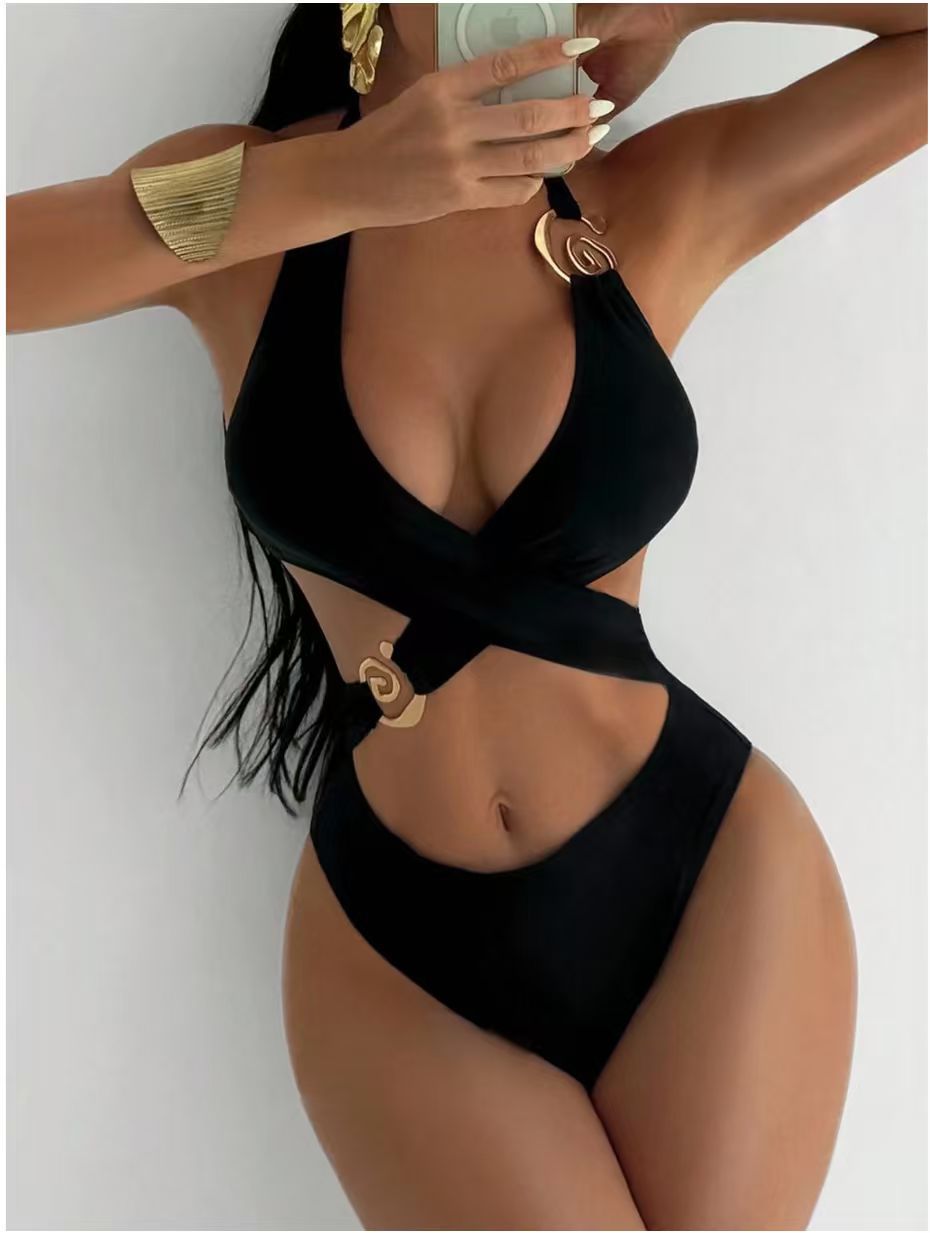
2. Secure One-Piece — Best for Big Body Slides
A one-piece removes the failure point entirely: no top to shift, no strap to slip off a shoulder mid-launch. A cut-out or lace-up style keeps some of the visual interest of a two-piece while still functioning as a single, continuous piece of fabric once you’re moving fast.
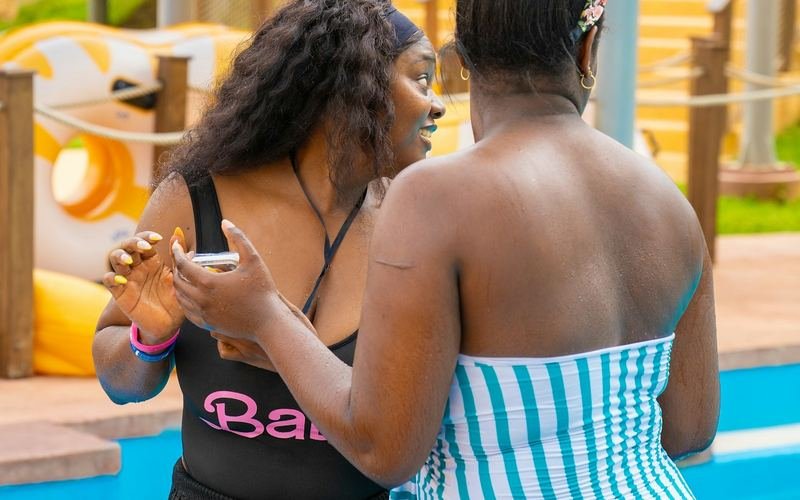
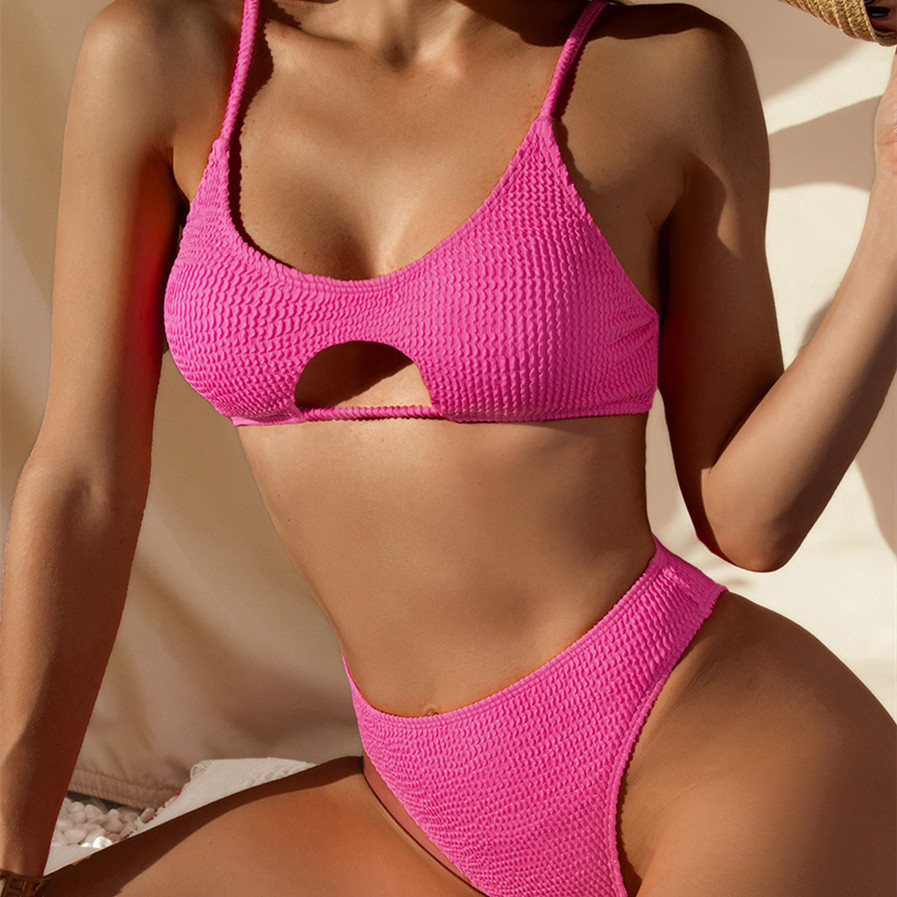
3. High-Waisted Bikini with Sewn Sides — Best for Wave Pools and Lazy Rivers
Wave pools push and pull a swimsuit in every direction at once, and a low-rise bottom with string ties is the first thing to shift. A high-waisted bottom with a solid, sewn waistband instead of side ties stays anchored through a wave surge the way a tied bottom can’t, and the higher coverage means less readjusting as you float the lazy river for the third time.
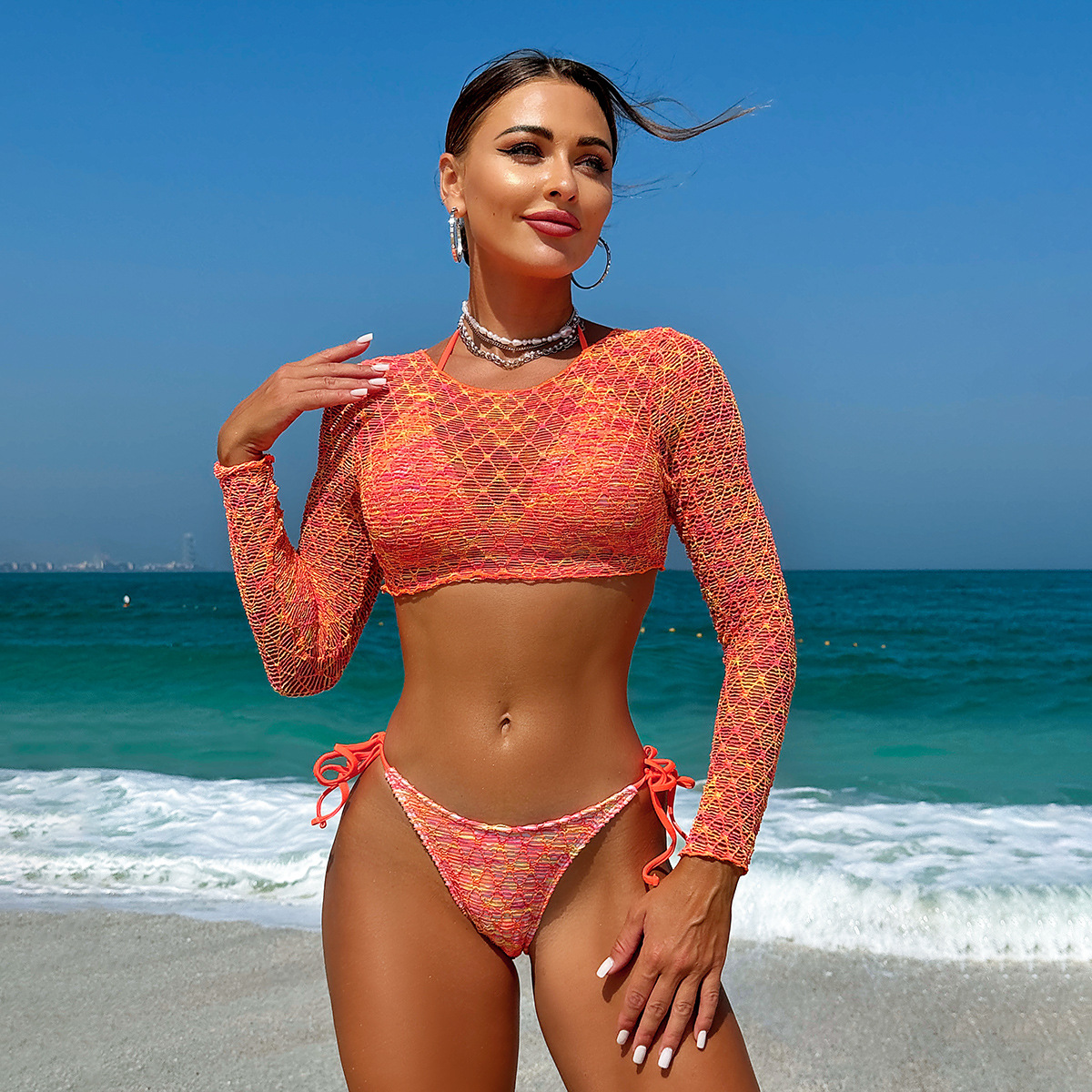
4. Long-Sleeve Mesh Rash Guard Set — Best for All-Day Sun
Water parks offer almost no shade near the slide queues, and sunscreen alone doesn’t hold up to six or eight hours of reapplication, swimming, and toweling off. A long-sleeve, UPF-rated set covers the torso and arms permanently, which matters most on the shoulders and upper back — the two spots that burn worst on a day spent climbing slide stairs in direct sun.
5. Quick-Dry Tankini — Best for Lounging Between Slide Runs
A water park day isn’t just slides — it’s hours of sitting on a towel, standing in line, and walking across hot concrete between attractions. A tankini with a fitted, secure bottom gives you tummy coverage for the lounging stretches without sacrificing the fit security you need the moment you’re back in a slide queue.
6. Chlorine-Resistant Fabric — Best for Multi-Day Trips
If the water park is part of a multi-day vacation, fabric durability matters more than it would for a single beach day. Standard spandex blends break down fast in heavily chlorinated commercial pools, going thin and losing elasticity within a handful of wears. Look for polyester or PBT-blend fabric specifically — it costs a little more up front and outlasts a basic suit by an entire season of regular chlorine exposure.
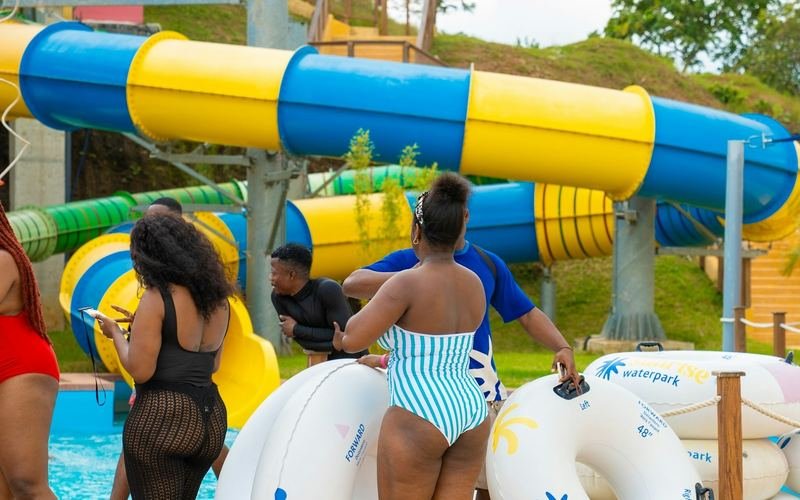
7. Wedgie-Proof, Hardware-Free Bottoms — Best for Actually Getting On the Slides
This one isn’t optional at most parks: swimwear with exposed buckles, rivets, metal buttons, zippers, or decorative chains is commonly barred from slides outright, since the hardware can scratch the fiberglass flume or snag a rider. A simple, snug bottom with fabric-only construction and a cut that won’t ride up on a fast slide clears every posted dress code and saves you the awkward moment of being pulled aside by a lifeguard at the top of the stairs.
What to Avoid at a Water Park
- String bikinis with thin ties — the knot that’s perfectly fine on a beach towel is the first thing to work loose on a drop slide.
- Anything with metal hardware — buckles, rivets, zippers, and metal buttons are banned on slides at most commercial parks, not just the extreme ones.
- Cheeky or thong-cut bottoms — many parks restrict these outright, and even where they’re technically allowed, they ride up badly on mat races and speed slides.
- Cotton anything — cotton cover-ups and tees soak through and stay heavy and cold instead of drying between rides.
- Loose, hanging fabric or long fringe — skirted bottoms and fringe trim can catch on slide mats and raft handles.
Do Water Parks Actually Enforce a Swimwear Dress Code?
Yes, more consistently than most first-time visitors expect. Chain water parks like LEGOLAND and DreamWorks post explicit swimwear policies barring exposed zippers, buckles, rivets, or metal ornamentation on any slide or attraction, and lifeguards are trained to stop riders at the top of the stairs if their suit doesn’t clear the rule. Smaller independent parks tend to enforce less strictly but will usually still turn away street clothes, cutoff jeans, or anything with a belt. The safest move is checking a park’s specific swimwear policy page before you pack, since the rules do vary slightly park to park.
Is a One-Piece Really Better Than a Bikini at a Water Park?
For the slides specifically, yes — a one-piece removes the two failure points (a top that shifts and a bottom that rides up) in a single garment. That doesn’t mean you have to give up a two-piece for the whole trip. A high-waisted, sewn-side bikini set with a sports-bra-style top performs almost as well as a one-piece on slides while staying a two-piece for the lazy river and tanning breaks in between. The suits to actually avoid are the ones built for a beach day, not a slide tower: thin triangle tops and tie-side bottoms.
Watch: What to Wear to a Water Park
What to Pack Alongside Your Swimsuit
A backup suit is worth the extra bag space on any water park trip. Suits snag on slide mats more often than you’d expect, and a damp, misshapen suit from the morning session is not something you want to put back on after lunch. Pack the spare dry and keep the wet one in its own bag — a dedicated wet bag or a plastic grocery sack both work, and it keeps a soaked suit from turning everything else in your tote damp by mid-afternoon.
High-SPF, sweat-resistant sunscreen matters more here than at the beach, since reapplying every two hours is realistic on a towel but nearly impossible between slide runs. A long-sleeve rash guard solves the gap for the torso and arms, leaving just face, neck, and legs to manage with spray or stick sunscreen between rides. Water shoes earn their keep too — concrete around a water park gets hot enough to burn bare feet by early afternoon, and they keep a foot from sliding out of a flip-flop halfway up a slide staircase.
Packing This Alongside Other Water Days
If the water park is one stop on a bigger trip, the same secure-fit logic carries over to other water activities. Our public pool etiquette guide covers the unwritten rules that apply just as much at a water park’s wave pool, and the water aerobics swimwear picks share the same chlorine-resistant fabric logic for suits that see repeated, heavy pool use. Pack one secure, hardware-free suit for the slides and save the delicate string bikini for the beach day after.
A suit that survives a full day of body slides, wave pools, and a lazy river has earned its spot in the regular rotation — it’s the one piece of swimwear that’s been tested by an actual drop, not just a lounge chair.
Sources
- Swimwear Policy — Fallsview Indoor Waterpark — posted park policy on banned hardware and swimwear requirements.
- Swimwear Restrictions — LEGOLAND California Water Park — official swimwear restriction list for slides and attractions.
- Does DreamWorks Water Park Have a Dress Code? — American Dream — confirms the hardware ban applies across major chain water parks.
- What to Wear to a Water Park: Dos and Don’ts — Attraction Tickets Direct — fabric and fit recommendations for slide-heavy days.
- The Ultimate Water Park Packing List for Every Crew — The Suburban — backup suit, sunscreen, and wet bag packing guidance.