
Swimwear Care Guide: How to Make Your Bikinis Last Longer
That gorgeous bikini you splurged on last summer — the one that made you feel like a goddess on the beach — doesn’t have to fade, sag, or pill after a handful of wears. Most swimwear retires early because of how we wash it, dry it, and store it, not because the fabric was bad. With a little care, a quality bikini or one-piece can stay vibrant and supportive for three to five seasons. Here’s exactly how to make that happen, no matter your shape, size, or how often you swim.
Why Swimwear Wears Out Faster Than Almost Anything Else You Own
Swimwear lives a hard life. Stretch fabrics like spandex, elastane, and Lycra are engineered to flex up to seven times their resting size — but every time they stretch and recover, microscopic fibres relax just slightly. Layer on UV rays, chlorine, salt, sand, sweat, sunscreen, and the occasional spin cycle, and the fabric starts to surrender.
The good news: most swimwear damage is preventable. The fabric isn’t fragile so much as it is sensitive to specific things. Once you know what those things are, the right routine becomes muscle memory in about a week.
The Pre-Swim Routine That Doubles the Lifespan
This is the single most overlooked step in swimwear care, and it costs nothing. Before you get into any pool or ocean, rinse your swimsuit with fresh, cool tap water. A quick shower while wearing it works perfectly.
Why? Saturated fabric absorbs less chlorine and saltwater. Chlorine in particular bonds aggressively with dry spandex, breaking down the elastic fibres on contact. A pre-soaked suit acts like a sponge that’s already full — it can’t drink in as much of the harsh stuff. If you’re heading to a chlorinated pool, this single habit can extend your swimsuit’s life by months.
How to Wash Your Swimwear Without Killing the Stretch
Forget the washing machine. Even on a delicate cycle, agitation, residual heat, and detergent buildup gradually cook the elastic out of your suit. Hand washing takes three minutes and easily triples the lifespan.
The 30-Minute Soak Method
- Fill a clean sink or basin with cool water — cold-ish, never warm.
- Add a tiny amount of gentle detergent: a teaspoon of baby shampoo, Woolite, or a dedicated swimwear wash like Forever New.
- Submerge the suit and gently swish for thirty seconds.
- Let it soak for fifteen to thirty minutes — no scrubbing, no wringing.
- Rinse two or three times in fresh cool water until the water runs clear.
- Press (don’t twist) the water out gently between your palms or in a clean towel.
That’s it. The whole process takes longer to read about than to actually do.
What to Avoid in the Wash
- Hot water — relaxes the elastane permanently.
- Bleach — yellows whites, weakens fibres, and fades prints.
- Fabric softener — coats stretch fibres so they can’t bounce back.
- Standard detergent in big doses — leaves residue that traps chlorine and oils.
- The dryer — heat is the number-one enemy of swimwear elastane, full stop.

Drying Done Right (This Is Where Most People Mess Up)
Never hang a wet swimsuit by its straps. Wet fabric is heavy, and gravity will stretch the straps out of shape within a few sessions. The same goes for clipping a wet bikini bottom by the leg openings — the elastic gives up fast.
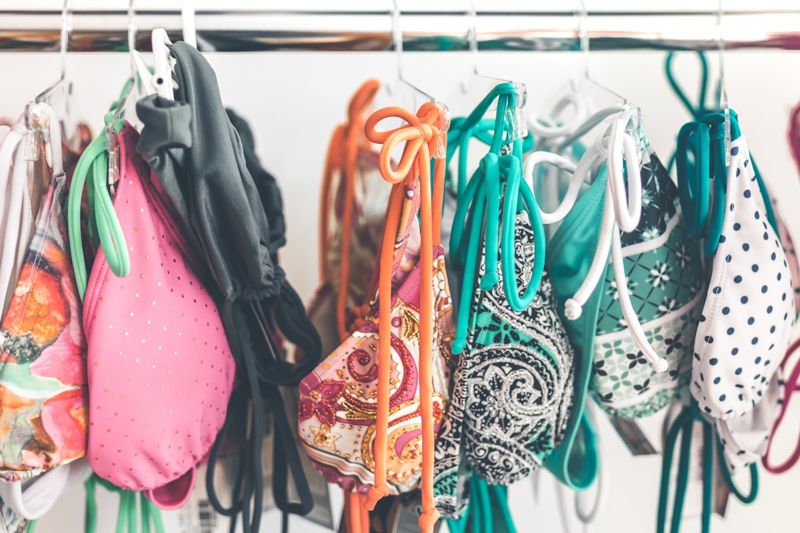
The pro move: lay the suit flat on a clean dry towel, in the shade, away from direct sunlight. Roll the towel up gently to absorb the bulk of the water, then unroll and let the suit air-dry flat. UV light is rough on dyes and elastane, so a shaded balcony or a drying rack indoors is ideal. If you’re traveling and need it dry fast, the towel-roll trick gets you to comfortably damp in about twenty minutes.
Storage Mistakes That Quietly Ruin Bikinis
How you put your swimwear away between wears matters almost as much as how you wash it. The hours your suit spends folded (or hung wrong) in a drawer add up fast.

- Fold, don’t hang. Hangers stretch shoulder straps even when dry. Lay suits flat in a drawer.
- Separate prints from whites. Migrating dye is real, especially if anything is even slightly damp.
- Use breathable bags for travel. A cotton drawstring pouch beats plastic, which traps moisture and grows mildew.
- Restore the cups. For padded bikini tops, gently push the cups back into shape after each wash so they hold their structure.
- Watch the metals. Hardware (rings, clasps, buckles) can rust if stored damp. Always one-hundred-percent dry before storage.
Sunscreen, Oils, and the Stains You Can Actually Remove
Mineral sunscreens with zinc or titanium dioxide are the worst offenders for white and pastel swimwear — they create yellowish stains that look like sweat marks. Self-tanner, body oil, and DHA-based bronzers are close runners-up, and they all bond fast.
Three rules handle about ninety percent of stains:
- Apply sunscreen 15-20 minutes before putting on your suit — let it absorb fully into your skin first.
- Treat stains the same day. Dried-in zinc and oils are nearly impossible to lift later. Fresh stains rinse out with cool water and gentle soap.
- For stubborn marks, make a paste of baking soda and water, dab it onto the stain, leave for thirty minutes, then hand wash as normal. Skip this on delicate metallic or printed fabrics.

Chlorine vs Saltwater: Which Is Actually Worse?
Both are rough on swimwear, but they damage in different ways.
Chlorine is the bigger villain. It’s a chemical that bonds with elastane, and the longer it sits in the fabric, the more it eats away at the stretch. Pool swimmers often see suits sag and lose colour within a single intense season.
Saltwater is gentler chemically, but the salt crystals that form when the suit dries are sharp and abrasive. Wearing the same dried-stiff suit straight back into the ocean grinds those crystals into the fibres and accelerates pilling.
The fix for both is the same: rinse in cool fresh water immediately after swimming. If you can’t wash it right away, at least soak it in fresh water in your hotel sink for ten minutes. Don’t let it dry crusty. For dedicated lap swimmers, a chlorine-resistant fabric like polyester PBT lasts dramatically longer in pool environments than a standard nylon-spandex blend.

When to Retire a Suit (and When You Can Still Save It)
Some signs are repairable. Others mean it’s time to let go and celebrate the seasons it gave you.
Save it:
- Loose threads — snip with sharp scissors, never pull.
- Slightly faded prints — wash inside out from now on to slow further fade.
- Stretched-out cups — rinse in cold water and reshape, or replace pads.
- A loose strap stitch — a tailor charges very little to fix this properly.
Retire it:
- Fabric has gone sheer or pilled heavily on the seat or bust.
- Elastic at leg or bust openings no longer recovers — it just stays loose.
- Yellowing in the lining that won’t lift after multiple soaks.
- Hardware has rusted, snapped, or left permanent marks.
A well-cared-for swimsuit lasts three to five seasons in normal beach use, or one to two seasons of dedicated lap swimming. If yours is fading after just a few wears, the issue is almost always heat (dryer, hot car, hot wash) or chlorine buildup that never got rinsed out.

The 60-Second Care Checklist
Pin this somewhere visible the first few times — it becomes automatic fast.
- Rinse the suit before every swim.
- Hand wash in cool water with a gentle, residue-free soap.
- Press water out, never wring or twist.
- Dry flat in the shade, on a clean towel.
- Fold and store dry, away from heat and direct light.
- Treat stains the day they happen.
- Rotate between two or three suits if you swim often, so each one gets a full rest day.
Embrace the Long Life of Quality Swimwear
Caring for your swimwear isn’t precious or fussy — it’s a tiny shift in routine that pays back in confidence. A suit that still fits like the day you bought it, with prints that haven’t faded and elastic that still hugs, makes you stand a little taller on the sand. Investing a few minutes after each beach day means you keep the pieces you love, in the colours you love, for years instead of months.
And when a suit truly does retire, you’ll know you got every wear out of it — which is the most body-positive, planet-positive thing a wardrobe can do.
Sources
- American Cleaning Institute — Laundry 101 and Delicate Fabric Care
- The Woolmark Company — Fabric Care Reference Guide
- Consumer Reports — Detergents and Stretch Fabric Care
- U.S. EPA — Chlorine in Drinking and Pool Water
Shop our full range of bikinis and swimwear at the BikiniCool store →