How to Triple Your Bikini’s Lifespan: The Swimwear Longevity Playbook
That bikini you fell in love with last summer? It can absolutely look this good for three more — if you treat it like the small, technical garment it actually is. Swimwear is one of the highest-stakes pieces in your wardrobe: a few square inches of stretch fabric expected to survive saltwater, sunscreen, sand, sweat, and chlorine, then look adorable on Instagram three minutes later. Most suits don’t die from being worn — they die from how they’re handled before and after.
This guide is the no-nonsense longevity playbook: a stack of small habits that compound into years of extra wear. None of it requires fancy gear, most of it takes under five minutes per swim, and every body deserves swimwear that holds its shape, color, and confidence boost for the long haul.
Why Swimwear Dies Faster Than It Should
Modern swimwear is built around a stretch fiber called elastane (also sold as Lycra or Spandex). It’s what gives your suit its hug, its bounce-back, and that snap feel when you put it on. Elastane is also surprisingly fragile — five common forces shred it from the inside.
- Chlorine — oxidizes elastane and breaks the chemical bonds that make it stretchy
- Saltwater plus heat — combines with sunscreen residue to dry out fibers
- Sunscreen oils — leave a film that traps chemicals against the fabric
- Friction — pool ladders, lounge chair concrete, hot tub jets
- Heat — tumble dryers, hot car trunks, even direct midday sun on the line
The bikinis you’ve watched go from vibrant to limp in a single summer didn’t fail you — they just didn’t get protected from those five attackers. The fix is layered: defense before the swim, gentle handling during, and a precise reset after.

The Pre-Swim Soak: Your 30-Second Insurance Policy
The single highest-leverage habit in swimwear care takes thirty seconds and happens in your bathroom sink. It’s the pre-swim soak: dunking your dry suit in cold tap water before you ever step into the pool or ocean.
Here’s why it works. Dry fabric is thirsty fabric. The first thing your bikini does at the pool is drink — and if it drinks chlorinated water first, those chemicals soak deep into the fibers and stay there. If you pre-soak with clean water, the fabric is already saturated when you hit the pool, so it absorbs far less of the bad stuff.
How to do the pre-swim soak
- Run cold tap water and submerge your dry suit for 30 to 60 seconds
- Gently squeeze (don’t wring) to push water through the fabric
- Wear it slightly damp — it dries on you in minutes
- In cooler weather, use lukewarm water so it’s not a shock when you put it on

In-Water Habits: Tiny Choices, Big Impact
Once you’re swimming, three small choices protect the suit you’re already wearing.
- Pick the gentler surface when there’s a choice — a fabric lounge cushion over rough concrete, sand over a pool deck, a teak ladder over a rusted metal one. Friction is invisible damage that adds up fast.
- Skip the hot tub when you can. Hot water plus chlorine plus jets is the trifecta that kills elastane fastest. If you do soak, designate one suit your hot tub bikini and rotate it.
- Apply sunscreen 15 minutes before you put your suit on. Lotion that bonds to skin doesn’t bond to fabric. Lotion applied after means oils press into the seams every time you move.

The 5-Minute Post-Swim Reset
The biggest mistake even careful swimwear owners make is treating rinsing as optional or as a once-a-day thing. Chlorine and salt don’t take breaks — they keep eating fibers as long as they’re in contact. The faster you rinse, the more years you bank.
The post-swim routine, step by step
- Within 30 minutes of getting out, rinse with cold fresh water — beach shower, hotel sink, the spigot at the pool gate, anywhere
- Squeeze gently from top to bottom — never wring or twist
- Roll in a clean towel and press to absorb excess water
- If you’re heading back to the room, store damp suits in a mesh bag, never plastic (mildew thrives in a sealed plastic bag inside a warm tote)
- Hang to air-dry in shade as soon as you can
This routine is what separates still snaps back after 80 swims from lost its shape in week three.

Hand Washing Like a Pro (No Machine Drama)
Once a week — or after every three to four wears, whichever comes first — your suit needs an actual wash, not just a rinse. The rules are short and worth memorizing.
- Cold water only. Always. Hot water is enemy number one for elastane.
- Mild detergent — a few drops of baby shampoo, a dedicated swim wash, or a gentle wool/silk wash
- No bleach, no fabric softener, no enzyme detergent. Most regular laundry detergents have enzymes that attack stretch fibers.
- Soak for 10 to 15 minutes, gently agitate with your hands, rinse until water runs clear
If you must use a washing machine, place each suit in a mesh delicates bag, run a cold delicate cycle, and never combine with zippers, hooks, or jeans. The friction inside a regular load is what shreds straps and weakens seams over time.

Drying Without the Damage
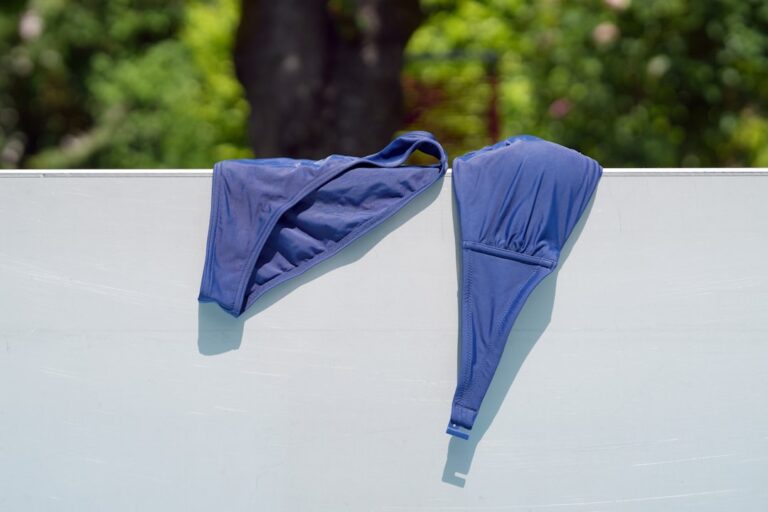
Heat is the silent killer in this whole equation. Your bikini survived the pool — don’t let your dryer finish the job.
- Never tumble dry — even on low, the heat fries elastane
- Lay flat on a clean towel, reshape gently, and air dry
- If you must hang, fold over a padded bar; clothespins leave permanent dents in cups and waistbands
- Dry in shade, not direct sun. UV light fades fabric the same way it fades upholstery
- Flip the suit halfway through to dry both sides evenly
Off-Season Storage: The Step Almost Everyone Skips
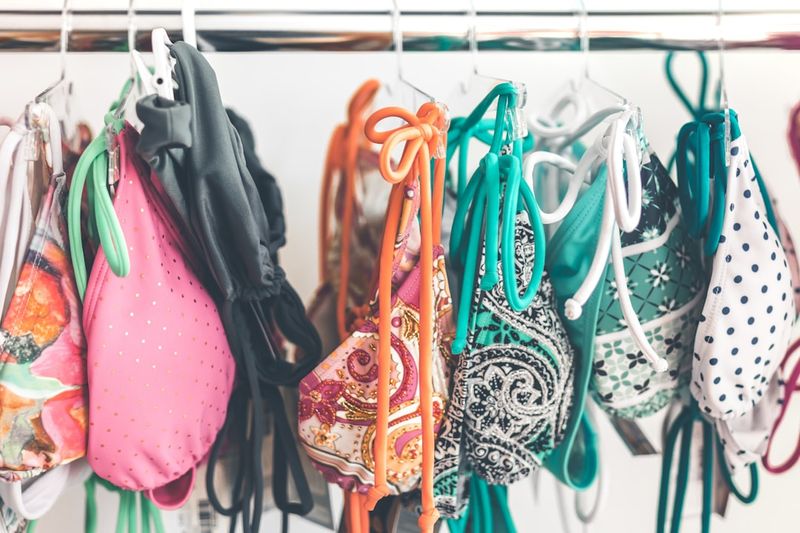
This is the step almost every swimwear guide skips, and it’s the one that decides whether your favorite suit survives the four months it’s out of rotation.
The wrong way: shoved damp into a drawer, folded with metal underwires pressing against the cups, jammed under five other suits. The right way:
- Make sure each suit is 100% dry — even a hint of moisture invites mildew
- Fold (don’t hang) for storage. Hanging stretches straps and stresses the elastane at the shoulders
- Stack flat in a breathable cotton drawer organizer or a fabric box
- Add a small sachet of cedar or lavender to deter pests and keep things fresh
- Store in a cool, dark place — not a sun-warmed closet shelf
For padded cups, slip a tissue paper ball inside each cup before folding. It keeps the shape so they don’t crease at the apex.
Reviving a Tired Suit Before You Retire It
Before you toss a faded, slightly stretched bikini, try one of these revival moves. Many ruined suits have one good comeback in them.
- Mineral build-up and dullness: soak in cool water with a tablespoon of white vinegar for 20 minutes, then rinse thoroughly
- Light pilling: use a fabric shaver on the lowest setting (never scissors — they snip stretch fibers)
- Stretched-out bottoms: a single cold-water hand wash followed by flat drying often restores 70 to 80% of the original shape
- Sunscreen yellowing on white suits: a gentle oxygen-based stain remover, dabbed and soaked cold, lifts most spots
- Lost color saturation: a navy or black suit can get one or two more seasons from a fabric-safe synthetic dye refresh — test on a hidden seam first
When It’s Honestly Time to Let Go
A suit is genuinely done when:
- The elastic is permanently wavy or rippled even after washing
- The lining bunches and won’t lay flat
- The color has faded unevenly in patches (chlorine bleach spots)
- The fabric goes sheer when wet in places it didn’t before
Don’t trash it. Most swimwear is recyclable through brand take-back programs (Outerknown, Patagonia, and several smaller eco-labels run them). Or cut the suit into sponge-sized pieces for use as gentle dish scrubbers and makeup pads. The fabric is too useful for landfill — and your next bikini is waiting.
Quick FAQ
How often should I actually replace a swimsuit?
With these habits, two to three years for everyday suits and four-plus for the ones you wear less. Without them, often a single summer.
Is the dishwasher really a good place to wash bikinis?
No. The hot drying cycle ruins elastane. The internet lies on this one.
Does sunscreen stain swimwear permanently?
Avobenzone and oxybenzone can yellow white and light-colored suits. Mineral sunscreens with zinc are gentler on fabric (and on reefs).
Are swimwear-specific detergents worth it?
If you swim more than once a week, yes. They’re pH-balanced for elastane and make a real difference over a season.
Can I freeze my bikini to set the color?
The freezer trick works for raw denim, not stretch fabric. Skip it for swimwear and stick with the cold-rinse routine instead.
Sources
- The Spruce — How to Wash a Swimsuit
- Real Simple — How to Make Swimsuits Last Longer
- The Lycra Company — Elastane Care Guidelines
- Sustain Your Style — Garment Care Guide
- The Good Trade — Eco Swimwear Care
Shop our full range of bikinis and swimwear at the BikiniCool store →