
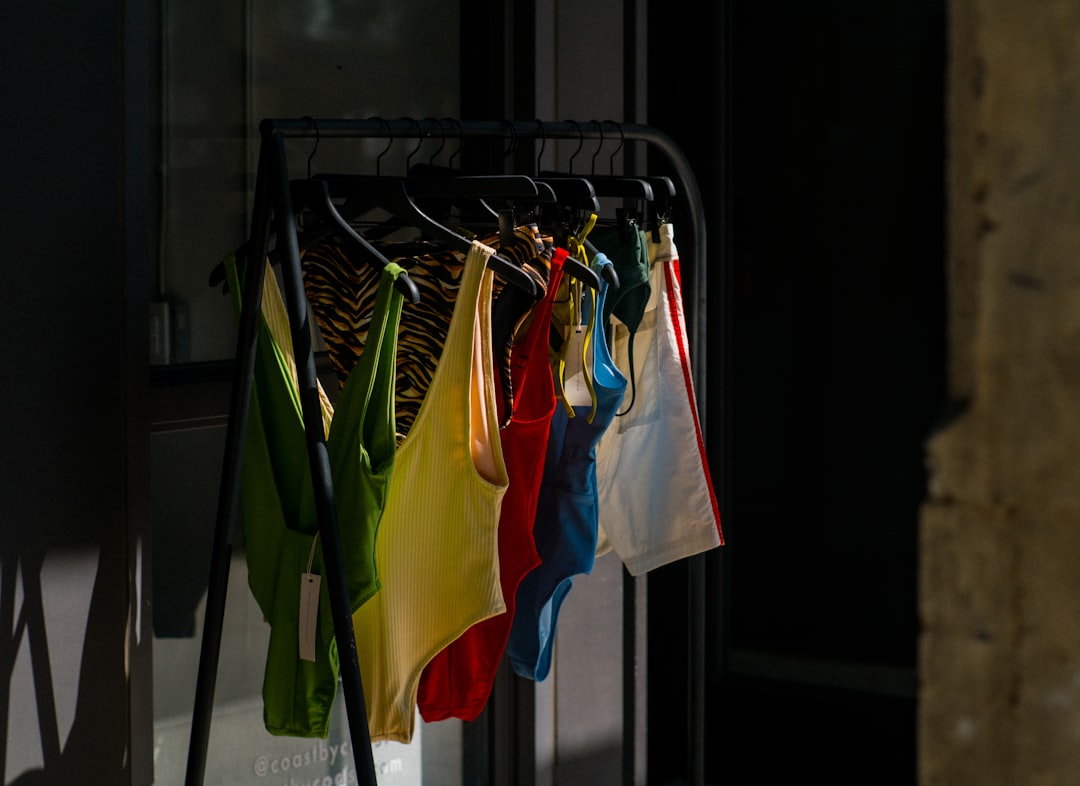
One-Piece vs Bikini: How to Choose the Suit for Your Day
Stand in front of any swimwear rack and you eventually face the same quiet question: one-piece or bikini? It sounds simple, but the choice carries more than fabric. It touches how you want to move, how much sun you want on your skin, how a waistband feels after lunch, and — honestly — how you want to feel when you catch your reflection in the changing-room mirror. There is no universally “right” answer here, and anyone who tells you otherwise is selling something. What there is, instead, is a set of honest trade-offs. Once you understand them, the decision stops feeling like a verdict on your body and starts feeling like what it actually is: a styling choice.
This is a comparison, not a competition. Most women who love the water end up owning both, reaching for one or the other depending on the day. So let’s walk through how a one-piece and a bikini really differ — in coverage, support, comfort, practicality, and the way each one tends to make people feel — so you can choose with clarity instead of guilt.

The Core Difference: Connected vs Separate
Strip away the marketing and the distinction is structural. A one-piece is a single, continuous garment that links the bust, torso, and hips. A bikini is two independent pieces — a top and a bottom — that you mix, match, and size separately. That one architectural fact is where nearly every practical difference between them comes from.
Because a one-piece is connected, it can distribute tension across the whole body. The shoulders, side seams, and leg openings work together, which is why a well-made one-piece can offer real lift and shaping without feeling like it’s fighting you. A bikini, being two separate pieces, trades that integrated support for flexibility: you can pair a D-cup top with a small bottom, or a sporty bralette with a high-waisted brief, and never worry that buying for your bust means a baggy seat or vice versa. Neither approach is superior. They’re just solving the body’s geometry in different ways.
Coverage and Sun: Skin, Comfort, and Confidence
Coverage is the most visible difference, and it pulls in two directions at once — how exposed you feel, and how much skin the sun can reach. A one-piece covers the midsection, which many people find reassuring on a long day at a public beach, on a paddleboard, or anywhere they’d rather think about the water than their waistband. Less exposed skin also means less surface area to apply (and reapply) sunscreen, and less risk of catching a burn on the parts of the torso that rarely see daylight.
A bikini does the opposite, and that’s frequently the point. More skin means a more even tan, faster cooling on a scorching afternoon, and the simple freedom of feeling the sun and breeze on your stomach. The trade-off is more diligent sun care: the midriff and lower back need attention they don’t get under a one-piece. If you tan easily or burn easily, this practical detail matters more than any style trend.
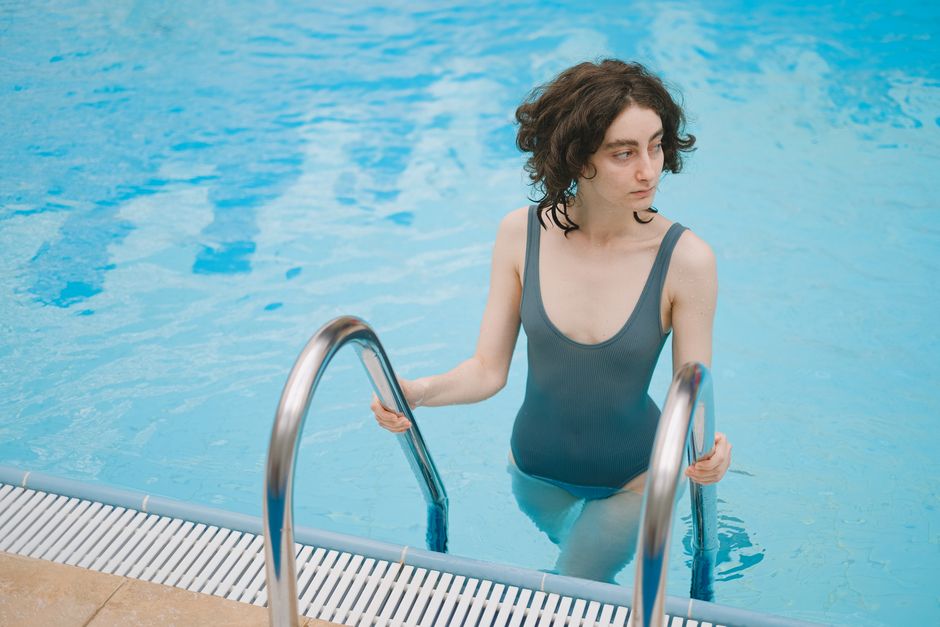
It’s worth saying plainly: coverage is not modesty, and exposure is not vanity. A one-piece is not “more appropriate” and a bikini is not “braver.” These are tired scripts. Coverage is a comfort and practicality dial, and you’re allowed to set it wherever you like on any given day — high for a windsurfing lesson, low for a lazy poolside read, and anywhere in between.
Support: Where the Bust Really Decides
If you have a fuller bust, support often becomes the deciding factor — and here the two camps split in an interesting way. A one-piece can build support directly into its frame: a hidden shelf bra, power-mesh lining, wide-set straps, and a band that anchors around the ribcage all working as one system. For high-impact swimming or simply for all-day security, that integrated structure is hard to beat.
But bikinis have quietly closed the gap. Underwired tops, molded cups, sized band-and-cup tops (think 32D, 36DD rather than vague S–M–L), and wide racerback designs now deliver genuine support in two-piece form. The advantage of the bikini route is precision: you size the top to your bust and the bottom to your hips independently, which can fit a pear or hourglass shape better than a one-piece cut to a single proportional template.
If support is your priority, look past the silhouette and inspect the engineering — band width, strap placement, and whether the cups are structured or just printed fabric. A supportive bikini top can outperform a flimsy one-piece, and a thoughtfully built one-piece can outperform a pretty-but-hollow bikini. The category name tells you almost nothing; the construction tells you everything.
Shop Underwire Support One-Piece Swimsuits on Amazon →
There’s one more variable worth naming plainly: your bust and your hips may not wear the same size on any chart, and most people’s don’t. A one-piece is cut to a single proportional template, which is why so many one-piece shoppers end up choosing between a top that fits and a leg opening that gapes, or the reverse. A bikini sidesteps that mismatch entirely — you can buy a 34D top and a size-8 bottom without either one compromising the other. If sizing frustration has ever chased you out of the one-piece rack, that’s not a flaw in your body. It’s the structural limit of a single connected garment, and it’s exactly the kind of practical detail that should factor into your decision more than any style chart.
Comfort and Movement: The Everyday Test
Comfort is personal, but a few patterns hold true. A one-piece tends to stay put: when you dive, get dumped by a wave, or hoist yourself onto a pool ledge, there’s no top to readjust and no bottom to fish back into place. For active swimming, water aerobics, surfing, or chasing kids across the sand, that reliability is a real, underrated luxury.

The one-piece’s weakness is the bathroom and the temperature gauge. Peeling a wet one-piece down for a quick toilet break is nobody’s idea of fun, and a single layer of fabric over the whole torso can feel warm on a still, humid afternoon. A bikini wins decisively on both counts: changing is effortless, cooling is instant, and you can take the top off discreetly under a cover-up to dry. For long beach days punctuated by snacks, drinks, and bathroom runs, that convenience adds up.
Movement also depends on what you’re doing. Lap swimming and serious water sport lean one-piece. Sunbathing, wading, and social pool-lounging lean bikini. Be honest about how you’ll actually spend the day rather than how you imagine an idealized beach trip — the suit that matches your real plans is the one you’ll be glad you wore.
Styling and Versatility
Style is where the comparison gets genuinely fun, because both have grown far beyond their old stereotypes. The one-piece is no longer the “sensible” default your aunt wore. Plunging necklines, high-cut legs that lengthen the body, cut-outs, ruching that flatters the midsection, and bold prints have turned it into a fashion statement. A sleek one-piece doubles brilliantly as a bodysuit under a skirt or wide-leg trousers, walking straight from the beach bar to dinner with nothing more than a change of bottoms.
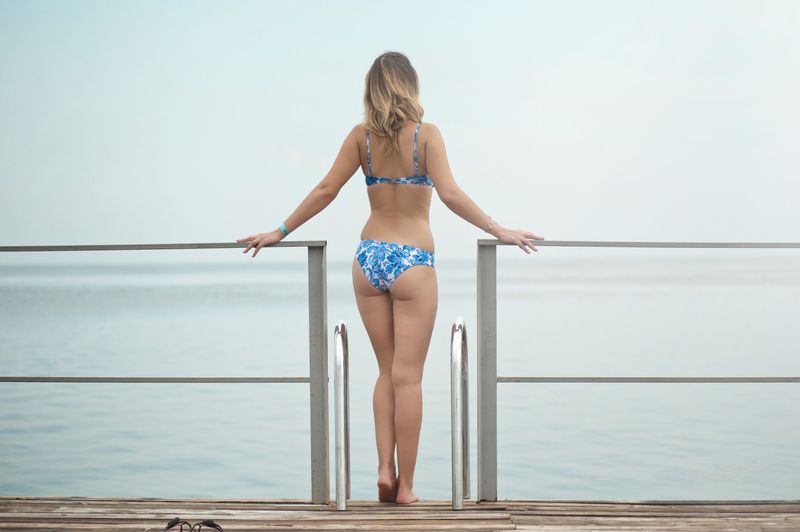
The bikini’s superpower is combinatorial. Three tops and three bottoms quietly become nine outfits, and you can refresh your look mid-season by adding a single new piece rather than a whole suit. Mixing a printed top with a solid bottom, or a bandeau one day and a halter the next, keeps a small swim wardrobe feeling fresh. If you value variety and like to play with proportion, the two-piece simply offers more levers to pull.
Shop Mix-and-Match Bikini Sets on Amazon →
Cost, Care, and Longevity
On price, the picture is muddier than it looks. A one-piece uses more fabric and often more internal structure, so a quality piece can cost more upfront. But you’re buying one coordinated garment that always matches itself. With bikinis, you might replace just the top when the elastic in your favorite bottoms is still going strong — or end up buying more pieces over time precisely because mixing is so tempting. Neither is reliably cheaper; it depends on how you shop.
Care is identical for both: rinse in cool fresh water after every swim to flush out chlorine and salt, hand-wash gently, and dry flat in the shade rather than wringing or tumble-drying. The one structural note is that a one-piece concentrates stress around the seat and shoulder seams, while bikini bottoms take the most wear at the waistband — so those are the spots to check first when you’re deciding whether a suit still has life left in it.

Forget “Flattering” — Choose for How You Want to Feel
Somewhere along the way, swimwear shopping got tangled up with the idea that certain bodies “should” wear certain suits. You’ve heard the rules: one-pieces for tummies, bikinis for flat stomachs, this cut to “hide” that, that cut to “balance” this. It’s worth letting those rules go. A bikini is not a reward for a particular body, and a one-piece is not a place to hide. Every body — round, soft, athletic, scarred, stretch-marked, post-surgery, postpartum, or simply older than it used to be — belongs at the beach in whatever it likes.
The best swimsuit isn’t the one that hides the most or shows the most. It’s the one you stop thinking about the moment you step into the water.
So flip the question. Instead of “what flatters me,” ask “what lets me forget I’m being looked at?” For some, that’s the held-together security of a one-piece. For others, it’s the sun-on-skin ease of a bikini. Both answers are correct, and yours can change with your mood, your destination, and your decade. Confidence isn’t a coverage level — it’s the feeling of wearing something that fits, holds where it should, and matches what you came to the water to do.
A Simple Way to Decide
When you’re stuck at the rack, run through a quick mental checklist. What’s the activity — serious swimming and sport, or lounging and tanning? How much sun do you want on your midsection? Do you need built-in support, or will a sized top handle it? Will you need easy bathroom breaks across a long day? And, above all, which one makes you want to walk out the door rather than rearrange a sarong over yourself?
Lean one-piece when the day is active, the swimming is real, the sun is fierce on bare skin, or you simply love the clean, sculpted line of a single garment. Lean bikini when you want flexible sizing, an even tan, easy changes, mix-and-match variety, and the breeze on your stomach. And remember that “both” is the most sensible answer of all — a versatile one-piece for the swim-and-sport days and a couple of mix-and-match bikinis for the lounge-and-tan ones cover nearly every occasion a summer can throw at you.
Shop Women’s Swimwear on Amazon →
One-piece or bikini isn’t a test you can pass or fail. It’s a choice between two good tools for the same joyful job — getting you into the water feeling like yourself. Buy for the day you’re actually going to have, care for whatever you choose so it lasts, and let “flattering” stay at home. The water doesn’t care which one you picked. It’s just glad you came.
Go Deeper: The Full One-Piece vs Bikini Series
This guide covers the fundamentals, but a few situations deserve their own deep dive. If one of these sounds like your actual day, read on:
- Swimming, surfing, or serious water sports — how each silhouette holds up once the water gets physical
- Packing for a trip — packing space, drying time, and which one doubles as an outfit
- Building a small swim wardrobe — how many suits you actually need and where to spend
- Sun, heat, and sweat — which one keeps you cooler and better protected on a scorching day
- Where the rivalry actually came from — the surprising history behind both suits
Sources
- Wikipedia — Swimsuit (history and styles)
- Wikipedia — Bikini
- Skin Cancer Foundation — sun protection guidance
Shop our full range of bikinis and swimwear at the BikiniCool store →