Swimwear for Every Body Type: Why the Old Charts Fail
Somewhere along the way, shopping for a swimsuit turned into a diagnosis. Pick your fruit — pear, apple, hourglass — then follow the rules assigned to it. Minimize this, draw the eye away from that, create the illusion of something you apparently don’t already have. It’s exhausting, and here’s the quiet truth almost nobody says out loud: those charts were never really about helping you find swimwear for every body type. They were about sorting bodies into problems, then selling you the fix.
This guide takes a different route. Instead of telling you what to hide, it walks through how swimwear actually behaves on real bodies — how cut, fabric, and support work — so you can shop by what you want to feel and do, not by which cartoon shape someone decided you resemble. The goal isn’t a suit that ‘flatters’ by making you look like someone else. It’s a suit that lets you stop thinking about your body and get in the water.

Why the Body-Type Charts Quietly Fall Apart
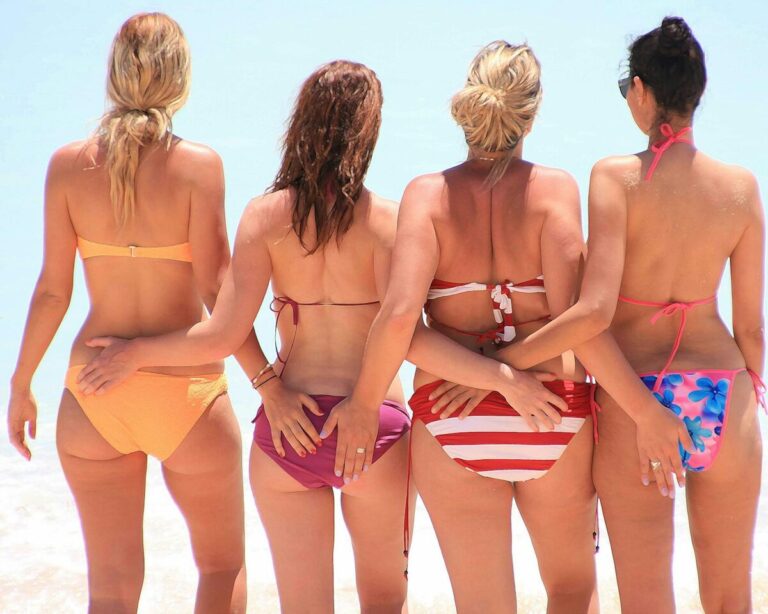
The ‘fruit’ system has an obvious flaw once you look at it directly: most people don’t fit one shape, and the ones who do don’t stay there. Weight shifts across a month, a year, a life. Posture, muscle, where you carry softness — none of it maps cleanly onto five neat categories. Stand ten people labeled ‘hourglass’ side by side and you’ll see ten different torsos, busts, and hip-to-waist ratios. A chart that produces the same advice for all of them isn’t precise. It’s a horoscope.
There’s a deeper problem, too. The charts almost always frame one part of you as the thing to ‘balance out’ or ‘distract from.’ Broad shoulders? Counter them. Fuller tummy? Camouflage it. The entire logic assumes your body is a set of flaws to be managed rather than a whole thing that gets to exist at the beach. Once you notice that framing, it’s hard to unsee — and once you drop it, swimwear shopping gets dramatically simpler.
A swimsuit’s job is to stay put, feel good, and let you move. Everything else is marketing.
Start With the Day, Not the Diagram
The single most useful question isn’t ‘what’s my shape?’ It’s ‘what am I doing in this suit?’ A day of actual swimming asks for very different things than an afternoon of reading on a lounger, and a suit that’s perfect for one can be miserable for the other. When you shop by activity first, fit decisions almost make themselves.
If you’re moving in the water
Swimming laps, chasing kids, bodysurfing, snorkeling — anything with real motion rewards security over everything else. You want straps that don’t slide, a bottom that stays where you put it, and enough compression that you’re not doing a mid-wave adjustment. This is where a well-built one-piece or a sporty bikini with a proper racerback earns its place, regardless of your measurements. Fixation on ‘shape rules’ here just distracts from the only metric that matters: does it hold?
Look for thicker straps, bound (not just folded) edges, and a bit of built-in structure through the torso. If you have a fuller bust, underwire or a sewn-in shelf with real bands makes the difference between comfort and a long day of hiking straps back up.
Shop Racerback Athletic One-Piece Swimsuits on Amazon →

If you’re mostly lounging
Sunbathing, sipping, wandering the boardwalk — comfort and easy coverage lead here. This is the moment for softer fabrics, adjustable ties, and pieces that transition well under a cover-up. A high-waisted bottom you can actually breathe in, a bandeau you don’t have to guard, a tankini that lets you grab lunch without a full outfit change — these are practical wins, not shape ‘corrections.’
Because you’re not fighting waves, you have more room to play with cut and print. This is where personality lives — the color you love, the tie you like fussing with, the neckline that makes you feel like yourself.

What Actually Changes How a Suit Sits
Forget shape charts for a second and learn the levers that genuinely matter. These apply to every body in existence, and once you understand them you can walk into any shop and read a suit on sight.
Fabric weight and lining
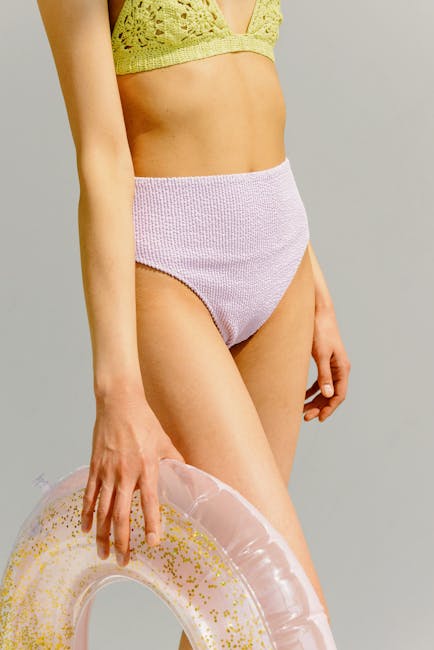
Thicker, double-lined fabric with a good percentage of elastane holds its shape, resists going sheer when wet, and gives gentle, even support without squeezing. Thin, single-layer fabric clings to every line and loses its stretch faster. If a suit feels flimsy on the hanger, it will feel flimsier in the water. This one variable affects comfort and longevity more than any silhouette rule.
Where the seams land
Seams, ruching, and paneling create structure. Ruching along the sides doesn’t ‘hide’ anything — it adds stretch and forgiveness so a single size fits a wider range of torsos comfortably. Vertical seaming builds support into a one-piece. Princess seams around a bust cup shape the fabric to hold you. Read seams as engineering, not as slimming tricks, and you’ll pick better suits.
Straps, bands, and the coverage you choose
Adjustable straps and a firm underband are what make a top actually supportive — not the cup size printed on the label. For bottoms, coverage is pure preference: cheeky, moderate, or full-brief all ‘work’ equally; the only wrong choice is the one you keep tugging at. If you spend the day adjusting, the problem is fit, not your body.

The Fitting-Room Test That Beats Any Chart
Here’s a routine that tells you more than a size tag ever will. In the mirror, do four things: raise both arms overhead, bend forward at the waist, sit down, and give the straps a firm tug. A suit that passes all four — no gaping, no rolling, no digging, no escaping — is your suit, full stop. It doesn’t matter what shape someone says you are; it stayed put through everything you’ll actually do in it.
Two more quiet signals of a good fit: the band or waistband should feel snug but leave no deep red marks when you take it off, and the fabric should lie smooth without pulling into stress lines across the front. Red marks and stress lines mean size up, not that you’re ‘too much’ for the suit. A garment is supposed to fit you — never the reverse.
And a note on sizing that saves a lot of grief: swimwear sizing is wildly inconsistent between brands, and it runs small more often than not. Ordering two sizes and sending one back isn’t a personal failure — it’s just how you win at a category with no standardization.
Building a Small Swim Wardrobe That Covers Everything
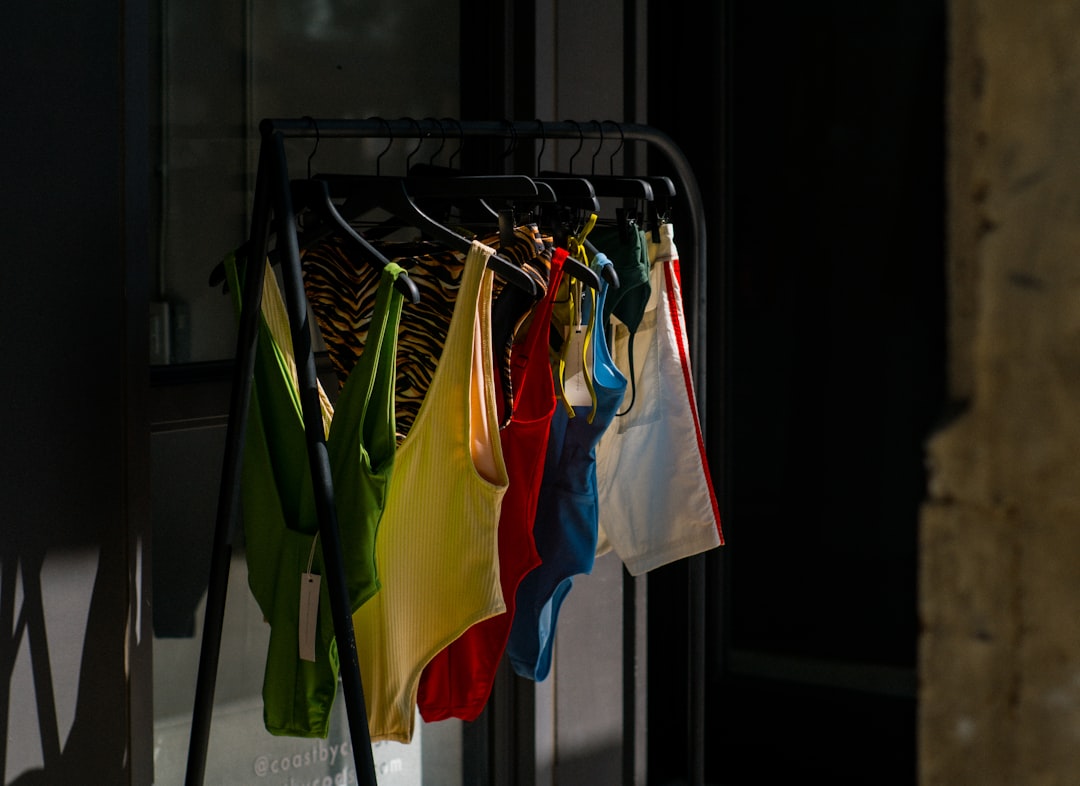
Instead of hunting for one mythical suit that does it all, most people are happier with two or three that each do one thing well. A secure one-piece or sporty two-piece for active days. A relaxed, easy piece for lounging. And, if you like variety, one ‘feel-amazing’ suit in a color or cut you genuinely love — the one you reach for when you want a lift.
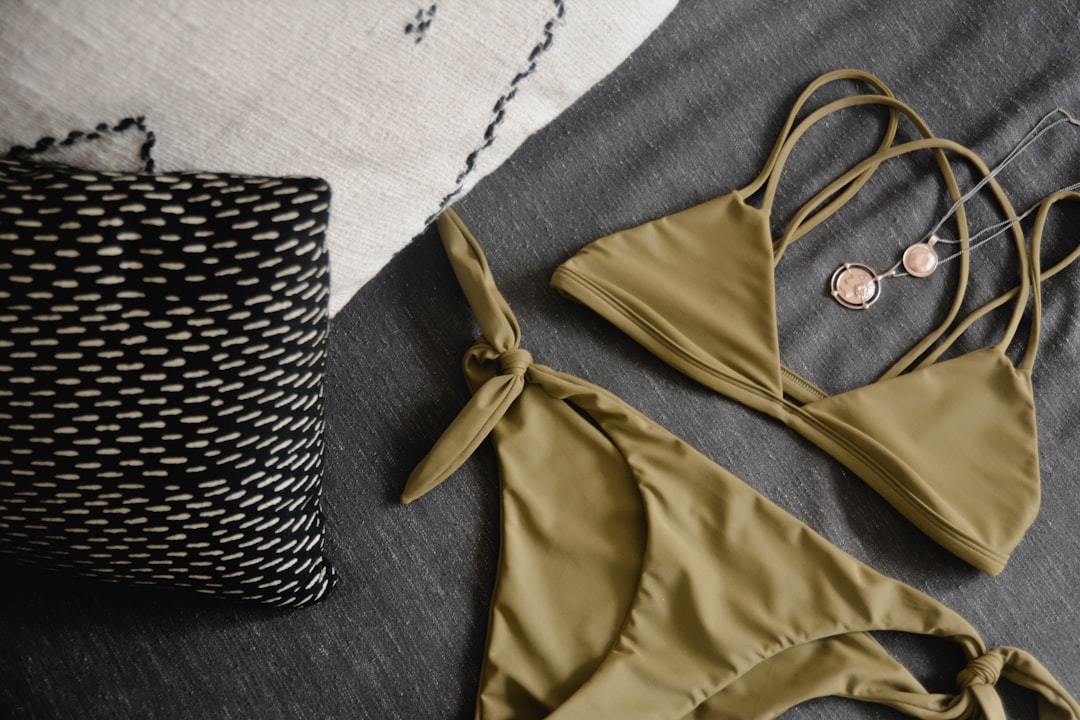
Separates quietly solve the mismatch problem so many people run into, where the top and bottom that fit them aren’t the same numbered size. Buying a top and bottom independently means a fuller bust and a smaller hip (or the reverse, or any combination) can each get the right fit instead of compromising in a fixed set. It’s the most body-friendly move in swimwear, and it has nothing to do with shape charts.
Shop Mix-and-Match Bikini Separates on Amazon →
Round it out with a cover-up or kaftan you can throw on for the walk to the water and lunch afterward, and a rash guard if you burn easily or want more sun protection during long days out. Neither is a compromise on style — both just extend how long you’re comfortable staying out, which is the whole point.
Shop Women’s Swim Cover-Ups & Kaftans on Amazon →
The Confidence Part Nobody Sells You
Here’s what the industry rarely mentions because there’s no product attached: the people who look most at ease in swimwear aren’t wearing a specific cut. They’ve just stopped auditing themselves. Confidence at the beach is less about the suit and more about deciding, before you walk out, that your body is allowed to be there exactly as it is. The right suit supports that decision. It can’t make it for you.
So when you shop for swimwear for every body type — including your own — flip the whole process. Don’t ask what your body needs to be corrected into. Ask what you want to do this summer, pick fabric and fit that let you do it, and use the four-move fitting test to confirm it stays put. The chart on the wall of the department store was never the expert. You, in the mirror, arms overhead and grinning, are.
Sources
- Wikipedia — Swimsuit: history, construction, and styles
- NHS Live Well — sun safety and skin protection guidance
- American Academy of Dermatology — sun protection and UV clothing
Shop our full range of bikinis and swimwear at the BikiniCool store →