Animal Print Swimwear: 7 Best Looks for 2026
Leopard print has outlasted nearly every swimwear trend of the last decade. It was on the racks in 2016, it was there in 2021, and Pantone-driven color forecasts change every season while the spots stay put. That staying power is the whole argument for buying a piece: animal print swimwear is one of the few “trends” you can wear for five summers without it dating you. This guide covers which prints are worth your money in 2026, how to pick a scale that flatters your shape, and how to style it so you look pulled-together instead of costumey.

Why animal print swimwear keeps coming back
Fashion recycles most trends on a roughly twenty-year loop, but animal print refuses to leave. It first hit mainstream swimwear in the 1950s on pin-up silhouettes, resurfaced hard in the 1980s, and has never fully cycled out since. The reason is practical, not sentimental: a busy print hides everything a solid color reveals. Water spots, slight puckering at the seams, the shadow line where a suit digs in — a leopard pattern breaks all of it up. A flat coral one-piece shows every one of those things in direct sun.
The truth is, most people who avoid animal print think it is louder than it actually is. On the rack it shouts. On the body, a small-scale leopard behaves like a warm neutral, the same way a tweed or a subtle plaid does in tailoring. That is the mild case I will make throughout this guide: leopard is not a risk. It is the easiest bold print you can own.

The animal prints that matter in 2026
Not every animal print is having a moment, and a few are quietly on their way out. Here is where the four main families stand this season, based on what is actually filling swim racks and try-on hauls rather than runway one-offs.
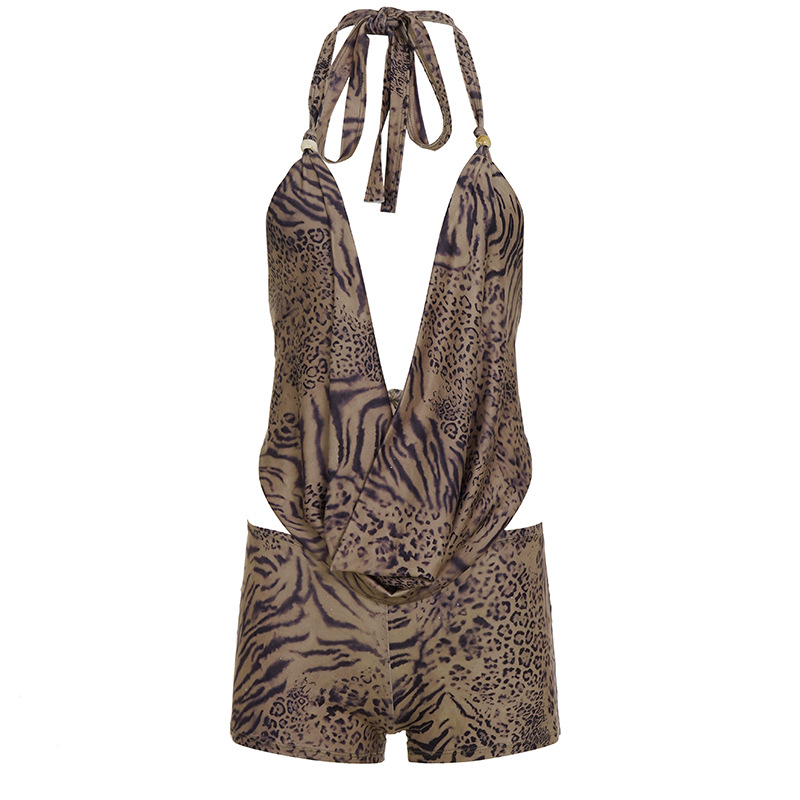
- Leopard — the anchor. Warm tan, gold, and black spots. The most forgiving and the most versatile. If you buy one animal print this year, buy this.
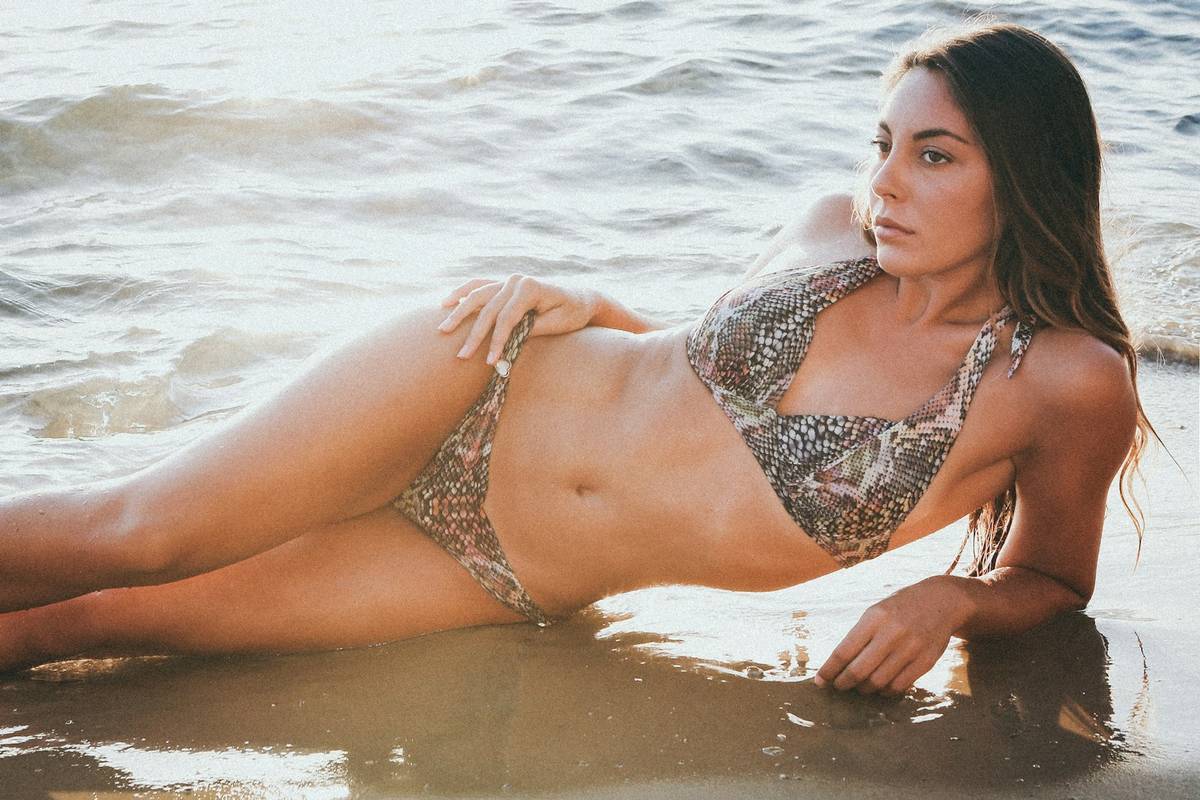
- Snake and python — the sleeper hit of 2026. Cooler tones, tighter pattern, reads more architectural than playful. Flattering because the print is small and dense.
- Zebra — high contrast and high drama. Slimming through vertical stripe illusion, but it demands confidence and simple styling to avoid looking like a costume.
- Tortoise and giraffe — the large-scale, blocky prints trending on one-pieces. Best on taller or longer frames where the pattern has room to breathe.
My pick for someone testing the water: a tan leopard bikini or a snakeskin two-piece. Both do the heavy lifting of looking intentional without asking you to commit to full zebra on day one.
How to pick an animal print that flatters your body
The single most useful rule is scale. Match the size of the print to the size of your frame. A petite frame gets overwhelmed by a giant tortoise-shell splotch, while a small, tight leopard keeps proportions intact. If you are taller or curvier, you can carry a larger print, and it actually helps — the bigger pattern is proportional to you and does not look busy.
Where you place the print matters just as much as its size. Want to draw the eye up? Put the pattern on the top and pair it with a solid black bottom. Want the reverse? Flip it. This is the same proportion logic that governs any swimsuit choice, printed or not — we broke it down fully in our guide to swimwear proportion and balance. Animal print just gives you an extra lever to pull.
Color temperature is the quiet third factor. Classic leopard is warm, so it flatters golden and olive undertones effortlessly. If your skin is cooler, reach for a snake or a gray-based leopard instead of the orange-tan version. We go deep on this in our breakdown of the best swimsuit colors for your skin tone — the undertone rules apply to prints too.
How do you style animal print without looking costume-y?
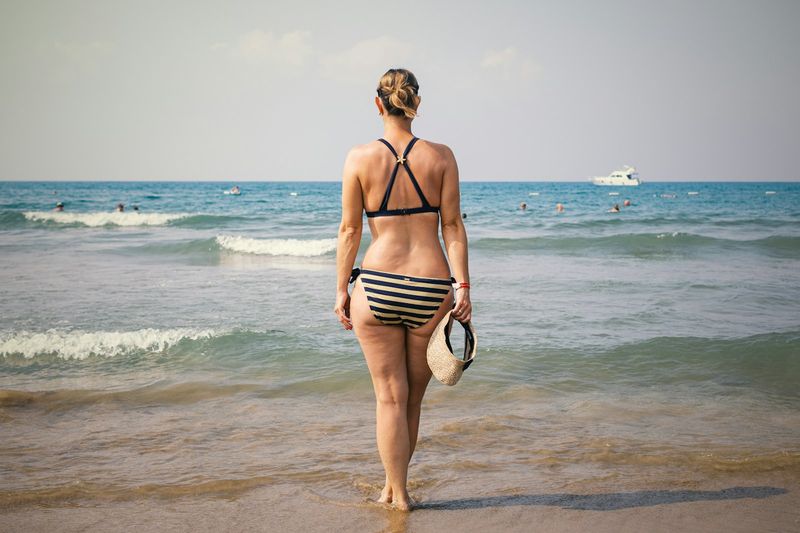
The line between chic and costume is almost always the styling, not the suit. The fix is restraint: let the print be the only loud thing you are wearing. Pair a leopard bikini with a plain linen cover-up, a straw hat, and gold hoops — nothing that competes. The moment you add a second print or a clashing neon, the whole look tips into try-hard.
Cover-ups do the most work here. A solid black kaftan or a neutral crochet dress over an animal print reads expensive and considered. If you want a full styling framework for the over-the-suit layer, our guide to what actually makes swimwear flattering covers how coverage and proportion interact once you add layers. Keep footwear and bags in tan, black, or gold, and you cannot go wrong.

Wearing a bold print when you feel self-conscious
Plenty of people love the look of animal print on the hanger and freeze when it comes to wearing it. That hesitation is normal, and it is worth naming: a loud print draws the eye, and if you are already worried about being looked at, that feels like the opposite of what you want. Here is the reframe that actually helps — the print draws the eye to the pattern, not to you. Observers register “leopard swimsuit” before they register any detail of the body underneath. A busy print is genuinely more forgiving than a plain suit, not less.
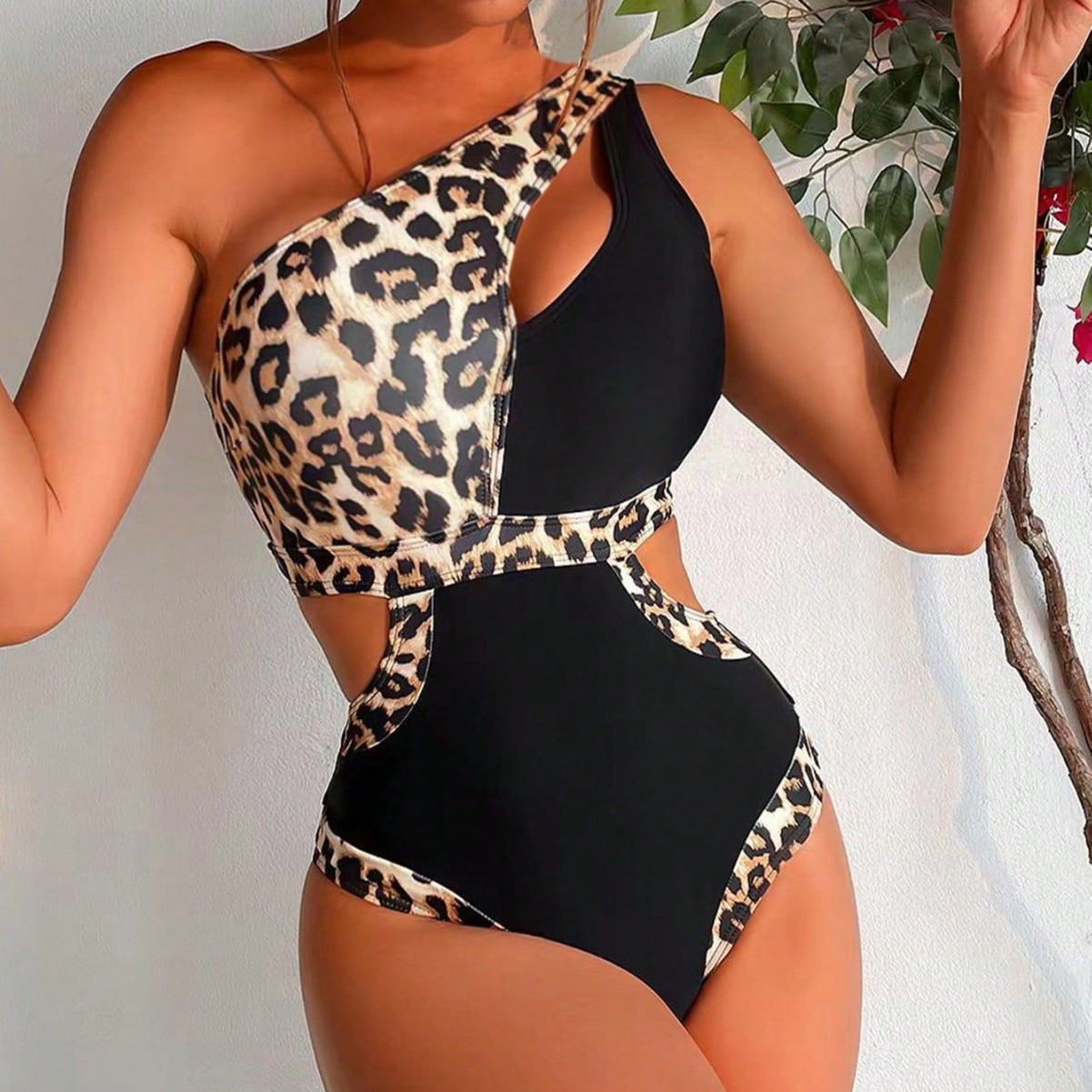
Start with a one-piece or a high-waisted animal print set if a string bikini feels like too much exposure at once. The coverage takes the pressure off while you get used to the pattern. A cut-out one-piece in leopard gives you the drama of the print with the security of full torso coverage — a genuinely easy first step. Wear it in the backyard or on a quiet morning beach before the crowd shows up. Confidence in a bold print is a muscle, and it builds faster than you expect.

Does animal print swimwear fade? How to make it last
A printed suit is only worth the money if the pattern survives the summer, and prints do fade faster than solids when you abuse them. Chlorine and sunscreen are the two culprits. The elastane fibers that hold a suit’s shape break down in chlorine, and the oils in sunscreen — especially avobenzone — can leave a permanent yellow cast on lighter prints.
Rinse in cold tap water the moment you get out of the pool or ocean, before the chlorine or salt dries into the fabric. Hand wash with a gentle soap, never the machine, and never wring it out — press the water out flat in a towel. Dry it in the shade, not on a hot railing in direct sun, which bakes and lightens the print. Do that consistently and a good animal print suit will look sharp for three or four seasons, which is what makes it worth buying over a here-today solid.

Common questions about animal print swimwear
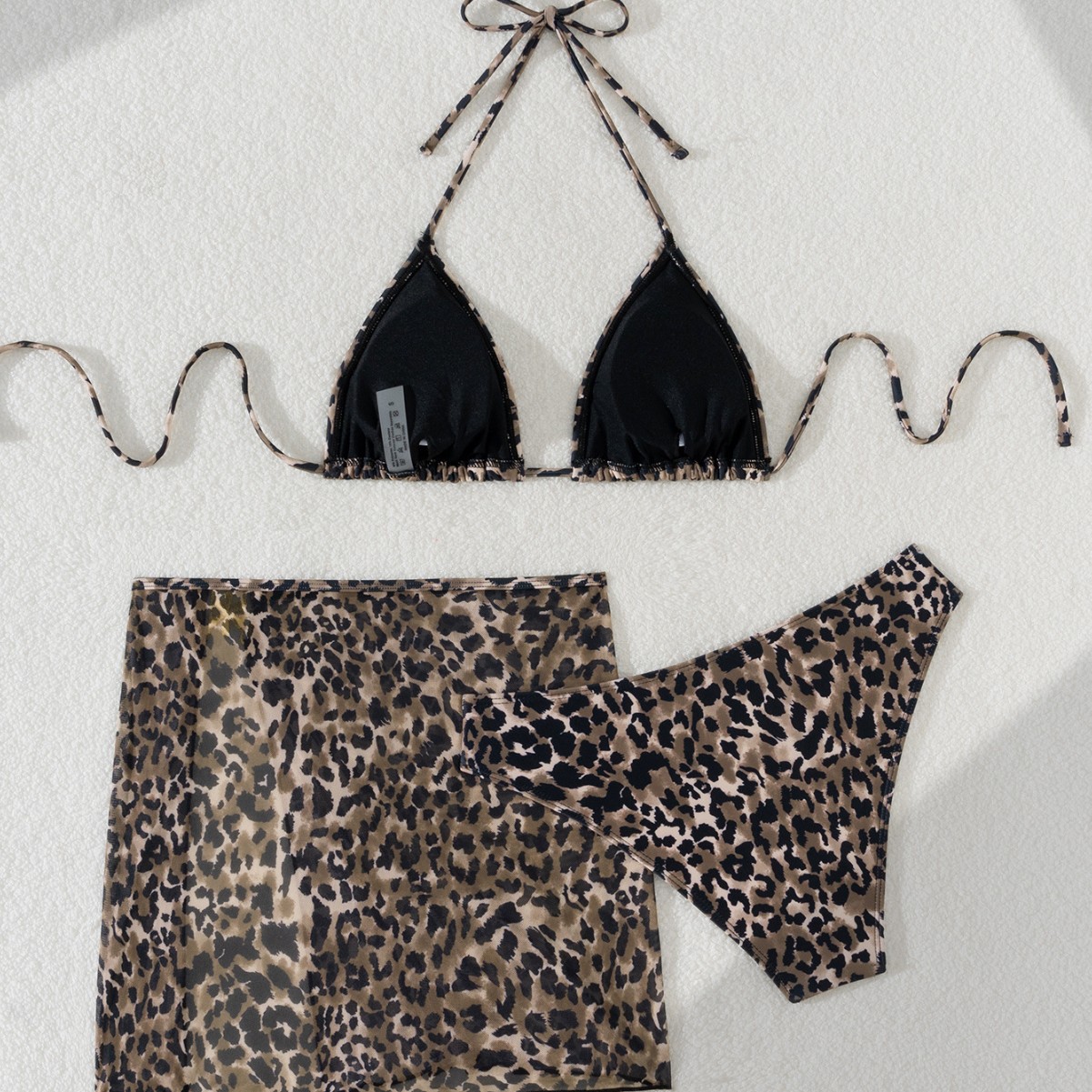
Is animal print still in style in 2026? Yes, and it is not going anywhere. Leopard in particular has held a permanent spot in swimwear for decades and behaves more like a neutral than a trend. Snake print is the fresher option this year if you want something that reads current.
What body type suits animal print? Every body type. Scale is the only real variable — smaller prints on petite frames, larger prints on taller or curvier ones. The pattern itself flatters across the board because it breaks up the surface and hides what a solid would show.
What do you wear over an animal print swimsuit? Solids only. A black or tan kaftan, a neutral crochet dress, or a plain linen shirt. Avoid a second print unless you are very confident about mixing them.
Can you mix animal prints? You can, but it is an advanced move. Keep the two prints in the same color family — leopard with snake in matching warm browns works; leopard with a cool zebra usually fights. If in doubt, ground one print with a solid.

Buy the leopard. It is the rare swimwear purchase that will still look right in 2029, it flatters more bodies than almost any solid, and it asks nothing of you except the confidence to let it be the loudest thing on the beach. Start with a one-piece or a tan bikini set, keep your cover-up and accessories quiet, and rinse it the second you climb out of the water. Ready to find your pattern? Browse the full animal print collection and pick the scale that matches your frame — your future self, five summers from now, will thank you.
Sources
- Vogue — ongoing coverage of animal print as a recurring, non-seasonal fashion staple.
- Who What Wear — swimwear trend reporting and print-scale styling guidance.
- Harper’s Bazaar — historical context on animal print in fashion since the 1950s.
- American Academy of Dermatology — on sunscreen chemistry and fabric staining.
Shop our full range of bikinis and swimwear at the BikiniCool store →