
Hourglass Body Shape Swimsuit: 7 Styles
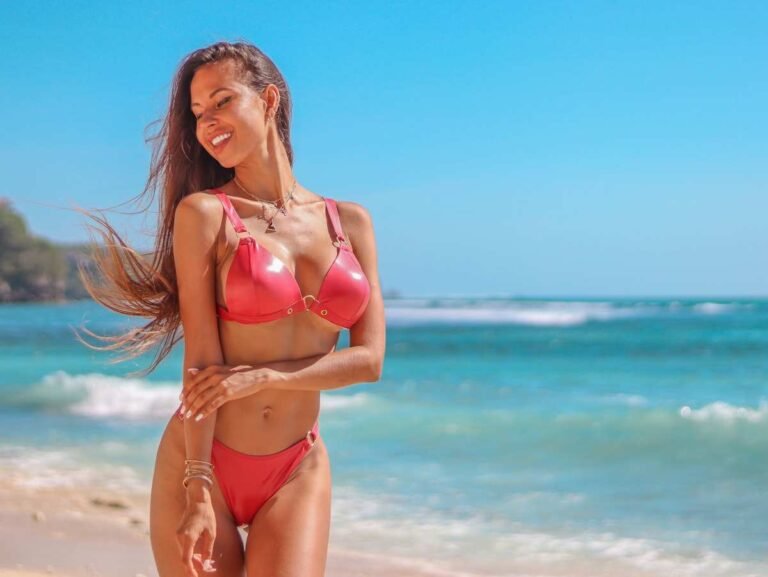
An hourglass figure means your bust and hips measure close to the same width, with a waist that’s noticeably narrower than both — roughly a 25% or greater difference, according to the classic waist-to-hip ratio used by stylists. That’s the good news: you already have the proportions most swimsuit design is built around. The bad news is that a lot of mass-market suits are cut for straighter frames, so a size that fits your ribcage gapes at the hip, or one that fits your hips digs into your waist. Getting the fit right is less about “flattering” and more about finding cuts that don’t fight your actual measurements.
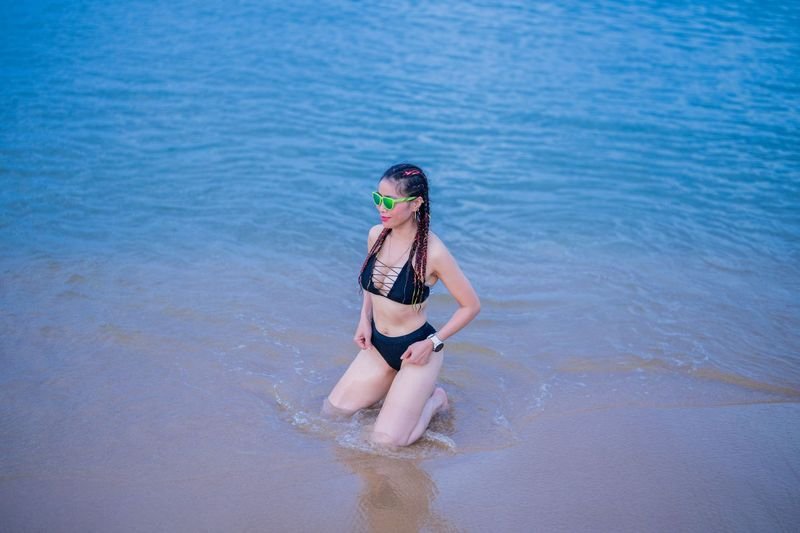
What an Hourglass Shape Actually Needs From a Swimsuit
Most swimsuit advice for hourglass figures boils down to one instruction: don’t hide the waist. A suit with a straight, boxy cut — no shaping seams, no ties, no contrast panels — reads as shapeless on a body that already has definition to show off. The opposite problem happens just as often: suits sized for the bust end up loose everywhere else, or suits sized for the hip squeeze the ribcage. Look for separates before assuming a one-piece won’t fit; buying a top and bottom in different sizes solves more hourglass fit complaints than any single “flattering” cut.
Support matters more here than on straighter body types. A D-cup or larger bust needs actual structure — underwire, wide-set straps, or a halter that distributes weight across the shoulders — not just a triangle top held on by string. Skimping on support here means spending the day adjusting straps instead of swimming.
1. The Underwire Halter Top
A halter neckline with a built-in underwire cup is the single most reliable pick for a fuller-busted hourglass frame. The wide strap across the back of the neck carries weight that a string bikini can’t, and the underwire holds shape without the top shifting every time you move. Pair it with a bottom cut at or just below the natural waist, and the whole silhouette reads intentional rather than improvised.
Look for halter tops with a hook-and-eye closure at the back rather than a tie — ties stretch out over a season of pool days, hooks don’t. Hardware that actually holds through a full day of swimming beats hardware that just looks good in the product photo.


2. The Wrap-Style One-Piece
A wrap one-piece — where the fabric crosses at the waist and ties or clips to one side — does what a plain cut can’t: it follows the actual line of your waist instead of running straight down from bust to hip. Because the wrap is adjustable, it also solves the fit mismatch between a larger bust and a smaller waist that off-the-rack one-pieces routinely get wrong.
The trade-off is durability. A wrap suit with a tie closure needs to be retied carefully after every wash and every swim, and the fabric at the crossover point takes more wear than the rest of the suit. If you’re in the water daily rather than lounging poolside, budget for replacing it sooner than a suit with fixed seams.

3. High-Rise Bottoms That Sit at the Natural Waist
High-rise bottoms — cut to sit at or just above the belly button rather than low on the hip — do more for an hourglass shape than almost any top choice. They land exactly where your waist is narrowest, which means the eye reads the narrowest point of your body first. Low-rise bottoms do the opposite: they sit at the widest part of the hip, which can make a defined waist look shorter than it is.
This isn’t a retro trend pick, it’s a proportion argument. A high-rise bottom paired with almost any top still reads as shaped, because the bottom alone is doing the waist-definition work. That’s part of why full-bust swimsuit guides keep recommending the same rise for a similar reason — support up top and a defined waistline below balance each other out.
4. Belted or Tie-Front Suits
A fabric belt, tie, or ring detail sitting right at the waist is a small addition that does a lot of work. It adds a literal line where your body already narrows, which reinforces the shape rather than inventing one. This is also one of the few style details that photographs well from every angle — a belt reads the same from the front, side, and back, unlike a plunging neckline that only works face-on.
Avoid belts that sit loose or float away from the body; a belt that gaps just draws attention to the fact that it isn’t doing anything. It should sit snug enough to hold its position when you move, not just when you’re standing still for a photo.
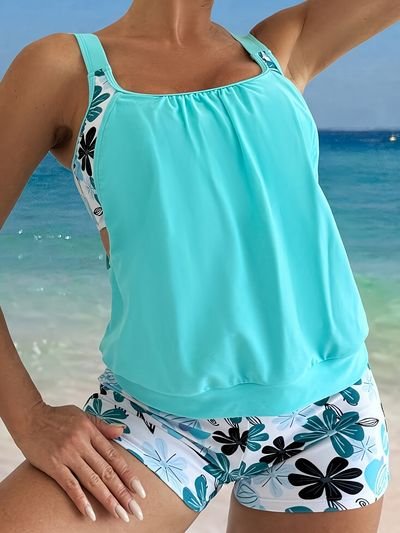
5. Contour Color-Blocking
Color-blocked suits that place a darker panel down the center or a lighter panel at the sides use the same principle designers use in tailored dresses: dark recedes, light comes forward. On an hourglass frame, this can be used to emphasize the waist even further — a dark center panel with lighter side panels draws a visual line straight down your narrowest point.
This is a case where the effect only works if the panels actually line up with your body’s real proportions. A color-block suit sized wrong will put the dark panel across your hip instead of your waist, which undoes the whole point. Try before you buy where you can, or check a brand’s size chart against your actual waist measurement rather than your usual size.
6. Structured One-Pieces With Side Cutouts
A one-piece with cutouts at the waist — small side panels of exposed skin rather than a full monokini gap — gives you coverage where you want it and definition where it counts. It’s a middle ground between a full one-piece, which can look boxy without shaping seams, and a bikini, which some hourglass-shaped swimmers find doesn’t offer enough bust support for a full day out.
The cutout placement matters more than the size of the cutout. A cutout positioned exactly at your natural waist reinforces the shape; one placed a few inches higher or lower just reads as a design gimmick. Check product photos on an actual body, not just a flat lay, before ordering.
7. Minimalist Solid Sets With Structured Seams
Not every hourglass-friendly suit needs a wrap, belt, or cutout to work. A well-cut solid-color set with structured princess seams — the vertical seams that run from the underarm to the hip — can shape a suit without any of the visual tricks. The seams themselves create the definition, which means less fabric to adjust, retie, or worry about shifting during the day.
This is the lowest-maintenance option on this list, and it’s worth defaulting to it if you’re buying a suit for a trip where you’ll actually be swimming rather than posing. Structure built into the seams doesn’t move the way a tie or wrap can.
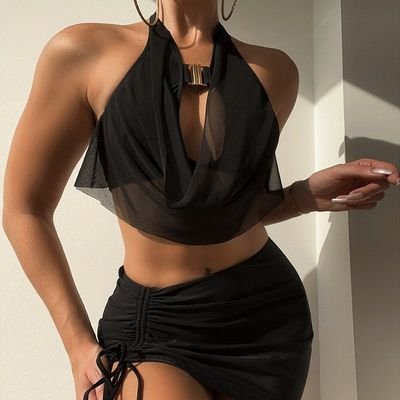
What to Skip if You Have an Hourglass Shape
Unstructured, boxy one-pieces are the most common miss — a straight-cut tank suit with no waist seam erases the exact proportion that makes an hourglass shape distinct. String bikini tops without any underwire or wide strap are the second: they’re fine for a lounge chair, but they won’t hold a fuller bust through actual swimming or beach volleyball. And extremely low-rise bottoms undercut the waist-definition work that a good top is doing above them — the two pieces end up working against each other instead of together.
None of this means an hourglass figure needs to over-engineer every suit. It means picking suits where the structure lines up with where your body already narrows, rather than suits designed for a different set of proportions entirely. That’s also the biggest difference from shopping for a rectangle body shape, where the goal is creating a waistline rather than defining an existing one, or a pear shape, where the priority shifts toward balancing hip volume instead of supporting the bust.
Getting the Fit Right When You’re Buying Online
Most online swimsuit returns for hourglass shapes come down to one mistake: sizing off a single number instead of three separate measurements. Measure your bust at the fullest point, your ribcage directly under the bust, and your natural waist — the narrowest point, usually an inch or two above the belly button. If the gap between your bust and waist measurement is four inches or more, a mix-and-match set will almost always fit better than a fixed one-piece, even if the size chart says a single size should work.
Check the brand’s actual size chart rather than translating from a size you wear in regular clothing. Swimwear runs on its own scale, and a brand that cuts generously through the hip and narrow through the ribcage — common with suits designed for straighter frames — will fit an hourglass shape differently than the label suggests. If a brand publishes garment measurements rather than just S/M/L, use those over the size label every time. And once a suit fits, it’s worth applying the same care rules as any other swimwear — rinsing chlorine or salt out promptly protects both the fabric and the structure that’s doing the actual shaping work in a suit like this, as covered in our shaping swimwear guide.
Frequently Asked Questions
Do hourglass shapes look better in one-pieces or bikinis?
Both work — the deciding factor is bust support, not shape. A one-piece with built-in structure or a bikini with an underwire halter top will do the same job; a soft, unstructured bikini top is the only style that tends to underperform for a fuller bust.
What necklines work best for an hourglass figure?
Halter and sweetheart necklines are the two most consistent picks. Both distribute weight across a wider area than a triangle top or a thin string, which matters more as cup size increases.
Should hourglass shapes avoid high-waisted bottoms?
No — high-rise bottoms are one of the better choices, not one to avoid. They sit at the natural waist rather than the hip, which is exactly the point stylists recommend emphasizing on this body type.
Sources
- How to Choose a Bikini for an Hourglass Body Type — ROXY — brand styling guide on cuts and support for hourglass proportions.
- Bathing Suits for Hourglass Body Type — Geode Swimwear — coverage and structure recommendations by body proportion.
- Best Swimsuits for an Hourglass Body Type — Personal Stylist Tips — video styling breakdown referenced above.