Long Sleeve Swimwear: 7 Best Styles for 2026
Dermatologists put the sun protection factor of a standard cotton t-shirt at roughly UPF 5 to 7 when it’s dry, and lower once it’s wet. A long sleeve swimsuit rated UPF 50+ blocks about 98% of UV rays and keeps doing it in the water. That single number is why long sleeve swimwear stopped being “just for surfers” and became one of the fastest-growing categories in women’s swim. It’s practical, it’s flattering, and in 2026 it finally looks good enough to wear to brunch after the beach.
Why Long Sleeve Swimwear Is Having a Moment
A few years ago, if you wore sleeves to the pool people assumed you were either a competitive swimmer or hiding something. That’s over. The shift is partly about skin health — more women now treat daily sun exposure the way they treat seatbelts — and partly about how good the cuts have gotten. Brands realized that a fitted long-sleeve top over high-cut bottoms is just as striking as a triangle bikini, and it photographs beautifully.
There’s also a comfort argument that doesn’t get said out loud enough. Plenty of women love the beach but hate the exposed feeling of standing around in two small triangles of fabric. Long sleeve swimwear solves that without pushing anyone toward a full cover-up. You can boogie board, chase a toddler into the surf, or read on a lounger for three hours without reapplying sunscreen to your shoulders every forty minutes. That’s freedom, not modesty.
What Counts as Long Sleeve Swimwear?
The label covers more ground than most people expect. At its simplest, it’s any swim garment with full-length sleeves made from swim fabric — nylon-spandex or polyester-spandex blends that dry fast and hold their shape wet. Within that, four shapes dominate.
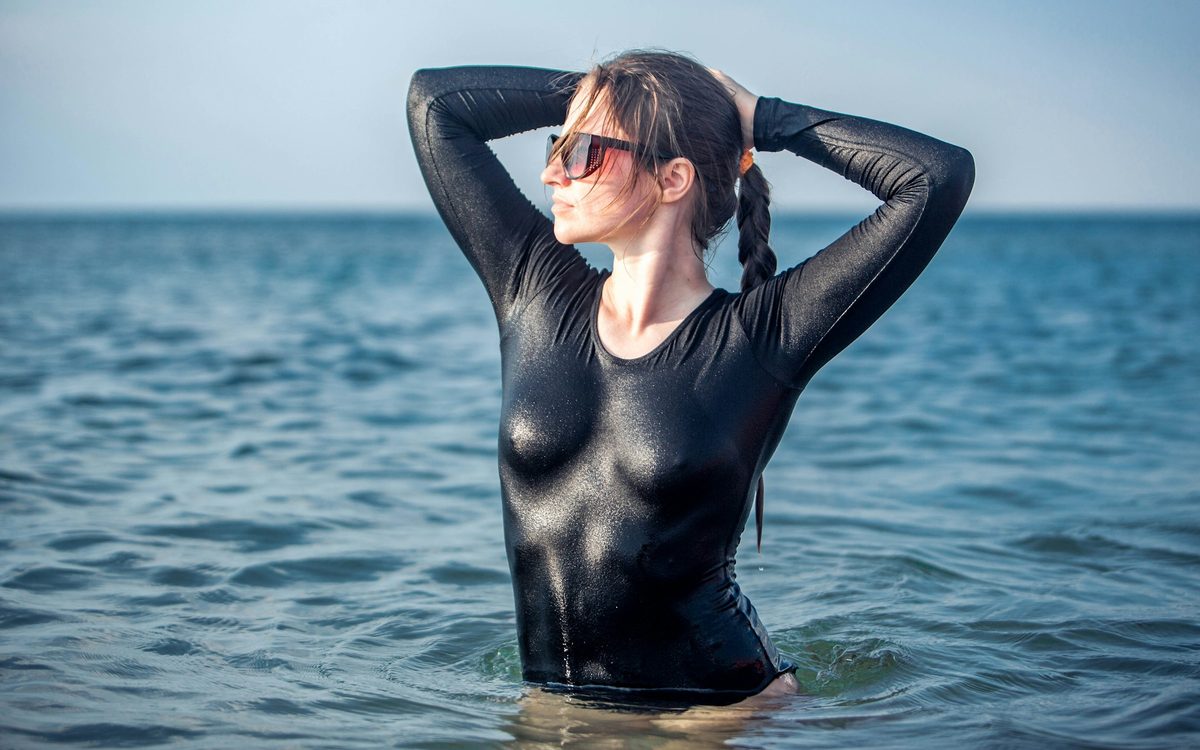
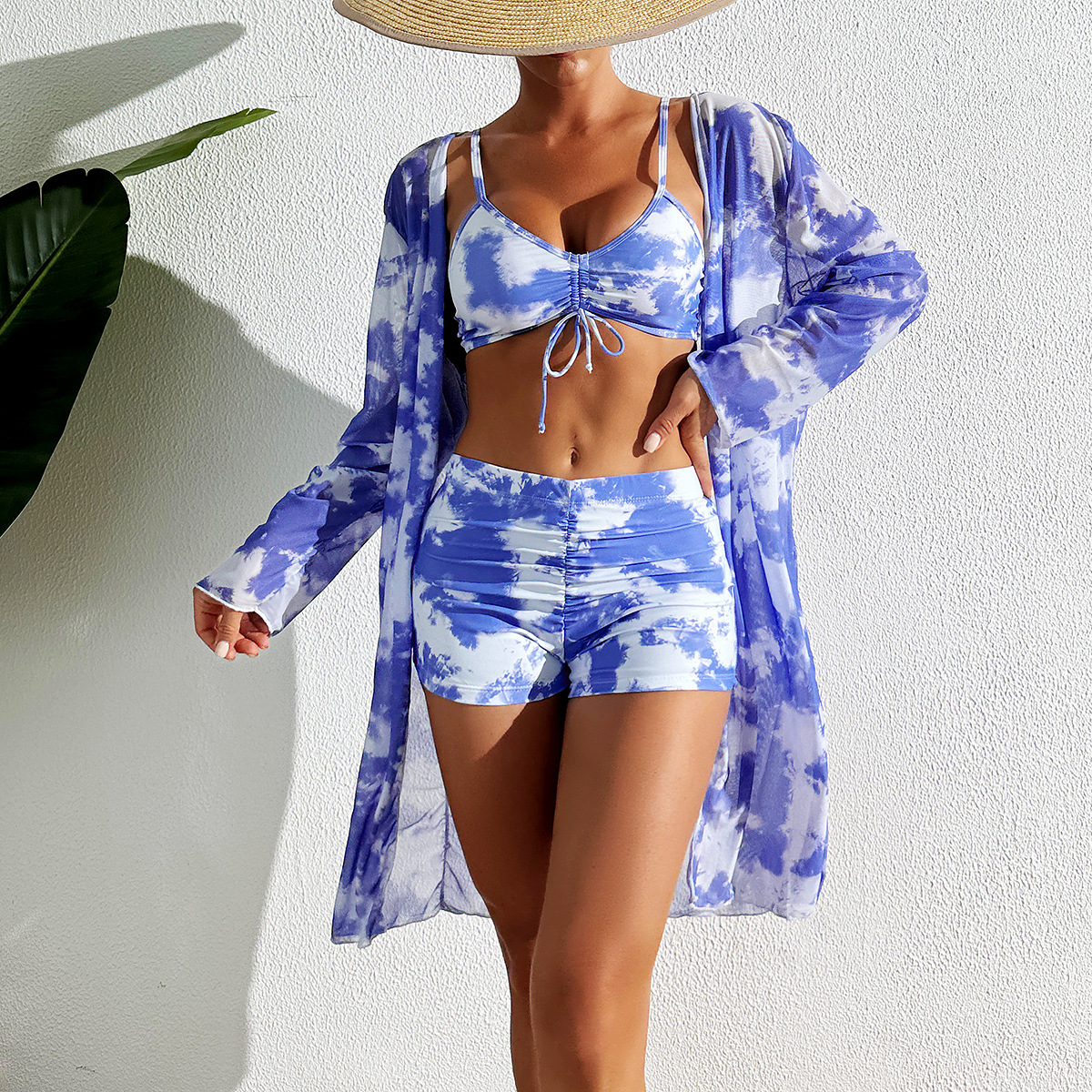
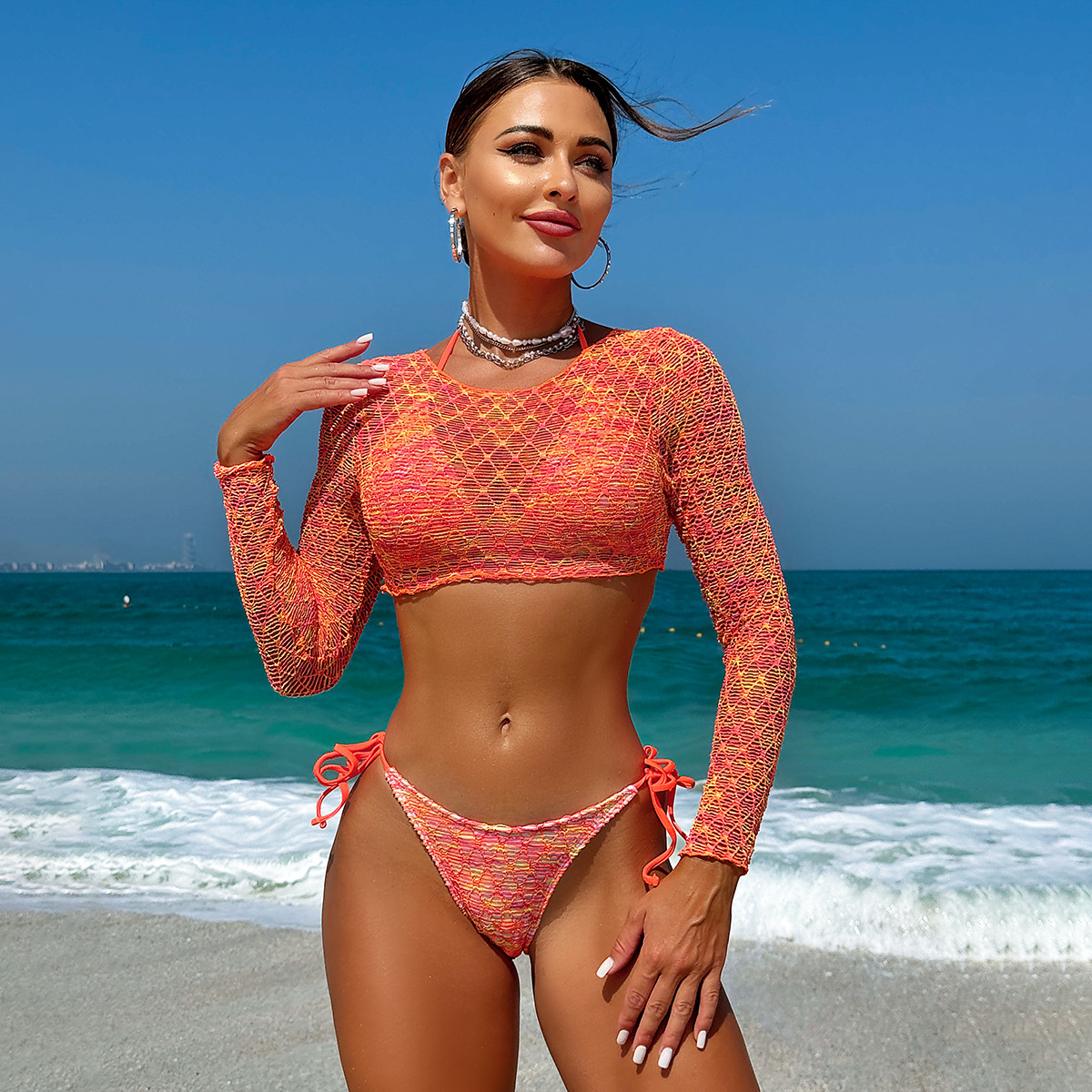
The rash guard set pairs a fitted long-sleeve top with matching bikini or bottoms, so you get coverage up top and whatever you like below. The long-sleeve one-piece reads sleek and sporty, often with a zip or scoop back. Surf suits lean athletic, cut for paddling and pop-ups. And the newer mesh or sheer-sleeve set keeps the long-sleeve silhouette while letting light through — more about style than sun, so save it for shade.

The Sun Protection Case for Long Sleeve Swimwear
Here’s the part worth taking seriously. Water reflects up to 25% of UV rays back at you, so a day in the ocean effectively doubles your exposure compared to the same time on dry sand. Sunscreen helps, but almost nobody applies the recommended shot-glass amount, and even fewer reapply it correctly after swimming. Fabric doesn’t wash off. A UPF 50+ sleeve gives your arms and shoulders — the spots most people miss — consistent, no-effort coverage all day.
Not every long sleeve suit is UPF-rated, though, and the rating depends on the weave and how much the fabric stretches on your body. A tightly knit, darker suit protects better than a loose pale one. If sun defense is your main reason for buying, check the tag for a stated UPF number rather than assuming sleeves equal protection. We break down how the fabrics actually work in our guide to UPF swimwear and sun-protective fabrics, and there’s a practical rundown in our UV protection beach day guide.
7 Long Sleeve Swimwear Styles to Know for 2026
The category has splintered into distinct looks, each solving a different problem. Here’s what’s actually worth your money this season.
- The zip-front rash guard. A front zipper makes it easy to get on and off when wet and lets you control coverage — zip high for sun, low for a scoop-neck look. The most versatile pick for most people.
- The crop-top set. A cropped long-sleeve top over high-waisted bottoms. You get arm coverage and a sliver of midriff, which balances the proportions beautifully.
- The long-sleeve one-piece. Sleek, uninterrupted, and pool-to-boardwalk ready. Great if you want zero fuss and one thing to pack.
- The surf-inspired suit. Athletic seams, thumbholes, and a higher neckline built for actual paddling. Function first, and it shows.
- The mesh-sleeve set. Sheer or perforated sleeves for a going-out beach look. Style over protection — keep it for evenings and shade.
- The mock-neck design. A short standing collar adds neck coverage and a slightly retro, sporty edge. Underrated for anyone who burns on the chest.
- The print-mixed three-piece. Top, bikini, and a matching bottom or skirt, all in one coordinated print — the most outfit-like option and the easiest to restyle.
How to Choose Long Sleeve Swimwear for Your Body
The honest truth: long sleeve swimwear flatters more body types than the industry admits, because a defined sleeve draws the eye to the smallest part of the arm and creates a clean vertical line. It isn’t a “cover-up for people who should cover up.” It’s a silhouette, and it works on everyone who likes it.
If you’re broad through the shoulders, a scoop or V-neck long-sleeve top opens up the chest and keeps the look balanced. Petite frames do well with cropped tops that don’t swallow the torso. Fuller busts are happiest in styles with a built-in shelf bra and a front zip for adjustable support. And if you carry weight around the middle and want a smoothing effect, a long-sleeve one-piece in a solid dark shade does it without any shapewear feeling. The goal is fit, not camouflage — pick the one that makes you want to move. Our best swimsuit for your body type guide goes deeper on matching cuts to shapes.
Styling Long Sleeve Swimwear Beyond the Beach
This is where the category earns its keep. A long-sleeve swim top genuinely doubles as a bodysuit. Tuck one into linen trousers or a wrap skirt and it reads as a going-out top, not a swimsuit that wandered off. Add gold hoops and a straw tote and you’ve got a beach-bar outfit that took ten seconds.
For the water itself, the mix-and-match sets give you the most mileage. Swap the long-sleeve top over different bottoms across a week and one purchase covers five looks. Stick to a tight color story — one print plus two solids that pull from it — and everything works together. If you want the color theory behind that, our post on swimsuit colors for your skin tone is a good next read.
Watch: Long Sleeve & UPF Swimwear Try-On
Seeing these styles on real bodies helps more than any flat product shot. This try-on runs through several long-sleeve rash guards and UPF pieces so you can see how the sleeves actually fit and move.


Long Sleeve vs. Classic Bikini: When to Reach for Each
You don’t have to pick a side — most women who own a sleeved suit also own two or three bikinis and choose by the day. The deciding factors are usually the sun, the activity, and how you feel walking down to the water.
Reach for sleeves when you’ll be out for more than an hour, when there’s real activity involved — paddleboarding, snorkeling, swimming laps — or when the water is cool enough that bare arms would leave you shivering. A classic bikini still wins for a quick dip, a tanning session where color is the whole point, or a crowded pool where you’re in and out. Think of the sleeved suit as your default for a full beach day and the bikini as your quick-change option. Between the two, you’re covered for almost anything summer throws at you, and neither choice says anything about your body — only about your plans.
Caring for Long Sleeve Swimwear So It Lasts
Long sleeve suits have more fabric than a bikini, which means more surface for chlorine, salt, and sunscreen to attack. Rinse in cool tap water the moment you’re out of the pool or ocean — before the chlorine has time to set into the fibers. Hand wash with a drop of gentle soap, never wring it, and dry it flat in shade. Heat from a dryer or direct midday sun is what kills the elastane and leaves you with a saggy, faded suit by August.
One more thing surf swimmers know: rotate two suits if you swim often. Spandex needs about 24 hours to fully recover its stretch between wears, and giving it that rest roughly doubles how long a suit holds its shape.
Long Sleeve Swimwear FAQ
Is long sleeve swimwear hot to wear in summer? Surprisingly, no. Swim fabric is thin and wicks water, so a wet sleeve actually cools your arm through evaporation. It feels cooler than dry skin baking under direct sun.
Can you tan through long sleeve swimwear? Through a UPF 50+ suit, barely — that’s the point. Lower-rated or looser fabrics let some UV through, so you may see a faint tan but far less burn risk.
Are rash guards and long sleeve swimwear the same thing? A rash guard is one type of long sleeve swimwear, originally designed to stop board rash for surfers. All rash guards have sleeves, but not every sleeved swim top is a technical rash guard.
If you’ve been reaching for a cover-up the second you leave the water, a long sleeve suit is the piece that lets you skip that step entirely. Buy one this summer, wear it hard, and pay attention to how much less you think about sunscreen and self-consciousness. That mental space is the real return. Start with a zip-front set you can restyle, and build out from there — then browse the full Bikini Cool collection to find the print that’s yours.
Sources
- Skin Cancer Foundation — UPF ratings and how sun-protective clothing works.
- American Academy of Dermatology — correct sunscreen amount and reapplication guidance.
- U.S. Environmental Protection Agency — UV reflection off water and surfaces.
Shop our full range of bikinis and swimwear at the BikiniCool store →