Orange Bikini: 9 Best Styles for 2026
Bottega Veneta, Valentino, and GmbH all sent saturated tangerine down their Spring/Summer 2026 runways, and WGSN and the Pantone Color Institute flagged the shade as one of the year’s defining colors before a single swimwear brand picked it up[1]. Kylie Jenner wore it as a full monochrome statement within weeks of the shows landing, which is usually the signal that a runway color is about to turn up on every beach by July. Orange inherited a reputation problem from ready-to-wear — the assumption that only tan, warm-undertone skin can carry it. That rule holds less than people think. The real variable is saturation, not skin color, and that distinction decides which of the nine cuts below actually belongs in your bag this summer.
Why Orange Owns the Beach This Year
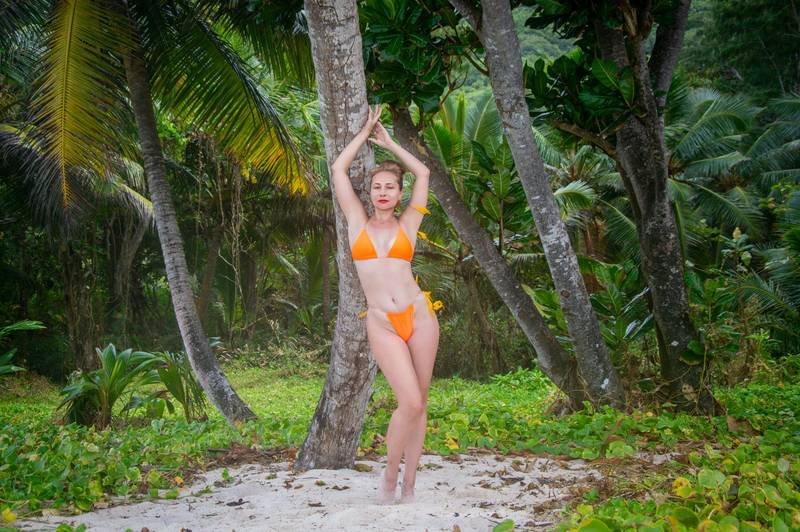
The trend forecasters call it “Hardcore Orange” — a saturated, pure tangerine that’s a deliberate step away from the softer peachy shades that circulated a few years ago[1]. Luxury labels like Khaite and Acne Studios picked it up on the ready-to-wear side, and fast-fashion retailers from Mango to & Other Stories followed within a season, which is the usual pipeline from runway to beach bag. What’s different about this wave is that it split into two camps instead of one. Some brands are chasing the loud, neon end of the spectrum — the version built for being seen from the lifeguard tower. Others went the opposite direction, leaning into terracotta, rust, and burnt orange, shades that read as more grown-up and considerably easier to style off the sand.
Neither camp is winning outright, and that’s good news if you’ve been burned by a bikini color before — the spectrum is wide enough that there’s a version of orange that works regardless of how bold you want to go. The nine styles below cover both camps, plus the fit questions that actually determine whether an orange suit flatters you or just sits there looking bright.
The 9 Best Orange Bikini Styles for 2026
These are ranked by how wearable they are across different skin tones and body types, not just by what’s trending on a runway. A few assume you already own a neutral piece and want an orange one to rotate in; most work as a first orange buy.
1. Solid Burnt Orange Triangle
A plain triangle top in a muted, rust-leaning orange is the safest entry point if you’ve never worn the color before. Burnt orange sits closer to the red end of the spectrum than tangerine does, which means it flatters a wider range of undertones without the brightness of a pure neon shade. Pair it with black or white bottoms if you want the orange to read as a deliberate accent rather than a full-color commitment.
2. Neon Orange Triangle
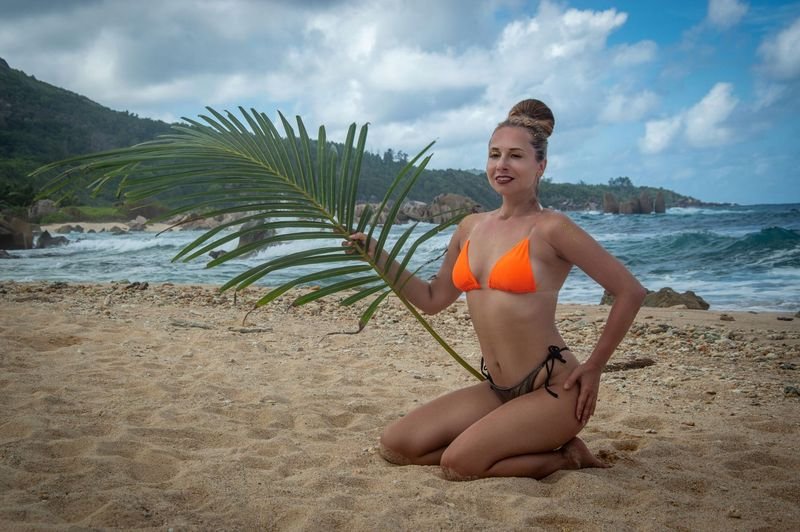
The loud version. A saturated, almost fluorescent orange triangle top is built for standing out in a crowd, and it photographs noticeably brighter in direct sun than it looks on a screen or in a dim fitting room — worth knowing before you order online. It works best on deeper, warm-undertone skin, where the neon reads as a highlight instead of washing out the face the way it can on very fair skin.
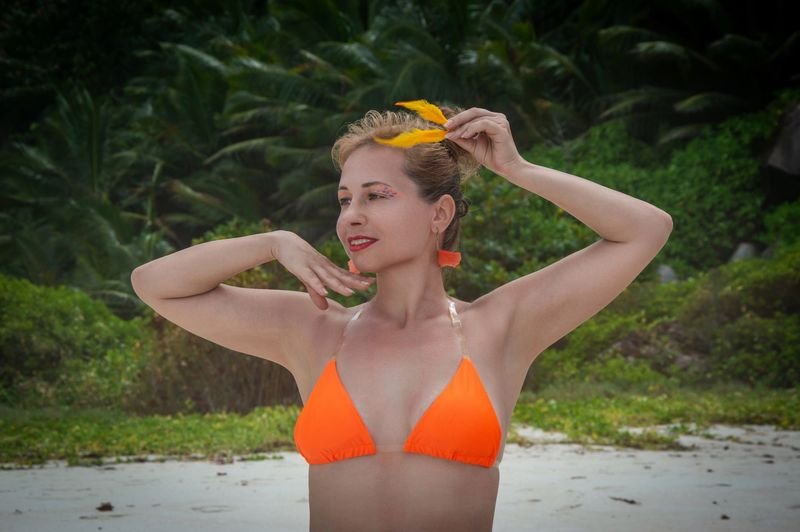
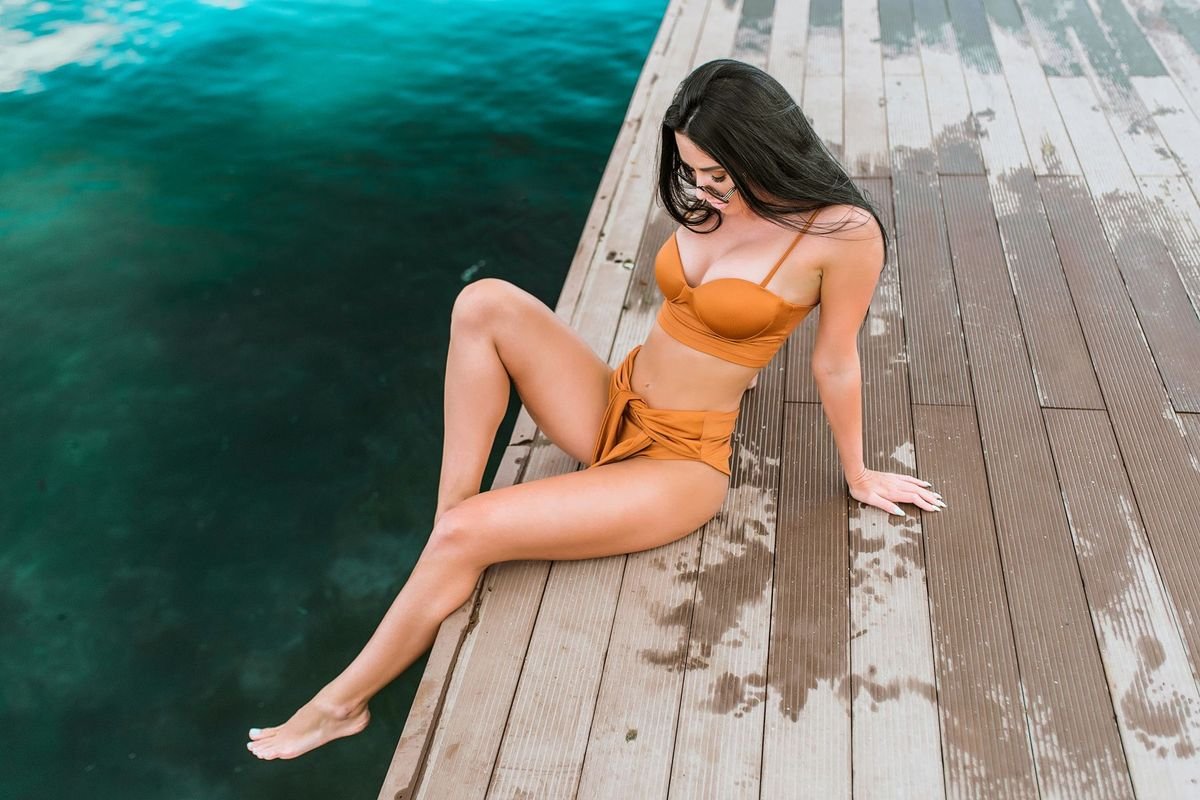
3. Tangerine High-Waisted Classic
Orange is one of the few colors where a high-waisted bottom doesn’t default to looking modest — the warmth of the shade keeps the silhouette from reading as conservative the way the same cut does in navy or black. It’s also the most forgiving fit for anyone who finds a low-rise bottom digs in uncomfortably while sitting. The high-waisted bikini styles guide breaks down which rise actually suits your torso length if tangerine isn’t the color you land on.
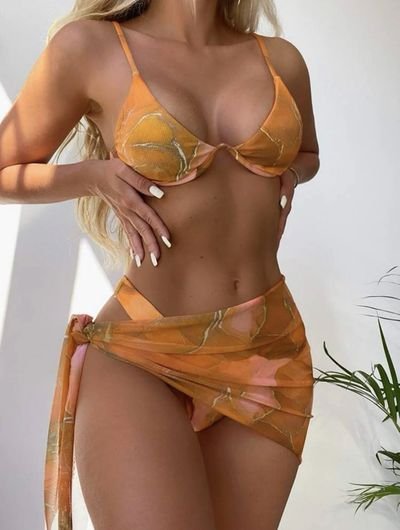
4. Orange Marble Swirl Set
A marbled, almost watercolor print in shades of orange and gold is the print lane for anyone who wants color without a flat, single-tone block of fabric. The swirl pattern does something flat orange can’t — it breaks up the shade into lighter and darker sections, which is more forgiving on a midsection than a single saturated block would be.
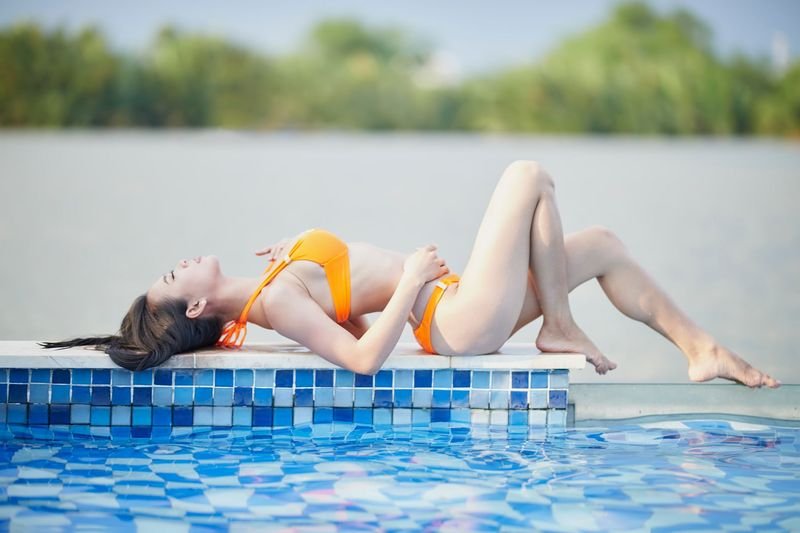
5. Orange Sporty Scoop
A scoop-neck top in solid orange, built like a sports bra and usually paired with high-cut bottoms, is the version meant for actually swimming rather than lounging. The thicker fabric holds color better under chlorine and sun than the sheer, lightweight weaves used for softer styles, which matters more with orange than with most colors — more on that below.
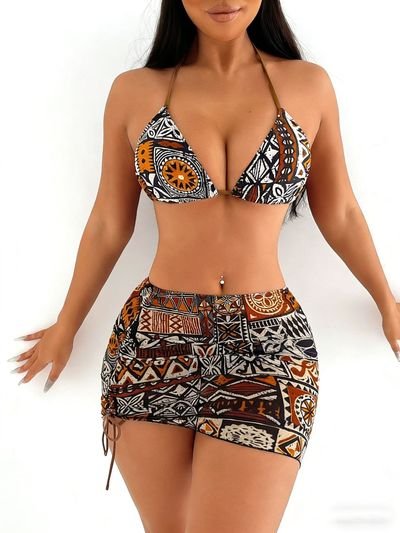
6. Burnt-Orange Tribal Print
A geometric or tribal-inspired print rendered in burnt orange, black, and cream reads as more considered than a solid block of color, and it’s the easiest orange style to wear to a family beach day without feeling like you’re making a statement. The pattern does most of the visual work, so the cut underneath can stay simple.
7. Terracotta Bandeau
A strapless bandeau in a dusty terracotta shade is the quietest way to wear orange — it reads as a warm neutral almost as often as it reads as a color statement, which makes it easy to build an entire capsule around. If you’re deciding between a bandeau and a different strapless cut, the full bandeau fit guide covers which body types it actually supports versus just suits visually.
8. Orange Cutout Monokini
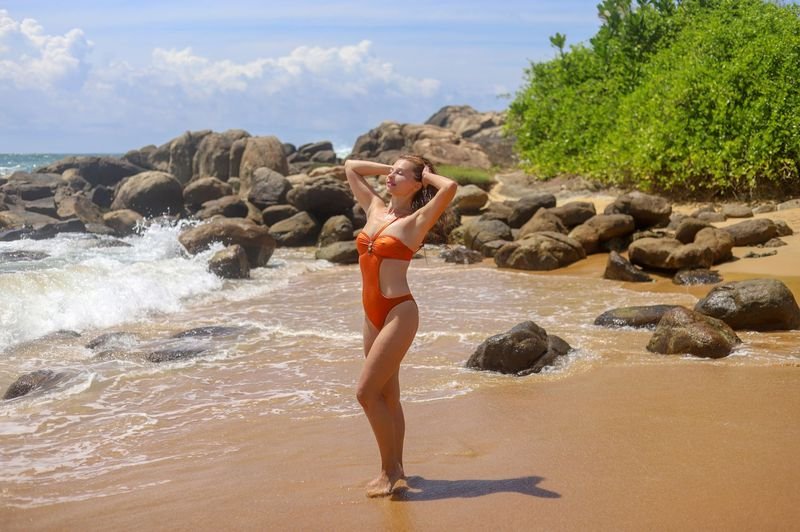
A one-piece with side or waist cutouts in a mid-tone orange gives the coverage of a one-piece with the visual lightness of a two-piece, and the warmth of the color keeps the cutouts from reading as clinical the way they sometimes do in black or white. It’s the pick for anyone who wants to try the color without committing to a separates set.
9. Orange and Turquoise Color-Block
Pairing an orange panel against turquoise or teal is the color-block combination showing up most in 2026’s print mixes, and it works because the two shades sit almost directly opposite each other, which creates genuine contrast instead of a muddy blend[1]. Placed well, the block can draw attention exactly where you want it — a center panel for a flatter stomach read, a side panel for a waist-defining line.
Which Shade of Orange Actually Works for Your Skin Tone
Undertone decides this more than how light or dark your skin is. Warm undertones have the widest range to pick from — fair warm skin looks good in peach and apricot, medium warm skin suits coral and soft tangerine, and deeper warm skin can wear burnt orange, rust, or mango without any of it clashing[2]. The shade is unambiguously warm, built from red and yellow, so it naturally resonates with skin that has the same warmth underneath it.
Cool undertones aren’t excluded, but the margin for error is smaller. A pure, vivid tangerine can make cool-toned skin look flushed or sallow, while the muted end of the family — rust, burnt orange, coral-orange — works because it moves toward the edges of the orange family instead of sitting at its most saturated center[2]. If you’ve tried a bright orange swimsuit before and felt like it fought your skin rather than complementing it, the fix usually isn’t abandoning the color — it’s moving toward a deeper, dustier version of it.
How to Style Orange So It Doesn’t Overwhelm the Rest of Your Look
Stylists working with this trend on the clothing side use a rough 70/30 rule — orange carries roughly a third of the outfit while neutrals ground the rest[1]. The same math works at the beach. A bold orange swimsuit paired with a plain white or tan cover-up lets the color be the one loud element instead of competing with a second bright piece on top of it. Gold or rose-gold jewelry reads as neutral regardless of how saturated the suit is, which is why it keeps showing up across every bold-color swimwear trend, not just this one.
Sunglasses and hats are the easiest place to dial things back if the rest of the look already leans bright — a tortoiseshell frame or a plain straw hat grounds a neon orange top faster than a matching orange accessory ever will. If you’d rather see how other colors handle this same balancing act, the bikini colors for skin tone guide walks through the same logic shade by shade.
Why That Bright Orange Fades Faster Than You’d Like
Chlorine is an aggressive oxidizer — it doesn’t just sit on the surface of fabric, it actively breaks down the dye molecules bonded to the fibers, and UV exposure does the same thing to the fibers themselves[3]. A lab study tracking swimwear fabric under combined chlorine and sun exposure found fabric strength dropped by 65% after 300 hours — roughly a season and a half of regular pool use[3]. Orange doesn’t degrade chemically any faster than other colors, but any shift away from the original shade shows up more obviously on a bright, saturated hue than it does on something muted, so fading reads as worse even when the underlying damage is identical.
Three habits buy real time: rinse the suit in cool, fresh water immediately after chlorine or saltwater exposure instead of waiting until you’re home, skip the dryer entirely, and lay the suit flat in shade rather than leaving it balled up in direct sun. None of that stops fading completely, but it’s the difference between an orange suit that still looks saturated in August and one that’s gone chalky by the Fourth of July.
Orange isn’t a color you need to catch before it fades from the racks — between the neon camp and the terracotta camp selling side by side this year, there’s a version built to outlast the season, not just the trend cycle it rode in on. Match the saturation to your undertone before you worry about the cut, and the rest of the styling takes care of itself.
Sources
- Marvellous Adventures — Tangerine Color Trend 2026: How to Wear Hardcore Orange — reporting on the Spring/Summer 2026 runway trend, Kylie Jenner, and the 70/30 styling rule.
- Palette Hunt — Who Can Wear Orange? Best Shades for You — guidance on matching warm and cool undertones to specific orange shades.
- PMC — The Impact of Chlorinated Water and Sun Exposure on the Durability and Performance of Swimwear Materials — lab data on fabric strength loss from combined chlorine and UV exposure.