
Strapless Bikinis and Bandeaus: No-Tan-Line Guide
Roughly one in three swimwear returns comes down to a single complaint: the top wouldn’t stay up. Strapless bikinis carry that reputation, and it scares a lot of people off a style that actually solves the tan-line problem better than anything else in the drawer. Skip the shoulder straps and you skip the two thin white stripes that ruin an off-shoulder dress in August. The trade-off is fit, and fit is fixable.
This guide covers how a strapless bikini and a bandeau differ, whether they really prevent tan lines, and the seven small tricks that keep one in place through a full beach day. There is a mild opinion baked in here: for anyone whose summer wardrobe leans on tank tops and slip dresses, a well-fitted bandeau earns its spot faster than a third triangle set ever will.
What Makes a Strapless Bikini or Bandeau Different
A strapless bikini is any top that supports the bust without over-the-shoulder straps. A bandeau is the most common version of it — a straight, horizontal band of fabric that wraps across the chest. The terms get used interchangeably, but not every strapless top is a flat bandeau; some use molded cups, a twist front, or a sweetheart neckline for shape.
The design choice matters more than the label. A flat bandeau flatters smaller and mid-range busts and reads clean and retro. A molded or underwire strapless holds heavier busts far better than a plain band. If you have tried a bandeau before and written the whole category off, there’s a good chance you tried the wrong construction, not the wrong style.

Most strapless tops also convert. Look inside and you’ll usually find a detachable strap or two — halter, cross-back, or classic — tucked into a seam. That single feature is what makes the style practical: bandeau while you tan, strapped while you swim.
Do Strapless Bikinis Actually Prevent Tan Lines?
Yes, for the part of your body that shows most. Shoulder and neck straps sit on skin that faces the sun almost straight-on, so they burn a crisp line fast. Remove them and the top edge of a bandeau sits lower and flatter, which produces a softer gradient instead of a hard stripe. You still get a tan line where the band ends — there’s no swimwear that tans you evenly everywhere — but it lands under the collarbone, where a tank top or sundress hides it.
The American Academy of Dermatology is blunt about the bigger picture: there is no such thing as a safe tan from the sun, and any color change is a sign of skin damage. A strapless cut doesn’t change that math. What it changes is where the untanned strips land, so the color you do build looks intentional rather than accidental.

If an even glow is the actual goal, pair the strapless top with the habits in our guide to avoiding tan lines — rotating position, using self-tanner on the covered zones, and moving straps around on the days you do wear them.
How to Get an Even Tan in a Strapless Bikini
The strapless top does half the work. The other half is what you do on the towel. A tan line is just a border between covered and uncovered skin, so the fix is to keep that border moving instead of letting it sit in one spot for three hours.
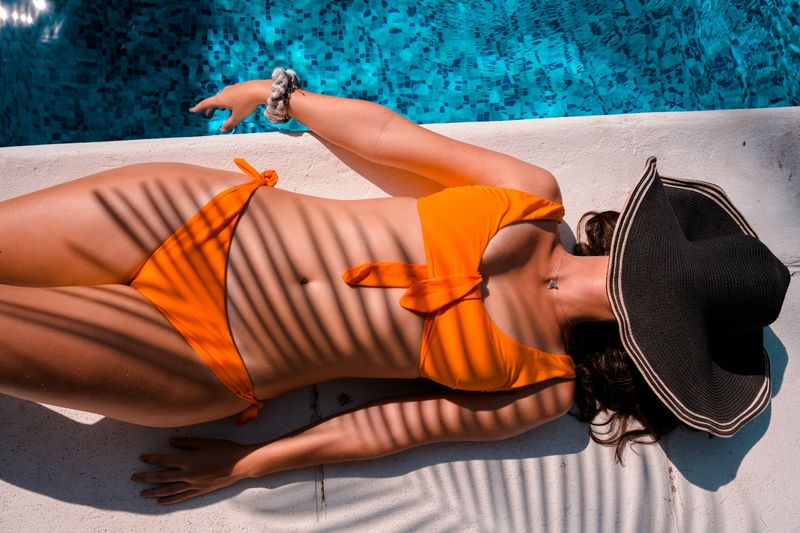
- Shift the band an inch every half hour. Pull it up slightly, then down, then roll it once. Each small move blurs the edge so no single line ever sets.
- Untie for the last stretch. If you’re lying face-down in a private spot, loosen the back and let the whole back tan strap-free.
- Blend the gaps with self-tanner. A light coat on the shoulders the night before evens out any faint mark before it starts.
- Reapply SPF to the newly exposed skin. The chest and collarbone rarely see this much direct sun, so they burn faster than you expect.
None of this works if you skip sunscreen to chase color faster. The Skin Cancer Foundation recommends a broad-spectrum SPF 30 or higher reapplied every two hours, and a strapless cut exposes more of the high-burn zone than a full-coverage top does.
One more habit worth stealing: keep a light kaftan or sarong within reach and throw it on during the harshest midday hours, roughly 11 a.m. to 3 p.m. You lose nothing on the tan — skin barely colors when the UV index is peaking anyway, it mostly just burns — and you protect the exposed chest during the window it’s most vulnerable. Tan in the softer morning and late-afternoon light instead, and the color you build is deeper, safer, and far more even.
How Do You Keep a Strapless Bikini From Slipping?
This is the real question, and the honest answer is that fit does 90% of it. A strapless top holds through tension around the ribcage, not from the shoulders, so the band has to be genuinely snug — snug enough that you can’t pull it more than an inch off your chest. Most slipping complaints trace back to a band that was one size too loose, bought for comfort at the moment of trying it on.

Beyond the band, three features make the difference between a top that stays and one that becomes a full-time job:
- Silicone grip strip. A thin band of silicone along the inside top edge holds against skin far better than fabric alone.
- Boning or side stays. Thin flexible ribs at the sides stop the top from folding down when you bend.
- A back that hooks, not ties. A hook-and-eye or clasp back keeps even tension; a fabric tie loosens as it gets wet.
For a larger bust, a plain bandeau will fight you no matter how tight it is — that’s a job for structure. Our roundup of supportive bikini tops covers the molded and underwire strapless styles that actually hold a D-cup and up through a wave.
Bandeau vs. Strapless: Which Should You Choose?
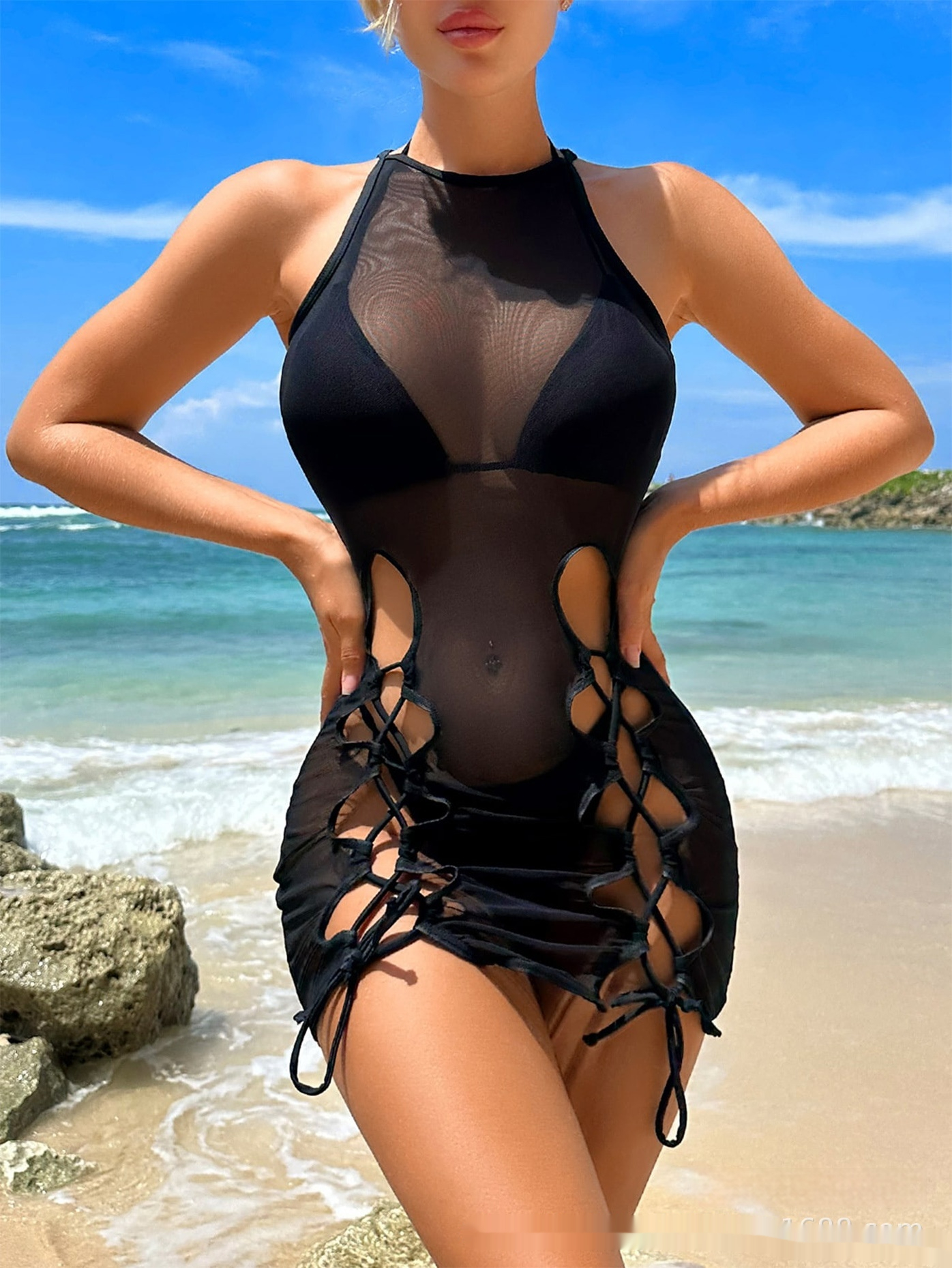
They overlap enough that the choice comes down to how you actually spend your beach day. A flat bandeau is the lightest, most tan-friendly option and the easiest to pull off for a nap on the sand. A structured strapless — molded cups, boning, convertible straps — trades a little of that ease for security in the water.

Pick the bandeau if you’re mostly lounging, you’re a smaller-to-mid bust, and an even tan is the priority. Pick the structured strapless if you plan to swim, surf, or chase kids, or if you need real bust support. If you can only buy one, get the convertible style — it plays both roles, and you can read the full breakdown in our bandeau bikini guide.
Price is worth a mention too. A cheap bandeau with no silicone grip and a flimsy band is the fastest way to hate the style — it’s the tops in the $8 range that slide, not the style itself. You don’t need designer money, but a top with real construction, a grip strip, and a hooked back is where the difference lives. Spend there and skimp elsewhere.
Here’s the video version of the tan-line problem if you’d rather watch someone walk through it:
Best Strapless and Bandeau Styles for Every Body
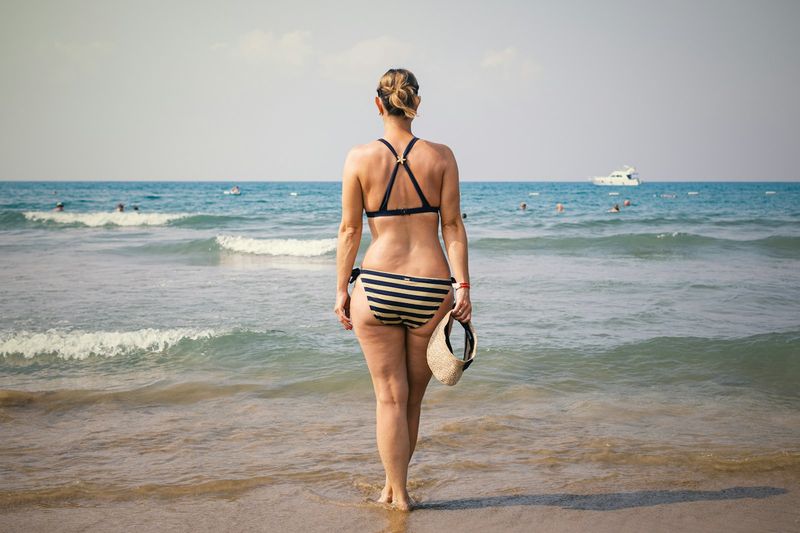
No single strapless shape flatters everyone, and that’s the point — there are enough versions that every body has one that works. The trick is matching construction to your frame instead of buying the one on the mannequin.
- Smaller bust: a flat or ruffled bandeau adds the illusion of shape; horizontal detail and texture help.
- Mid-range bust: a twist-front or sweetheart strapless creates a defined neckline without extra hardware.
- Fuller bust: molded cups with side boning and a wide band — support first, then style.
- Longer torso: a wider bandeau band balances your proportions and won’t roll.
Confidence in a strapless top isn’t about having a certain body — it’s about the band fitting your ribcage and the cut matching your bust. Get those two right and the style does the rest.

Caring for Strapless Swimwear So It Keeps Its Grip
The silicone strip and elastic band are the two parts that make a strapless top work, and they’re also the first to die. Chlorine, sunscreen, and heat break down elastane and dull silicone grip, so a top that held perfectly in June can start sliding by August if you treat it like laundry.

Rinse it in cold water within an hour of getting out, hand-wash with a gentle soap, and never wring or machine-dry it — heat is what kills the band. Lay it flat in the shade. Keep sunscreen and body oil off the silicone strip when you can; those are what leave it slick and non-grippy. Done right, a good strapless top holds its shape for three or four seasons instead of one.
The One Thing That Decides Everything
Buy the band that fits your ribcage, not the cup size that looks flattering on the hanger. Every complaint about strapless bikinis — the slipping, the constant adjusting, the tan line landing in the wrong place — traces back to a band bought a size too loose. Get that number right and a strapless bikini stops being a gamble and becomes the smartest tan-line fix in your drawer. Start with a convertible style, wear it strapless on the towel, and let those shoulders tan clean.
Sources
- American Academy of Dermatology — The truth about tanning — why any sun tan signals skin damage.
- Skin Cancer Foundation — Sun protection and sunscreen guidance — broad-spectrum SPF and reapplication rules.
- How to Avoid a Bikini Tan Line — video walk-through of strap positioning.