Petite Frame Swimwear: A Proportion Guide for Smaller Statures
If you have ever stood in a fitting room wondering why a bikini that looked tiny on the hanger somehow swallows you whole, you are not imagining it. Most swimwear is cut for a notional five-foot-six frame, which means anyone under about five-foot-four is quietly fighting the pattern itself — straps that fall off shoulders, tie placements that hit the wrong part of the hip, leg openings that swing low across the thigh and chop the leg line in half. A petite frame swimwear guide is not really about hiding anything. It is about understanding proportion, because the right cut on a smaller stature does not just fit — it visually lengthens, balances, and lets the suit work with the body instead of around it.
This is a fit guide written with one principle in mind: petite is a proportion, not a problem. Once you stop fighting your measurements and start dressing the lines you actually have, swimwear shopping turns from a stress test into something genuinely fun.
Why Petite Isn’t a Style Problem
The fashion industry uses the word “petite” to mean a height range — generally five-foot-four and under — independent of dress size. A petite frame can be slim, curvy, athletic, or full-busted. What unites petite bodies is shorter vertical real estate, which means every horizontal line on a garment cuts a larger percentage of the visible torso or leg. A waistband that looks subtle on a taller frame can read as a thick belt across a petite midsection. A boy-short leg opening that lands mid-thigh on someone five-foot-eight will land closer to the knee on someone five-foot-two, dramatically shortening the leg line.
None of this is a flaw. It is geometry. The goal of a petite-focused swim wardrobe is to choose cuts where the proportions of the garment harmonize with the proportions of the body — so the eye sees one continuous, balanced shape instead of a torso interrupted by a too-wide band or legs cropped by a too-low leg hole.
The Proportion Rule
If you remember only one thing from this guide, make it this: on a petite frame, vertical lines lengthen and horizontal lines shorten. That single idea explains almost every cut recommendation below. High-cut leg openings extend the leg upward. Plunging necklines stretch the torso. Vertical seam details, color blocking that runs top-to-bottom, and skinny side ties all add perceived height. Thick waistbands, wide horizontal stripes, low-rise boy shorts, and bandeaus with horizontal piping all visually compress.

This does not mean you can never wear a horizontal element. It means you should know what it is doing to your silhouette and choose intentionally. A thin horizontal tie at the natural waist can flatter — a thick band at the hip bone usually will not.
Bottom Cuts That Add Length
Petite legs benefit dramatically from leg openings that rise higher on the hip. The higher the cut, the longer the leg reads — even if the actual inseam length has not changed.
High-Cut Legs
The classic high-cut bottom — sometimes labeled “French cut” or “eighties cut” — pulls the leg opening up toward the hip bone. On a five-foot-two frame, swapping a standard-cut bottom for a high-cut version can add what looks like two inches of leg without any change in body. Pair with a top that sits at or above the natural waist for the most dramatic lengthening effect.
Side-Tie Bottoms
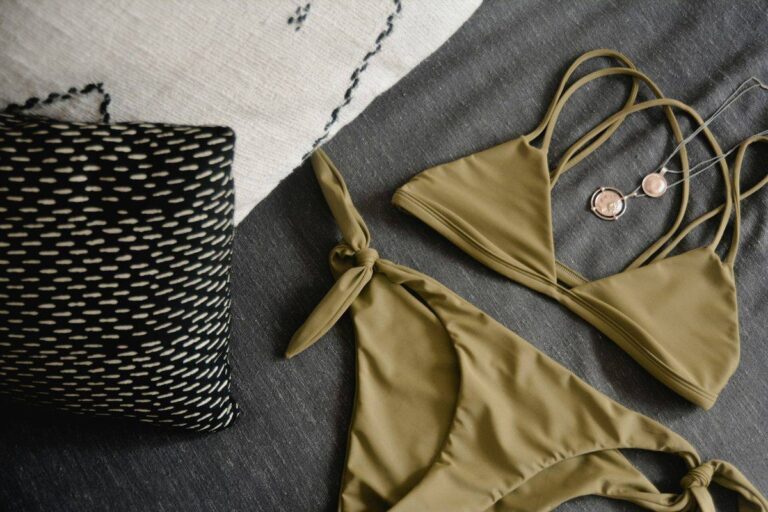
String side-ties are a petite secret weapon. Unlike a fixed waistband, ties can be adjusted to sit exactly where they flatter your body — usually a little higher than the manufacturer intends. The vertical line created by a tail of string hanging from the side tie also pulls the eye downward, lengthening the hip-to-thigh transition. Bonus: side-ties accommodate the reality that petite hips and petite waists are rarely a perfect size-match to the rise of fixed-waist bottoms.
Cheeky and Brazilian Coverage
Cheeky coverage works on petite frames because it keeps the back leg opening high, which preserves the line from waist to thigh. Full-coverage bottoms can work too, but look for ones with a leg opening that curves upward rather than running straight across — the angle matters more than the surface area.
Top Styles That Balance a Smaller Frame
Tops on a petite frame need to do two jobs: fit a smaller torso without bagging, and create a vertical line that draws the eye up. Most off-the-rack bikini tops are sized assuming a certain torso length between the underbust and the neckline — that gap is shorter on a petite body, which is why straps so often need adjusting.
Triangle Tops
The classic triangle top is the most petite-friendly silhouette for one reason: the V-shape of the cups creates a vertical line down the center of the torso, lengthening it. Fully adjustable halter ties mean you can move the apex of the V to whatever position flatters your bust and frame. Triangles also avoid the underwire-band issue that plagues petite shoppers with smaller-to-medium busts — the band on a structured top often sits too far below the bust on a short torso.

Halter Necklines
A halter pulls the eye up toward the face and creates strong diagonal lines from shoulder to neck — both lengthening effects on a petite frame. Halters also let you customize strap length, which solves the universal petite complaint of straps that slide off the shoulders.
Bandeau with Care
Bandeaus are a mixed bag for petite frames. The pure horizontal line of a bandeau can shorten the torso. But a bandeau with a center-front twist, knot, or vertical seam breaks up that horizontal line and turns the top into a flattering vertical detail. If you love bandeaus, look for ones with a center gather or sweetheart shaping rather than a straight edge.
One-Piece Strategies for Petite Bodies
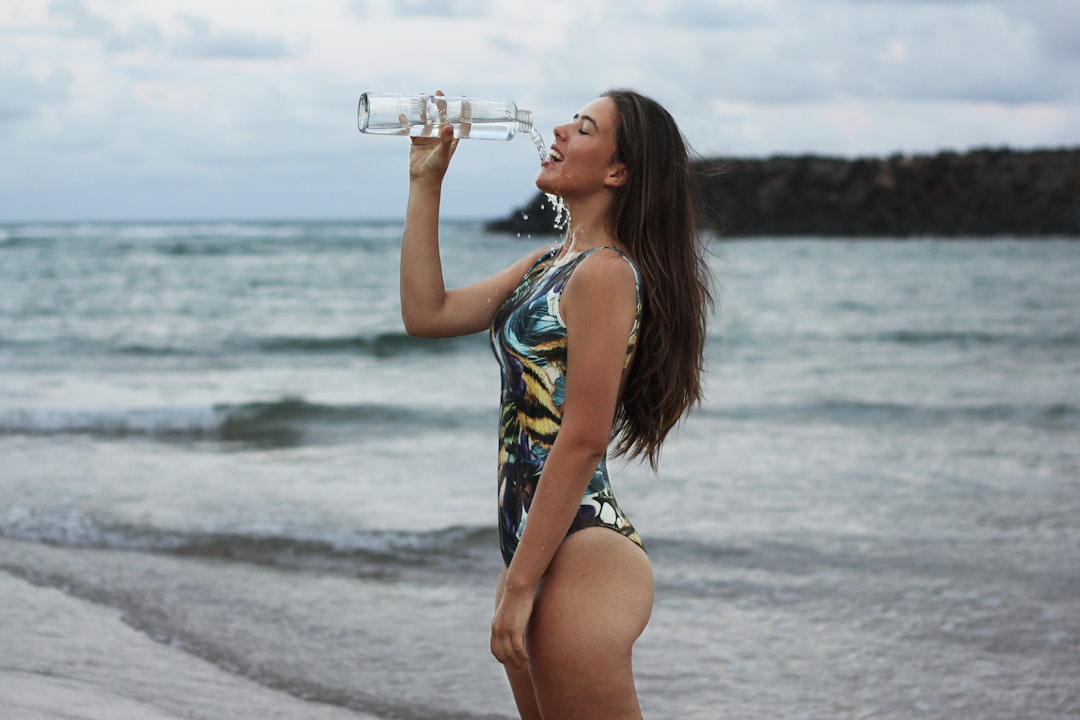
One-piece swimsuits are sometimes treated as risky for petite shoppers because the torso length of a standard one-piece can be too long, creating a pulled-down, droopy feeling at the crotch. The fix is to look for one-pieces designed for shorter torsos — many swim brands now label them “petite,” “short torso,” or list the back-strap-to-leg-opening measurement explicitly.
Once fit is sorted, the right one-piece can be incredibly lengthening on a petite frame. Look for:
- Deep V or plunge necklines — extends the visible torso upward.
- High-cut leg openings — extends the leg line.
- Color blocking with a vertical center panel — creates a slimming and lengthening illusion.
- Side cutouts that create vertical negative space, not horizontal bands.
- Avoid wide horizontal stripes and dropped waist seams.
Color, Pattern, and Visual Length
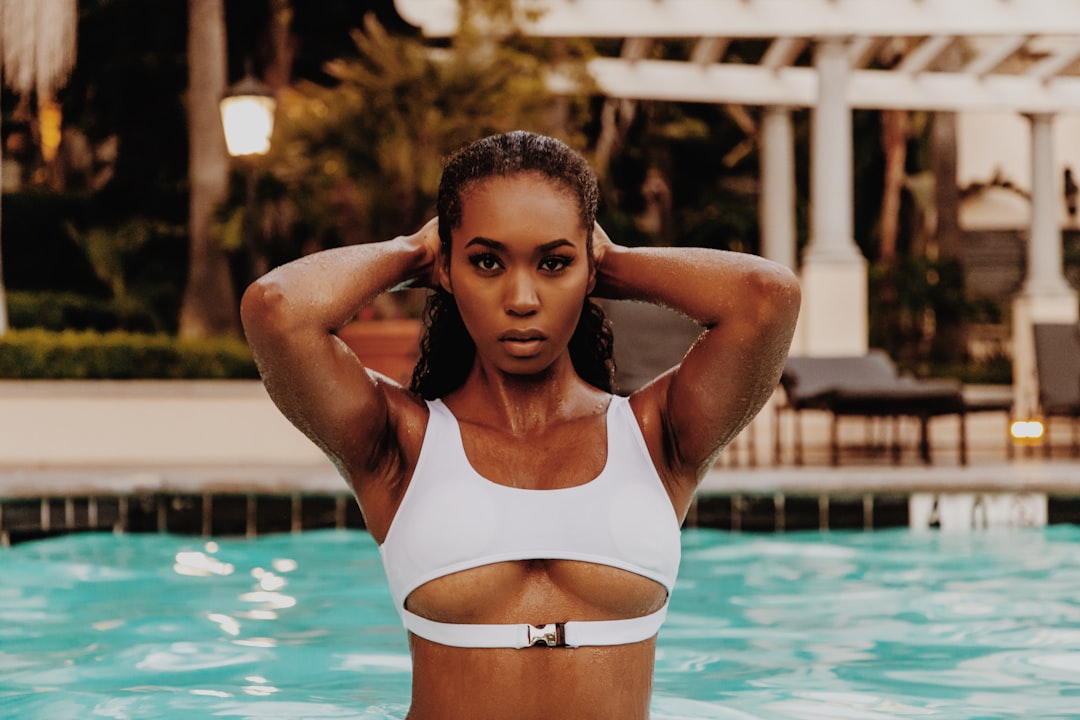
Pattern scale matters disproportionately on a petite frame. A bold tropical print sized for a six-foot model becomes a single flower stretched across a petite torso — losing the rhythm the print is supposed to create. Smaller-scale prints, micro-florals, and dotted or pin-striped patterns tend to scale to a petite body more naturally.
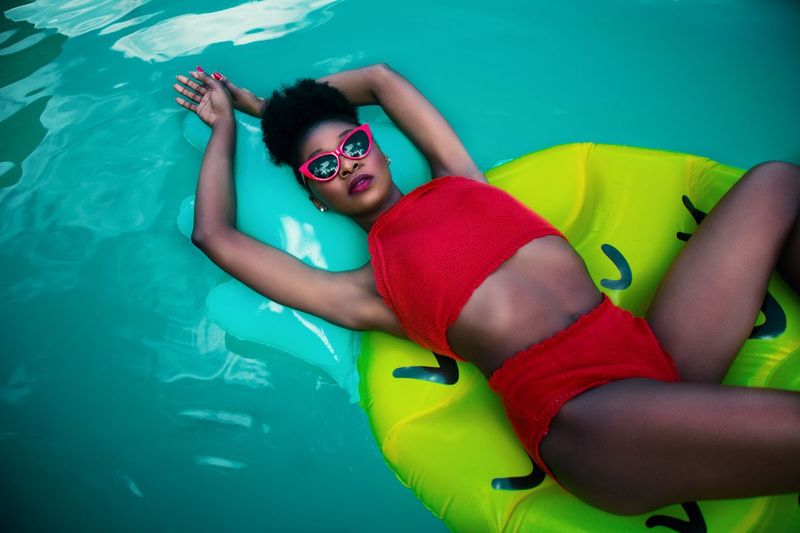
Color blocking is one of the most underrated petite tools. A suit with a darker side panel and lighter center panel creates a vertical column-of-color illusion that visually narrows and lengthens. Monochromatic top-and-bottom pairings in the same color family also lengthen the body because the eye reads one continuous line instead of two stacked blocks.
Common Petite Swimwear Mistakes
A few patterns show up over and over in fitting rooms. Avoiding them will save hours of frustration:
- Buying for bust size and ignoring torso length. A 32C top in one brand can have a totally different underbust-to-strap measurement than the same size in another brand.
- Thick fixed waistbands. These act as visual belts that cut the body in half.
- Boy-short bottoms that sit low. They drag the hip line down and shorten the leg.
- Oversized ruffles. A ruffle scaled for a taller model can overwhelm a petite frame — look for slim or layered ruffle details instead of single dramatic flounces.
- High-neck tops without vertical breakup. A solid high neckline can shorten the torso unless paired with a deep keyhole, lace-up, or vertical seam.
Fit and Sizing Tips Before You Buy
Petite shoppers benefit more than anyone from doing a little homework before clicking buy. A few habits make the difference between a suit that lives in your drawer and a suit you actually wear:
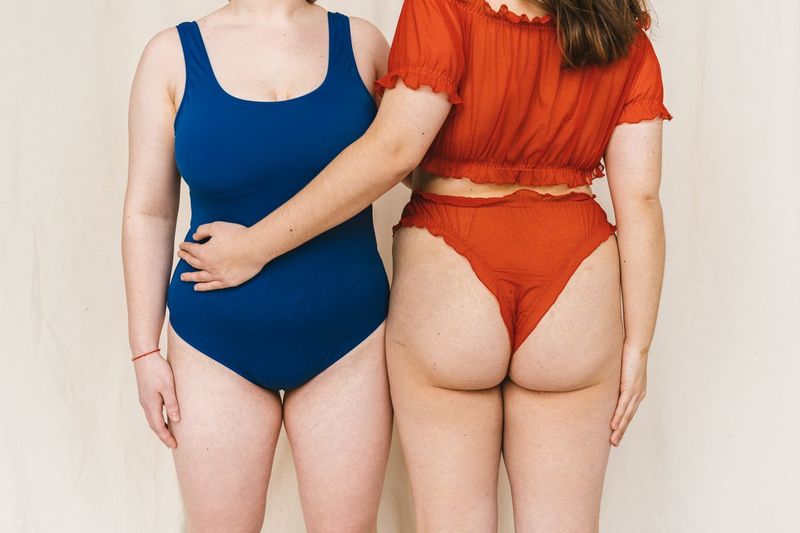
- Measure your torso from the hollow of your collarbone, over the bust, to the crotch. This is the key one-piece dimension and most petite shoppers need around 60–63 cm rather than the standard 65–68 cm.
- Check the leg-opening height on bottoms. Brands rarely list it, but high-cut should rise to roughly the hip-bone level when modeled.
- Favor adjustable everything. Tie sides, tie halters, removable padding, and adjustable straps all help a generic cut become a personalized fit.
- Order two sizes when in doubt. Petite bust-to-hip ratios often span two sizes — returning one is cheaper than wearing the wrong fit all summer.
- Read reviews from petite-tagged buyers. Even a brand without an explicit petite line often has reviewers noting fit at five-foot-two or shorter.
The Confidence Layer
Every fit rule in this guide exists to serve one outcome: walking onto the beach in a suit you do not have to think about. Petite frames have been styled as “cute” or “small” for so long that it is easy to forget swimwear can simply be powerful — a plunge one-piece, a confident high-cut, a halter tied exactly where you want it. The right suit is the one you stop adjusting after the first ten minutes.
Proportion is not a hierarchy. Tall, petite, curvy, athletic — every body has a geometry that suits it best. Learning yours is the actual upgrade.
The best swimsuit is the one you forget you are wearing. Fit it to your frame and the rest takes care of itself.
Sources
Shop our full range of bikinis and swimwear at the BikiniCool store →