
Red Bikini: 9 Best Styles for 2026
A red bikini outsells almost every other single-color search on swimwear sites every June, and it’s one of the only colors that reads as a statement from across a crowded beach. That visibility is exactly why the shade you pick matters more than it does with a black or navy suit — the wrong red fights your skin tone instead of warming it up, and the fabric itself behaves differently than lighter colors once it hits chlorine. Below is what actually separates a red bikini that photographs well for three summers from one that looks tired by August.
Which Shade of Red Actually Flatters Your Skin Tone
Most swimwear guides claim red “suits everyone,” which isn’t true and isn’t useful. Red is a temperature, not a single color, and matching that temperature to your skin’s undertone is what makes the difference between a bikini that looks intentional and one that looks slightly off in every photo.
If your undertone runs warm — your veins read more green than blue, and gold jewelry flatters you more than silver — look for tomato red, brick, or crimson with an orange base. These shades align with the golden and peachy tones already in your skin instead of fighting them. Cooler undertones do better in blue-based reds: cherry, scarlet, and true crimson sit closer to raspberry than orange and read as crisp rather than muddy against cooler skin.
The easiest way to check before buying: hold the swatch or a similar-colored shirt against your inner wrist in daylight. If it makes your skin look slightly gray or sallow, you’ve got the wrong temperature of red, not the wrong color altogether.

7 Red Bikini Styles Worth Shopping in 2026
Once the shade is settled, the cut does the rest of the work. These seven are the styles actually moving this year, not a recycled list from five summers ago:
- Classic triangle: adjustable straps, minimal coverage, and the easiest red to pack for travel since it rolls flat.
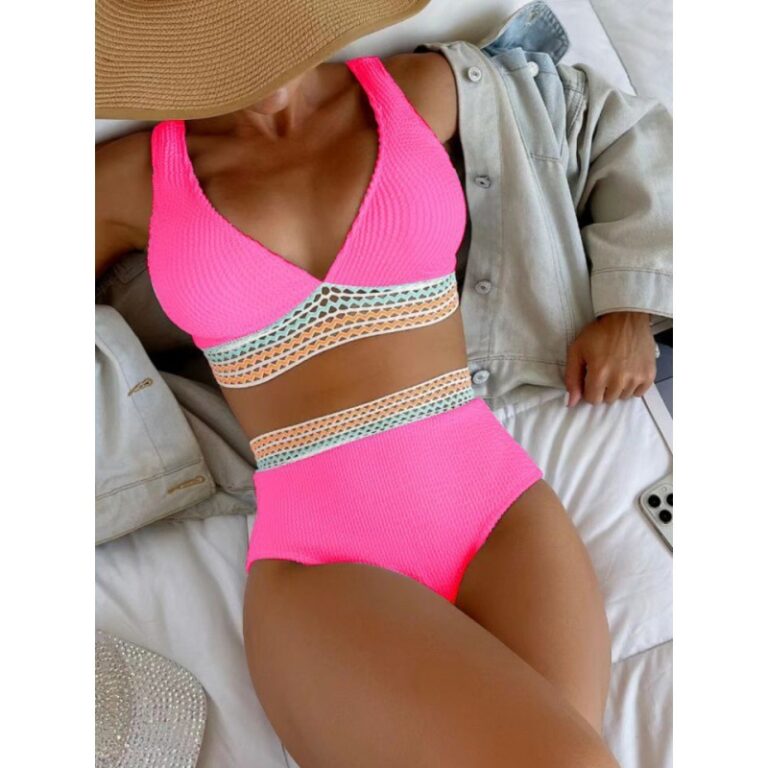
- High-waisted bottoms: paired with a triangle or bandeau top, this is the single most-searched red bikini silhouette for 2026 — tummy coverage with a retro line that doesn’t read as modest.
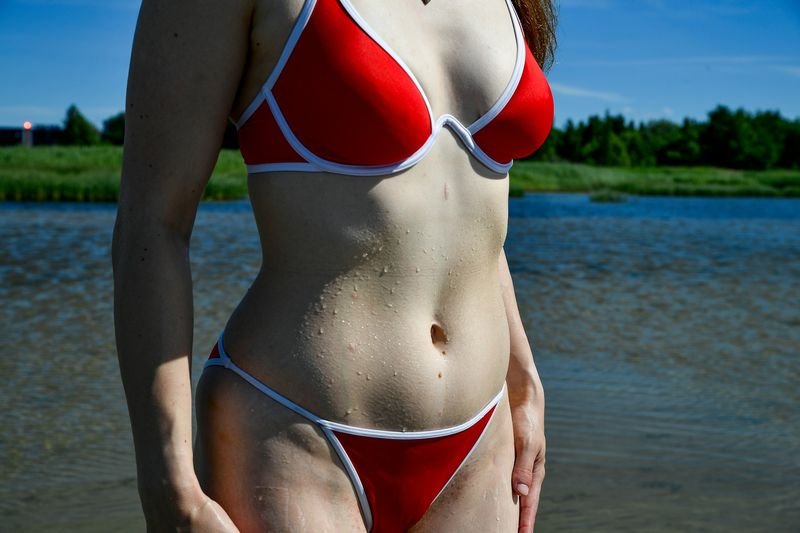
- Underwire top: structured cups built for actual support, not just shape, and the one most worth trying on before buying online.
- Sporty racerback: wider straps and a scoop back that stays put through volleyball, paddleboarding, or chasing a toddler into the surf.
- Lace-trim: red and navy lace panels are showing up across more swimwear lines this season than any other trim detail.
- One-shoulder: asymmetrical but still full coverage on one side, a middle ground between triangle and one-piece.
- Reversible: red on one side, a print or solid neutral on the other — two suits packed as one, which matters more than it sounds like until you’re trying to fit a week of swimwear into a carry-on.
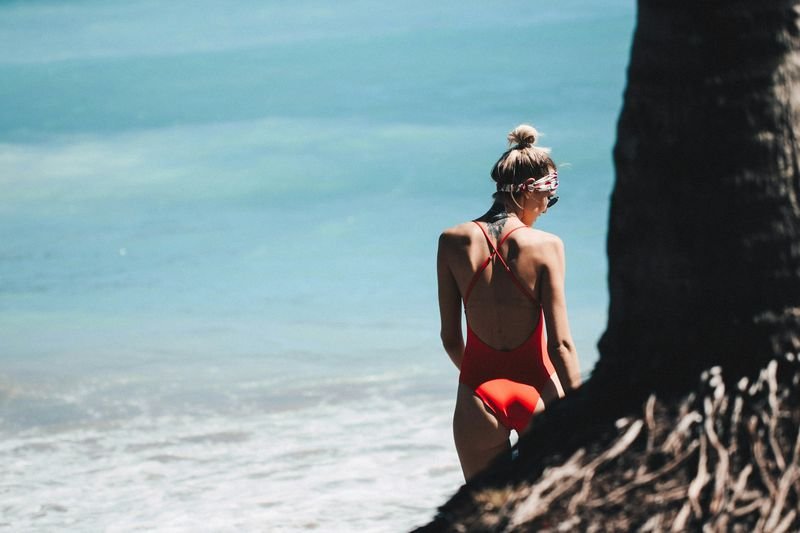
A red one-piece deserves its own mention here, separate from the bikini cuts above. It reads less overtly summer-fling and more like something you’d actually wear to swim laps or walk a beach boardwalk without adjusting straps every few minutes. A scoop-back or cross-back in red holds up against wind and current better than most bikini tops do, and it photographs just as well from behind as the front — which is more than most swimwear can claim.

For a deeper breakdown of the high-waisted cut specifically — which body types it flatters and how the rise should actually sit — see our high-waisted bikini guide.

The Best Red Bikini for Your Body Type
Red doesn’t change the fit rules that already work for your shape, but a bright color does draw the eye, so where you put it matters. A fuller bust generally looks and feels more secure in an underwire or thicker-strap triangle top in red, since the color already pulls attention upward — add structure so it’s supportive, not just bright.
Curvier and plus-size shoppers tend to get the most mileage out of high-waisted red bottoms paired with a bandeau or halter top. The high rise gives coverage without hiding the color, and red in a high-waisted cut photographs as confident rather than conservative, which is the balance most people are actually looking for.
Petite frames can wear red in smaller-scale prints or a solid without it overwhelming the frame — string ties at the hip and a smaller triangle cut keep proportions in check. Athletic builds get the most out of cut-out detailing or a two-tone red-and-black combination, since red alone on a straighter frame can read as flat without some structure breaking it up.
None of this is about hiding anything — it’s about putting the color where you actually want the attention. A longer-torso frame benefits from a red bottom paired with a neutral or lower-contrast top, which visually shortens the torso instead of elongating it further. A shorter torso works the opposite way: red on top, neutral on the bottom, to add visual length. Small adjustments like that do more for how a suit feels in photos than chasing a specific “flattering” cut ever does.
Styling a Red Bikini On and Off the Sand
A red bikini is loud enough that it doesn’t need loud accessories fighting it. Gold jewelry and a neutral straw bag do more for the look than anything that tries to match the red exactly — matching accessories to a bikini almost always reads as trying too hard, not styled.
For cover-ups, white or cream linen is the easiest pairing because it lets the red stay the focal point. A black sarong works for evening but can read heavier in daylight photos. If you want the red to carry the whole outfit, a solid red one-piece under an open white shirt does more for a pool-to-bar transition than a printed cover-up ever will.
The setting changes what’s worth prioritizing, too. A resort pool day rewards a structured triangle or underwire top since you’re sitting upright on a lounger most of the afternoon and support matters more than mobility. A real beach day with waves and current favors the sportier racerback or a one-piece, since red bottoms with loose ties are the first thing to shift or come untied in rough water. A pool party or evening event is really the only place a fully matching red set — top, bottom, and cover-up — makes sense; anywhere else, one red piece against neutrals does more work than head-to-toe red.



Why Red Fades Faster Than Almost Any Other Bikini Color
Here’s the part most red bikini guides skip entirely: red is one of the fastest-fading swimwear colors you can buy, and it isn’t about cheap fabric. Chlorine is a bleaching oxidizer — it attacks dye molecules directly, and darker, more saturated colors absorb more UV energy on top of that chlorine exposure, which speeds up the breakdown even further. Pastels and whites simply don’t carry the same depth of pigment, so there’s less for the chlorine and sun to strip out.
The damage compounds the longer wet fabric sits. A red suit left balled up in a damp pool bag for a few hours degrades noticeably faster than one rinsed in clean water within fifteen minutes of leaving the pool. Nylon holds onto that chlorine longer than polyester does, so a nylon-blend red bikini needs faster rinsing than a polyester one to stay saturated past a single season.

How to Keep a Red Bikini From Fading
Rinse it in cool, clean water the same day you swim in it — not after it’s dried in a bag. Skip the washing machine entirely; hand-wash with a mild detergent and lay it flat in shade, since direct sun finishes the fading job chlorine started. Pool suits specifically benefit from a quick rinse before the first swim too, since pre-wetting the fibers slightly reduces how much chlorine the fabric absorbs on contact.
If a red suit has already gone slightly pink or dull, it’s often salvageable rather than done. Our swimwear care guide covers the full wash routine in more depth, including what to do with stretched elastane alongside faded dye.
The Sun-Protection Edge Nobody Mentions
There’s one upside to red’s vulnerability to fading: the same dye density that breaks down faster also blocks more UV than a pastel suit does. A standard dark, tightly woven swimsuit fabric rates around UPF 8.6 when dry, compared to roughly UPF 4 for a white or light-colored suit once it’s wet — a meaningful gap if you’re spending hours in direct sun rather than minutes. It’s not a reason to skip sunscreen, but between two otherwise-identical suits, the red one is doing slightly more work against UV than the white one next to it. Fabric weave matters as much as color here — a tightly woven, dry red suit protects more than a stretched-out one with a looser knit, since gaps in the weave let more light through regardless of how dark the dye is. The Skin Cancer Foundation’s cutoff for “sun protective” clothing is a UPF rating of 30 or higher, and most swimwear, red or otherwise, doesn’t hit that number without a specific UPF finish — so treat the color advantage as a bonus, not a substitute for a rash guard on a long beach day.
If you already own a black bikini for its fade-resistance, red gets you a similar sun-protection benefit with a color that photographs better against sand and water.
Red isn’t the easy, forgiving bikini color — it asks a little more of you than black or navy, in care and in matching it to your undertone. That’s also exactly why it still reads as a statement on a beach full of neutrals. Buy the shade that matches your undertone, rinse it the day you wear it, and it’ll outlast the guesswork most people put into choosing it in the first place.
Sources
- Effect of Chlorine on Swimwear — EcoStinger — explains how chlorine oxidizes dye molecules and why darker colors fade faster.
- What Skin Tone Suits Red — Palettehunt — breaks down warm vs. cool red shades by undertone.
- Sun Protective Clothing — The Skin Cancer Foundation — UPF ratings and how fabric color affects UV protection.