
Women’s Rash Guard Guide: Styles, Fit & Sun Protection 2026
Skin cancer is the most commonly diagnosed cancer in the United States, and the Skin Cancer Foundation reports that more than 5 million cases are treated every year. A women’s rash guard rated UPF 50+ blocks at least 98% of that radiation continuously — the kind of protection that sunscreen requires reapplication every two hours to match. That practical difference is what’s pushed rash guards from surf shops into everyday beach bags.
What Is a Women’s Rash Guard?
A women’s rash guard is a close-fitting athletic top made from quick-drying, stretchy fabric — typically a nylon-spandex or polyester blend — with a built-in UPF (Ultraviolet Protection Factor) rating. The name originally referred to the garment’s ability to prevent rash from surfboard wax and sand friction. That original purpose still holds. But the category has expanded well past its surf origins.
Today’s rash guards function as both sun protection and swimwear. The fabrics are engineered to resist saltwater and chlorine degradation, dry fast, and maintain their UPF rating through repeated washing. Many styles look indistinguishable from regular athletic tops — which is exactly why they’ve become a staple for beach vacations, pool days, and watersports from kayaking to paddleboarding.

7 Women’s Rash Guard Styles Worth Knowing
The category has expanded enough that picking a style actually requires thought. Here’s what’s on the market and what each one is genuinely good for:
Long sleeve classic. The original and still the most protective option. Full arm coverage, snug fit, usually with a scoop or crew neck. Best for surfing, snorkeling, or anyone who burns quickly. Pairs naturally with bikini bottoms for a beach look that’s practical without being athletic-only.
Short sleeve. Covers the shoulders and upper arm — the areas that absorb the most UV when seated or lying down — while allowing more freedom of movement. A smart choice for pool days and light water activities where a full sleeve feels unnecessary.
Zip-front rash guard. A pull-on style isn’t always practical when wet. The zip-front solves that problem and adds a casual sportswear edge to the silhouette. Many zip-front styles also sit slightly looser through the body, making them the most comfortable option for long days in the heat.
Cropped rash guard top. Cut at the midriff and designed to be worn as a swim top in its own right. Works well with high-waisted bikini bottoms and carries more beach-fashion weight than a traditional full-length rash guard. Less total coverage, but much more versatility off the water.
Printed and patterned. The protection level didn’t change — the prints did. Tropical prints, florals, bold geometrics, and tie-dye patterns are standard across most brands now. A printed women’s rash guard in a color that coordinates with your bikini reads as an intentional outfit, not an afterthought.
Integrated rash guard swimsuit. A one-piece swimsuit built entirely from rash guard fabric. Covers the torso and arms in a single garment with no layering required. The simplest option for anyone who wants maximum coverage with minimum effort.
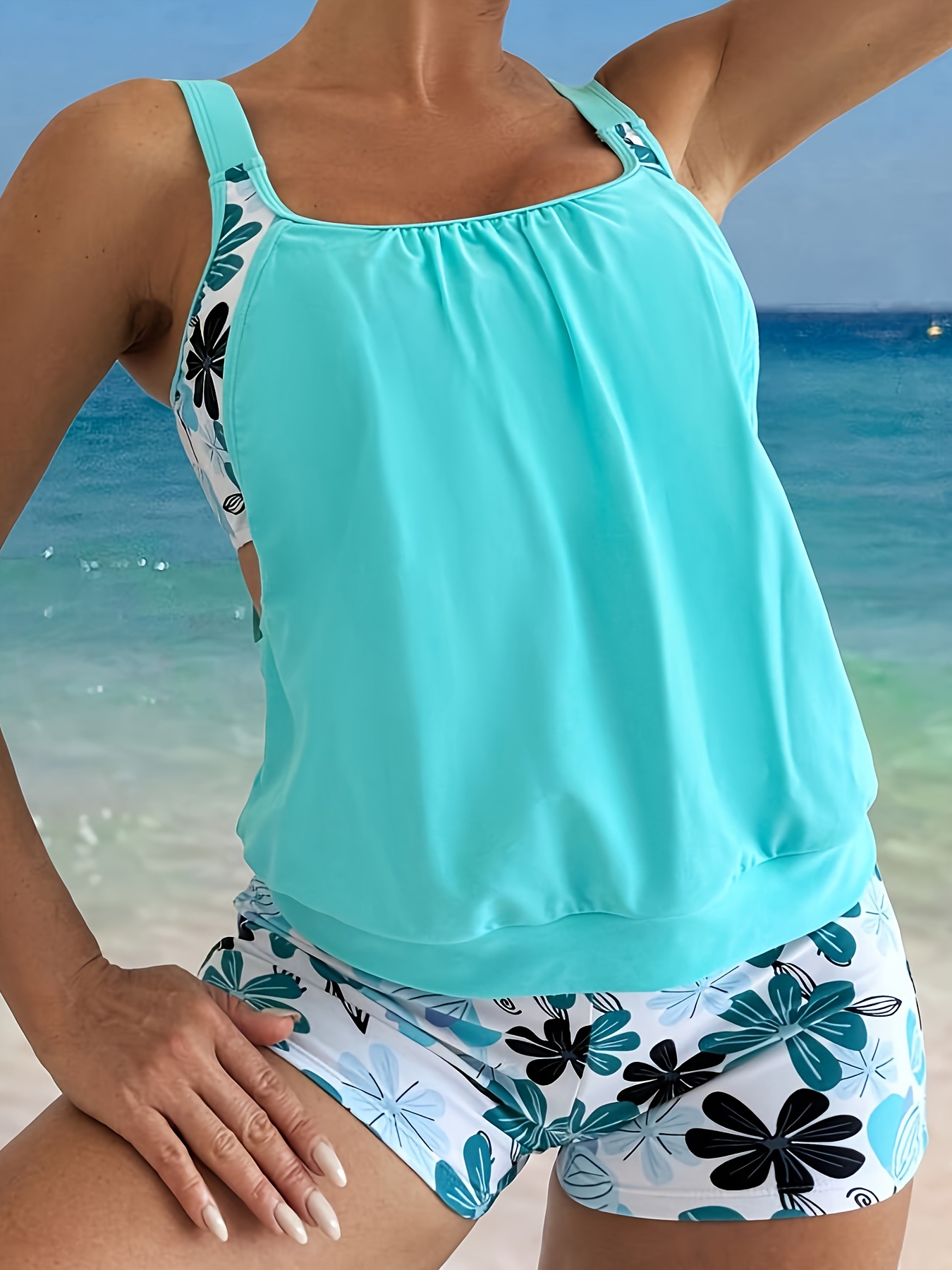
Swim shirt / tankini hybrid. A longer, slightly looser version with a standard hem that falls past the hips. Functions more like a UV-protective top than a form-fitting rash guard. Works well for pool activities with kids or anyone who prefers a relaxed beach silhouette without a compression fit.
UPF 50+ — What That Number Actually Means for Your Skin
UPF stands for Ultraviolet Protection Factor — the fabric equivalent of SPF. A UPF 15 garment blocks roughly 93% of UV radiation. UPF 30 blocks 96.7%. A garment rated UPF 50+ blocks 98% or more. The “+” designation matters: it indicates the fabric was tested and found to exceed the 50 threshold, not just meet it.
Sunscreen requires reapplication every two hours, especially after swimming or sweating — and the American Academy of Dermatology notes that most people apply far less than the amount used in laboratory testing, which significantly reduces effective protection. A UPF 50+ rash guard maintains its full protection rating for as long as you’re wearing it. That’s the practical difference.
Not all rash guard fabrics carry the same UPF rating even at similar price points. Tightly woven nylon-spandex blends consistently test higher than loosely knit polyester. If a rash guard doesn’t display a UPF rating on the label, treat it as unrated — no label means no certification. To understand more about how swimwear fabrics affect performance, see our swimwear fabrics guide.

How to Wear a Women’s Rash Guard (Not Just in the Water)
The original use case — pull it on over a bikini before paddling out — is still valid, but it’s not the whole picture anymore. A women’s rash guard worn with high-waisted bikini bottoms and a wide-brim hat is a legitimate resort look. A cropped rash guard paired with swim shorts works whether you’re in the water or walking to the café two blocks from the beach.
For pool days, a fitted long-sleeve rash guard over a bikini solves the sun exposure problem without the bulk of a traditional cover-up. For family beach trips, an integrated swimsuit style removes the decision entirely. For snorkeling, kayaking, or any activity where you’re on the water and continuously exposed — the long-sleeve classic is the most practical choice by far.
A pairing that works well: a printed rash guard top worn with solid-color bikini bottoms in the same color family. The rash guard becomes the statement piece; the bottoms anchor the look. This approach works across most silhouettes and avoids the matchy-matchy problem that can feel costume-like when both pieces carry the same bold pattern.

What to Wear Under a Women’s Rash Guard
A snug rash guard works best when layered over something equally close-fitting. Loose fabric bunches, rides up, and creates pressure points when you’re active in the water. The three most practical underlayers: a bikini set, a sports bra with bikini bottoms, or a one-piece swimsuit.
A bikini top with matching bottoms is the most versatile choice — when you pull the rash guard off, you have a complete swimwear look ready underneath. Look for a bikini cut that won’t create bulk at the neckline or sides. Triangle tops and bandeau styles tend to sit the most seamlessly under a fitted rash guard. For guidance on finding the right bikini fit overall, see our swimwear shopping guide.
A sports bra under a rash guard works well for high-activity days — surfing, paddleboarding, beach volleyball — where you want the security of athletic support without adding the bulk of a structured bikini top. Pair it with bikini bottoms or board shorts depending on the activity.


Women’s Rash Guard Fit Guide: How It Should Feel
A properly fitting women’s rash guard should feel like a second skin — snug enough that it won’t ride up in the water, loose enough to allow free arm movement overhead. If you’re between sizes, size up for a swim shirt hybrid and size down for an athletic-fit or surf style. The snugger the fit, the more reliably the UPF rating holds in the water, because looser fabric stretches and opens its weave when wet.
Length matters more than most sizing guides acknowledge. A rash guard that hits above the hip when dry will ride up to mid-torso the moment you start paddling. If you plan to use it actively in the water, add roughly an inch to whatever “comfortable” feels like on land.
Check the sleeve length against your actual arm span, not just the size on the label. A women’s medium cut for a broader shoulder will have longer sleeves than the same size cut narrow — and vice versa. UPF protection only covers the skin that the fabric is actually touching. A rash guard that exposes your wrists provides no wrist protection regardless of its fabric rating.

Styling a Women’s Rash Guard On and Off the Water
Rash guards have earned a place in beach fashion because they solve a real problem without requiring a sacrifice in how you look. Here are the combinations that actually work:
Beach day: Long-sleeve rash guard in a neutral or bold print over bikini bottoms. Wide-brim hat. The rash guard functions as the top in the outfit — treat it as such and style the rest of the look around it, rather than viewing it as an add-on to the swimwear underneath.
Resort travel: A cropped rash guard over high-waisted bikini bottoms reads as resort wear. Add slides and a crossbody bag and the look works from the pool deck to a casual beachfront lunch. Pick a rash guard and bottoms in complementary colors rather than forcing an exact match — coordination reads better than identical prints.
Watersports: Zip-front styles are the most practical here. They’re easier to put on and remove over wet swimwear and the zip provides ventilation on warm days. Pair with board shorts or surf leggings for full coverage during paddleboarding, kayaking, or open-water swimming.
One thing worth knowing: a rash guard changes your sun exposure pattern significantly, which directly affects how and where you tan. If tan lines are a factor in your beach wardrobe planning, our bikini tan line guide covers what to expect when you add or remove coverage layers from your regular beach routine.

How to Care for a Women’s Rash Guard
The most common mistake is leaving a rash guard bunched in a wet bag for hours after a beach day. Salt and chlorine continue to break down the fabric if they’re not rinsed out promptly. The fix is immediate: rinse in cold fresh water right after use, even if you plan to machine wash it properly when you get home.
Never put a rash guard in the dryer. Heat degrades spandex and nylon fibers, which shortens the life of the garment and gradually compromises the fabric’s UPF rating. Lay flat to dry out of direct sunlight — prolonged UV exposure accelerates fabric breakdown even in stored garments. After a full beach day, drying in the shade is the better call.
Skip the fabric softener entirely. It coats fabric fibers in a way that interferes with moisture-wicking and can reduce UPF effectiveness over time. Use a mild detergent, cold water, and the gentle cycle — or hand wash. A women’s rash guard treated this way should maintain its shape and UPF rating through three to five years of regular use.

A women’s rash guard is one of the more useful additions to a beach wardrobe — it does something sunscreen alone can’t replicate, it works across body types and activities, and the current range of styles makes it wearable as fashion on its own terms. Pick the silhouette that fits how you actually use it, size for snug movement rather than comfort on the hanger, and rinse it immediately after every session. It’ll hold up.
Sources
- Skin Cancer Foundation — Skin Cancer Facts & Statistics — more than 5 million cases of skin cancer are diagnosed and treated in the US annually
- American Academy of Dermatology — Sunscreen FAQs — most people apply 25–50% less sunscreen than the tested amount, significantly reducing effective SPF
- SwimOutlet — How to Choose a Rash Guard — fit, fabric, and UPF selection guidance
- ROXY — Women’s Rashguard Guide — style and activity-based selection