
How Swimwear for Curvy Figures Actually Works: A Guide to Fit That Feels Right
Shopping for swimwear when you have curves can feel like navigating a system that wasn’t built for you. Standard sizing charts don’t account for the reality of curvy bodies — fuller hips, a defined waist, a larger bust — and the result is swimwear that gaps, pinches, or refuses to stay in place. But the problem isn’t your body. It’s almost always the construction.
It’s About Fit Architecture, Not Body Shape
The fashion industry has historically designed swimwear for one body type and scaled up the proportions — which is why simply sizing up often doesn’t solve fit problems for curvy women. A swimsuit sized for a straight-size body and then graded to a 1X or 2X may have more fabric in the bust and a longer torso, but it won’t necessarily address the curve-specific challenges that matter most: the hip-to-waist ratio, bust volume relative to band size, and how fabric behaves when stretched across rounder contours.
What curvy-specific swimwear design does differently is engineer the garment’s structure around those proportions from the start. That means tummy panel placement, strap attachment points, and underwire sizing designed for a fuller cup — not just scaled from a smaller one. When you find a swimsuit built for a curvy body rather than scaled up for one, the difference is immediately noticeable: the fabric sits instead of stretches, the straps pull in the right direction, and the shape holds through an entire beach day.

The Construction Details That Change Everything
Ruching and Shirring
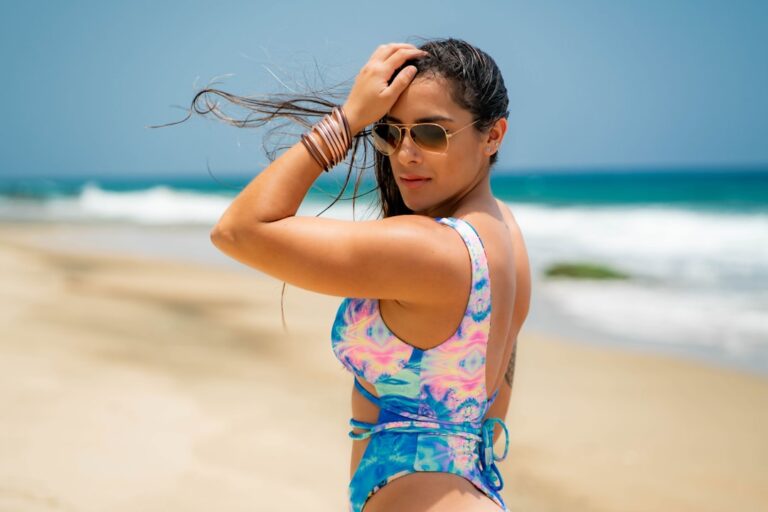
Ruching — the gathered, rippled fabric detail across the stomach area of many one-pieces and bikini bottoms — isn’t just decorative. When placed strategically, ruching distributes fabric tension across a wider area, which reduces the pulling or riding-up that happens when flat fabric sits over rounded curves. Shirring on the sides of a one-piece performs a similar function, allowing the suit to expand and conform to your shape rather than resist it.
Not all ruching is equal. Ruching that runs vertically through the center of a one-piece draws the eye inward and creates an elongating effect. Horizontal ruching that wraps around the hip adds visual volume, so its placement relative to your fullest point matters considerably. The best ruched designs use it where you need the fabric to flex — not just where it looks good in a product photograph. When you’re shopping online, zoom in and look at where the gathering actually starts and ends.
Underwire and Structured Cups
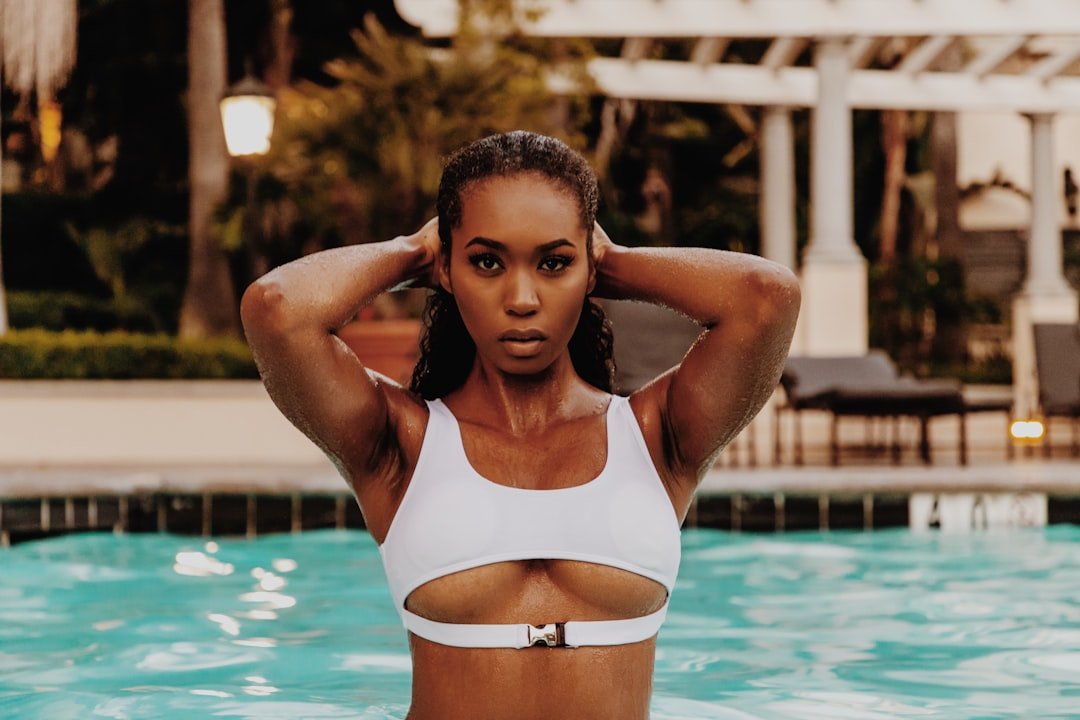
For a curvy body with a larger bust, fabric cups without structure can’t provide adequate support when you’re actually moving in the water. Underwire in a bikini top or one-piece does two things: it lifts the bust and keeps the cup shape from collapsing during activity. What you’re looking for isn’t just any underwire, but one that follows the natural curve of your breast root. If it’s too straight or too narrow, it will dig in at the sides or pop out from underneath when you move.
Molded cups with underwire give the most consistent shape and support, but they don’t always accommodate different cup depths. Soft-cup construction with removable pads can be more adaptable if your bust runs on the fuller side. When shopping online, look for swimwear brands that size their tops by bra size — 34D, 38DD — rather than XS through XL. That’s a reliable signal the cups were engineered for actual bust variation rather than estimated from a single proportional model.
Fabric Weight and Stretch Recovery
Thin, high-stretch fabric moves with you, which sounds ideal, but for a curvy figure it often means the swimsuit stretches out of alignment when wet and heavy. Mid-weight fabrics with four-way stretch hold their shape better through a full day and don’t become translucent when wet. Nylon-spandex blends recover their shape quickly after stretching. Polyester-spandex blends resist chlorine and UV damage better, making them the smarter choice if you swim regularly rather than just sunbathe. For beach-only use, look for at least 80% nylon content for the best drape and recovery.
Shop Ruched Swimsuits for Curvy Women on Amazon →
One-Piece vs. Bikini: What Actually Works for Curvy Bodies
The assumption that curvy women should wear one-pieces for coverage is one the swimwear world has been slowly dismantling — and rightly so. The real question isn’t about modesty. It’s about support and fit complexity. A one-piece has one unified structure that has to fit your bust, waist, and hips simultaneously. That’s genuinely harder to achieve for a curvy body where the difference between those measurements is significant. If a one-piece fits your hips, it may pull across the bust or produce a neckline lower than you chose. Many curvy women find that a two-piece gives them far more control: they can size the top separately from the bottom, addressing the bust’s specific needs independently from the hips.

That said, a well-designed one-piece with adjustable or tie straps, a defined waist panel, and a tummy control lining can deliver the kind of all-day comfort and security that a bikini requires you to actively maintain. The right answer depends on whether your bust and hip measurements are close enough that a unified garment works for you, or different enough that mixing sizes is the smarter call. Curvy-specific one-pieces with separate cup sizing do exist and are worth seeking out if that silhouette is what you prefer — don’t let a poorly fitted one-piece convince you the style doesn’t work for your body.
Shop High-Waist Bikinis for Curvy Women on Amazon →
The Practical Case for Adjustable Styles
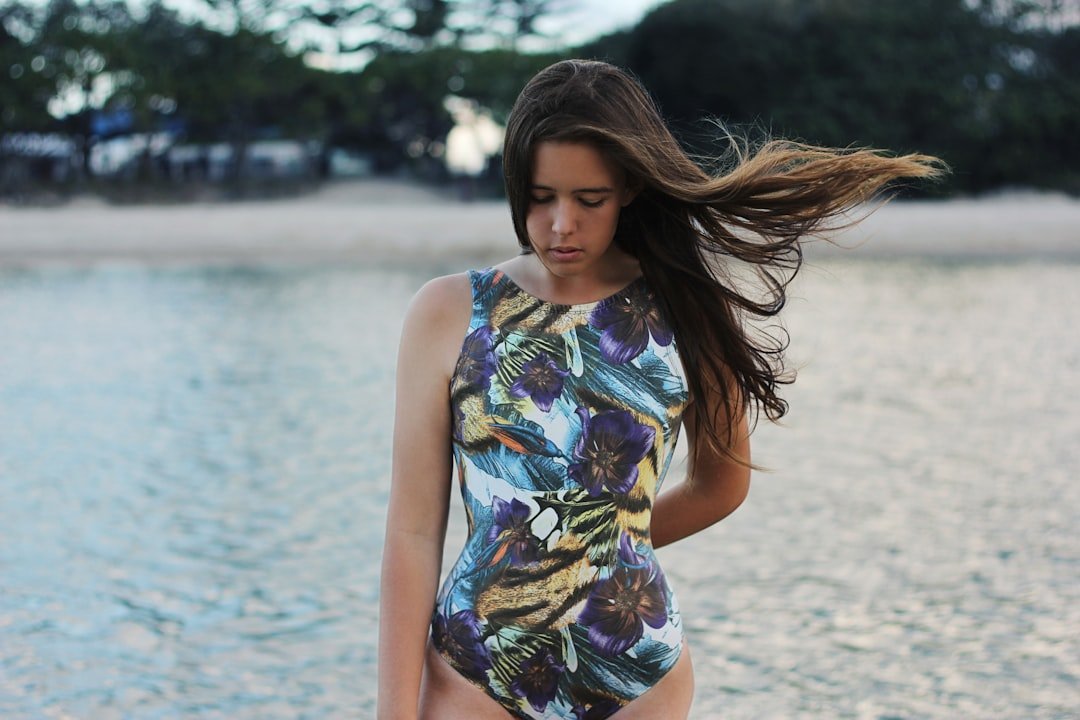
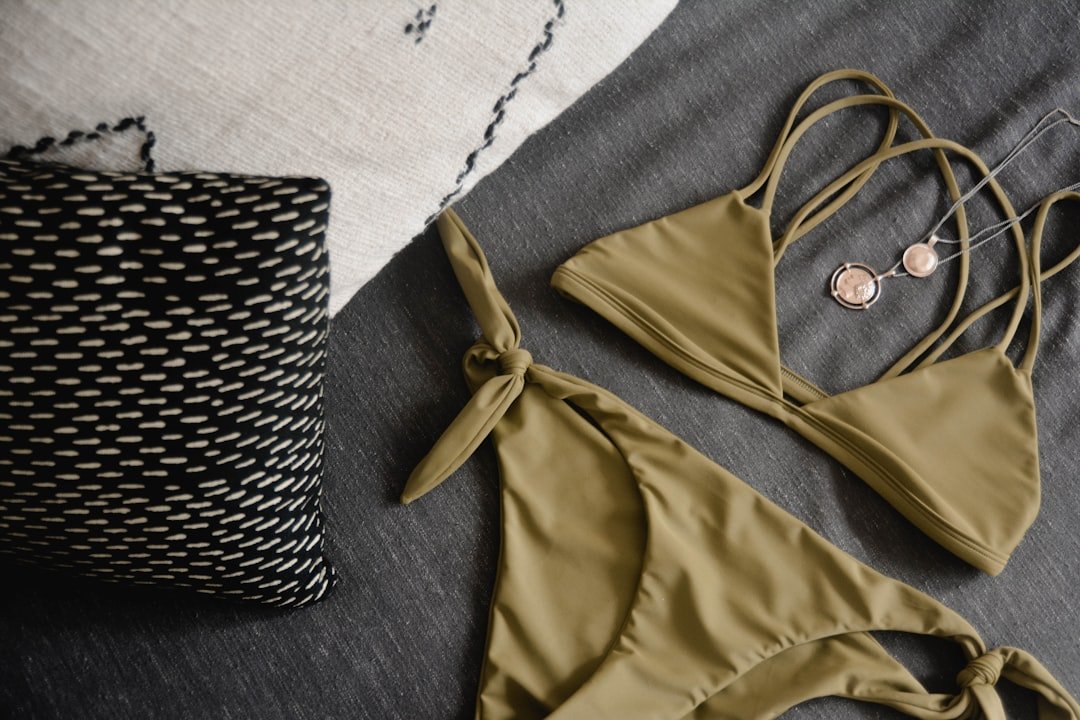
Adjustable swimwear is undersold in mainstream retail but enormously practical for curvy bodies. Wrap-style bikini bottoms tie at the hips rather than relying on a fixed elastic band, so they can accommodate a wider range of hip sizes and sit exactly where you need them rather than rolling or riding up. Tie-back halter tops can be tightened as needed, which matters particularly when the fabric is wet and heavier after time in the water.
Adjustable straps on one-pieces are worth prioritizing just as much. A fixed strap length that works for a shorter torso will pull uncomfortably on a longer one. Being able to add or remove length from the shoulder or back means the suit can position the bust correctly without pulling the crotch too high or letting the neckline drop further than intended. Many curvy-specific brands now offer slider adjusters rather than simple knot ties, which hold tension more reliably through an active beach day without requiring constant readjustment.
Starting Your Search From Measurements, Not Style
Most women shopping for swimwear focus first on style — the print, the color, the silhouette — and then try to make fit work around it. For curvy figures, reversing that order tends to produce better results. Starting from your measurements before you open a browser tab means you’re eliminating options that won’t work before you fall in love with a print on a swimsuit built for a different shape.
The measurements you actually need are: full bust, underbust for the band size, natural waist, and fullest hip. Equally useful is knowing your torso length — the distance from your shoulder to your crotch. Short-torso and long-torso versions of the same swimsuit exist, and finding them can be the difference between a one-piece that fits all day and one that gaps at the top or rides up constantly. When shopping online, read the return policy before anything else. Curvy-specific swimwear in the right style but wrong construction is just as unwearable as an ill-fitting standard-size suit, and being able to try and return freely is the only way to discover which brand’s fit model actually matches your proportions.

Shop Tummy Control One-Piece Swimsuits on Amazon →
What Body-Positive Swimwear Shopping Actually Looks Like
Body positivity in the swimwear space has moved beyond marketing language into real structural changes in how some brands operate. The most useful signal when you’re shopping isn’t the brand’s tagline — it’s whether they photograph their swimwear on a range of body sizes and publish customer reviews with sizing context. A review that says “I’m a size 16 with a 44D bust and ordered a 2X — fits perfectly on the hips but ran small in the cup” is worth more than ten five-star ratings with no detail. That kind of specificity tells you how the fit model is shaped and whether it’s likely to match yours.
Fit guides that walk you through how to measure yourself and match to a brand’s size chart are a reliable sign the brand has invested in curvy-specific design rather than just scaling up standard patterns. Extended size runs that reach beyond 3X or include plus-petite and plus-tall options suggest the same investment. The brands doing this work are out there — they just aren’t always the ones with the biggest marketing budgets. Actively searching for curvy-specific swimwear retailers, rather than waiting for them to surface in algorithm feeds, will get you to the good stuff faster.
The most empowering thing you can bring to any swimwear search is specific knowledge of what has worked for your body before. A swimsuit you felt great in — even from years ago — is worth noting. What brand was it, what style, what fabric? That information is far more useful than chasing “most flattering style for your body type” advice, which tends to be a repackaged version of the same rules that weren’t built around your actual proportions to begin with. Trust your history over the guide.
Sources
2. Swimsuits For All — Curvy Swimwear Retailer
3. SELF Magazine — Fashion and Wellness