
Why Your Bandeau Slips (and How to Make It Stay Put)
There’s a specific little gesture almost every woman who owns a bandeau knows: the discreet upward tug. You do it walking out of the water, standing up from a lounger, or right before someone takes a photo. It’s not that the style is bad — it’s that most of us were handed a strapless top with no explanation of how the thing is actually engineered to stay up. Once you understand the mechanics, the anxious hovering hand disappears and you get to enjoy the whole point of a bandeau: clean shoulders, no straps digging in, and an even, uninterrupted line across the collarbone.
This isn’t a ranking of the “best” tops or a list of rules for who’s “allowed” to wear strapless. Every torso — long, short, broad, narrow, fuller-busted, smaller-busted — can wear a bandeau beautifully. What changes from body to body is which construction details you need to look for. So let’s actually get into how these styles work, why they slip, and how to make yours behave.
What a bandeau actually is (and how it differs from strapless)
People use “bandeau” and “strapless” interchangeably, but a bandeau is really just one style of strapless top — a straight band of fabric with no cups or boning. (For the full breakdown of bandeau vs. strapless styles and how to pick a cut for your shape, see our bandeau and strapless styling guide.) What actually determines whether yours stays up has nothing to do with which name is on the tag — it comes down to construction, which is what the rest of this piece is about.
The distinction matters because it tells you where the support is coming from. A flat tube-style bandeau relies almost entirely on the grip of its bottom band against your ribcage. A structured strapless top borrows tricks from lingerie — boning, molded cups, wider under-bands — to carry more of the load. If you’ve ever bought a “bandeau” that felt like it was constantly on the verge of a wardrobe malfunction, there’s a good chance you bought a flat tube when your bust actually wanted a structured strapless. Same category, very different physics.
The real reason it slips: it’s the band, not the fabric
Here’s the single most useful thing to understand. A strapless top does not stay up because it’s tight across your chest. It stays up because the bottom edge grips the ribcage just under the bust. That lower band is the anchor. When a bandeau rolls down or creeps, it’s almost never because the top is too loose across the front — it’s because the under-band has lost its grip and the whole tube starts migrating south.
This is why the width and elasticity of that bottom band is the first thing to inspect. A thin, single-layer hem will stretch out fast and skate down your torso. A wider band — think an inch or more of firm, doubled elastic — sits like a shelf and holds position through movement. When you try a bandeau on, ignore the front for a second and run your finger along the bottom edge. If it feels flimsy, that’s your slip risk right there, regardless of how cute the print is.
The band also explains the counterintuitive sizing trick: if your bandeau slips, the fix is often a smaller band, not a bigger cup. A band that’s snug on your ribcage does the anchoring work. Going up a full size to “get more coverage” usually just loosens the anchor and makes the slipping worse. You want firm around the ribs and comfortable across the bust — those are two separate measurements doing two separate jobs.
Matching the construction to your body
There’s no such thing as a bust that “can’t” do strapless — but a fuller bust needs the top to do more work, and that work has to be built in. If you’re a larger cup size, the flat-tube bandeau is the one style that genuinely fights you, because there’s nothing distributing the weight. What you want instead is a structured strapless: molded or lightly padded cups that create shape, internal side boning that keeps the top from folding down, and that wide gripping band underneath. Silicone or rubberized strips along the top inner edge add real staying power against skin.
If you’re smaller-busted, you get the widest range — including the clean, minimalist flat bandeau that looks so effortless precisely because it doesn’t need scaffolding. The main thing to watch for is gaping at the top edge; a slightly ribbed or textured fabric and a bit of ruching in the center help the top hug rather than stand away. Mid-range busts can go either way and benefit most from a removable halter or clip-on strap — more on that in a moment.
Fabric does quiet, important work
Two bandeaus can have identical shapes and behave completely differently because of what they’re made of. A quick stress test when shopping: tug the fabric and let go. If it snaps back crisply, it’ll hold you; if it stays stretched and sad, it’ll slide. (For the deeper dive on spandex content, seaming, and exactly why some fabrics grip better than others, see our construction breakdown.)
When you find a top that ticks these boxes — wide band, real fabric recovery, structure matched to your bust — it’s worth having in the rotation.
Shop Structured Bandeau Bikini Tops on Amazon →
The convertible advantage
One of the smartest things to happen to strapless swimwear is the removable strap. Many bandeaus now come with a detachable halter tie or a pair of clip-on shoulder straps, and this turns a single top into a versatile piece: strapless for sunbathing, clipped on for anything active. (Our inside-a-bandeau construction guide covers the different clip-in configurations — classic, halter, crossed — in detail.)
The halter tie deserves special mention for fuller busts. Adding a single center-back-to-neck tie redistributes weight upward and takes strain off the band, giving you the strapless look for photos and the halter security for movement, all in the same suit. Think of the straps not as a compromise but as a mode switch — you’re choosing the amount of support the moment calls for.
Shop Convertible Bandeau Tops on Amazon →
Wearing it with confidence, not vigilance
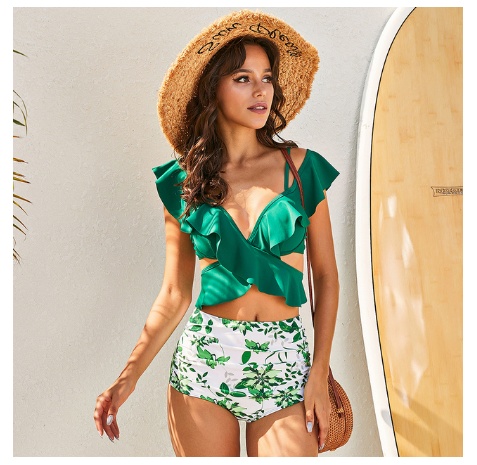
Once the fit is right, the styling is where the fun starts. Because a bandeau strips the eye down to a clean horizontal line, it plays beautifully with bottoms that add their own detail — high-waisted briefs for a retro hourglass, tie-side bottoms for a bit of movement, or a matching set for the pulled-together look. A bandeau also layers under a linen shirt or a mesh cover-up better than almost any other top, since there are no straps to peek out awkwardly.
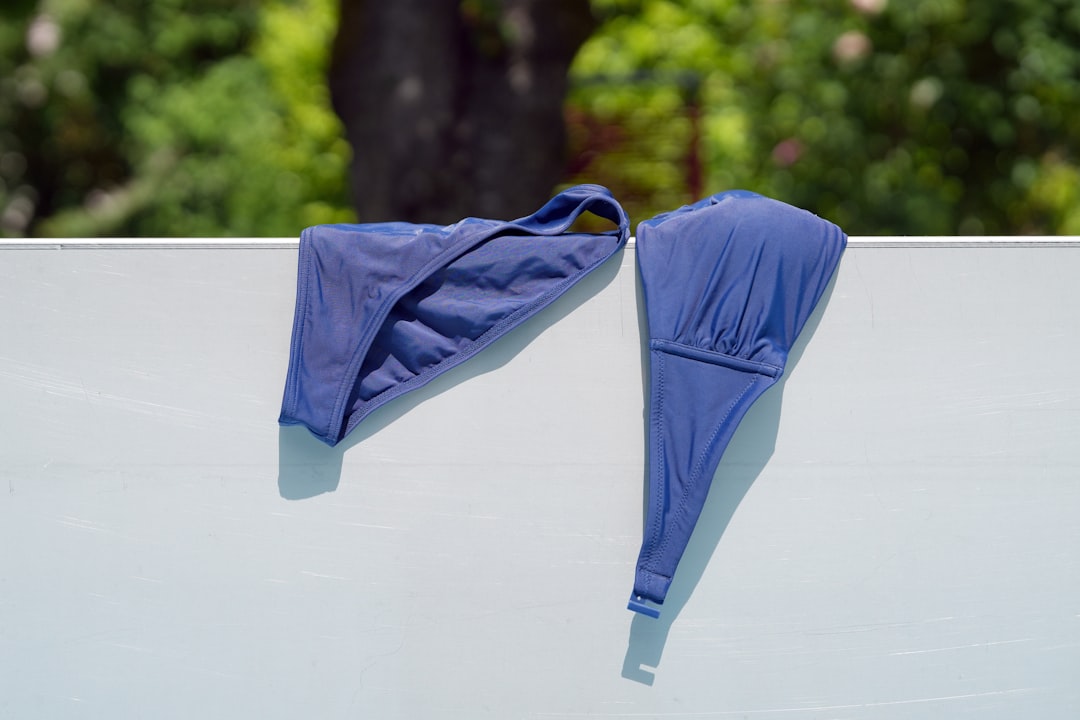
A few in-the-moment habits keep everything drama-free. After you swim, do a quick reset — pull the band back down to its home position on your ribcage instead of leaving it rolled, because a rolled band is a slipping band. If you’re active, that’s your cue to clip on the straps rather than trusting the tube through a wave. And give a brand-new top a “test drive” at home: move around, raise your arms, bend over, sit down. You want to discover its limits in your bedroom, not on a crowded beach.
The deeper shift here is mental. So much bandeau anxiety comes from treating the top as something you have to constantly manage and monitor. But a well-chosen, well-fitted strapless top is genuinely secure — it’s doing its job whether or not your hand is hovering nearby. Trusting it is a skill you build over an afternoon or two, and once you do, you stop performing surveillance on your own outfit and actually relax into it.

Care: how to keep the grip from dying
Because the whole system depends on elastic, a bandeau lives or dies by how you treat that elastic. The two things that kill grip fastest are heat and chlorine. Rinse the top in cool fresh water after every swim to flush out salt and pool chemicals, which degrade elastane over time. Never wring it out in a tight twist — that permanently distorts the band. And keep it far away from the dryer; the heat that relaxes the fibers is exactly what turns a gripping band into a loose one within a season.
Hand-wash in cool water with a gentle soap, press the water out flat in a towel, and dry it lying flat rather than hanging, which drags the band out of shape under its own wet weight. Rotating between two suits instead of wearing one favorite to death also gives the elastic time to fully recover between uses. Treated this way, a good bandeau keeps its snap for years instead of surrendering by August.
If you want a low-effort everyday option to break in alongside a structured piece, a soft ribbed bandeau is the easy-wearing workhorse of the category.
Shop Ribbed Bandeau Tops on Amazon →
The takeaway
A bandeau isn’t a gamble and strapless isn’t a body-type privilege reserved for a lucky few. These styles are simple machines: a gripping band, some fabric with real recovery, and structure sized to match what your bust needs. Get those three things right and the slipping stops being a feature of the style — it becomes a sign you bought the wrong construction, which you now know how to avoid. Choose the version built for your shape, break it in at home, rinse it kindly, and let your hands stay down at your sides where they belong. Clean shoulders, even lines, and not a single anxious tug all day — that’s the whole promise of a bandeau, finally delivered.
Sources
- Wikipedia — Bandeau
- Wikipedia — Swimsuit history and construction
- Wikipedia — Spandex / elastane fiber behavior