

The Perfect Beach Day Timeline
The difference between a good beach day and a great one usually comes down to timing. Show up at noon with the whole city and you fight for parking, bake through the harshest UV of the day, and pack up sunburned by three. Work the clock instead, and the same stretch of sand feels like a private resort. This perfect beach day timeline breaks the day into hour-by-hour blocks so every part of it earns its place — from the quiet sunrise arrival to the golden-hour swim most people miss.

Early Morning Arrival (7–9 AM): Why the Early Bird Owns the Sand
Get there before 8 AM and you walk onto a beach that belongs to you. The sand is cool, the water is glassy, and the good spots near the lifeguard tower or natural shade are still open. Parking is free of the circling-vulture routine that starts around ten. This is the single highest-leverage decision of the day, and it costs nothing but an alarm.
Early water is also the safest water. Wind tends to build through the day, so morning surf is usually calmer and rip currents are easier to spot on a flat surface. Take five minutes to read the beach before you settle in — note the lifeguard flags, where other swimmers are, and any channels of choppy, discolored water that signal a rip. The U.S. lifesaving statistics are blunt on this: the vast majority of surf rescues involve rip currents, and they are far easier to avoid than to escape.
What to Pack for a Perfect Beach Day
The best beach bag is packed the night before, not thrown together at the door. You want everything to earn its space — a day at the beach punishes both the over-packer hauling a wagon and the under-packer who forgot water. Here is the short list that covers a full day without turning into a moving job:
- Sun protection: broad-spectrum SPF 30+ sunscreen, a wide-brim hat, UV sunglasses, and a rash guard or cover-up for the hottest hours.
- Hydration and food: more water than you think you need, plus salty snacks and a proper lunch in an insulated bag.
- Comfort: a quick-dry towel, a lightweight blanket, and a beach umbrella or pop-up shade.
- The swimwear that actually fits your day: a supportive set you can swim, walk, and lounge in without adjusting every five minutes.
- Small but critical: a first-aid basics pouch, a phone dry-bag, a trash bag, and cash for the parking meter or ice cream truck.
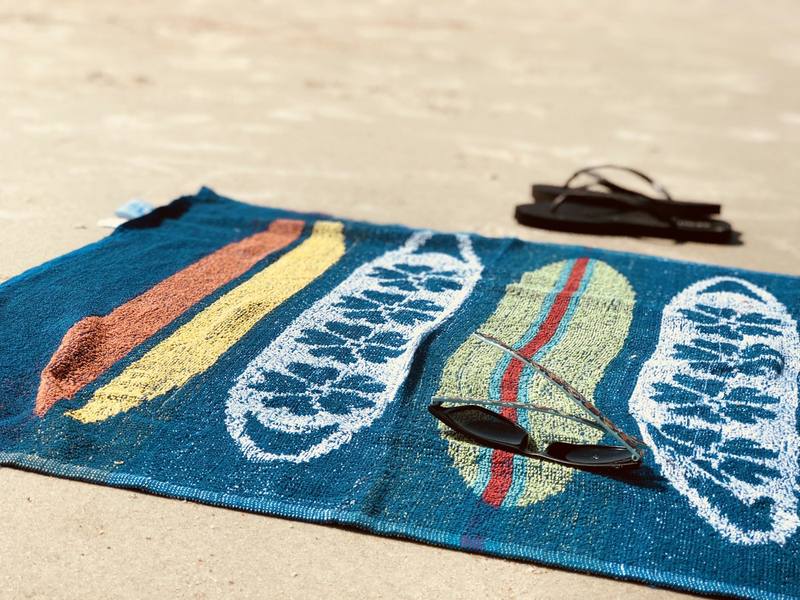
Your swimwear is the one item you’ll wear from the first swim to the sunset walk, so it’s worth getting right. A set that shifts or digs in turns a relaxed day into a constant fidget. If you’re deciding between styles for a full active day, our guide to choosing swimwear by water activity breaks down what holds up when you’re actually swimming versus lounging.

For a full visual checklist you can screenshot before you leave, this walkthrough of beach must-haves covers the small items most people forget:
Mid-Morning (9–11 AM): Claim Your Spot and Win the Sun War
By now the beach is filling in, but you’re already set up. Use this window to build your basecamp: umbrella angled against the morning sun, towels down, cooler in the shade. The single most common beach mistake is treating sunscreen as a one-time application. It isn’t.
The American Academy of Dermatology recommends applying about one ounce — a full shot glass — of broad-spectrum SPF 30 or higher, and reapplying every two hours, or immediately after swimming or heavy sweating. Set a phone timer. Waterproof does not mean water-proof-forever; even the best formulas wash and rub off. The people who never seem to burn aren’t lucky, they just reapply on schedule and wear a rash guard through the peak hours.

Late Morning to Noon (11 AM–1 PM): The First Real Swim
This is prime swimming time — the water has warmed a few degrees from the early chill, but the crowds haven’t fully committed to the surf yet. Get in before you get too hot, not after. Cooling down in stages beats sprinting from a scorching towel into cold water and shocking your system.
Swim parallel to the shore rather than straight out, stay within the lifeguard-flagged zone, and never swim alone. If you do get pulled by a current, the guidance from NOAA and lifeguards is consistent: don’t fight it, swim sideways along the beach until you’re out of the pull, then angle back in. Panic burns energy; the current itself rarely does.


Midday (1–3 PM): Lunch, Shade, and the Smart Retreat
Here’s where a perfect beach day quietly separates itself from an exhausting one. The sun is at its most intense between roughly 10 AM and 4 PM, when the UV index peaks and skin burns fastest. Instead of fighting it, plan around it. Eat lunch, sit in the shade, read, nap, and let the harshest rays pass while you’re not baking on an open towel.
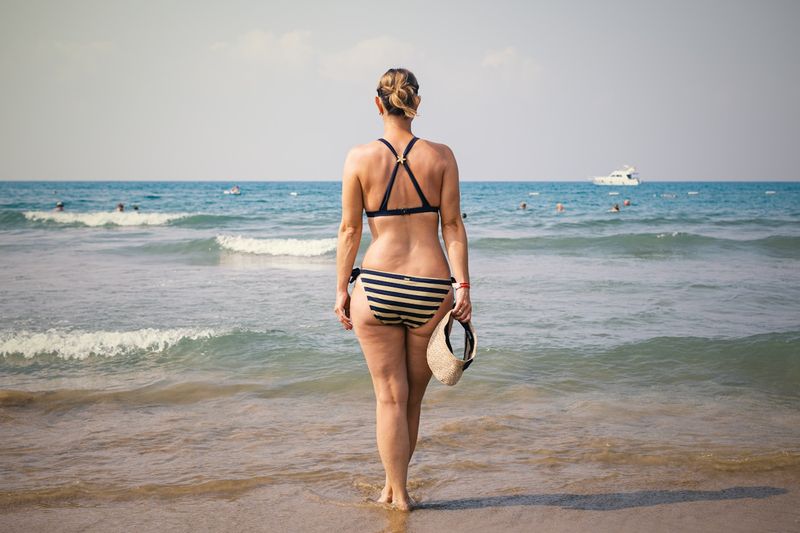
A real lunch matters more than people admit. Salt and water both leave your body fast in the heat, so pair a proper meal with steady hydration — not just the one bottle you sip when you remember. This is also the natural moment to swap a wet suit for a dry one or slip on a cover-up. Confidence on the sand comes from feeling comfortable in what you’re wearing, which is exactly why body-positive fit beats chasing a trend. If you want swimwear that’s built to flatter across ages and shapes, our roundup of bikinis for women over 40 is a good place to start.
Afternoon (3–6 PM): Peak Play and the Golden Window Opens
As the UV starts to ease past mid-afternoon, the beach hits its sweet spot. The water is at its warmest, the light softens, and the midday crowd begins to thin as families with young kids head home. This is when you get the best of both worlds — comfortable sun and elbow room.
Use this stretch for the fun stuff you rationed earlier: a long swim, a walk down the shoreline, paddleboarding, or just floating. If you’re planning a whole trip rather than a single day, matching your swimwear to the setting pays off — a beach, a hotel pool, and a resort each reward different cuts, which we break down in our guide to vacation swimwear for beach, pool, and resort.

Evening (6–8 PM): Golden Hour, a Beach Picnic, and Sunset
Most people are folding umbrellas exactly when the beach becomes its most beautiful. The hour before sunset — golden hour — bathes everything in warm, flattering light, which is why it’s the photographer’s favorite and should be yours too. The sand is nearly empty, the heat is gone, and a simple picnic feels like an event.

Bring something easy for the evening: fruit, a sandwich, a warm layer for when the breeze picks up after dark. Watch the sun drop, take the photos you’ll actually keep, then do the one thing that makes tomorrow’s beachgoers grateful — pack out every scrap of trash you brought in. Leave the sand cleaner than you found it and the perfect beach day ends the way it should.

The Perfect Beach Day Timeline at a Glance
| Time | What to Do | Why It Works |
|---|---|---|
| 7–9 AM | Arrive, claim your spot, read the water | Cool sand, calm surf, free parking, best shade |
| 9–11 AM | Set up shade, first sunscreen, relax | Beat the crowd before UV climbs |
| 11 AM–1 PM | First real swim | Warmer water, still less crowded |
| 1–3 PM | Lunch, shade, rest, reapply SPF | Avoid the 10 AM–4 PM UV peak |
| 3–6 PM | Peak play — swim, walk, paddle | Warmest water, softening light, thinning crowd |
| 6–8 PM | Golden hour, picnic, sunset, pack out | Best light, empty sand, cool breeze |
Perfect Beach Day FAQ
What is the best time to go to the beach? Early morning, before 9 AM, and late afternoon into evening are the two best windows. You get calmer water, smaller crowds, and gentler sun on both ends, while skipping the 10 AM–4 PM UV peak in the middle.
How often should I reapply sunscreen at the beach? Every two hours, and immediately after every swim or heavy sweat session. Use about an ounce each time and don’t skip your ears, feet, and the part in your hair.
What should I never forget for a beach day? Water, sunscreen, and shade. Everything else is comfort; those three are what keep a long day from turning into dehydration and a burn.
Is it safe to swim in the morning? Usually it’s the safest window of the day — surf is calmest and rip currents are easier to spot. Always swim near a lifeguard, within the flags, and never alone.
Nail the timing and the rest takes care of itself. The beach doesn’t reward the people who show up hardest — it rewards the ones who show up smartest, at the right hours, in swimwear they never have to think about. Set the alarm, pack the night before, and go own the sand while everyone else is still stuck in the noon parking lot.
Sources
- American Academy of Dermatology — Sunscreen FAQs — how much sunscreen to use and how often to reapply.
- U.S. EPA — UV Index and Sun Safety — peak UV hours and daily sun exposure guidance.
- NOAA / National Weather Service — Rip Current Safety — how to spot and escape rip currents.