
Vintage Swimsuit: 7 Best Retro Styles
The swimwear market doesn’t cycle trends the way fast fashion does — it circles back. In 2023, several Parisian and Italian runway houses pulled directly from their 1960s archives for their resort collections. By 2026, those shapes reached mainstream brands and the vintage corner of Depop in equal measure. The result: a wider range of flattering vintage swimsuit silhouettes available at every price point than at any other moment in the past three decades.

Why Vintage Swimwear Is Back in 2026
A few things collided at once. Thrift platforms grew fast — Depop reported a significant rise in searches for “vintage swimwear” between 2022 and 2024, mirroring the broader secondhand fashion surge documented in ThredUp’s 2024 Resale Report, which found vintage clothing growing at three times the rate of the overall apparel market. Simultaneously, mainstream buyers started finding that contemporary minimalist micro styles simply don’t work for every body, and vintage-inspired cuts — higher waists, structured tops, more fabric in flattering places — fill that gap.
The third factor is print fatigue. After years of neon and tropical patterns, a simple 1960s mod stripe or a 1970s earthy paisley feels genuinely fresh. None of the seven styles below requires actually shopping at a vintage store — every one is in production from current brands, some as exact reproductions, others as modern interpretations with UV-protective fabric and better construction.
1. The 1950s Ruched One-Piece

The ruched one-piece defined American beach culture from 1947 through the early 1960s. Ruching — the gathered horizontal fabric lines running across the torso — was a deliberate engineering choice. It breaks up the silhouette, draws the eye horizontally rather than vertically, and allows a single suit to fit comfortably across a two-to-three size range without alterations. Jantzen, the Portland-based brand that started making swimwear in 1910, is often credited with perfecting the ruched construction during this era.
Today’s versions swap acetate-rayon blends for nylon-spandex or recycled polyester, which means better stretch recovery and actual chlorine resistance. If you’ve tried on a tummy control one-piece and found it stiff, the ruched construction is the softer alternative — it achieves the same smoothing effect through fit engineering rather than compression panels.
2. The 1960s Mod Print Bikini
When Louis Réard introduced the bikini at a Paris fashion show in July 1946, department stores refused to carry it. By 1960, that had flipped entirely. Italian and French designers brought geometric prints — bold stripes, color blocks, op-art patterns — into a structured two-piece format that looked deliberately graphic rather than merely revealing. The top was typically a structured triangle or bralette with padding sewn in; the bottom sat at the natural waist, not below it.
The distinguishing feature of the mod bikini is the print. Where contemporary bikini prints lean tropical or abstract, the 1960s version was specifically geometric: black-and-white checks, thick horizontal stripes, and the kind of bold color blocking that photographs well from 100 feet away. If you’re drawn to color block swimwear right now, you’re already halfway to the mod bikini — just add structure to the top and raise the rise on the bottom.
3. The 1970s Macramé Bikini

Macramé knotting arrived on the beach via the broader crafts movement of the early 1970s. Hand-knotted bikini tops were visually striking in a way mass-produced swimwear wasn’t, they could be adjusted at every tie point for a customized fit, and they carried a handmade quality that resonated with the era’s DIY aesthetic. The original versions were made from natural cotton or jute and had essentially zero stretch — genuinely uncomfortable to actually swim in, though ideal for lounging.
Current versions use macramé-pattern nylon or stretch-knit that holds its shape in water. The silhouette has stayed remarkably true to the original: triangular cups, adjustable ties at the sides and neck, a halter configuration that works across a wide bust range. The crochet bikini — a close cousin — follows the same pattern with a more uniform weave and typically slightly more coverage per panel.
4. The 1970s String-Tie Triangle Bikini
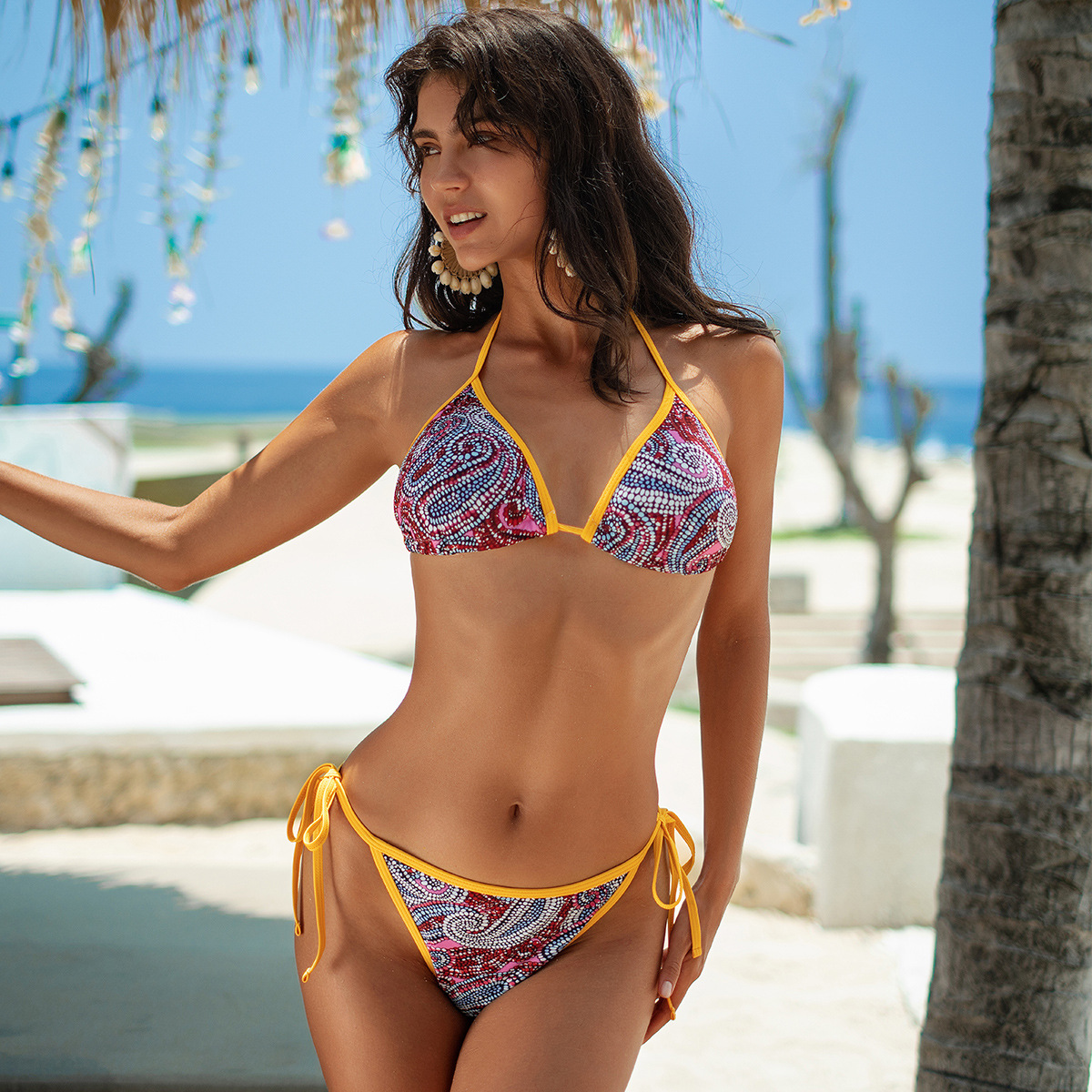
The string bikini as a mass-market category launched into mainstream visibility with the 1974 Sports Illustrated swimsuit issue, though the style had circulated in Brazil and on the French Riviera for years before that. The defining feature is simple: triangle-shaped cups with ties at the neck and back, side-tie bottoms, no structural support built in beyond the fabric itself. Nothing holds the top in place except the ties, which is either a feature or a drawback depending on your priorities.
The 1970s version differs from modern iterations in the bottom cut — original ’70s bikini bottoms had a higher rise and more coverage than the low-rise versions that became standard in the 1990s and 2000s. That higher rise is the element making the clearest comeback right now, showing up in almost every swimwear collection this season. If you’re choosing between top shapes, a halter vs triangle bikini comparison covers the practical fit differences.
5. The 1980s High-Cut One-Piece

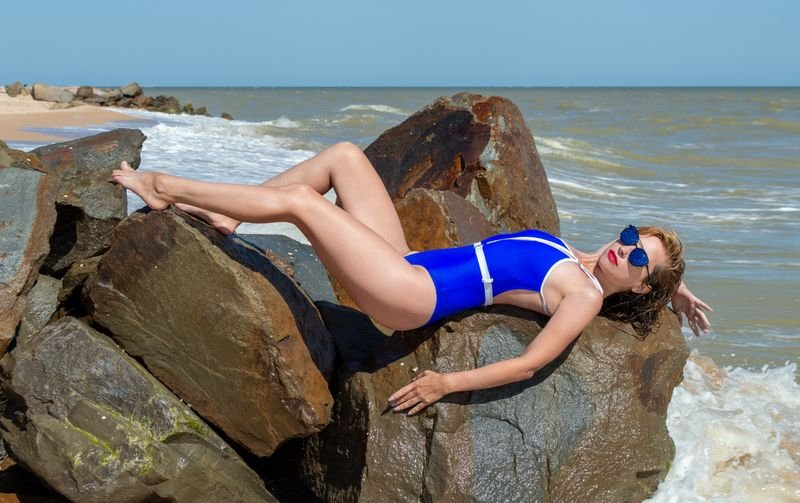
The high-cut one-piece peaked commercially between 1982 and 1989. The cut swept upward from the hip to expose as much of the leg as structurally possible while keeping a full back and a structured front — a silhouette that managed to look sporty and dramatic simultaneously. Baywatch made it iconic, but the style was everywhere before the show premiered in 1989; Norma Kamali’s 1980 swimwear collection is often cited as the commercial launch of the extreme high-cut silhouette in the American market.
The geometric logic of the cut is what makes it work: a high leg opening elongates the leg visually, and the single-piece structure eliminates any concern about the top riding up during movement. In 1985, many one-pieces ran 15–20% spandex content. Modern reproductions typically use 20–25%, which improves both fit precision and shape retention after repeated chlorine exposure.
6. The 1980s Bandeau Bikini
The bandeau top — a horizontal tube of fabric worn across the chest — first appeared in mainstream swimwear in the mid-1950s but hit its commercial peak in the 1980s when spandex became cheap enough to manufacture at scale. Early bandeau tops were largely strapless by necessity: without adequate stretch, adding straps would have required so much structural engineering that the minimalist appeal disappeared. 1980s versions in high-spandex fabric could finally stay in position without constant adjustment.
What separates the 1980s bandeau from more recent versions is the pairing. The era matched bandeau tops with high-waist bottoms — a combination that reads as complete and deliberate rather than minimal. Pair a modern bandeau with low-rise bottoms and you get a completely different silhouette. The original ’80s look specifically required the higher rise to balance the covered-torso top, and that pairing is what’s currently being reproduced most faithfully.
7. The 1990s Sporty Crop Bikini

The 1990s brought a deliberate shift away from the body-conscious silhouettes of the 1980s toward something more utilitarian. The sporty crop bikini — a short, structured bralette top with minimal padding and a moderate-coverage bottom — looked like activewear adapted for the beach. Brands associated with surf and skate culture pushed the athletic cut into mainstream style, and the shape became the default for the decade’s beach aesthetic.
The key construction detail is the top: boxy, cropped, with a horizontal band at the hem, built more like a sports bra than a lingerie-influenced bikini top. That boxy, non-tapered shape is what separates it from the 1970s triangle bikini. The three-piece swimwear set currently in production — a crop top, bikini top, and bottom sold together — is the direct descendant of this style, giving wearers the flexibility to mix coverage and silhouette by outfit.
Vintage vs. Vintage-Inspired: What You’re Actually Buying
Buying a real vintage swimsuit from the 1950s or 1960s comes with practical problems. Sizing conventions were different — a 1955 size 14 is typically a modern size 6 or 8. Nylon and acetate fabrics from that era degrade with prolonged sun and chlorine exposure: a genuine 60-year-old garment may look pristine on a hanger and fail structurally in the water. The secondary market (Etsy, ThredUp, local thrift stores) holds genuinely beautiful pieces that simply aren’t safe to swim in.
Vintage-inspired swimwear — current production using retro silhouettes — solves this cleanly. You get the shape and the print in fabrics rated for repeated chlorine and UV exposure, in a sizing system that matches current measurements. When shopping vintage-inspired, look for brands that name the specific decade they’re referencing in the product description. That detail usually signals a more deliberate design process than simply adding a floral print to a standard cut and labeling it retro.
Sources
- Smithsonian Magazine — How the Bikini Got Its Name — History of Louis Réard’s 1946 Paris debut and the bikini’s commercial journey into American retail
- ThredUp 2024 Annual Resale Report — Industry data on secondhand fashion growth, including vintage swimwear category trends
- Vogue Swimwear Coverage — Ongoing editorial coverage of swimwear silhouette trends and vintage revival in contemporary collections