
Blue Bikini: 9 Best Styles for 2026
A search for “blue bikini” pulls more volume on Google every June than almost any other single-color query, and the reason is simple: it is the one shade swimwear shoppers pick when they are not sure what else to choose. That safety comes with a catch. “Blue” covers everything from a pale, almost-white powder blue to a navy so dark it reads as black in photos, and those two ends of the spectrum behave completely differently on skin, in a pool, and in a camera roll. Below is what separates a blue bikini that still looks sharp in September from one that is already patchy by the Fourth of July.
Which Shade of Blue Actually Flatters Your Skin Tone
Unlike red, which splits cleanly into warm and cool camps, blue is the rare color family that genuinely works on nearly every skin tone — the trick is matching the saturation and depth, not the hue itself. Fair, cool skin brightens next to sky blue and powder blue, which sit close to the skin’s own undertone instead of fighting it. Deep, rich skin tones do best in saturated jewel shades like cobalt and royal blue, where the contrast reads as intentional rather than washed out.
Warm undertones are the one group that needs to be more deliberate. A stark, icy baby blue can look slightly cold against golden or olive skin, so teal-blue, indigo, or a navy with a hint of green undertone will sit better than a true sky blue. The same test that works for red applies here: hold the fabric or a similar-colored shirt against your inner wrist in daylight. If your skin looks brighter and more awake, the shade is working. If it looks flat or slightly gray, size down the saturation or shift toward teal.

One more detail most color guides skip: blue photographs differently than it looks in person, especially cobalt and royal blue, which can shift toward purple under direct sun and toward gray under cloud cover or indoor lighting. If a bikini is going on a vacation that is mostly photos, test the exact shade in outdoor light before buying, not just under a store’s fluorescent bulbs.
Tan lines complicate the picture further. A deep summer tan pushes almost every blue toward looking cooler and brighter by contrast, which is why a cobalt bikini bought in April can look noticeably different by August once the tan has caught up. If you are buying early in the season, lean one shade warmer or more saturated than you think you need — the color will read as intended once the tan line sets in, instead of looking too harsh against pale early-season skin.
9 Blue Bikini Styles Worth Shopping in 2026
Once you’ve settled on a shade family, the cut determines how it actually wears. These nine are the styles moving in 2026, not a recycled list from a few summers back:
- Classic cobalt triangle: adjustable straps, minimal coverage, and the shade that photographs most true-to-life in daylight.
- Navy high-waisted set: pairs a navy top with high-waisted bottoms for a retro-leaning silhouette that reads more sophisticated than playful.
- Sky blue striped one-piece: a horizontal stripe in sky blue and white is the most forgiving print in the entire blue family for a one-piece.
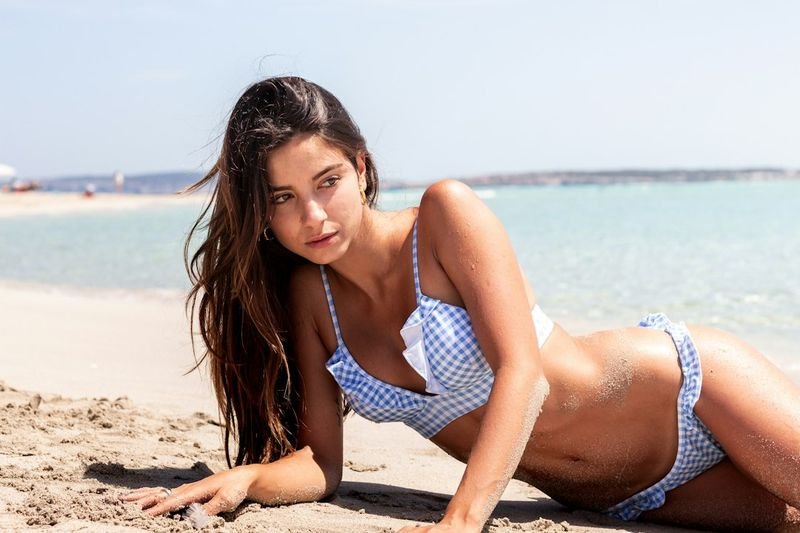
- Blue gingham bikini: the small-check print that outsold solid colors on several swim retailers’ 2026 bestseller lists, especially in cornflower and periwinkle.
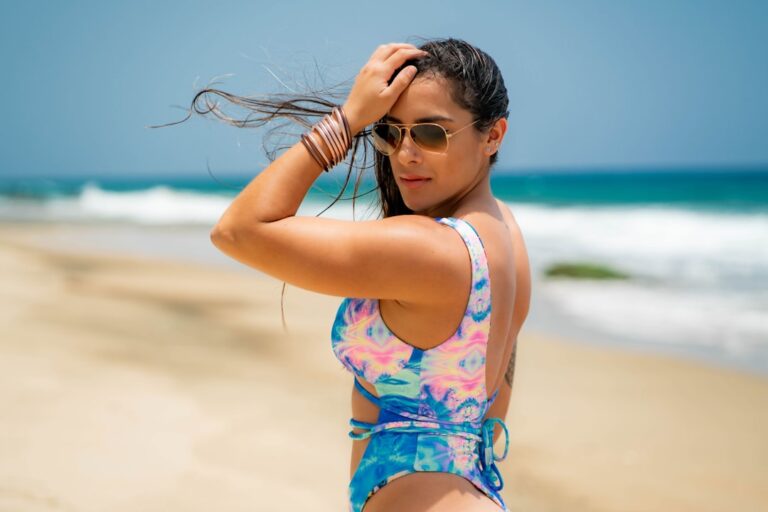
- Tie-dye ombre blue: a gradient from pale sky blue to deep indigo, which hides the seam lines that a solid color would show.
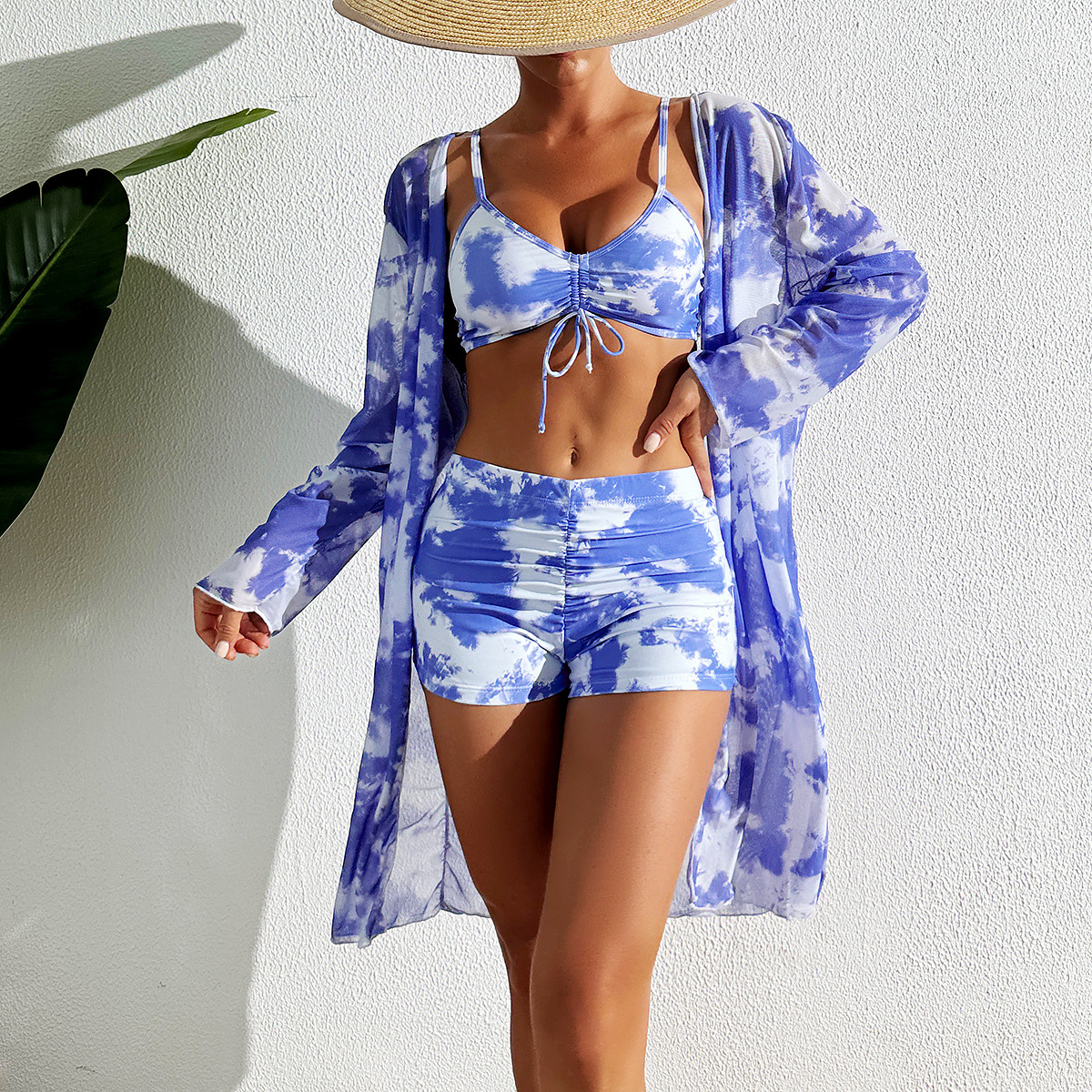
- Long-sleeve mesh cover-up: an ombre blue mesh dress worn over a solid suit, useful for reef-adjacent trips where extra coverage matters.
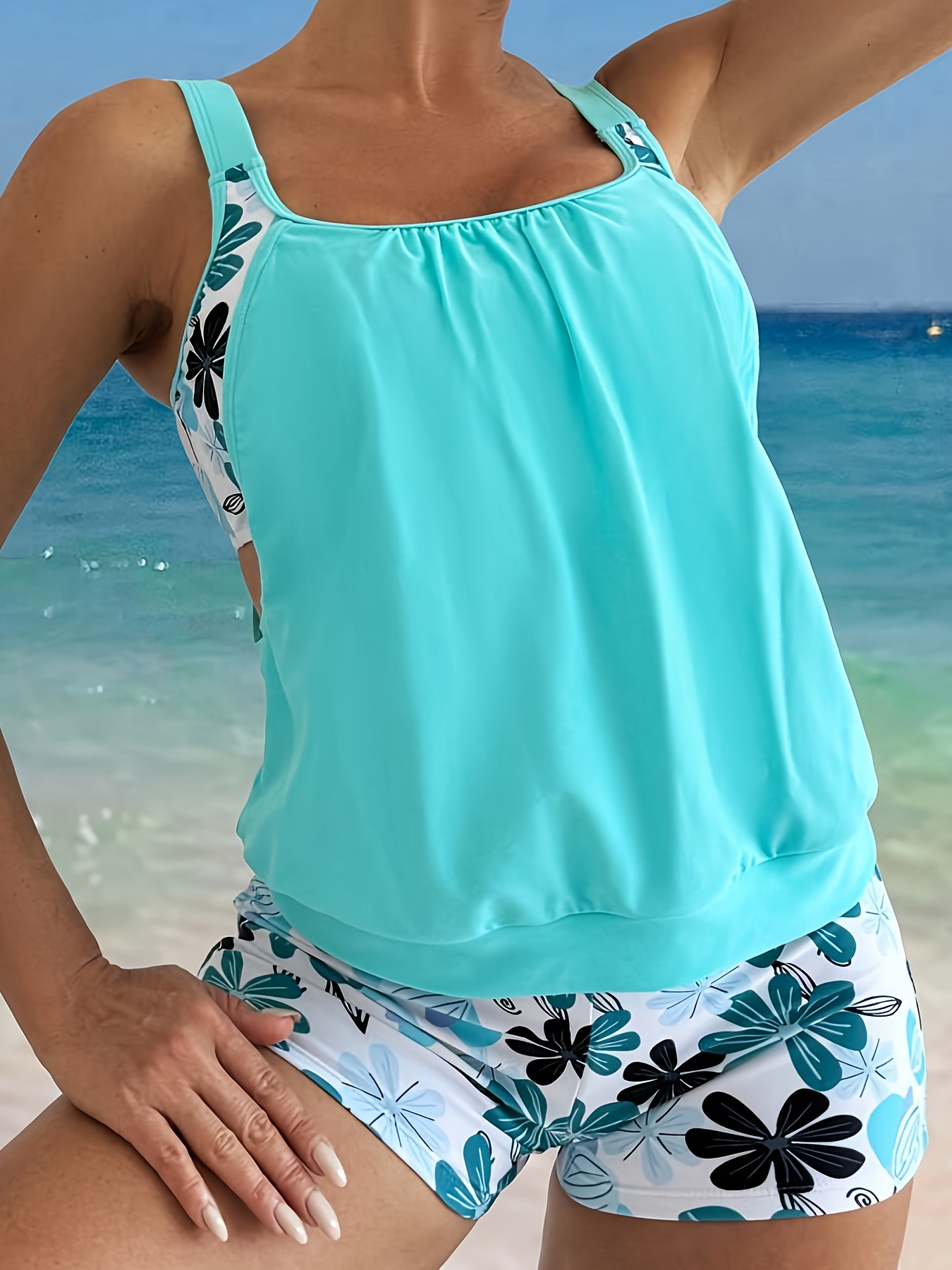
- Turquoise cut-out one-piece: sits at the warmer, greener end of the blue spectrum and tends to flatter warm undertones better than a true cobalt.
- Powder blue bandeau: the palest end of the family, best suited to fair and light-medium skin where it reads as soft rather than washed out.
- Color-block navy and white: a contrast panel at the waist or bust that breaks up a solid navy suit without adding a second loud color.

Navy, Cobalt, Sky Blue or Turquoise: Picking the Right Shade for the Occasion
Navy is the shade to reach for when a bikini needs to do double duty off the beach — it reads as swimwear in the water and as a quiet, grown-up color choice on a resort patio in a way that bright cobalt never will. It also hides the slight color shift that comes from repeated chlorine exposure better than any other blue, since the dye is already dark enough that minor fading is hard to spot.
Cobalt and royal blue are the attention shades. They photograph vividly against both tan and pale skin and work well as a single statement piece against neutral cover-ups, but they show fading faster than navy because the dye sits at a lighter base than it looks. Sky blue and powder blue are the softest options, best for someone who wants to avoid looking like they are “trying” with color — but they are also the least forgiving of sun damage, since any yellowing or fading shows up immediately against such a pale base.
Turquoise sits in its own category. It leans warmer and greener than the rest of the blue family, which is exactly why it flatters warm and olive undertones that a true cobalt can wash out. If the rest of this list reads a little too cool for your skin, turquoise is the shade to try before giving up on blue altogether.

Styling a Blue Bikini: Prints, Pairings and Accessories
Blue is one of the only swimwear colors that pairs cleanly with almost every cover-up color instead of fighting for attention — white, tan, and even a clashing orange sarong all read as intentional next to it. A blue gingham or striped set styled with a straw hat leans classic and editorial, which is part of why the print outperformed plain navy on several retailers’ 2026 bestseller charts.
Gold jewelry tends to read warmer and more flattering against cobalt and turquoise, while silver sits better against navy and powder blue. If you are building a capsule around more than one color, blue is the easiest anchor piece because it does not compete with red, black, or white the way two bold colors competing for attention would.
A long-sleeve mesh cover-up in a matching ombre blue solves a problem solid swimsuits can’t: it adds sun coverage for a boat day or a reef excursion without breaking the color story the way a plain white or patterned cover-up would. Because the mesh is sheer, the suit underneath still shows through, so the cover-up reads as an extension of the swimsuit rather than a separate outfit layered on top.


Why Blue Fades Faster Than You’d Think (And How to Stop It)
Chlorine and UV exposure bleach every swimsuit color eventually, but the rate depends on how much color depth the dye actually has. Pale shades like baby blue and powder blue have very little pigment density to begin with, so any fading shows up almost immediately, while dark, saturated colors like navy hide the same amount of chemical damage for months longer. This is the opposite of what most shoppers assume — a loud cobalt feels like the “riskier” buy, but it is often the pale, quiet shades that look tired first.
The single most effective habit for any blue suit is rinsing it in cool water within minutes of leaving the pool or ocean, since chlorine and salt both continue reacting with the dye as the fabric air-dries. Skip the washing machine entirely — hand wash in cold water with a gentle detergent, and never wring or twist the fabric, which breaks down the spandex fibers that keep the color saturated and the fit snug.
Sun exposure while the suit is wet speeds up fading more than dry-sun exposure does, so laying a wet blue bikini flat in direct sun to dry is one of the fastest ways to dull the color. Dry it in shade, inside out, and it will hold its shade for noticeably longer than one left tanning on a towel next to you.
Know when to stop trying to save one. If a navy suit starts showing a faint greenish or gray cast at the seams, or a sky blue top looks noticeably duller than the bottoms it was bought with, the dye has broken down past the point any detergent or color-restoring soak will fix. At that stage the elastic is usually stretched out too, so replacing the suit rather than trying to revive it is the better use of money.


Watch a full try-on walkthrough of different blue bikini shades and cuts below:
Blue Bikini vs. the Rest of the Color Wheel
A navy or cobalt bikini will never be as visible across a crowded beach as a red bikini, and it won’t read as timeless and neutral as a black bikini or white bikini. What it does better than any of those three is versatility across undertones — there is a workable shade of blue for cool, warm, deep, and fair skin, which is not true of red or stark white. If you already own one of those three colors and are deciding what to add next, blue is the shade least likely to sit unworn in a drawer.
Sources
- PaletteHunt — What Skin Tone Suits Blue? — breakdown of cool vs. warm undertone matching for blue shades.
- Capittana — The 6 Most Flattering Bikini Colors According to Your Skin Tone — jewel-tone guidance for deep skin tones.
- EcoStinger — Effect of Chlorine on Swimwear — data on chlorine and UV fabric degradation rates.
- Phys.org — Do I Have to Rinse Out My Swimsuit After the Pool? — textile scientist explanation of post-swim rinsing and fiber damage.