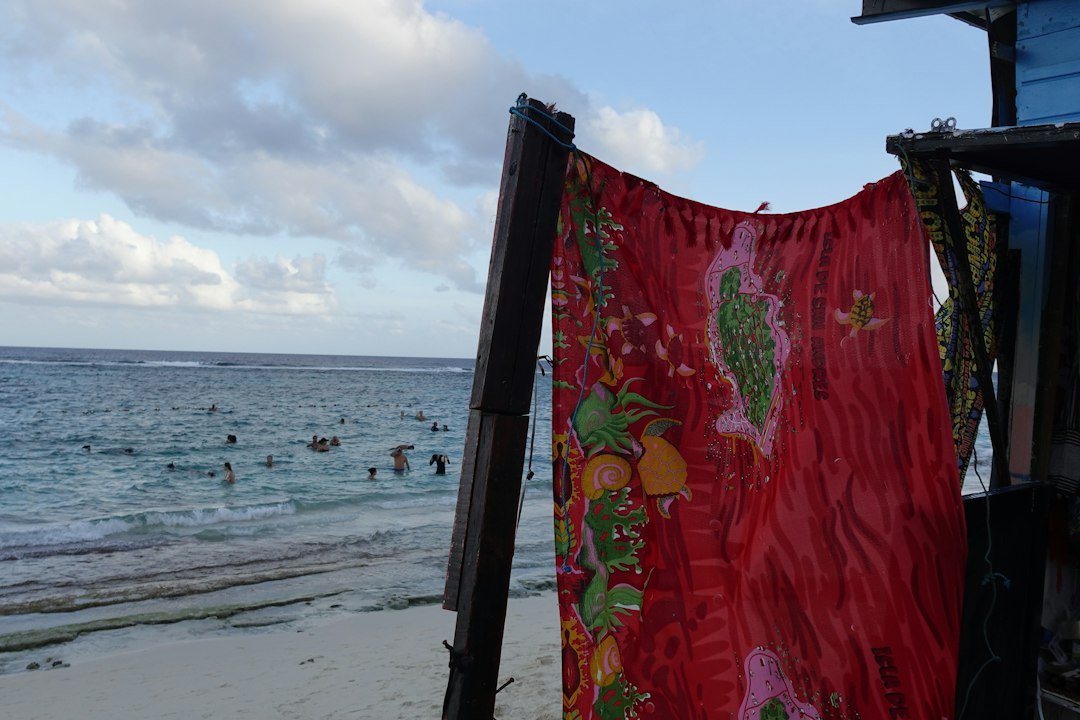
Sarong Length and Proportion: How to Drape for Your Height
Almost every piece of sarong advice out there talks about knots, patterns, or which print goes with which swimsuit. Almost none of it mentions the one measurement that actually determines whether a sarong looks effortless on you or fights you all afternoon: length. A wrap that’s the wrong size for your height and proportions will bunch, gap, or drag no matter how well you tie it. Get the dimensions right, and even a plain rectangle of fabric falls like it was cut for you.
Why Sarong Length Changes the Whole Look
A sarong isn’t a fitted garment, so it doesn’t have a “size” in the way a swimsuit does. What it has instead is a fixed rectangle of fabric, usually somewhere between 40 and 84 inches long and 30 to 45 inches wide. Where that rectangle lands on your body depends entirely on your height relative to those dimensions, and that relationship changes the visual proportion of your whole silhouette — how long your legs look, where the eye lands first, whether the drape reads as flowing or overwhelming.
The same 72-inch sarong that hits a 5’2″ woman mid-calf will hit a 5’8″ woman above the ankle. Neither length is wrong, but they create different effects. Shorter hemlines relative to your height emphasize the legs and read as breezier; longer hemlines create an elongated, column-like line. The mismatch problem happens when the fabric length was never chosen with your height in mind at all — it was chosen because the print was cute.
Finding Your Ideal Sarong Dimensions
The Two Measurements That Matter
Before buying, take two numbers: your height, and the distance from your natural waist (or wherever you plan to tie the sarong) down to the hem length you want. A sarong tied at the waist and falling to the knee needs less fabric length than the same tie falling to the ankle. Most sarongs are sold by total rectangle size, not by “where it hits,” so you have to do that math yourself.
- Under 5’4″: a 60–66 inch length usually gives you knee-to-midi options without excess fabric to manage.
- 5’4″ to 5’7″: 66–72 inches covers most tie styles from hip to ankle.
- Over 5’7″: look for 78–84 inch or “extra-long” sarongs, or you’ll run out of fabric for a full wrap.
Width matters too, though it gets less attention. A narrower width (around 30 inches) wraps closer to the body and works well for a sleeker, single-layer tie. A wider width (40+ inches) gives you enough overlap for a fuller skirt effect or a halter-style tie up top, but on a smaller frame that same width can swallow you in fabric.

Draping for a Petite Frame
If you’re on the shorter side, the instinct is often to buy the longest sarong available because it feels more “covered” or more elegant. In practice, excess length on a petite frame usually means folding the top edge over before you tie it, which adds bulk at the waist and hip exactly where you don’t want it. A better approach: buy closer to your actual proportions and let the hem land where it naturally falls, rather than engineering around too much fabric.
A single diagonal wrap that ties at one hip, rather than a full front-to-back skirt tie, also tends to flatter a shorter frame because the diagonal line does some of the lengthening work that a straight hem doesn’t. It’s a small adjustment, but it’s the difference between a sarong that looks intentional and one that looks like it’s wearing you.
Shop Lightweight Beach Sarong Wraps on Amazon →
Draping for a Taller Frame
Taller women run into the opposite problem: a standard 60-inch sarong that’s marketed as “one size” often doesn’t wrap all the way around and tie securely, forcing an awkward knot with barely enough fabric to hold it, or a hemline that lands mid-thigh when a full skirt effect was the goal. If you’ve ever felt like a sarong you bought was secretly too small, it probably was — for your height, not in general.
Look specifically for sarongs labeled extra-long or beach-blanket-sized (some brands sell them at 80+ inches specifically because they double as a beach throw). On a taller frame, that extra fabric also opens up styling options a shorter sarong can’t do at all — a full halter-and-skirt combination, or a wrap long enough to cross at the back and tie in front with enough length left to drape rather than pull tight.
Adjusting Proportion at the Waist and Hip
Wide Ties vs. Narrow Ties
Where you position the knot changes the proportion of your torso to your legs independent of the sarong’s actual length. Tying at the natural waist, with a narrower gather, keeps the visual break high and makes the legs look longer relative to the top half. Tying lower on the hip, with a wider, looser knot, shortens that visual line and puts more emphasis on the hip and thigh area.
Neither is more flattering than the other in any universal sense — it depends on what you want to draw attention to that day. A high, narrow waist-tie under a bright top works well if you want a defined silhouette. A low, looser hip-tie over a plain suit gives a relaxed, effortless line that reads more resort-casual than styled.
Shop Extra-Long Sarong Cover-Ups on Amazon →
Fabric Weight and How It Falls
Length and width are only half the equation — fabric weight decides whether that length actually drapes or just hangs stiff. A lightweight rayon or gauze sarong falls close to the body and moves with you, which is usually the better choice for anyone who wants the fabric to skim rather than stand away from the frame. A heavier cotton or a textured weave holds its shape more, which can work in your favor if you’re going for a fuller skirt silhouette, but it also shows every crease and fold if you fold it into a bag for the day.
If you’re buying online and can’t feel the fabric first, check the product description for gauze, rayon, or viscose if you want drape, and reserve cotton or linen blends for when you specifically want more structure. A sarong that’s the right length but the wrong weight for your intended tie will still look off, even if the math is perfect.
Matching Length to Where You’re Actually Going
The right length also depends on context, separate from height. A shorter, knee-length tie works for walking to the water and back, where you don’t want fabric dragging in the sand or catching in your legs. A longer, ankle-length wrap makes more sense for sitting at a beachside restaurant or walking the boardwalk after the sun goes down, where the fuller line reads more put-together. If you only own one sarong, a mid-length option that hits somewhere between knee and calf is the most versatile compromise across both settings.
It’s worth owning two lengths if you can — a shorter one for active beach days and a longer one for anything more social — rather than trying to make a single sarong do both jobs by folding or adjusting the tie every time.
Shop Sarong Two-Packs on Amazon →
Buying the Right Size the First Time
Before you check out, measure yourself the way you would for any garment: height, and the length from your intended tie point to your intended hem. Compare that number against the sarong’s listed dimensions, not just its photos, since a model’s height rarely appears in the listing and the same rectangle looks completely different on a 5’3″ model than it will on you. A few extra minutes of measuring will save you from a drawer full of sarongs that never quite worked, no matter how many times you retied them.
Once you find a length and width that actually work for your proportions, that’s the size to keep buying in every print. The pattern is the fun part. The dimensions are what make it wearable.
Sources
Wikipedia: Sarong — history and traditional dimensions of the garment.
Vogue — general reference on resort and beach styling trends.
Travel + Leisure — reference on packing and resort-wear practicality.