Bikini Shopping on a Budget: Style Without Splurging
A designer bikini can run $180 for two triangles of fabric and a couple of strings. Meanwhile, the exact same nylon-spandex blend, cut from the same rolls in many of the same factories, sells for under $20 if you know where to look. Price and quality parted ways in swimwear a long time ago. This is a guide to bikini shopping on a budget without ending up with a suit that pills after two pool days or sags the moment it gets wet.

How much should you actually spend on a bikini?
For most people, a good bikini costs between $18 and $35. Below $15 you start gambling on fabric that fades and elastic that dies; above $40 you’re mostly paying for a brand name and a marketing budget, not better construction. The sweet spot is the low-to-mid twenties, where you get a proper four-way-stretch fabric with a decent lining and finished seams.
Here’s a more useful way to think about it than sticker price: cost per wear. A $25 bikini you wear 30 times over two summers costs you about 83 cents a wear. A $150 boutique suit you baby and wear eight times costs nearly $19 each time you put it on. The cheaper suit is the better financial decision by a mile — as long as it lasts, which comes down to fabric and care, not price.
Where to find cheap bikinis that don’t look cheap
The gap between “cheap” and “looks cheap” is smaller than the swimwear industry wants you to believe. Direct-to-consumer brands like Cupshe, Kanu, and countless three-piece sellers cut out the department-store markup and land quality suits in the $15–$30 range. End-of-season racks at Target, Old Navy, and H&M routinely drop last summer’s stock to single digits by August. And secondhand platforms — Poshmark, ThredUp, local swap groups — are full of barely-worn suits at a third of retail.
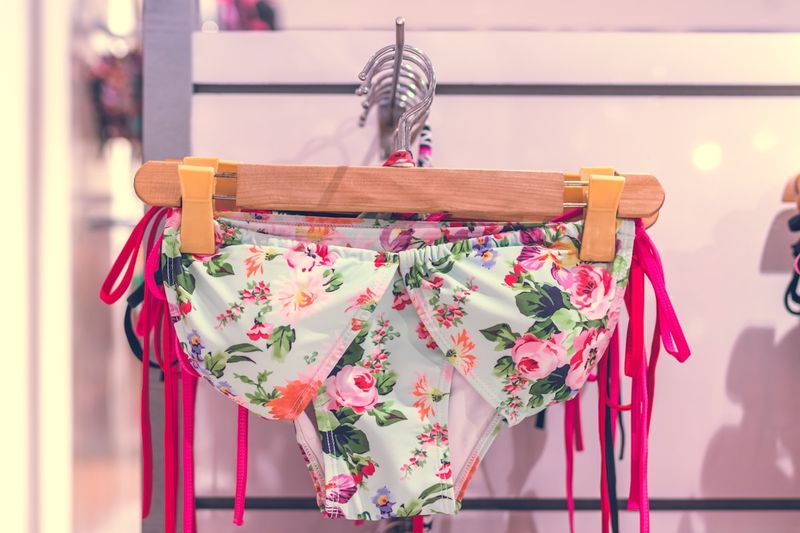
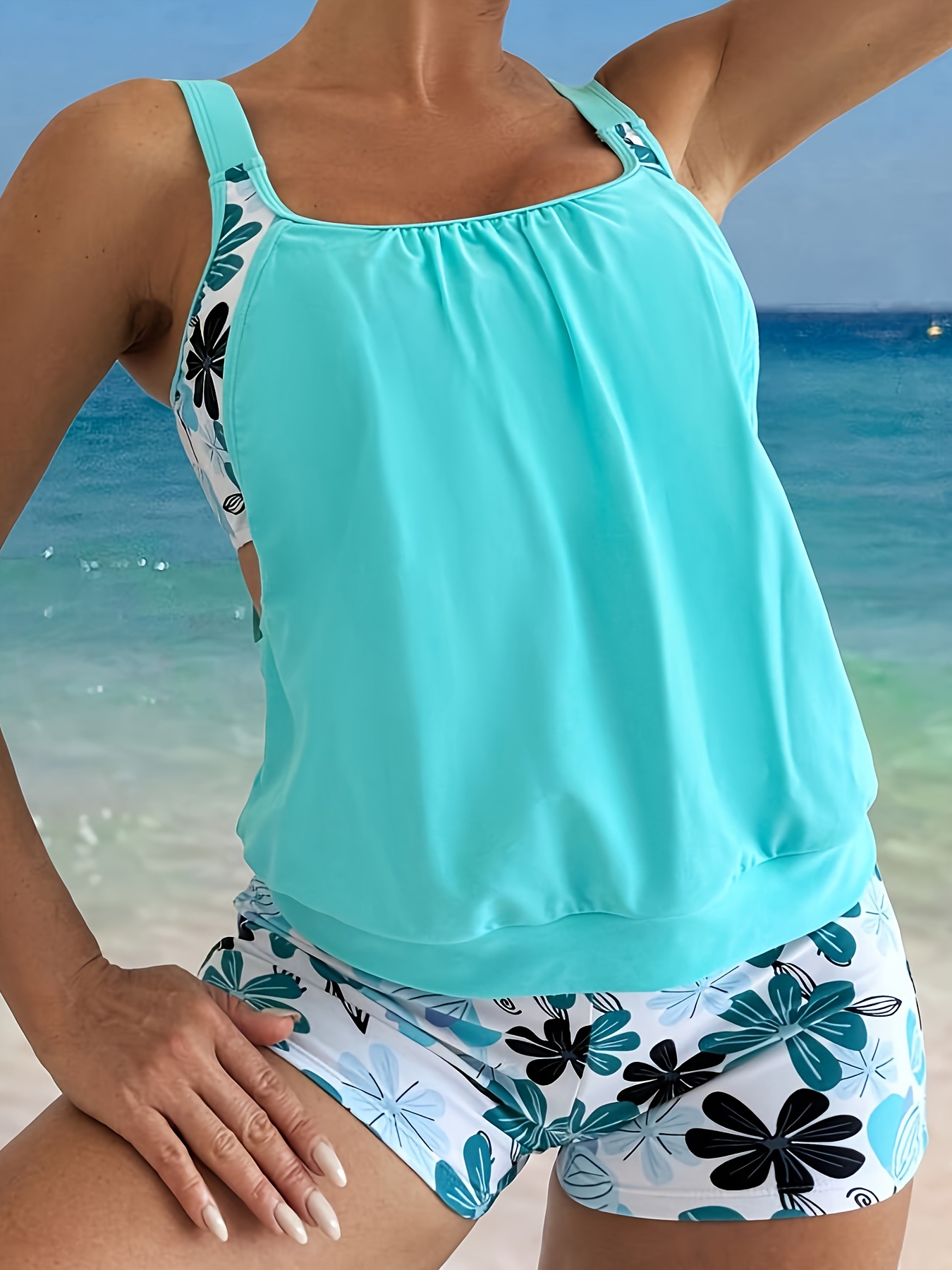
One rule that saves you every time: judge the suit, not the tag. A floral print with clean, dense stitching and a fully lined cup will photograph and wear better than a designer solid with thin, see-through fabric. Print, ironically, is your budget friend — busy patterns hide cheaper fabric and cheaper construction far better than a flat block color does.

The fabric checklist that separates a $20 suit from an $80 one
Flip the tag before anything else. The single most important number on a swimsuit is its spandex (elastane) content. You want at least 15%, and 18–20% is ideal. That’s what gives the fabric its snap-back — the ability to return to shape after it stretches over your body and soaks up water. A suit that’s 95% polyester and 5% spandex will bag out at the seat and the cups within a season.
A few more things to run your fingers over before you buy:
- Lining. A fully lined bottom and a lined cup mean the suit stays opaque when wet. Hold it up to the light — if you can read your hand through it dry, it’ll be transparent in the water.
- Seams. Look for flat, dense stitching with no loose threads. Puckered or single-stitched seams are the first thing to fail.
- Hardware. Plastic rings and sliders are fine; just make sure they’re thick enough not to crack. Rusting metal clasps are a red flag on any suit, cheap or not.
- Stretch recovery. Pull the fabric and let go. It should snap back instantly. If it stays stretched even a beat, walk away.
Do this thirty-second check and you’ll filter out most of the genuinely bad budget suits, leaving you with the ones that punch far above their price.

Mix-and-match: the trick that triples your swimwear wardrobe
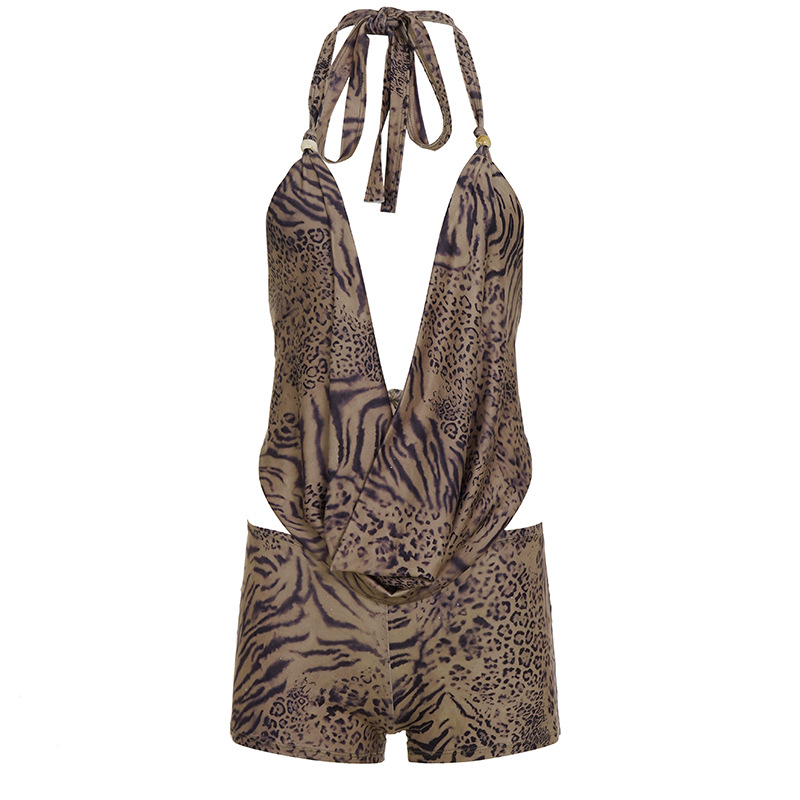
This is where budget shoppers quietly win. Instead of buying three complete matching sets, buy separates in a shared color story — say, black, white, and one bright print — and mix them. Three tops and three bottoms that all coordinate give you nine outfit combinations from the price of maybe two full designer suits.
Separates also solve the most common swimwear problem: being two different sizes on top and bottom. Roughly a third of women size differently above and below the waist, and matched sets force a compromise. Buying a medium bottom and a large top — or vice versa — means a better fit for less money than a tailored set would cost. If you want to go further with the layered look, our three-piece swimsuit styling guide breaks down how to stack a cover piece over any bikini base.
When is the best time to buy swimwear on sale?
Timing is the single biggest lever on price, and it’s the one most people ignore. Swimwear runs on a predictable markdown calendar. Retailers push new stock in February and March at full price, hold through peak season, then slash everything from late July onward to clear the floor for fall.
The best deals land in two windows: the back-to-school stretch of August and September, when in-season suits hit 50–70% off, and the deep-winter clearance of January, when whatever’s left goes rock-bottom. Buying your summer bikini in August for next year feels backwards, but it’s how you get a $60 suit for $18. If you can shop a season ahead, you’ll never pay full price again.
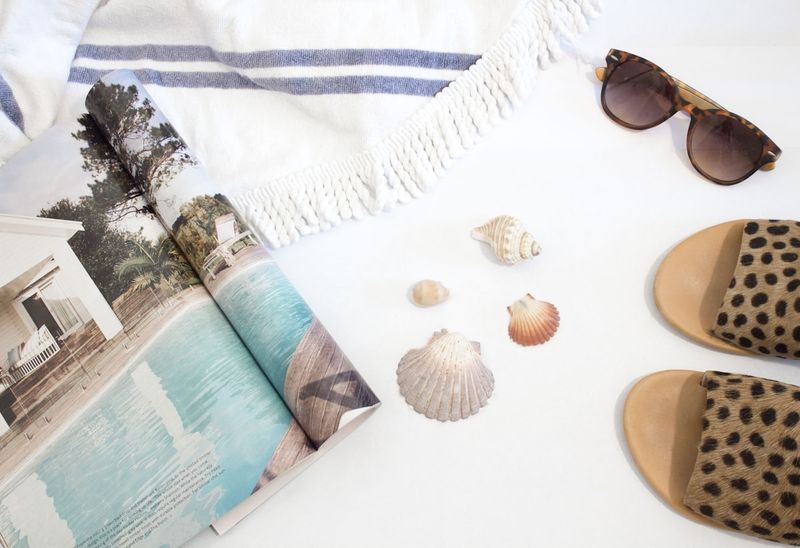
Accessories do a lot of quiet work here too. A straw hat, cheap oversized sunglasses, and a $12 sarong will make a $20 bikini read as a put-together resort look. You’re dressing the whole picture, not just the suit — and the extras cost less than the difference between a budget bikini and a designer one.
How to shop your body, not the trend
The cheapest mistake in swimwear is buying the suit on the model instead of the suit for you. A budget bikini that fits your actual body beats an expensive one chasing a trend that doesn’t suit your shape. Start from what you want to feel comfortable doing — swimming, chasing kids, lounging — and buy for that.
High-waisted bottoms flatter almost everyone and give real coverage for active beach days. Halter and underwire tops carry a fuller bust that a flimsy triangle can’t. If you’ve got a strong, athletic frame, sporty banded tops and cheeky bottoms tend to sit best — our fit guide for athletic builds goes deep on that. And if tummy coverage is your priority, a well-cut two-piece with a wide waistband often does the job better than a pricey one-piece; the tummy-control roundup has budget-friendly picks. The point of body-positive swimwear isn’t hiding — it’s buying the suit that lets you forget you’re wearing one.
Making a cheap bikini last all summer
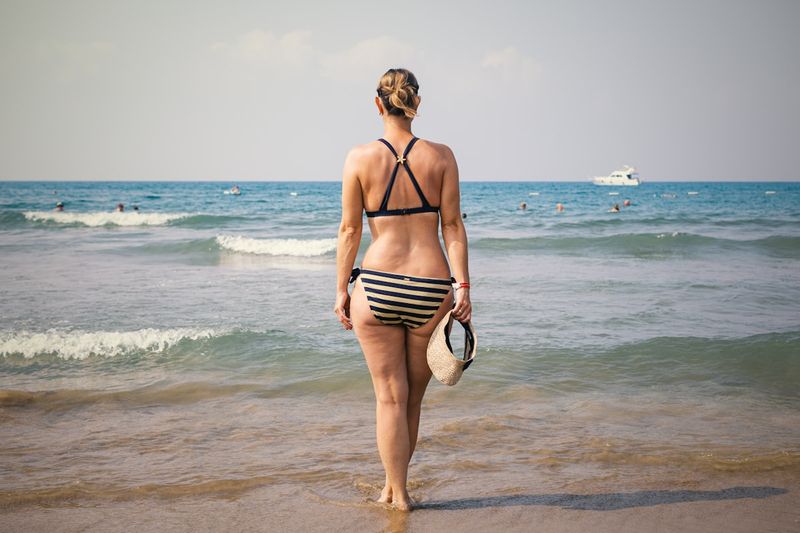
A budget suit lives or dies on how you treat it, and the fixes are almost free. Chlorine and sunscreen are the two killers — both break down elastane and eat color. Rinse your suit in cold tap water the moment you’re out of the pool or ocean, before the chemicals set. Don’t wait until you get home.
Hand-wash in cold water with a drop of gentle soap, never the washing machine, and never the dryer — heat is what turns spandex brittle. Lay it flat in the shade to dry, since direct sun fades color fast. And rotate: if you swim most days, having two cheap suits and alternating them lets the elastane fully recover between wears, which doubles the life of both. Good Housekeeping’s clothing-care team makes the same point — heat and chlorine, not price, are what age a swimsuit.

Bikini shopping on a budget: mistakes to skip
Three traps catch almost everyone. The first is buying purely on price — a $6 suit that lasts three wears is more expensive than a $22 one that lasts three summers. The second is ignoring the return policy; ordering online means fit is a gamble, so only buy from sellers who let you send it back. The third is falling for the photo instead of the tag — that gorgeous studio shot tells you nothing about whether the fabric goes see-through in water.
Skip those three and budget shopping becomes almost foolproof. For a broader look at what’s landing this season, our sustainable swimwear guide covers which affordable brands are actually using recycled fabric — often the same recycled nylon the expensive labels charge triple for.
See it in action
If you want to see how affordable suits actually hold up on real bodies before you buy, try-on hauls are the fastest reality check. This 2026 walkthrough runs through budget bikinis, one-pieces, and resortwear with honest fit notes:
The bottom line
Great swimwear was never about the price tag. Buy off-season, read the spandex percentage, shop separates instead of sets, and treat the suit right — and $60 gets you a whole summer’s wardrobe. The person who looks the most put-together at the beach usually isn’t the one who spent the most. She’s the one who shopped the smartest. Start with one well-chosen budget suit, add a hat and a sarong, and you’re set. Your money is better spent on the trip than the two triangles of fabric you wear when you get there.
Sources
- Good Housekeeping — Clothing & Fabric Care — guidance on washing and extending the life of swimwear.
- Cupshe — direct-to-consumer affordable swimwear brand referenced for pricing ranges.
- ThredUp Resale Report — secondhand apparel pricing and availability data.
Shop our full range of bikinis and swimwear at the BikiniCool store →