
Swimwear and Proportion: How Balance (Not Rules) Builds Confidence
Somewhere along the way, choosing a swimsuit turned into a diagnostic exercise. You are supposed to identify your shape from a lineup of fruits and geometric forms, then follow a list of things to hide and things to “balance out.” It is exhausting, and honestly, it misses the point. The best swimwear for every body type has almost nothing to do with matching yourself to a chart. It has everything to do with understanding a few simple ideas about proportion, line, and support — and then using them to dress the actual body you have, on the actual day you are living.
This is a guide to how swimwear fit genuinely works. Not a set of rules to obey, but a working knowledge of the tools — so the next time you stand in front of a rack or a mirror, you are making choices instead of following orders.

Why Body-Type Charts Quietly Fail You
Body-type systems promise precision, but they deliver anxiety. The trouble starts with the premise: that there are four or five kinds of human bodies, and that each one has a corresponding “correct” suit. Real bodies do not sort themselves so neatly. You might have broad shoulders and full hips at once, a short torso with long legs, or a midsection that shifts week to week. The chart has no row for you, so it leaves you guessing — usually in the direction of concealment.
The deeper problem is the goal baked into these systems. Almost every body-type rule is written to make you look like something you are not: to “create” curves you do not have, or to “minimize” the ones you do. That framing treats your body as a problem to be corrected. It is worth naming that plainly, because once you stop trying to correct yourself, the whole task gets easier. The question changes from “what hides my flaws?” to “what do I actually want to feel and move like today?” — and that question has real answers.
The Real Mechanics: Proportion and Visual Balance
Strip away the shame and what remains is genuinely useful: a small set of visual principles that designers, tailors, and stylists use across every kind of clothing. They are not rules about which body is good. They are observations about how the eye reads a shape. Understanding them means you can predict, before you try anything on, roughly what a suit will do — and decide whether you want that effect at all.
Focal Points: Where the Eye Lands First
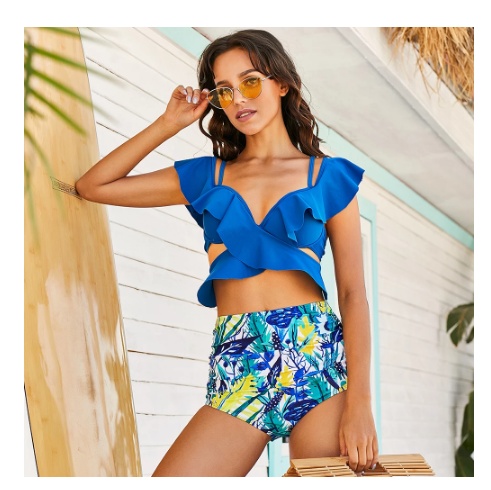
Every swimsuit has a focal point — a place the design pulls attention toward. A bright ruffle at the bust, a cut-out at the waist, a bold hip tie, a plunging neckline: each one is a spotlight. This is the single most powerful idea in swimwear, because you get to decide where the spotlight goes. Love your shoulders? A halter or a strong strap frames them. Want the eye to travel up toward your face? A detail near the neckline does that. There is no wrong focal point. There is only the one you chose on purpose versus the one the suit chose for you.
Line and the Illusion of Length
Lines guide the eye the way a road guides a car. Vertical lines — a plunging V, a color-blocked panel down the sides, a high-cut leg — draw the gaze up and down, which reads as length. Horizontal lines — a bandeau top, a contrasting waistband, a hip stripe — draw it side to side, which reads as width at that point. Neither is better. A horizontal band at the hips can be exactly what you want if you love your hips and want them celebrated. The skill is simply knowing that the line will do that, so the result feels intentional.
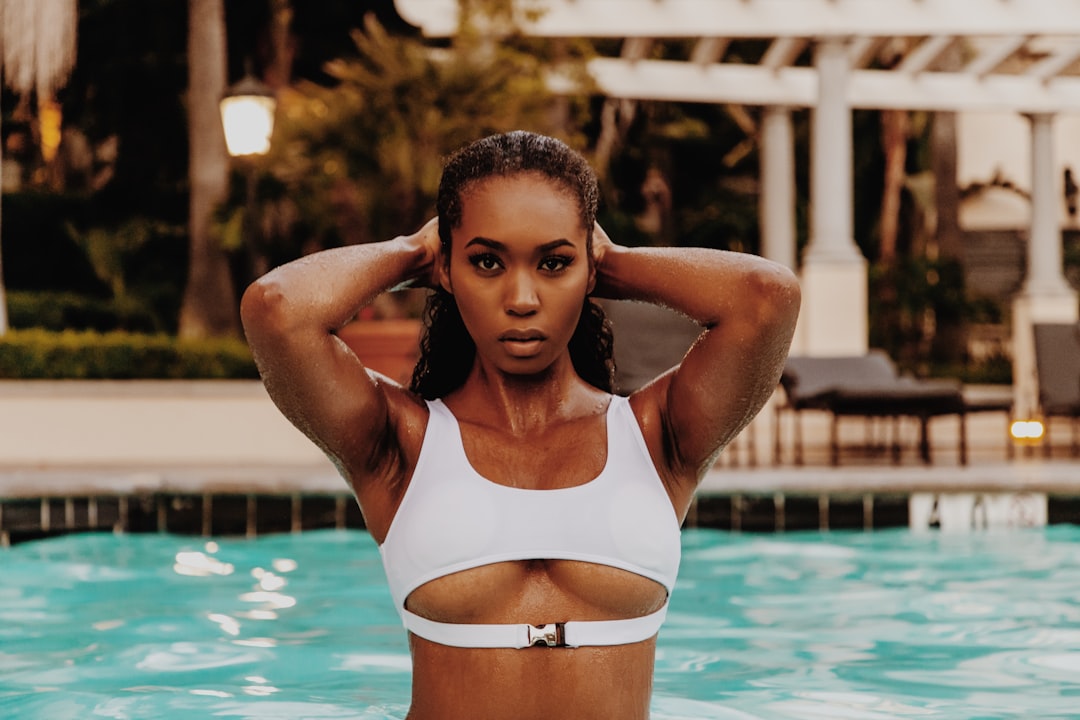
A high-cut leg is the clearest example of line at work: by lifting the point where the fabric crosses your hip, it lengthens the leg visually and adds a long diagonal to the silhouette. It is not magic and it is not mandatory — it is just a line doing what lines do.
Shop High-Waisted Bikinis on Amazon →
Reading Your Own Proportions (Without Judgment)
Here is the part that replaces the body-type chart. Instead of asking “which fruit am I,” stand in front of a mirror and simply notice relationships. Where is your natural waist — high, low, undefined? How does the length of your torso compare to your legs? Are your shoulders and hips roughly the same width, or is one clearly broader? None of these observations are verdicts. They are just facts about your proportions, the way your height is a fact.
Once you have those facts, the visual tools become practical. A shorter torso often feels most comfortable in a suit that does not cut it in half — a one-piece with a long vertical seam, or a bikini bottom that sits higher, both give the midsection room to read as continuous. A longer torso can happily carry a horizontal detail at the waist because there is length to spare. Broad shoulders paired with a bold hip tie balance out into a lovely hourglass read — if that is what you are after. And if it is not, ignore all of it and wear the bandeau. The proportions are information, not instructions.
How Coverage and Support Actually Function
People talk about coverage as if it were purely about modesty or hiding. In practice, coverage and support are engineering questions first. A swimsuit is a garment you will swim, walk, chase kids, and lie in the sun in. The amount of fabric and the structure holding it together determine whether it stays put and stays comfortable — long before it determines how anyone else perceives you.
Support Is Structure, Not Shame
For fuller busts especially, support is a mechanical need, not a vanity concern. Underwire, wide-set adjustable straps, a proper band that fits like a well-fitted bra, and molded or lined cups all do real physical work — distributing weight, preventing strain, and keeping everything secure through movement. A supportive top is the difference between forgetting about your swimsuit for six hours and adjusting it every four minutes. That freedom is worth more than any styling trick.

The same logic applies to the body of a one-piece. A suit with a thicker knit, a lined front panel, or gentle shaping fabric holds its shape and smooths seams because of how it is constructed, not because your body needs correcting. Think of it the way you think of a good sports bra or a structured jacket: the structure exists to make the garment work harder so you can think about it less. If you want that engineering, a tummy-control one-piece delivers genuine comfort and hold — not as camouflage, but as a suit that simply behaves.
Shop Tummy-Control One-Piece Swimsuits on Amazon →
Necklines, Straps, and Leg Lines as Levers
Once you see swimwear as a set of levers rather than a set of laws, the details start to feel playful. Necklines set the frame for your face and shoulders: a scoop is soft and open, a plunge lengthens the upper body, a high or crew neck feels sporty and secure and puts the focal point up near your collarbones. None of these is the “right” neckline. Each is a different lever pulling attention to a different place.
Straps are the same. A halter builds a strong vertical up the center and frames the shoulders; wide-set straps open up the neckline and add real support; a bandeau removes the vertical entirely and lets the shoulders read broad and bare. Leg lines finish the story: a high-cut leg lengthens and exposes, a boy-short sits square and casual and gives a straight horizontal at the thigh, and a mid-rise brief lands comfortably in between. When you know what each lever does, you stop asking permission and start assembling the effect you want.
Color, Print, and Texture as Quiet Tools
Beyond cut, the surface of a suit is doing subtle work. Solid dark colors recede slightly and read as smooth and continuous, which is why they feel sleek — but a single bright color can be just as flattering because it reads as bold and whole rather than broken up. Prints are the underrated hero here: a busy pattern scatters the eye, so it never settles on any one spot, which is why prints feel forgiving and easy to wear all day.

Placement matters too. A print concentrated on top and a solid on the bottom shifts the focal point upward; the reverse pulls it down. Texture — a ribbed knit, a shirred panel, a matte versus a high-shine finish — changes how light hits the fabric and how forgiving the surface feels. These are gentle levers, not decisive ones, but stacked together with cut and line they let you fine-tune a look without a single change to your body.
Shop Supportive Underwire Bikini Tops on Amazon →
Choose for the Day, Not for the Mirror
Here is the variable body-type charts never account for: what you are actually doing. The “best” swimwear changes completely depending on whether you are swimming laps, chasing a toddler through the shallows, paddling out on a board, or lying still on a lounger with a book. A suit that flatters brilliantly in a mirror can be miserable in the water, and a suit that photographs plainly can be the one that lets you forget yourself entirely for an afternoon.
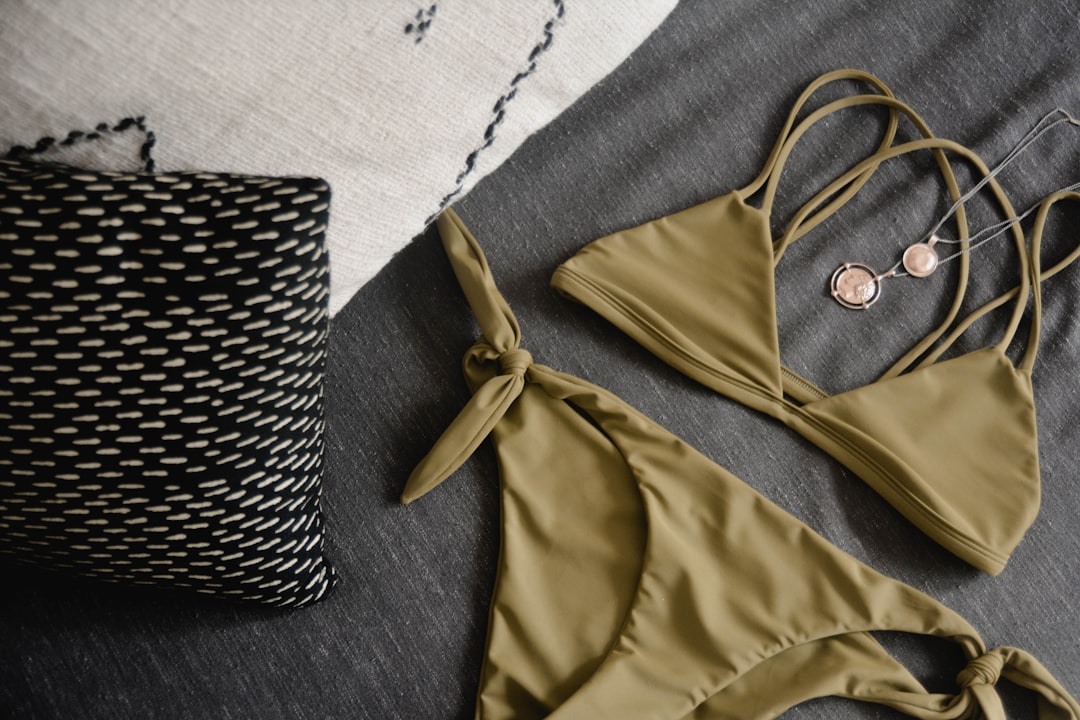
So add the day to your decision. If you will be active, prioritize a secure band, straps that stay, and coverage that does not need adjusting. If you will be lounging, comfort and how the fabric feels against sun-warmed skin might matter most. If it is a pool party where you will barely get wet, the suit that simply makes you happy to be seen is the right one. Function is not the enemy of feeling good — very often it is the source of it.
Confidence Is the Real Fit
Every principle here — focal points, line, proportion, support, color, and context — is really in service of one thing: a suit you forget you are wearing so you can be present at the beach. That is what people read as “confidence.” It is not a magic silhouette. It is the visible ease of someone who is not fighting their clothes or their body, who chose a suit on purpose and then went and enjoyed the water.
The best swimwear for every body type is simply the swimwear that lets you stop thinking about your body and start enjoying your day.
Use the tools when they help. Ignore them when they do not. Buy the suit that fits your proportions, supports what needs supporting, suits the day you have planned, and makes you want to walk straight into the sea. Every body already qualifies for that — no chart required.
Sources
- Wikipedia — History and construction of the swimsuit
- Smithsonian — Fashion, textiles, and dress history archives
- Vogue — Swimwear trends and styling coverage
Shop our full range of bikinis and swimwear at the BikiniCool store →