
Full Bust Bikini Guide: 7 Best Support Styles
A DD-plus chest carries roughly two to four pounds of weight that a triangle top held on by two shoelaces was never built to handle. That single fact explains almost every bad swimsuit experience a fuller-busted woman has had: the gaping, the sliding straps, the four-way readjustment every time she stands up out of the water. The fix isn’t a bigger size of the wrong style — it’s the right style bought in your real measurements. This guide breaks down exactly which cuts hold up, which ones to skip, and how to find your fit.
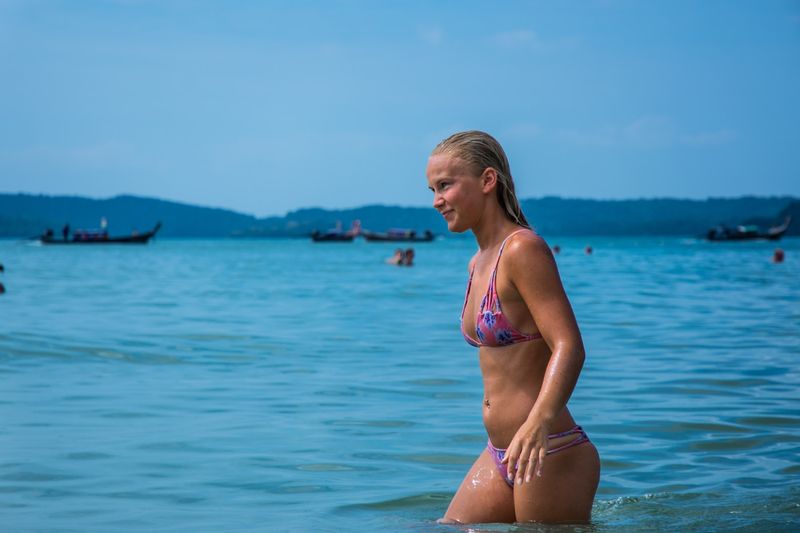
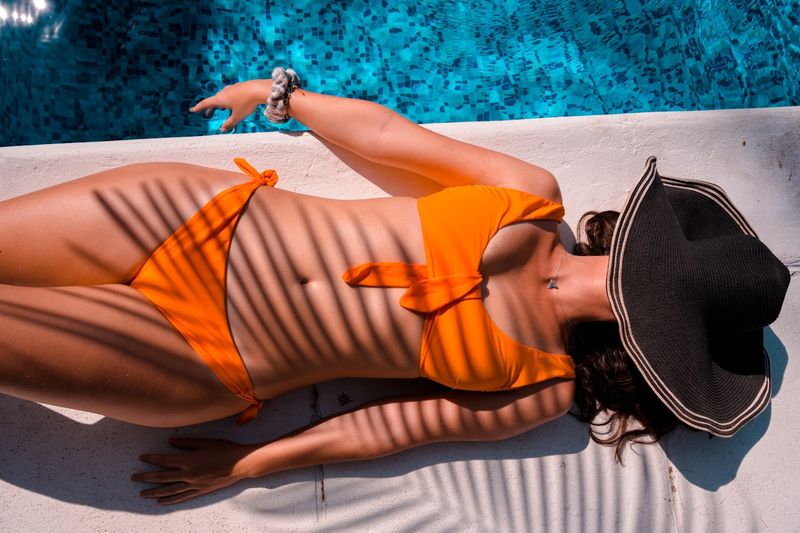
A halter neckline routes support up and over the shoulders — the single most reliable cut for a larger bust.
What Makes a Full Bust Bikini Actually Supportive
Support in swimwear comes from three places, and none of them is the size on the tag. The band under the bust does about 80% of the work — the same as a good bra. Wide, adjustable straps carry the rest, and any underwire or molded cup handles shape and separation. A top that skips all three and relies on a slab of spandex to “hold everything in” will stretch out by the second swim.
This is why cup-sized swimwear exists. A top labeled 34F gives you a defined cup and a measured band the way lingerie does, instead of forcing a G-cup and a B-cup into the same “Large.” (If you’re at the other end of the spectrum, the logic flips — see our guide to the best bikini styles for a small bust.) Brands like Panache, Freya, and Curvy Kate built entire ranges around this, and it’s the reason their fans rarely go back to generic sizing. If you’ve only ever bought small-medium-large swimwear, trying a cup-sized top for the first time is genuinely a lightbulb moment.

How to Measure Yourself for the Right Fit
Getting your numbers right matters more than any style choice on this page. Wrap a soft tape snugly around your ribcage directly under your bust for the band size, then measure around the fullest part of your chest for the bust size. The difference between the two, in inches, is your cup: one inch is an A, two a B, and it keeps climbing — five inches is a DD/E, six an F, seven a G.
Most women who “hate their chest in swimwear” are simply in the wrong band. If your straps dig in and the front rides up, the band is too big and the straps are compensating. Size the band down and the cup up — a 36DD and a 34E hold a similar volume, but the smaller band actually anchors it. Measure before every summer, too; weight shifts and a two-year-old size guess is rarely still accurate.
Two quick fit tests tell you everything once the suit is on. First, run a finger under the band at the back — it should sit level and snug, not ride up toward your shoulder blades. A band that lifts at the back is dumping all the weight onto your neck or straps. Second, do the jump test in the fitting room: three small hops. If anything spills or shifts, size the cup up before you rule out the style entirely. Most “this style doesn’t work on me” verdicts are really a half-size fit problem in disguise.
The Best Bikini Top Styles for a Larger Bust
A handful of cuts do the heavy lifting, literally. These are the ones worth trying first.
Halter tops are the safest bet. Tying behind the neck creates an upward pull that lifts the bust and takes strain off the band — the reason they dominate every fuller-bust recommendation list. The trade-off is neck pressure on a long beach day, so look for a wide, padded tie rather than a thin string.
Underwire tops bring bra-level structure to the beach. The wire follows the natural crease under each breast, lifting and separating instead of flattening. If you wear an underwire bra daily, an underwire bikini will feel familiar and secure.
Wide-strap and molded-cup styles spread weight across the shoulder so nothing digs in, and a molded (foam) cup smooths the shape and adds a layer of modesty in cold water. Together they’re the low-drama choice for anyone who wants to swim, not just pose.
Sports-style tops with a thick underband and racerback are the pick for actual activity — surfing, paddleboarding, chasing kids. They compress slightly for zero bounce, though they trade a little shape for that security.
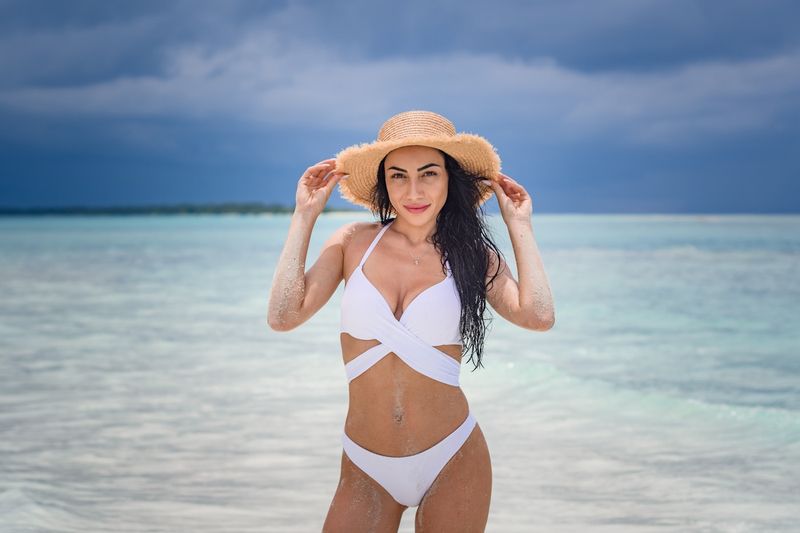
A wrap or crossover front adds a second layer of support across the bust line.
Styles to Approach With Caution
Some cuts aren’t off-limits, they just fight you harder. Bandeau tops have no strap to carry weight, so anything above a C tends to slip the moment you move — a removable halter strap turns a bandeau from unwearable into fine. Classic string triangles offer no band structure at all; the coverage is there but the support isn’t, and you’ll spend the day adjusting.
The honest take: a deep plunge or a skimpy string can absolutely look great on a fuller bust in a photo, but “looks great standing still” and “survives a wave” are two different tests. If you’re mostly sunbathing, wear what you love. If you’re getting in the water, prioritize the band and straps every time.
Balancing Your Proportions With the Right Bottoms
Support handles the top half; proportion handles the whole picture, and it ties directly into dressing for your overall body type and shape. A fuller bust reads more balanced when there’s a little visual weight on the bottom, which is why high-waisted, ruched, or tie-side bottoms flatter so many people — they add shape at the hip and draw the eye down. A patterned or brighter bottom paired with a solid top does the same trick.
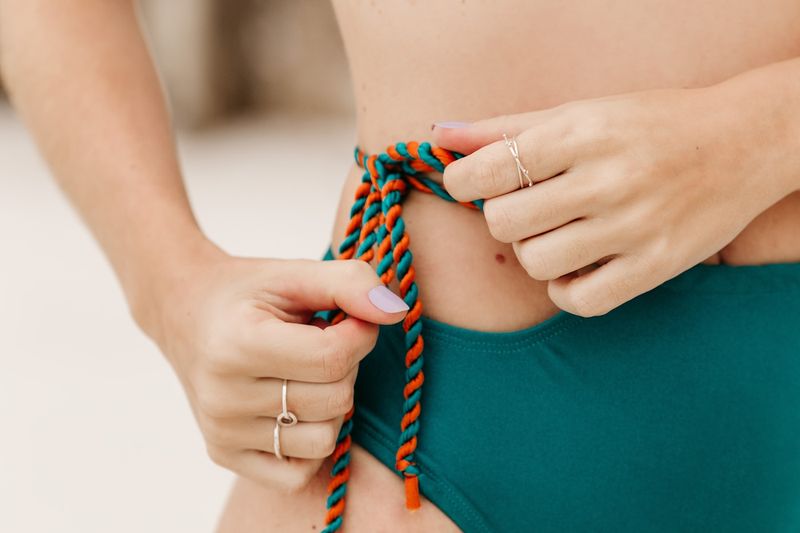
Tie-side bottoms earn a special mention because they solve the mismatch problem. Plenty of fuller-busted women wear a larger top and a smaller bottom, and adjustable ties let you buy one set that fits both halves. It’s a small thing that removes a genuinely annoying shopping obstacle.
Color and print do quiet work here too. A darker or solid top with a printed bottom pulls attention down toward the hips and evens out an hourglass or top-heavy frame, while a bold top with a plain bottom does the opposite. Neither is a rule — it’s just a lever you can pull depending on the balance you want. The most flattering combination is always the one you stop thinking about the moment you’re in it.
One-Piece and Tankini Options That Still Support
Two pieces aren’t the only route. A one-piece with built-in underwire and a “power mesh” lining pulls everything into place with the security of a swimsuit and the structure of a bra — ideal for laps or a long beach day. Look specifically for the words “bust support,” “underwire,” or “D+ cups” in the description; a pretty one-piece without them offers the same non-support as a triangle.
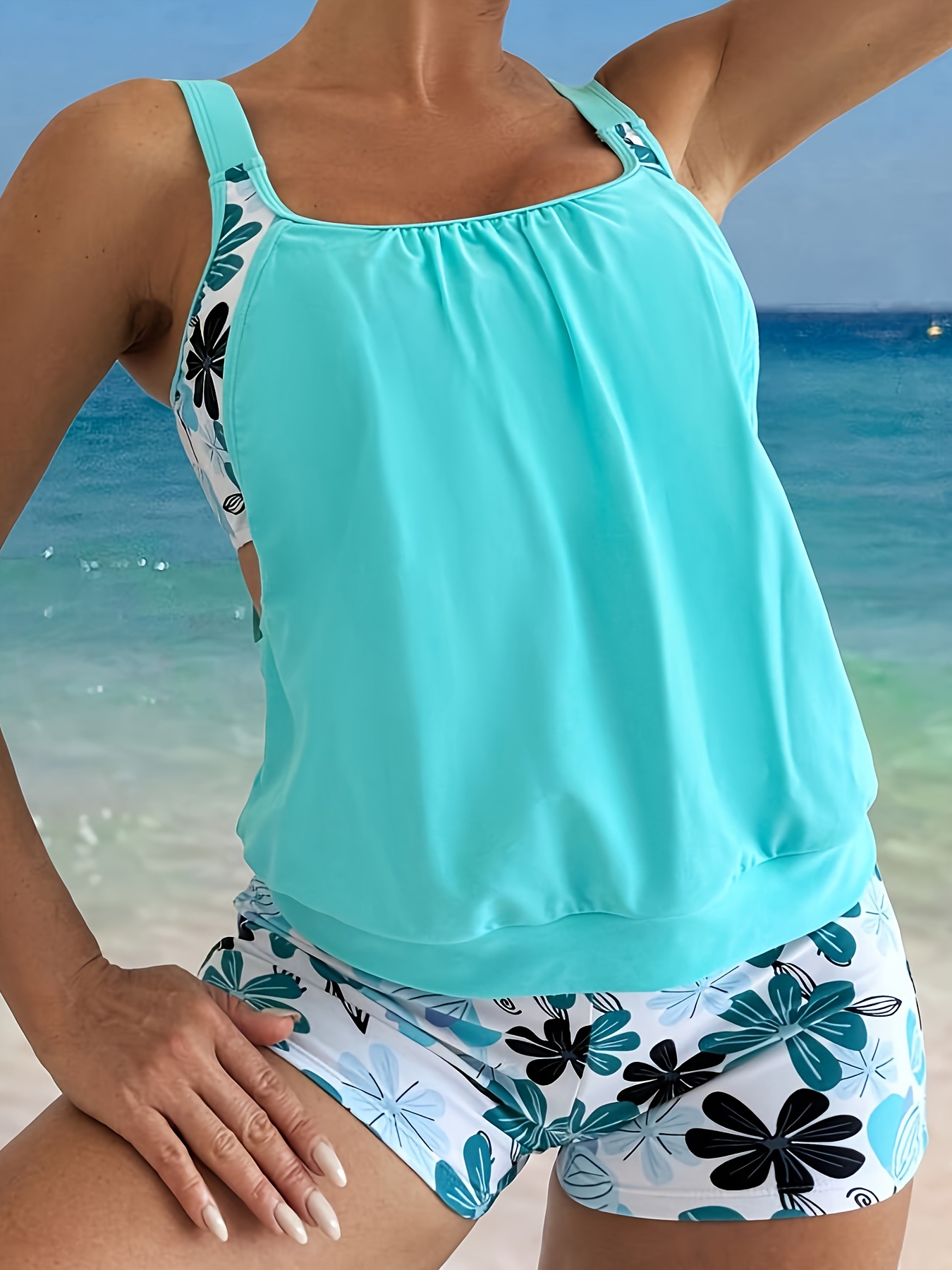
Tankinis deserve a second look too. The two-piece convenience (easy bathroom trips, mix-and-match sizing) comes with a top that can hide a full support layer underneath the fabric. A blouson tankini skims the midsection while an inner shelf bra or adjustable straps do the lifting — coverage and support in one.
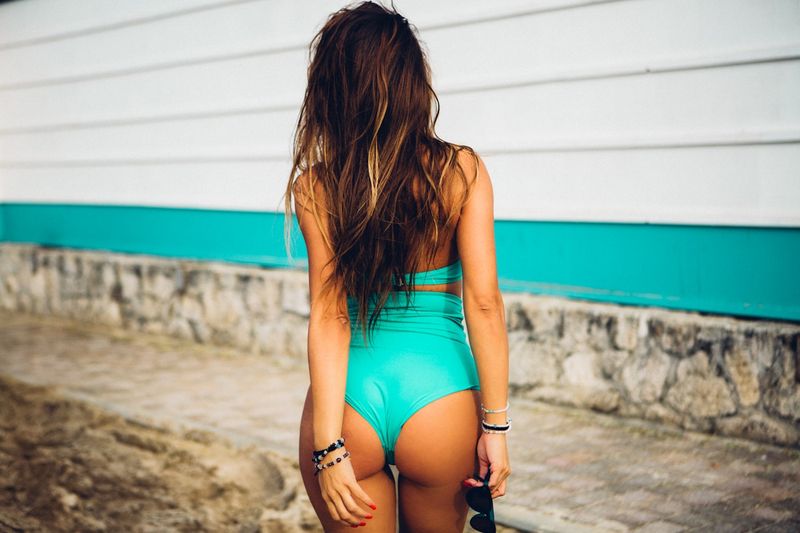
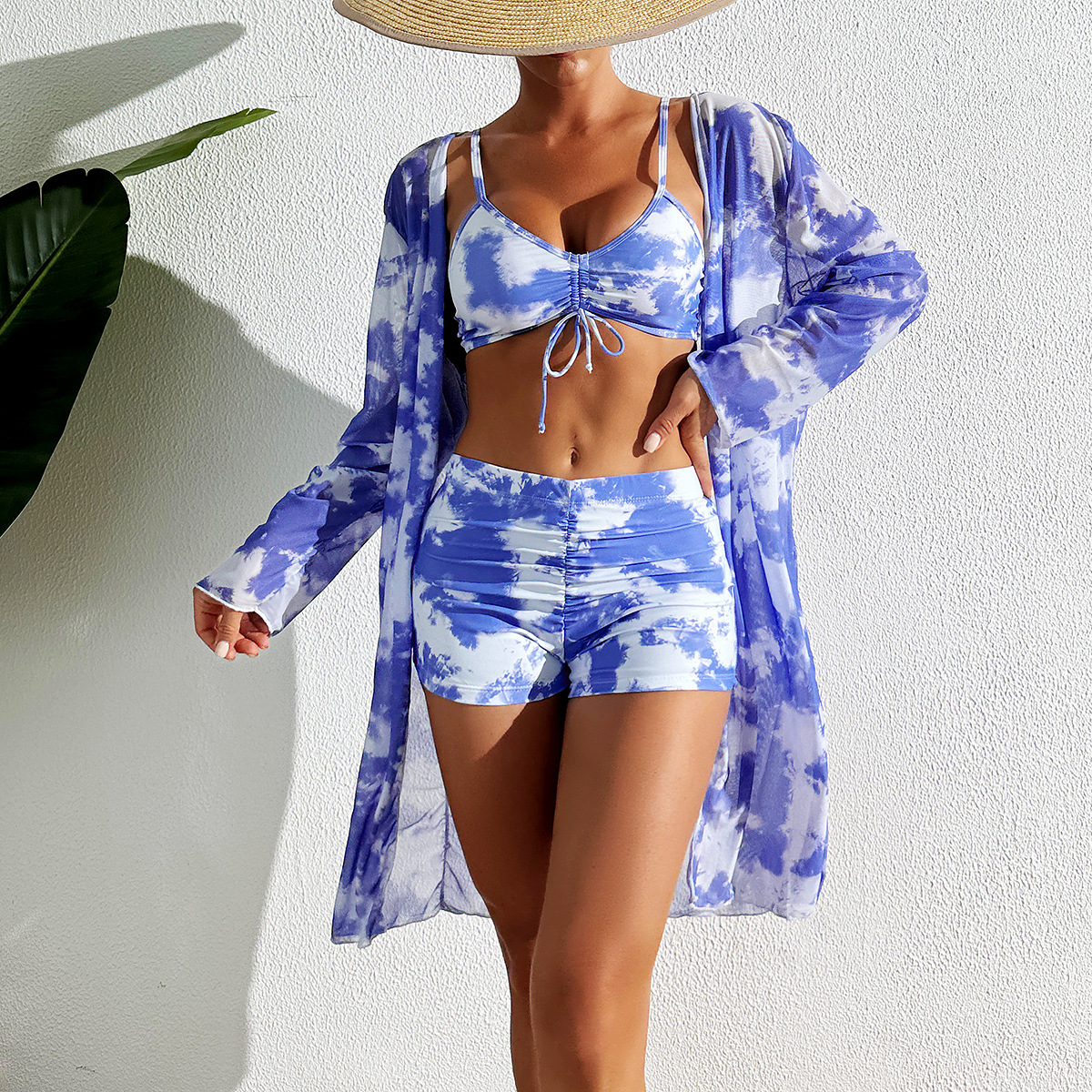
Making a Supportive Swimsuit Last
A good full bust bikini is an investment — cup-sized swimwear costs more than a five-dollar triangle for a reason — so treat it like one. Rinse it in cool water after every swim, because chlorine and salt are what actually break down elastane and kill the stretch that holds you in. Skip the wringing and the dryer; both destroy the band’s recovery. Hand-wash, lay flat to dry, and rotate between two suits if you swim often so each one gets a full day to spring back.
Underwire needs one extra habit: store it flat or gently curved, never folded, so the wire keeps its shape and never pokes through. Done right, a structured suit holds its support for two or three seasons instead of stretching out by August.
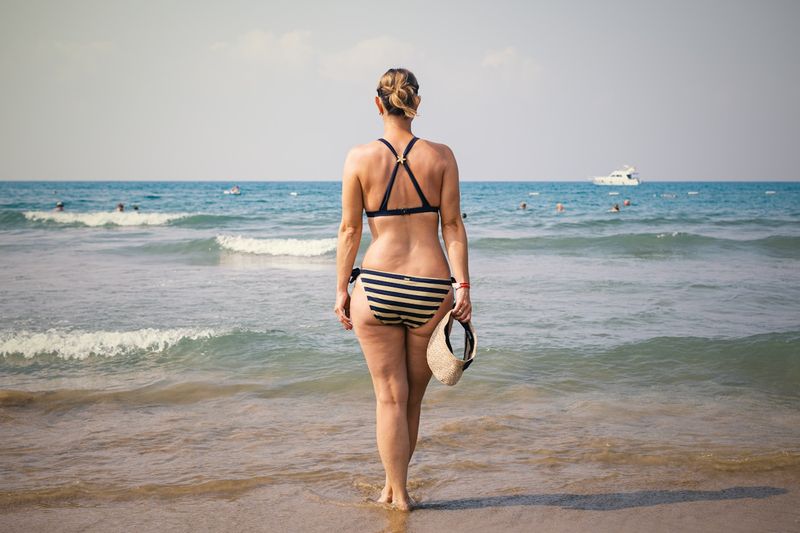
Frequently Asked Questions
What is the most supportive bikini top for a large bust? An underwire top bought in your true cup size, or a wide-strap halter with a molded cup. Both anchor weight at the band and shoulders instead of relying on stretch fabric.
Can I wear a strapless or bandeau bikini with a big bust? You can, but add a removable halter or neck strap for anything above a C cup. A bandeau alone has nothing to stop it sliding once you move.
Do I really need cup-sized swimwear? If you’re a DD or above, yes — it’s the difference between a suit that fits your band and cup separately versus one that guesses. It’s the single biggest upgrade most fuller-busted women make.
The One-Piece and Bikini Video Guide
If you want to see these styles on real bodies before you buy, this try-on walkthrough covers the best supportive tops for fuller and bigger busts:
Buy for your band, not your fear of a number. The right full bust bikini isn’t about hiding — it’s about wearing a suit that stays put so you can stop thinking about it and actually enjoy the water. Start with your measurements, pick a halter or underwire cut, and check out our roundup of the most supportive bikini tops for big busts when you’re ready to shop. Confidence is a suit that fits.
Sources
- ALT Swim — How To Choose The Best Bikini For A Larger Bust — underwire, wide straps, and correct measurement guidance.
- Wardrobe Oxygen — The Best Large Bust Swimsuits — cup-sized swimwear brands and fit testing.
- SI Swimsuit — Best Bikini Tops for Larger Busts — styles that fit and flatter a fuller bust.
Shop our full range of bikinis and swimwear at the BikiniCool store →