The Anatomy of a Bikini: How Cuts, Coverage & Support Actually Work
Two bikinis can be labeled the exact same size and feel like they were made for two different people. One stays put through a wave; the other shifts the second you stand up. The difference almost never comes down to the size on the tag — it comes down to how the piece is built. Coverage, support, neckline, leg cut, and fabric are all separate design decisions, and once you understand how each one works, a swimwear listing stops being a guessing game and starts reading like a spec sheet.
This isn’t a ranking of styles or a list of what’s “in.” It’s a look under the hood at the anatomy of a bikini, so you can walk into any shop — or any product page — and know exactly what you’re looking at and why it will or won’t work for the day you have in mind. There’s no single right body for any of this. The goal is simply to match the construction to what you want it to do.
Coverage Is a Spectrum, Not a Style
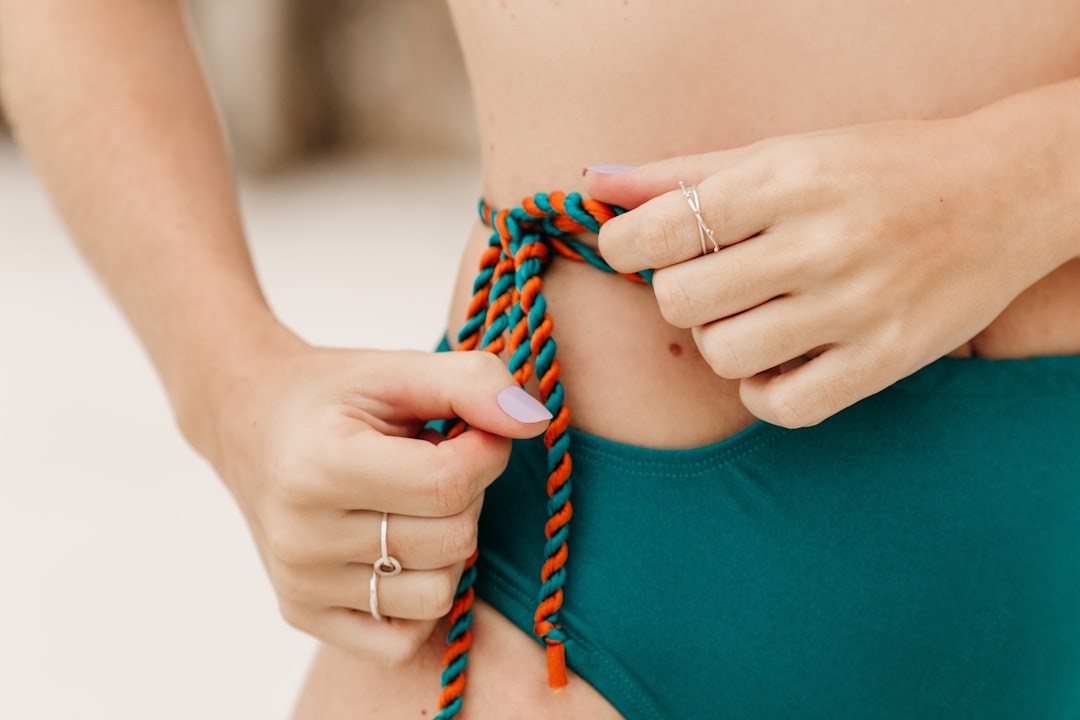
The word that trips most people up is “coverage,” because it gets treated like a single dial when it’s really three. Top coverage, bottom coverage, and how the two relate to each other are independent choices. You can pair a full, supportive top with a cheeky bottom, or a tiny triangle top with a high-waist brief. Mixing those decisions on purpose is how you build a set that feels like yours rather than whatever the manufacturer paired on the hanger.
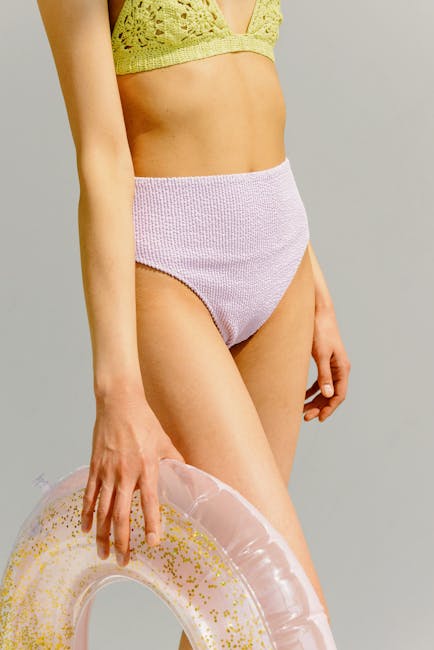
On the bottom half, coverage is usually described by how much of the rear the fabric spans and how high it sits on the hip. Full-coverage briefs wrap the seat completely and often sit higher on the waist. Moderate or “mid” coverage leaves a little more leg. Cheeky and Brazilian cuts intentionally show more, and high-cut leg openings — where the fabric rises toward the hip bone — visually lengthen the leg regardless of how much rear they cover. None of these is more flattering in the abstract; they just do different things, and “high-cut leg” and “high coverage” are not the same lever.
A useful habit: when a listing says “cheeky” or “full,” picture the rear coverage. When it says “high-cut” or “high-leg,” picture where the side of the fabric hits your hip. Reading those two separately stops the most common online-shopping surprise — a bottom that covers exactly the opposite of what you expected.
The Top: Where Support Actually Lives
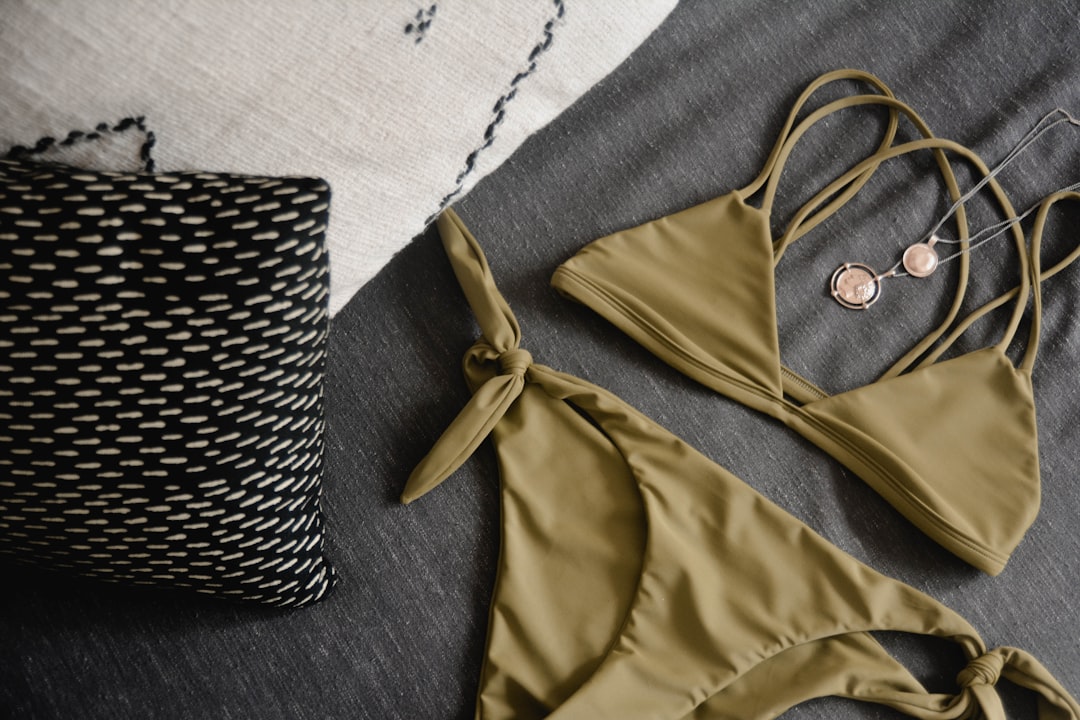
Bikini tops are where the most engineering hides, and where the same word can mean two different garments. “Support” isn’t a single feature — it’s the sum of the neckline, the strap path, the band, and what’s inside the cups. Understanding those four pieces tells you more than any size chart.
Necklines and strap paths
A triangle top hangs from a thin string and relies on tension at the neck — light, adjustable, minimal lift. A halter pulls the straps up and behind the neck, which concentrates support at a single point and tends to lift and center; it’s why halters feel secure to many people but can tire the neck over a long beach day. A bandeau removes straps entirely and lives or dies by its band, so the elastic underneath has to do all the work. An underwire or molded-cup top borrows directly from bra construction, separating and supporting each side independently.
The takeaway isn’t “halters are best.” It’s that the strap path determines where the load goes — neck, shoulders, or the band around your ribs — and you get to decide which trade-off suits your day.
The band is the quiet hero
Here’s the detail most shoppers miss: in a supportive top, the majority of the lift comes from the band that wraps your ribcage, not the straps over your shoulders. This mirrors how a well-fitted bra works. If a top digs into your shoulders, the band is usually too loose and the straps are compensating. A firm, level band that doesn’t ride up is the single best predictor of all-day comfort — which is exactly why bandeau tops, with nothing but a band, have to be cut so precisely.
What’s inside the cup
Listings throw around “removable pads,” “molded cups,” and “underwire” as if they’re interchangeable. They’re not. Removable pads are thin inserts mostly for shaping and modesty; pull them out and the top still works. Molded cups are pre-formed and hold their shape on their own, giving structure without wire. Underwire adds a rigid frame that separates and lifts — the most structured option and the one most worth seeking out if you want bra-level support in the water.
If a top offers adjustable straps and a hook-and-eye back closure, treat that as a green flag — it means you can fine-tune the band and straps separately, the same way you’d dial in a good bra.
Shop Supportive Underwire Bikini Tops on Amazon →
Fabric Is a Feature, Not Just a Color
Two bikinis in identical cuts can perform completely differently because of what they’re made of. Most swimwear is a blend of nylon or polyester with elastane (you’ll see it as spandex, Lycra, or elastane on the label). The elastane percentage drives the stretch and recovery — how well the fabric snaps back instead of sagging when wet. A higher-quality blend holds its shape through a full day of sun, salt, and sitting on a towel; a cheaper one bags out at the knees and seat by lunch.
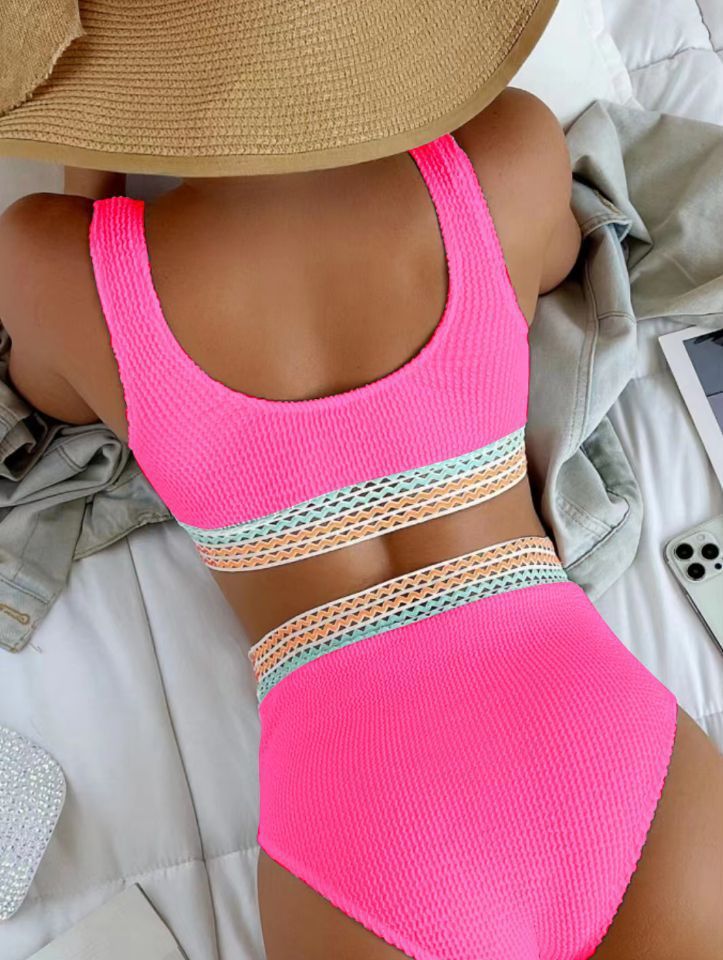
Fabric weight matters too. A thicker, double-lined fabric is more opaque, smooths the surface, and resists going see-through when wet — worth knowing if you’re buying a light color. Ribbed and textured fabrics have a slight structural quality that many people find more forgiving and modern-looking, while smooth fabrics show the line of the cut more sharply. None of this is visible in a photo, which is exactly why the materials section of a listing deserves a read before you click buy.
The fastest way to judge swimwear quality online: read the fabric composition and lining before you look at the price. An 80/20 nylon-elastane blend with full lining tells you more than any star rating.
How the Pieces Talk to Each Other
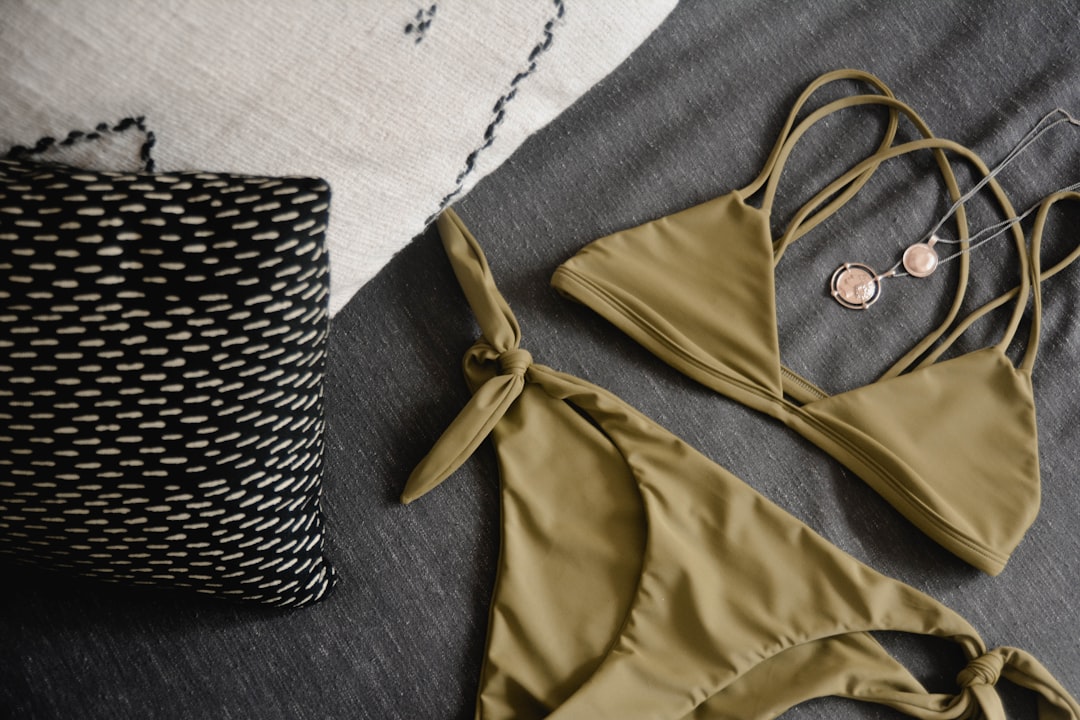
Once you can read each part on its own, the real skill is seeing how they balance. Swimwear design tends to play with proportion: a detailed or higher-coverage top often pairs naturally with a simpler bottom, and a minimal top balances a bottom with more going on. This is why mixing and matching separates can feel “off” even when both pieces are lovely — you’ve doubled the visual weight on one half.
You can use this on purpose. Want to draw the eye upward? Choose a top with a bold neckline, color, or detail and keep the bottom clean. Prefer the focus lower, or just want the most comfortable, no-fuss top? Flip it. Balance isn’t a rule about hiding anything — it’s a tool for steering attention wherever you’d like it to go, and it works on every body.
The other relationship worth watching is rise versus leg cut on the bottom. A high-waisted brief with a high-cut leg reads very long and lean through the torso; a low-rise with a straight leg reads more relaxed and retro. Same coverage number, totally different silhouette. When a listing brags about being “flattering,” this proportion play is usually what it’s quietly referring to.
Shop High-Waisted Bikini Sets on Amazon →
Matching the Build to the Day
The most overlooked variable in choosing a bikini isn’t your body — it’s your plans. A piece optimized for lying on a lounger is built differently from one meant for swimming laps or playing beach volleyball. When you know what the day demands, the construction choices make themselves.
If you’ll be active
For swimming, surfing, or any real movement, prioritize secure strap paths and a firm band over delicate ties. Halters and sporty racerback tops keep things anchored; tie-side bottoms can loosen in surf, so fixed sides or a snug full-coverage cut hold better. Thicker, high-recovery fabric resists the tug of moving water. The string triangle that looks effortless on a lounger is the first thing to shift in a wave — that’s physics, not a flaw in you.
If you’ll be lounging or at a resort
When the agenda is sun, photos, and slow afternoons, comfort and tan lines matter more than lockdown. Adjustable ties let you tweak coverage as the day goes; bandeaus minimize shoulder lines; lighter fabrics feel cooler. This is the setting where the more decorative cuts shine, because you’re not asking them to survive a swim.
If comfort over hours is the priority
For long days, look for wide-set or adjustable straps that don’t dig, a band you can tighten, and seams that sit flat. Anything that pinches in the fitting room only gets louder by hour four. Trust that early signal.
How to Read a Listing Like You Built It
Put it all together and an online swimwear page becomes easy to decode. Run through the anatomy in order and you’ll know whether a piece fits your day before it ships:
- Strap path: triangle, halter, bandeau, or molded — this sets where support comes from.
- Closure: ties, hook-and-eye, or pull-on — adjustability is a feature, not a frill.
- Inside the cup: removable pads, molded, or underwire — the real support tells.
- Bottom coverage and leg cut: read them as two separate numbers.
- Fabric: elastane percentage, lining, and weight predict how it wears wet.
That five-point scan takes thirty seconds and replaces hope with information. You stop ordering three sizes to see what happens and start ordering the one piece that’s actually built for what you need.
Your Body Sets the Brief, Not the Rules
Everything above is mechanics — coverage, support, fabric, proportion. What it’s for is freedom. When you understand how a bikini is built, the conversation stops being about whether you’re “allowed” to wear a cut and becomes about whether that cut does the job you want on the day you have. A high-cut leg isn’t a reward for a certain shape; it’s a tool that lengthens a line. Underwire isn’t a confession; it’s engineering you can choose. There is no body that needs to earn a bikini.
The most confident beachgoers aren’t the ones who match some template — they’re the ones who know what they want a piece to do and pick accordingly. Learn the anatomy once, and you carry that confidence into every fitting room and every cart, summer after summer.
Shop Bandeau Bikini Sets on Amazon →
Sources
- Wikipedia — Bikini (history, cuts, and terminology)
- Wikipedia — Swimsuit (construction and fabric overview)
- Wikipedia — Spandex / elastane (stretch fabric and recovery)
Shop our full range of bikinis and swimwear at the BikiniCool store →