
How the One-Piece and the Bikini Became Rivals: The Story Behind Two Swimsuits
Every summer, the same quiet debate plays out in fitting rooms and hotel bathrooms around the world: one-piece or bikini? We tend to treat it as a personal styling question — a matter of mood, coverage, or what we think a given day at the water calls for. But the two silhouettes carry a much longer story than that. They were invented decades apart, for different reasons, under different pressures, and the tension between them has always been about far more than fabric. Understanding where each suit came from makes the choice feel less like a verdict on your body and more like what it actually is: picking a tool with a history.
(Just want the practical answer for today’s beach day? Our main one-piece vs bikini guide walks through coverage, support, and comfort. This one is about where the whole debate came from.)

Before There Was a Choice at All
For most of recorded bathing history, women didn’t get to weigh one-piece against two-piece — because swimwear as we’d recognize it barely existed. Well into the nineteenth century, sea-bathing costumes were closer to full dresses: heavy wool or flannel gowns worn over bloomers, sometimes with weights sewn into the hems so the fabric wouldn’t float up and reveal an ankle. These garments were designed to conceal, not to swim in. A woman entering the water was expected to disappear beneath yards of cloth, and the idea that a swimsuit might actually help you move was almost beside the point.
The shift began with athletes. As competitive swimming grew in the early twentieth century, the sheer impracticality of swimming in a dress became impossible to ignore. Australian swimmer and performer Annette Kellerman famously pushed the limits by wearing a form-fitting one-piece that exposed her arms and legs — and was reportedly arrested for indecency on a Massachusetts beach around 1907. The scandal is the point: the very first modern one-piece was radical precisely because it prioritized the body’s function over its concealment. What now reads as the “conservative” option entered the world as an act of rebellion.
The Maillot Grows Up
By the 1920s and 30s, the one-piece — often called the maillot, from the French word for a tight-fitting jersey — had become the default swimsuit for a generation of women who suddenly expected to actually swim. New knit fabrics clung and stretched in ways wool never could. Hemlines rose, backs dropped, and the silhouette began to celebrate the body’s line rather than smother it. This was the era that fixed the one-piece in the cultural imagination as the elegant, athletic, put-together option: think of the sculpted maillots of 1950s Hollywood, engineered with internal boning and shaping panels to create a smooth, poised shape.

That engineering heritage is exactly why the modern one-piece still feels the way it does. When you pull on a good maillot today, you’re wearing the descendant of a garment built around structure — a single continuous panel of fabric that can distribute tension across the torso, hold shaping in the midsection, and stay put through a dive. It’s not more “modest” by nature; it’s more integrated. The suit works as one connected system, which is why so many swimmers, lifeguards, and anyone who wants to move hard in the water still reach for it first.
Shop Women’s Athletic One-Piece Swimsuits on Amazon →
1946: The Bikini Detonates
While the one-piece was busy becoming respectable, the two-piece was waiting in the wings. Bare-midriff bathing sets existed in the 1930s and early 40s, but they kept the navel covered and stayed within the bounds of polite fashion. Then, in the summer of 1946, French engineer Louis Réard unveiled something deliberately more extreme. He named it the bikini, after Bikini Atoll — the site of recent nuclear tests — betting that his design would cause an explosion of its own. It nearly did. The suit was so scandalous that Réard reportedly couldn’t find a fashion model willing to wear it and had to hire a nude dancer for the debut.
The name tells you everything about how the bikini was positioned from birth: not as a practical garment but as a provocation. Where the one-piece earned acceptance by proving it was athletic and elegant, the bikini arrived as pure cultural dynamite — banned on beaches, condemned by authorities, and adopted slowly over the following two decades as film stars and pop culture chipped away at the taboo. By the 1960s it had gone from shocking to iconic, and the rivalry between the two silhouettes was fully set.

Two Different Design Philosophies
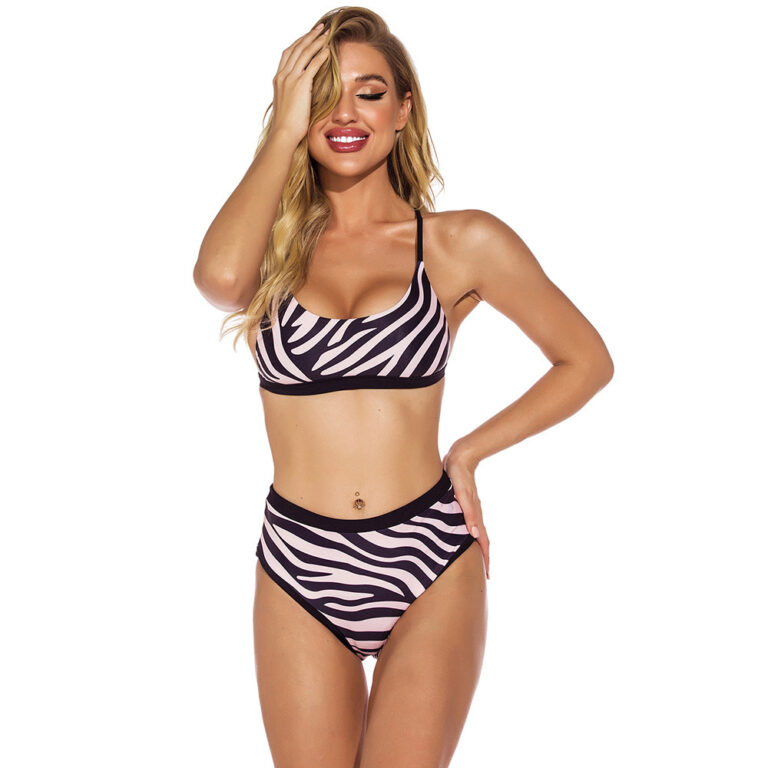
Strip away the century of cultural baggage and you’re left with two genuinely different engineering answers to the same problem. The one-piece is a single continuous structure. The bikini is a modular system — two independent pieces that can be sized, shaped, and mixed on their own terms. Neither is inherently better; they simply solve for different priorities, and knowing which is which takes a lot of the anxiety out of the decision.
What the one-piece is built to do
Because it’s a single connected panel, the one-piece excels at anything involving movement and security. It resists shifting during dives, laps, and waves. It can carry built-in shaping and support without relying on separate closures. And it offers a large, uninterrupted canvas — which is why bold cutouts, plunging backs, and dramatic color-blocking so often look most striking on a maillot. If your day involves actually being in the water rather than beside it, the one-piece’s integrated construction is quietly working in your favor.

What the bikini is built to do
The bikini’s superpower is that it’s really two garments. That modularity solves a problem countless bodies run into with one-pieces: the torso that needs one size on top and another on the bottom. Buy the pieces separately and you can dress a full bust and a smaller hip — or the reverse — without compromise. Two-piece construction also makes quick changes easier, dries faster in two smaller panels, and gives more skin to the sun if an even tan is what you’re after. The trade-off is simply that a modular system has more edges to shift, so fit at each seam matters more.
Shop Mix-and-Match Bikini Separates on Amazon →
The Rivalry Was Never Really About Bodies
Here’s the part the history makes impossible to miss. For a hundred years, the loudest arguments about one-piece versus bikini have almost never been about function — they’ve been about what a woman’s visible body is allowed to mean. Kellerman’s one-piece was scandalous because it revealed too much. Réard’s bikini was scandalous for the same reason a generation later. Each new silhouette was framed as either dangerously revealing or reassuringly modest, and women were sorted accordingly. The suits changed; the impulse to police them didn’t.
That’s worth naming because the same logic still leaks into how we shop. The tired script says one-pieces are for “hiding” and bikinis are for “showing off” — as if coverage were a confession about how you feel about your stomach. It’s a script written by the same anxieties that got Annette Kellerman arrested, and it deserves exactly zero authority over your beach day. A one-piece isn’t an apology. A bikini isn’t a dare. They are two designs, born of two eras, each good at different things.
The most flattering swimsuit is the one you forget you’re wearing the moment you get in the water.
Reading the Choice Through History
So how do you actually decide, once you’ve let go of the moral scoreboard? Let the design heritage guide you rather than the shame. Ask what the day demands of the garment. If you’re swimming laps, chasing kids into surf, or want a single bold statement piece with nothing to adjust, the one-piece’s integrated, athletic lineage is on your side. If you need to size your top and bottom independently, want the fastest changes, or simply love the freedom the two-piece has always represented, the bikini’s modular design is the smarter tool.

And notice how thoroughly the two have merged in recent years. Tankinis borrow the coverage of a one-piece with the separates of a bikini. High-waisted two-pieces revive a pre-bikini silhouette with modern stretch fabric. One-pieces now come with cutouts so architectural they show as much skin as any two-piece ever did. The rigid rivalry the twentieth century built has quietly dissolved into a spectrum, and you’re free to move up and down it by mood, activity, and body — no permission slip required.
Shop High-Waisted Two-Piece Swimsuits on Amazon →
Owning the Whole Story
The most freeing thing about knowing where these suits came from is realizing you’re the first generation that gets the full menu with none of the stakes. A woman in 1907 could be arrested for a one-piece. A woman in 1946 could be turned away from a beach for a bikini. You can keep both in the same drawer and choose between them based on nothing more serious than whether you feel like swimming hard or lying in the sun. That is not a small thing — it’s the payoff of a century of women pushing against every rule about what they could wear into the water.

So the next time the one-piece-versus-bikini question surfaces, skip the referendum on your figure. Ask the practical questions the designs were built to answer, pick the tool that fits the day, and let the century of drama stay in the history books where it belongs. Both silhouettes were, at their core, invented to let women do the same thing: get in the water and enjoy it. Everything after that is just styling.
Sources
- Wikipedia — Bikini (history and 1946 debut)
- Wikipedia — One-Piece Swimsuit
- Wikipedia — Annette Kellermann
- Encyclopaedia Britannica
Shop our full range of bikinis and swimwear at the BikiniCool store →