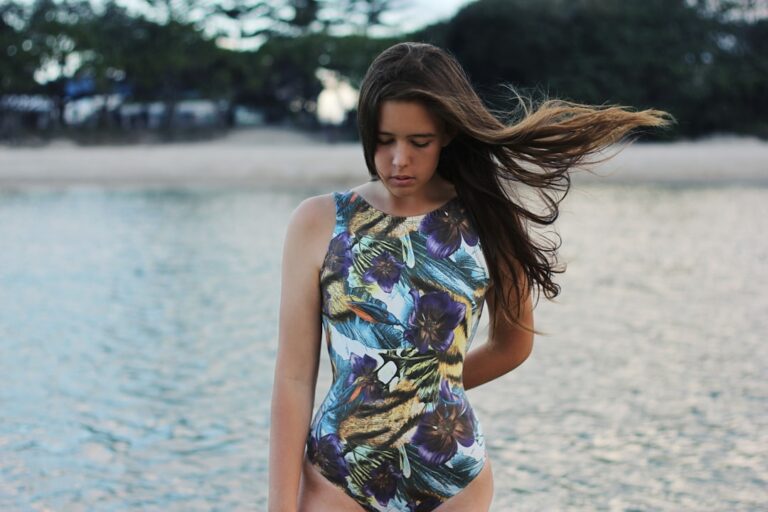
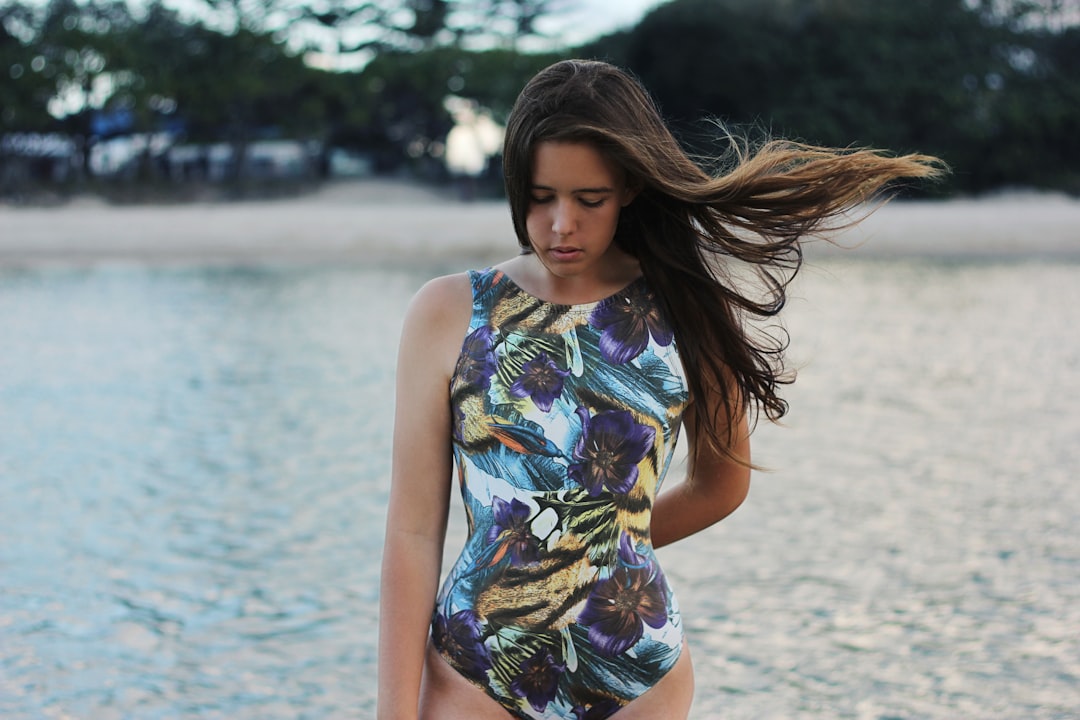
Woman in a swimsuit in water

One-Piece or Bikini by Activity: What to Wear in the Water

Ask ten people whether a one-piece or a bikini is “better” and you’ll get ten different answers, mostly based on what they happened to grow up wearing. But the honest answer is that neither one wins in the abstract. The right suit depends almost entirely on what you’re planning to do once you get to the water. A suit that’s perfect for floating on a raft with a cold drink can be a genuine nuisance the moment you try to swim a real lap, and the bikini that feels effortless on a lounge chair may spend your entire snorkeling trip drifting somewhere it shouldn’t.

So instead of crowning a winner, this guide walks through the activities most of us actually do at the beach and the pool, and looks at how each style holds up. Every body is different, every comfort level is different, and there’s no rule that says you can’t own both. Think of this less as a verdict and more as a way to match your suit to your day.

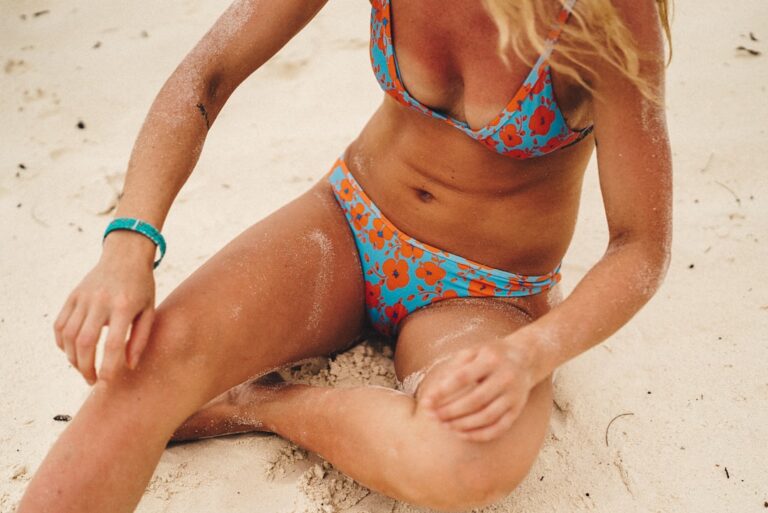
woman in blue bikini sitting on beach during daytime

Why Activity Matters More Than Body Type

For decades, swimwear advice was organized around body shapes: pear, apple, hourglass, and so on. That framing has aged badly, because it treated a swimsuit as a tool for hiding rather than a tool for living. The more useful question isn’t “what flatters my figure” but “what lets me move the way I want to today.” A suit that stays put while you dive, dries fast between activities, and doesn’t demand constant adjustment will make you feel more confident than any suit chosen to disguise a body part.

That’s why activity is the better lens. The physical demands of swimming laps are completely different from the demands of wading in the shallows with kids or reading on a towel. Once you know what your day looks like, the one-piece-versus-bikini question tends to answer itself. And if your day includes several activities, that’s a strong argument for owning a small rotation rather than a single “perfect” suit.

Serious Swimming and Lap Work

If your idea of a good beach day involves actually swimming — freestyle down the length of the pool, distance in open water, or working on your stroke — the one-piece has a real, measurable edge. A well-fitted athletic one-piece hugs the torso, reduces drag, and, most importantly, stays exactly where you put it when you push off a wall or duck under a wave. There’s a reason competitive swimmers almost universally wear one-piece racing suits: there’s simply less to worry about.

That doesn’t disqualify the bikini, but it does raise the bar for fit. A bikini can handle real swimming if the top is a proper sports-style cut — think a racerback, high-neck, or securely tied halter rather than a loose triangle — and the bottoms sit snugly on the hips. The trouble is that many bikinis designed for lounging aren’t built for the forces of a strong kick and a wall turn. If you love the two-piece freedom but want swim security, look specifically for athletic or “sport” bikinis with compressive fabric and adjustable-but-lockable straps.

woman swimming alone in body of water

For anyone prioritizing swimming, the practical move is to shop the athletic category directly rather than the fashion racks.

👙 Shop Athletic One-Piece Swimsuits on Amazon →

Snorkeling, Diving, and Time Underwater

Snorkeler in a fitted swimsuit gliding underwater over rocks in clear sea water

Snorkeling is where the one-piece quietly shines, and not just for coverage. When you’re face-down for long stretches, kicking against a current, and occasionally duck-diving to get a closer look at a reef, a one-piece keeps everything anchored so you can focus on what’s below you instead of on your straps. There’s also a sun exposure argument: your back is up and facing the sky for hours, and a one-piece — especially a higher-backed or long-sleeve style — covers the area that’s hardest to reach with sunscreen.

Bikinis aren’t off the table here, and plenty of people snorkel in them happily. The key is the same as with swimming: secure ties and a snug fit. Many snorkelers who prefer two pieces pair a sturdy bikini bottom with a rash guard or swim shirt on top, which gives them the flexibility of a two-piece for bathroom breaks and quick changes while adding the sun protection a bare back doesn’t offer. That hybrid approach is often the most comfortable answer of all.

woman holding surfboard front of the sea during golden hour

Surfing, Paddleboarding, and Board Sports

Board sports are the most physically dynamic thing most of us do in swimwear, and they’re brutal on anything loose. Paddling out through breaking waves, popping up on a board, wiping out and tumbling — these are exactly the motions that peel off a poorly secured top or shift bottoms out of place. Surfers have long favored suits that lock down: high-neck one-pieces, zip-front styles, and bikinis with thick, cinched straps and full-coverage bottoms that won’t ride up when you’re straddling a board.

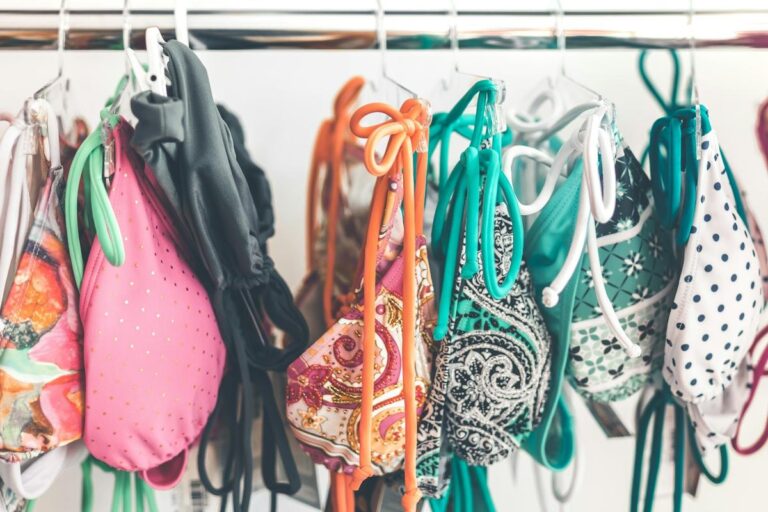
Colorful clothes hang on a rack outside.

If you’re just getting into paddleboarding or surfing, a one-piece is the lower-anxiety starting point simply because there’s less that can go wrong while you’re already concentrating on balance. As you get more confident, many board-sport athletes move to a sporty bikini or a bikini-and-rash-guard combination for the freedom of movement and the easy layering. The deciding factor is security, not style — whatever you choose, it should pass the “jump in and thrash around” test before you rely on it in the surf.

Lounging, Sunbathing, and Slow Beach Days

Here’s where the bikini earns its reputation. On a low-key day of sunbathing, wading, and drifting in and out of the water, the two-piece is hard to beat. It’s cooler in the heat, it’s far easier when nature calls, and it minimizes tan lines — which, for a lot of people, is the entire point of a lazy beach afternoon. The looser fit that works against you while swimming becomes a comfort feature when you’re mostly horizontal.

None of this means the one-piece can’t lounge. Modern one-pieces come in plunging, high-cut, and cut-out styles that are every bit as sun-friendly and every bit as fashionable as a bikini, and many people simply prefer the feel of a single garment. The point isn’t that lounging “requires” a bikini — it’s that if convenience and coolness are your top priorities and swimming isn’t, the practical case for a two-piece is strong.

👙 Shop High-Waisted Bikini Sets on Amazon →

man in black shorts riding blue and white kayak on body of water during daytime

Family Days and Chasing Kids

A day at the beach with small children is its own category of physical activity: crouching, lifting, running into the shallows, bending over sandcastles, and repeating all of it for hours. Many parents gravitate toward the one-piece here for a simple reason — it stays put through constant bending and reaching without demanding a single mid-play adjustment. There’s a real mental relief in not having to think about your suit while you’re keeping an eye on a toddler near the water.

That said, the tankini and the sporty bikini exist precisely to bridge this gap. A tankini offers one-piece-level coverage and stability with the bathroom convenience of a two-piece, which is why it’s a perennial favorite for busy family days. Once again, the decision comes down to what the day demands rather than any rule about what you “should” wear at a given age or size.

Building a Small, Activity-Ready Rotation

If your summers include more than one kind of water day — and most do — the smartest approach isn’t to hunt for a single suit that does everything. It’s to keep a small rotation that covers your real activities. For many people, that looks like one secure athletic suit for swimming and board sports, one easygoing two-piece for lounging and sunbathing, and a rash guard that can layer over either for long sun days or snorkeling. Three well-chosen pieces will serve you better than a drawer full of suits that each only half-work.

Happy woman on summer beach

A rash guard in particular is the most underrated item in the beach bag. It instantly upgrades any bikini for sun protection, adds warmth for cool-water mornings, and takes the fitness pressure off both the top and your shoulders during long swims. If you own one flexible layer, make it this.

The Real Takeaway

The one-piece versus bikini question only feels hard when we treat it as a judgment about our bodies. Reframed as a question about activity, it becomes practical and almost easy: match the suit to the movement. Swimming and board sports reward the security of a one-piece or a genuinely athletic two-piece. Lounging and sunbathing reward the coolness and convenience of a bikini. Snorkeling and family days sit somewhere in the middle, where hybrids like the tankini and the rash-guard combo often win.

Whatever you choose, the goal is the same — to spend your time thinking about the water and the people you’re with, not about your straps. A suit that lets you forget you’re wearing it is a suit that fits your life. And you’re allowed to own more than one.

Sources

Similar Posts