
Sporty Bikini: 7 Athletic Styles for Active Summer 2026
A sporty bikini is a swimsuit engineered to stay on your body when the body is moving — paddling out past a break, diving for a volleyball, hauling yourself back onto a paddleboard. Most “athletic” labels in 2026 are marketing; the ones that actually work share three traits — wider straps that distribute load, compression-grade fabric that recovers shape after every plunge, and bottoms that sit above the hip flexor so they don’t drag down with every kick. The seven styles below all pass that test, and the back half of this guide covers how to pressure-check a sporty bikini in the changing room before you trust it in saltwater.
What Makes a Bikini Actually “Sporty”?
Strip away the photoshoots and the answer is simple — coverage, retention, and recovery. A sporty bikini holds its shape after twenty wash cycles and doesn’t migrate when you sprint into a wave. The fabric matters more than the cut. Look for blends with at least 20% spandex (elastane) and the rest a chlorine-resistant polyester like Xtra Life Lycra or PBT. Standard nylon-spandex swimwear, the stuff you’ll find on most fast-fashion racks, loses about half its compression after a single summer of pool use. Sport-grade fabric keeps roughly 90% of its stretch over the same period, which is why competitive swimmers replace suits on cost-per-wear, not on look.
The other underrated factor is seam construction. Flat-locked or bonded seams sit flush against skin and won’t chafe through a two-hour beach session — overlocked seams (the raised ridge you can feel with your thumb) will rub a stripe across your ribs by hour one. Run a fingernail along every seam in the store. If you can feel it from the inside, you’ll feel it on the water.
1. The Racerback Sporty Bikini Top
The racerback is the workhorse — straps that converge between the shoulder blades instead of hanging off the deltoids. That single design choice solves the most common complaint with athletic swimwear, which is straps sliding off during arm rotation. Swim a freestyle stroke in a standard halter and you’ll feel the strap creep within the first lap. A true racerback can’t do that because the convergence point sits below the spine of the scapula, locked in by your own back muscles.
Pick a racerback with at least 1.5-inch straps and a built-in shelf bra (a second internal layer of compression fabric, not removable pads). Removable pads slip out and float away the first time you dive. The shelf bra also smooths the underbust line, which is what most people are actually trying to achieve when they ask for “more support.”
2. The Halter Crossover for Surf and Paddle Sessions
Halter tops get unfairly lumped in with delicate styles, but a wide-band halter with a crossover front is one of the most secure shapes for surfing and paddleboarding. The neck tie acts as an anchor, the crossover panel locks down the bust during pop-ups, and a second band under the rib cage handles the bounce. The trick is the bottom band — it should be at least an inch thick and snug enough that you can fit one finger underneath, no more.
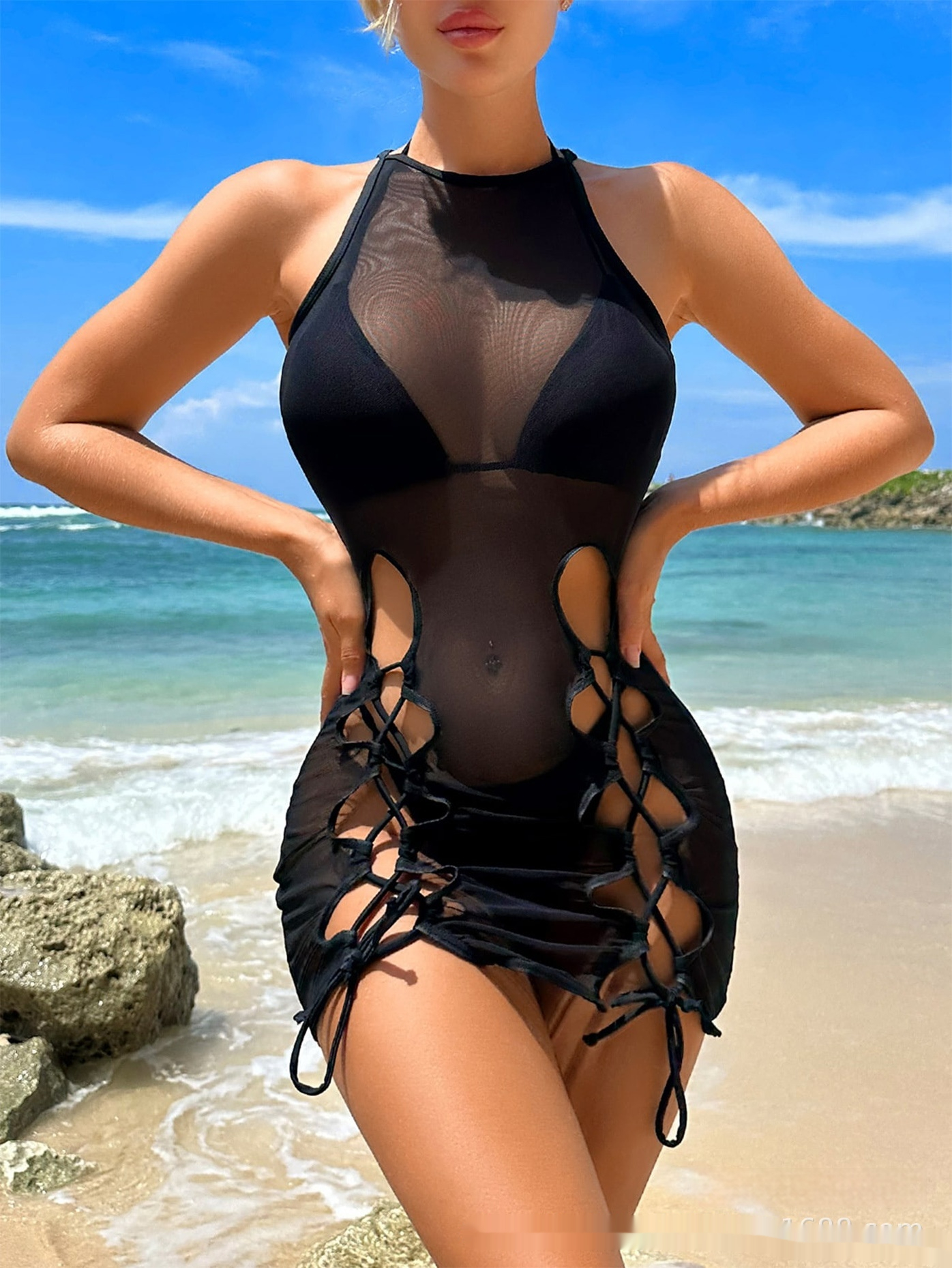
A cut-out panel between the bust adds a design accent without giving up function, since the structural work happens at the neck and rib bands. This style also pairs well with three-piece sets that include a matching cover layer for shoreline lounging.


3. Bandeau With a Detachable Sport Band
The bandeau is the format people assume can’t be athletic, and for the strapless version that’s fair — the band-only design relies entirely on the rib cage to stay up, which fails during high-impact moves. But a bandeau with detachable racerback straps is a different animal. You get the clean shoulder line for the walk down the beach, click in the straps before you swim, and the cup retention goes from “lounge only” to “ocean swim.”
The detachable straps need real hardware, not flimsy plastic clips. Metal hooks or thick silicone loops can take repeated wet-dry cycles without splitting. If the clip feels like a bra hook, walk away — it won’t survive saltwater.
4. The Cami Tank Style for Long Days in the Sun
A cami-style top sits halfway between a sports bra and a regular bikini, with longer torso coverage and a softer scoop neck. It’s the right choice when you’re going to be in and out of the water all day — beach days where you swim, eat lunch, paddle, nap, swim again. The extra fabric across the lower ribs means you’re not constantly tugging the band back down, and the wider neckline reduces the awkward strap-marks-on-shoulders look by sunset.
Pair a cami top with a higher-cut bottom and you’ve solved the most common active-swim complaint, which is bottoms that ride down during kicking. The slightly longer cami covers the gap that opens between top and bottom during arm reaches.
5. The Performance One-Piece You Can Run In
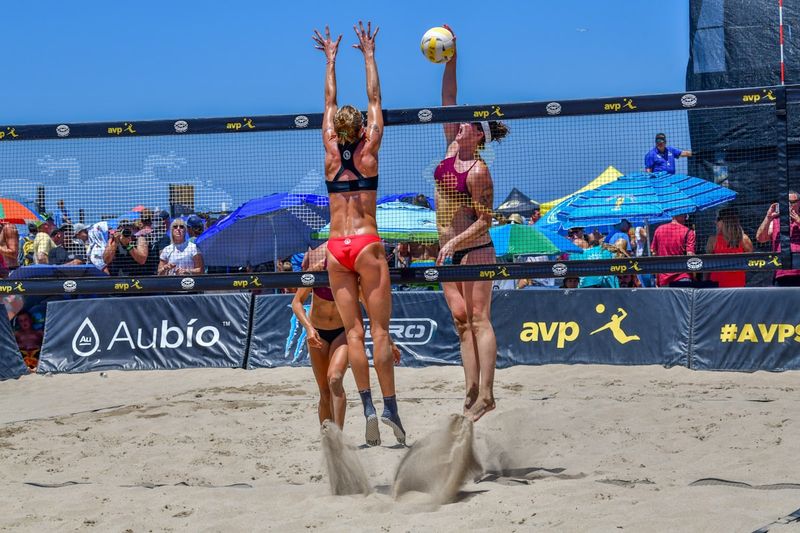
Anyone who’s tried to play beach volleyball in a regular bikini knows the problem — every dive, every spike, every dig requires you to re-adjust before the next play. A high-neck performance one-piece in compression fabric solves all of that in one purchase. Look for a racerback strap pattern, a high cut at the leg opening (for hip mobility), and chlorine-resistant fabric so the suit can also live in a lap pool during off-season training.
The right one-piece replaces three or four lower-performance suits and lasts longer than all of them combined. Consumer Reports testing has consistently found that competitive-grade polyester blends outlast nylon-elastane fast fashion by 3 to 5 times in chlorine and UV exposure.
6. High-Waisted Sport Bottoms That Don’t Roll Down
High-waisted bottoms are the unsung hero of active swimwear. A waistband that sits at or above the navel does two structural things at once — it stays up during kicking (because the band is gripping above the hip bones, not below them), and it doesn’t dig into the hip flexor when you’re cycling through paddle strokes. The mid-rise styles people default to are the worst of both worlds. They sit on the flexor and slide down with every kick.
For real active use, the band needs to be at least two inches wide and lined on the inside with a grippy elastic — sometimes called a “silicone gripper” or just “anti-roll waistband.” If you can’t tell from the photos, search the product Q&A or just check our deep guide to high-waisted bottoms, which breaks down which brands invest in real grippers versus the ones that just cut the fabric higher and hope for the best.

7. The Minimalist Solid-Color Sport Set
Sometimes the sportiest move is the simplest one. A solid-color, no-print, no-trim set in matte fabric is the multi-tool of athletic swimwear — it transitions from pool laps to a paddle session to a beach run without ever looking out of context. Matte fabric reads as more technical than glossy, and a solid color means no print bleeding after a salt-and-chlorine summer.
Three-piece sets in this format are particularly useful, because they include a coordinating top layer that doubles as a workout crop for runs along the shoreline. The shorts component, often overlooked, is the most useful for active beach days where you want bottom coverage during volleyball or a tide-pool walk.

The In-Store Fit Test for a Sporty Bikini
Before you commit to any swimwear that calls itself athletic, run it through four quick movements in the fitting room — none of them require a pool. First, do ten jumping jacks. If anything migrates, slides, or rolls, the suit fails. Second, reach both arms straight overhead and hold for ten seconds. If the bottoms ride up or the top band lifts off your ribs, the fit is too loose. Third, bend forward at the waist and shake out your arms like you’re warming up. The bust should stay put. Fourth, do a deep squat. If the bottoms gap at the lower back or pinch at the hip, the rise is wrong for your shape.
Most returns happen because shoppers test swimwear standing still in front of a mirror. The mirror tells you nothing useful. The movement test tells you everything. Pair this with the longer-term swimwear care routine and a good sport bikini will outlast three rounds of fast-fashion replacements.
Watch: An Honest Active Swimwear Try-On
If you want to see how these silhouettes move on a real body before buying, this try-on review from Eryn Krouse covers active swim brands and shows the same flex tests in action — racerbacks, high-waisted bottoms, and the fit details that make the difference between a suit that swims and a suit that wins.
One Sport Bikini Beats Three Cute Ones
The math is the point. A sport-grade bikini at $60 that survives three summers costs $20 a year. A $25 fashion bikini that’s wrecked by August costs $25 a season. Buy one piece that holds its shape and the rest of your swim drawer can stay playful — print bandeaus, crochet sets, micro triangles — because the workhorse is already handled. For broader style options once you’ve covered the active essential, our guide to every bikini style walks through the rest of the lineup.
Sources
- Consumer Reports — Swimwear Testing & Reviews — Fabric durability data on competitive vs. fast-fashion swimwear in chlorine and UV exposure.
- REI Co-op Expert Advice — Choosing Swimwear for Water Sports — Fit and fabric guidance for paddle, surf, and snorkeling use cases.
- SwimOutlet — How to Buy an Athletic Swimsuit — Compression fabric, lifespan, and racerback strap specifications.
Shop our full range of bikinis and swimwear at the BikiniCool store →