What Actually Makes Swimwear Supportive for a Larger Bust
When you have a larger bust, the swimwear search tends to follow a familiar script: something looks great on a hanger, promising in the dressing room, then spends the whole beach day requiring constant adjustment. The straps dig in, the underwire pokes, or there’s no real structure at all and you’re holding things together through sheer willpower.
The good news is that supportive swimwear for larger busts has genuinely improved. But navigating what actually works — versus what just markets itself as supportive — requires knowing what to look for before you buy. This guide focuses on the construction and fit details that make the real difference, not just the aesthetics.
Why Support Is an Engineering Problem
Most swimwear is built around a B-cup baseline. Everything scaled up from there can work beautifully or fail completely, depending on whether the brand actually rethought the internal construction — or just made the pattern bigger. True support comes from inside the garment. A swimsuit that looks supportive from the outside — wide straps, high coverage — won’t necessarily feel supportive once you’re moving and in the water, unless the cups, banding, and strap system are engineered to actually do the job.
That’s the gap between a swimsuit that photographs well and one that lets you swim laps, play in the waves, or walk the shoreline without thinking about your top every few minutes. The goal is supportive swimwear that disappears from your awareness — not swimwear you’re actively managing all day. Understanding what creates that experience starts with the construction itself.
The Construction Details That Actually Make a Difference
Cups, Linings, and Internal Structure
The most important element in supportive swimwear is cup construction. Molded foam cups hold their shape independently — they don’t rely on your body to create the form. This matters because the cup is doing structural work on its own, not just providing coverage. Underwire, when properly fitted, lifts and separates, distributing the weight of the bust across the bra channel rather than letting gravity pull everything down onto your shoulders and straps.
Soft cup options can work for some larger busts, particularly when combined with a thick built-in shelf bra and strong elastic throughout the garment. But fully unlined triangle cups — however on-trend — rarely provide meaningful lift or containment above a D cup. They are a silhouette choice, not a support system. Full lining throughout the body of the suit also adds recovery: the fabric bounces back after stretching rather than bagging out through the day.
Strap Width, Placement, and Adjustability
Thin spaghetti straps carry weight by digging in. Wide straps — ideally padded, or at minimum 1.5 inches across — distribute load over more surface area and are dramatically more comfortable for fuller busts over the course of a long beach day. Placement matters just as much as width. Straps set wider on the back, rather than close to the spine, align better with natural shoulder anatomy and reduce the tendency to slide inward.
Adjustable straps let you fine-tune length so the cups sit correctly against your body, which is the foundation of everything else working properly. Some designs route straps over the shoulder and connect at the front to a halter neck, shifting some of the support load to the neck and upper back rather than the shoulders alone — useful for active water wear, though it can feel heavier during a full day of lounging on the sand.
Shop Underwire Bikini Tops for Large Busts on Amazon →
Band Construction and Boning
The band — the horizontal stretch running under the bust — is the primary load-bearer in any bra-style swimsuit. A wide, firm band with strong elastic anchors the entire support structure. If the band rides up, the cups pull down, and every other support feature becomes ineffective. This is why band fit is the first thing to check when trying on any swimsuit, before evaluating straps or cups.
Boning — thin rigid rods sewn into the side panels — is less common in swimwear than in lingerie, but some structured one-pieces and bikini tops include it to prevent the side panels from rolling or collapsing under pressure. When done well, boning is nearly invisible and keeps the silhouette consistent through movement. It is a feature worth seeking out for swimwear you plan to wear actively rather than just recline in.
Which Silhouettes Work Best for Larger Busts
Halter and High-Neck Tops
Halter tops divide opinion because they shift part of the support load to the neck rather than the band — which feels very secure for some women and creates neck strain for others. For water activities, halter designs can be excellent because the neck tie or band locks the top in place during movement. For all-day beach wear, a halter with a thick, padded neck strap tends to be far more comfortable than one built on a thin cord.
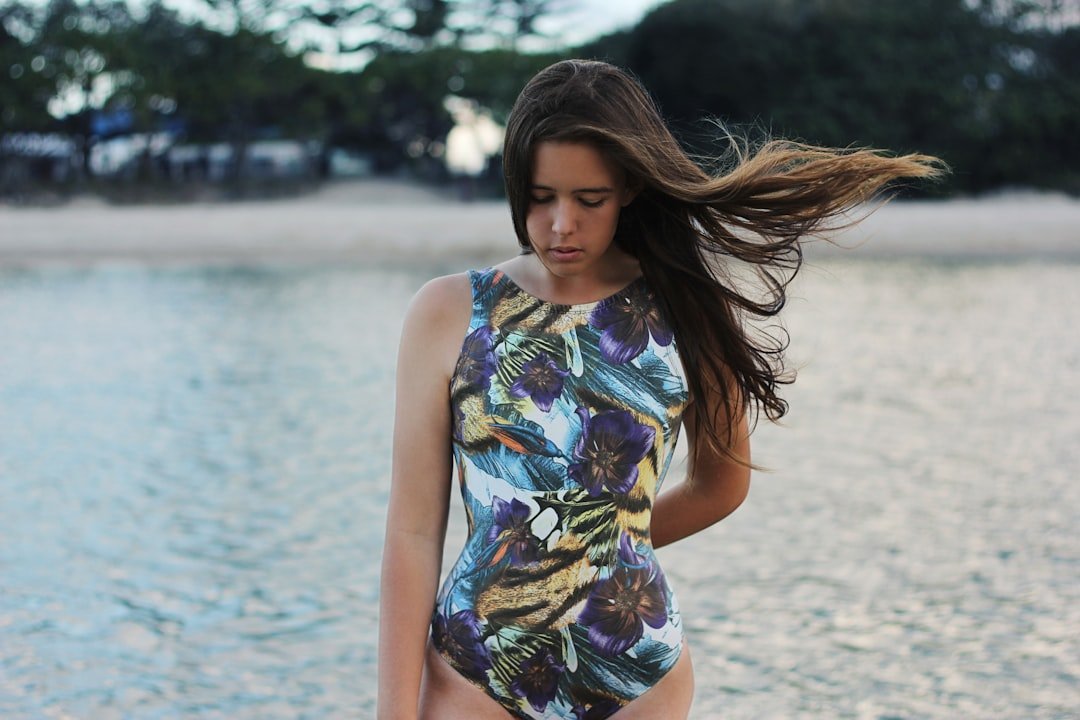
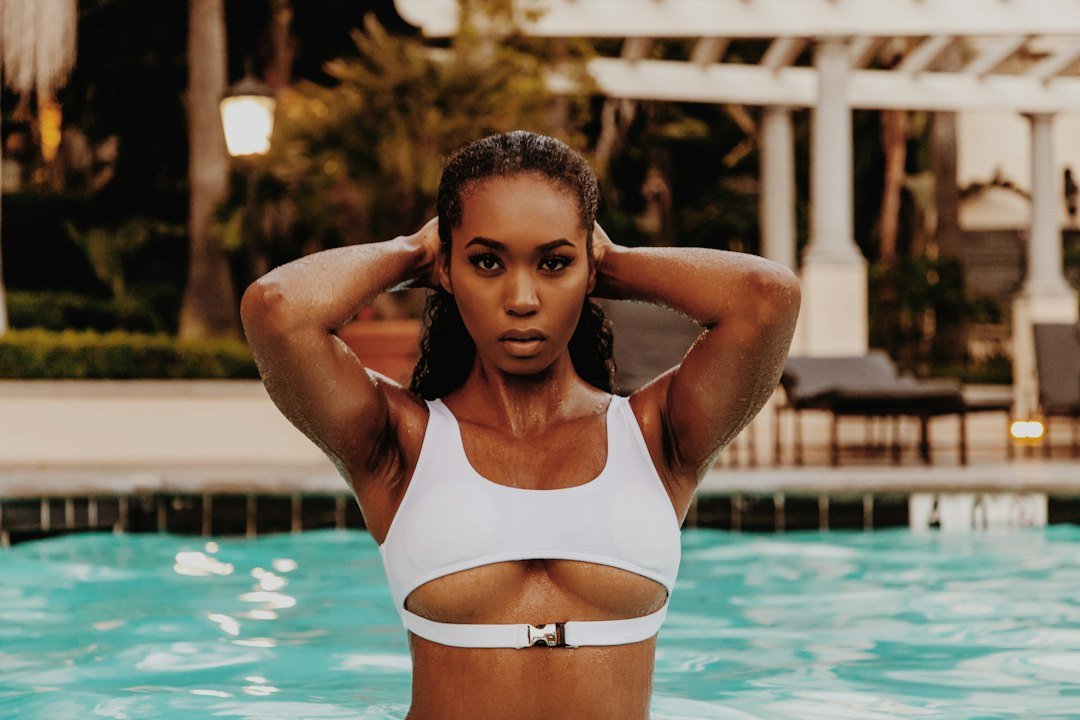
High-neck designs — sometimes called surf bras or racerback crop tops — cover more surface area and often include molded cups and full lining. They sacrifice the open aesthetic of a triangle or balconette, but for support during swimming and active play in the water, they are among the most functional options in the category. They also read as athletic and contemporary rather than frumpy, which matters when you actually want to enjoy how you look.
Structured Bikini Tops and Balconettes
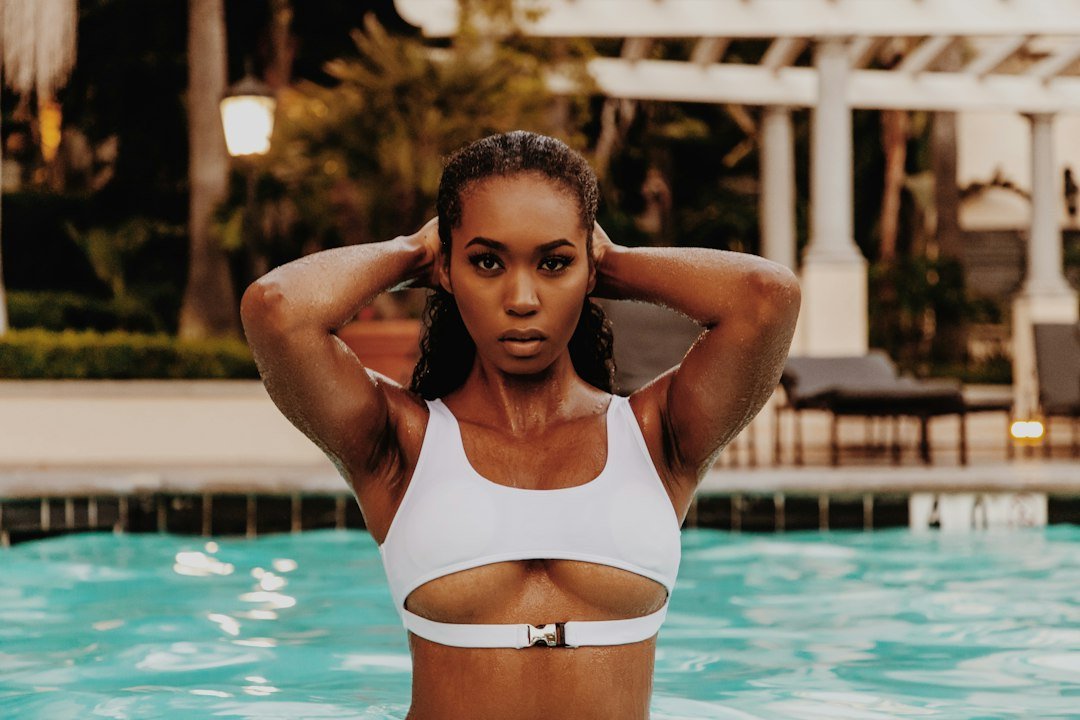
Underwire bikini tops designed for fuller busts typically feature wider cups, reinforced bands, and modesty linings. A balconette cup — cut horizontally across the top of the breast rather than angled — lifts and creates definition without requiring maximum coverage. This works well for those who want a more fashion-forward look without sacrificing internal structure. The trade-off is that balconettes can show more cleavage and require a precise fit to avoid the cup edge cutting in on the outer bust.
The key to making structured tops work is getting the sizing right. Many women wear the wrong bikini size because they’ve been fitting into a generic S/M/L system rather than bra-equivalent sizing. If you wear a 34D bra, look for swimwear brands that use actual bra sizing — 34D, 36E, 38F — rather than generic sizes. You’ll get a dramatically more precise fit, and the support the design was built to deliver will actually function as intended.
Shop Bra-Sized Bikini Tops on Amazon →
Tankinis as a Practical Fit Solution
Tankinis are frequently overlooked in trend-forward swimwear coverage, but for larger busts they solve a real, persistent fit problem: tops and bottoms that actually fit at the same time. Because a tankini top is a separate piece, you can size each component to your body independently. A D-cup tankini top doesn’t require a size 16 bottom. That one change alone can make the difference between swimwear shopping being frustrating and finding something that genuinely works.
Modern tankini tops have moved far beyond the boxy shapes of the early 2000s. Many now feature underwire, adjustable straps, and full lining — all the internal architecture of a structured bikini top, with extra torso coverage. For beach vacations where you want versatility without constant wardrobe management, a well-fitted tankini is one of the most practical and underrated choices in the category.

How to Test Fit Before You Commit
Construction details only pay off when the fit is right for your specific body. Cup spillage is the clearest signal of a wrong fit — if breast tissue is pushing over the cup edge at the top, sides, or center, the cup is too small. Go up a cup size rather than just a band size; the two adjustments are not interchangeable, and one will solve the problem while the other makes it worse.
The band should sit level all the way around your torso. If it rides up at the back, it is too loose — size down in the band. A band that digs in or leaves deep marks throughout the day is too tight — size up. These are the exact same checks used for bras, and they apply just as precisely to swimwear. The number-letter sizing system exists precisely to let you make these two adjustments independently.
Pay attention to where the cup sits on the outer bust. If the top edge of the cup cuts into tissue on the side, either the cups are set too narrow for your frame, or the style simply doesn’t suit your bust shape. Not all cup constructions work for all shapes: full-cup styles work best for fuller, rounder busts; balconettes suit a fuller-on-top profile; plunge styles work for those with a narrower bust root and closer-set breasts. Knowing your shape helps you filter by style before you even try anything on.
Finally: move around before deciding. Jump, lean forward, raise your arms over your head. If the band immediately migrates upward or the cups shift with arm movement, the swimsuit won’t hold through active use — regardless of how good it looks standing still.

What Truly Supportive Swimwear Feels Like
This is difficult to describe in the abstract, but immediately recognizable once you’ve experienced it. A well-fitted, genuinely supportive swimsuit for a larger bust doesn’t require active management. You move, swim, adjust your chair, play in the water — and the suit stays exactly where it started. You stop thinking about it.
That absence of adjustment is the standard to hold any swimwear to. If you find yourself reaching up every few minutes to reset a cup or pull a strap back into place, something about the construction or the fit isn’t working. The answer is not to get used to it. It’s to keep looking until you find the combination of silhouette, construction, and sizing that actually performs.
It’s also worth holding onto the reminder that supportive swimwear is not about covering more or conforming to a particular aesthetic. Some women with larger busts swim comfortably in unlined triangle tops and prefer that feeling of freedom. Others need full underwire, boning, and wide straps to feel at ease and move without hesitation. Both are completely valid — the goal is finding what genuinely works for your body, your activities, and your version of a good day at the beach.
Shop Supportive One-Piece Swimsuits on Amazon →
Sources
- Wikipedia — Swimsuit history and construction
- Glamour — Swimwear and body-positive fashion coverage
- Shape — Swimwear fit and lifestyle coverage