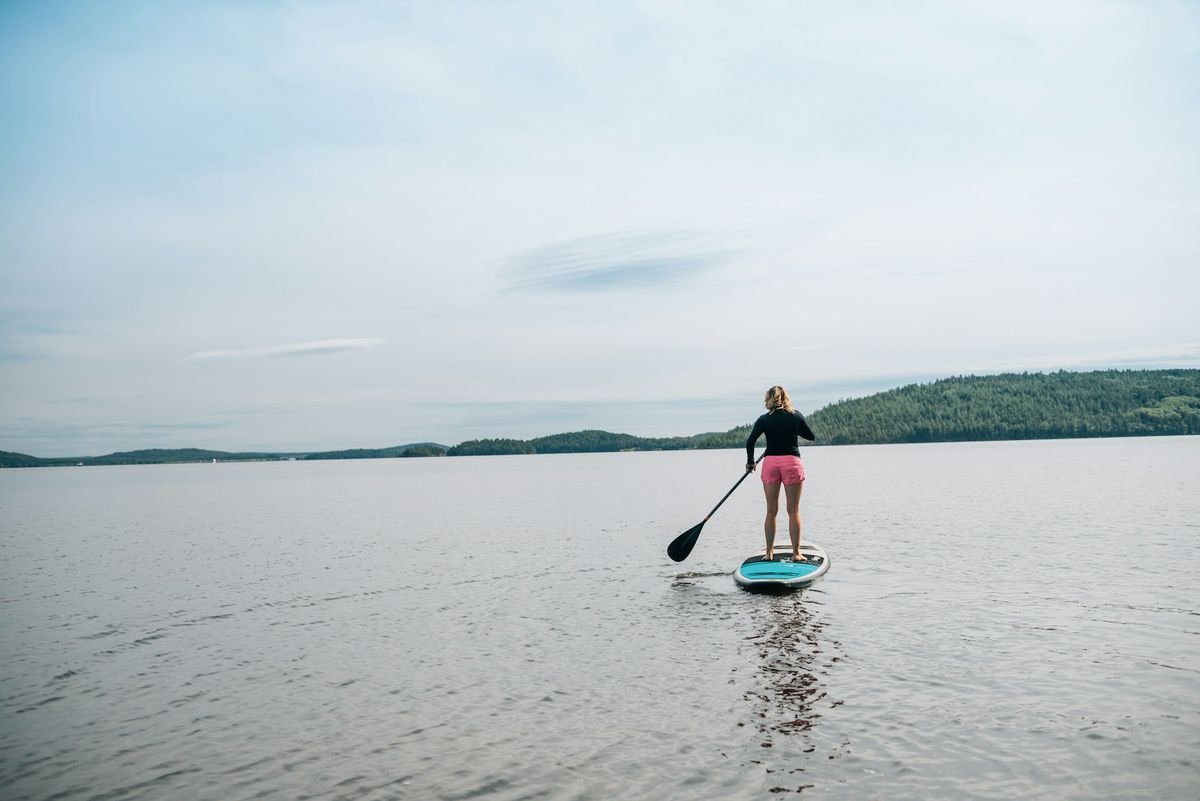
7 Best Swimsuits for Paddleboarding
Climb onto a paddleboard in a triangle bikini top and there is a real chance you are retying it before you have paddled fifty yards. The first wobble pulls differently than a pool ladder ever does, and the first wipeout pulls harder still. A swimsuit built for lounging on a towel and a swimsuit built for standing, falling, and climbing back on a moving board are not the same garment, even though most swimwear is marketed as if they were.

Why a Regular Bikini Lets You Down on a Paddleboard
Paddleboarding is not swimming. A paddler spends most of the session standing, bracing against a paddle stroke, and shifting weight to correct balance, which means the suit is under constant lateral tension in a way a pool swim never produces. A string-tie bikini bottom that survives twenty laps can come loose on a single hard fall, and a soft-cup bandeau top has nothing to brace against when you catch yourself with both arms.
Fit matters more here than fabric print or color. A suit that shifts when you reach for the paddle, bend to pick it up off the water, or climb back on from a seal landing is going to cost you focus on balance, not just modesty. That is the real argument for a athletic swimwear cut over a fashion-first one for this specific activity.
The Fit Test That Predicts a Stay-Put Swimsuit
Before buying anything for paddleboarding, do a dry-land test: raise both arms overhead, then twist at the waist like you are reaching for a paddle on your left side, then your right. A bikini top that rides up under the arms or a bottom that creeps during that motion will do the same thing on the water, just with more force behind it.
- Wide straps (at least an inch) distribute shoulder load and resist slipping better than thin string straps
- A racerback or crossback top stays flat under a life jacket strap instead of digging into the shoulder
- High-waisted or mid-rise bottoms with a wide waistband do not ride down when you kneel to paddle or climb back onto the board from the water
- A thicker leg-band elastic keeps bottoms from riding up during a fall, which thin string-side bikinis cannot match
None of this means a bikini is off the table. It means the bikini needs real construction underneath the print, not just a cute pattern.
Color is worth a second thought too, and it has nothing to do with style. A paddler who falls off a board in open water, around boat traffic or a crowded lake, is far easier to spot in bright orange, yellow, or hot pink than in navy, seafoam, or any pattern that blends into chop and glare. It is a small decision with real visibility consequences, and it costs nothing extra at checkout.
Bikini, One-Piece, or Swim Shorts: Which Wins on a Board
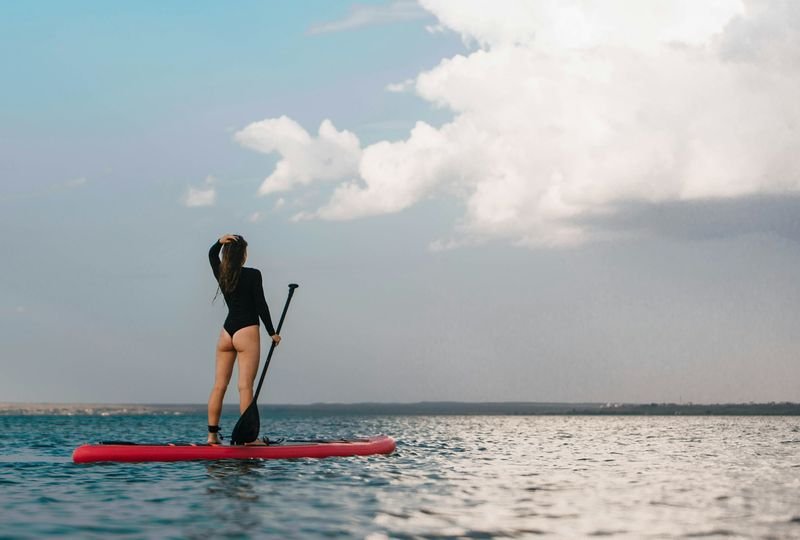
A well-built bikini works fine for calm-water, shorter sessions where falls are rare and gentle. For longer outings, surf launches, or anyone still learning to balance, a one-piece removes the one risk a bikini cannot fully solve: a top or bottom shifting mid-fall when both hands are busy with the paddle. The connected design stays put through a wipeout in a way no amount of tying can guarantee.
Swim shorts paired with a supportive top split the difference. They give the coverage and security of a one-piece bottom without the heat of full-length leggings, and they are the easiest option for anyone who finds a thong-cut bottom distracting while trying to balance. None of these is objectively correct — the honest answer is that the activity should pick the cut, not the other way around.

Fabric and Sun Protection for Hours on the Water

A standard session runs well past the window any sunscreen can promise. The FDA caps water-resistant sunscreen claims at 80 minutes of immersion, after which the labeled SPF is no longer guaranteed, and the agency does not allow “waterproof” on a bottle for exactly that reason. A two-hour paddle session is one, sometimes two, full reapplications if sunscreen is doing all the work alone.
That is why a UPF 50+ fabric earns its place on a paddleboard suit even for people who normally avoid sleeves. The protection is woven in rather than rubbed on, it does not wash off during a fall, and it covers the shoulders and upper back that take the steepest, most direct sun exposure while standing. A long-sleeve rash guard over a bikini bottom handles this without turning the outfit into a wetsuit, and pairing it with a mineral reef-safe sunscreen on exposed skin covers the gaps.

Life Jackets Change What You Should Wear Underneath

The U.S. Coast Guard classifies a stand-up paddleboard as a vessel once it leaves a designated swimming, surfing, or bathing area, which means paddlers 13 and older are required to have a Coast Guard-approved life jacket on board, and anyone 12 or younger must wear one. That single rule quietly rules out some swimwear choices before fit or fabric even enter the conversation.
A thin halter string digs into the skin under a PFD’s chest strap, and a soft bandeau top offers nothing for the jacket’s waist strap to sit against without sliding. A crossback or wide-strap top gives the jacket a flat surface to buckle over, which is a small detail that becomes obvious only after a few hours of chafing. Anyone paddling past a swim buoy line, not just in a roped-off swim area, should plan the swimsuit around the life jacket rather than the other way around.
Cold Water, Wetsuits, and the Shoulder-Season Swimsuit
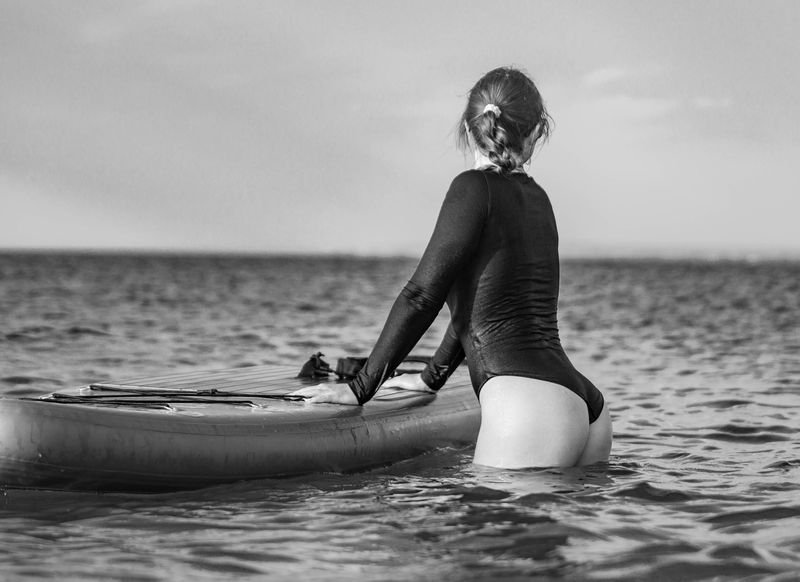
Spring and fall paddling sessions often mean air warm enough for a swimsuit but water cold enough to shock on a fall. A 2mm-3mm shorty wetsuit worn over a bikini or one-piece solves this without committing to full neoprene coverage, and it means the swimsuit underneath only needs to handle a few minutes of actual water contact rather than a full session. Full wetsuits make more sense below roughly 60°F water temperature, where a fall carries real cold-shock risk rather than just discomfort.
Here is the mildly unpopular opinion: most people paddling shoulder-season water in just a swimsuit are underdressed, not tough. A wetsuit top is not overkill once the water is cold enough that a fall takes your breath away for a few seconds — that reaction is cold water shock, and it is the thing that actually drowns unprepared paddlers, not distance from shore.
SUP Yoga and Longer Sessions Need a Different Calculation
SUP yoga asks more of a swimsuit than straight paddling does. Deep lunges, inversions, and seated poses put a suit through a wider range of motion than standing and bracing, so a bottom with a secured waistband and a top with real back coverage matter even more. A one-piece with a low-cut back for mobility, or a bikini bottom cut higher at the hip, avoids the mid-pose adjustment that a standard triangle bottom often needs.
Longer sessions, two hours or more, also make chafe points obvious fast. Side-tie bottoms that feel fine for thirty minutes can rub raw by hour two, especially with a kneeling-to-standing transition repeated dozens of times. A seamless or bonded-edge bottom avoids this in a way a tied string edge cannot.

Getting On, Off, and Carrying the Board Without a Wardrobe Malfunction

The moment most swimsuits actually fail is not paddling itself, it is the seal-style re-mount after a fall, where a paddler kicks hard and hoists their torso back onto the board in one motion. That motion catches a loose waistband or a slipping strap more than any amount of calm paddling does. Practicing that exact re-mount in shallow water before heading out, in whatever suit you plan to wear, is the single best way to find a wardrobe problem before it finds you in open water.

Carrying the board under one arm from car to water also puts a suit through a different test than paddling does — a strap can slip off the shoulder in a way it never would mid-paddle. A secure crossback top handles this without a mid-walk adjustment.
None of this means paddleboarding requires a new wardrobe. It means the suit already in the drawer should pass the overhead-twist test before it gets worn two miles from shore. The ones that pass stay forgotten for the whole session, which is exactly the point.
Sources
- NRS — U.S. Coast Guard Regulations for Stand Up Paddlers — life jacket and vessel classification rules for SUP
- FDA — OTC Sunscreen Labeling Requirements — water-resistance testing and labeling limits
- GILI Sports — Best Women’s Swimsuits for SUP — gear-specific swimwear recommendations for paddleboarders