Where the Sarong Actually Comes From (And Why That Changes How You Should Wear One)
Long before it showed up folded into a beach bag next to sunscreen and a paperback, the sarong was already doing serious cultural work. In Indonesia, Malaysia, the Philippines, and across the Pacific Islands, this simple length of cloth has been worn for centuries as everyday clothing, ceremonial dress, and a marker of regional identity. The version most people know today — tied loosely over a swimsuit on a resort beach — is a fairly recent chapter in a much longer story. Understanding that story doesn’t just make for good beach trivia. It actually changes how you might choose, wear, and talk about the sarong you pack for your next trip.
A garment with roots across an entire ocean
The word “sarong” comes from the Malay and Indonesian word for “sheath” or “covering,” and the garment itself predates the word by a long shot. Woven and dyed cloth wraps have been part of daily dress across the Malay Archipelago for centuries, with regional variations in weave, pattern, and the way the cloth is tied or sewn into a tube. Batik — the wax-resist dyeing technique most associated with Javanese sarongs — is itself recognized by UNESCO as an Intangible Cultural Heritage of Humanity, which tells you something about how significant these textiles are beyond fashion.
Travel further east into the Pacific and you’ll find related wrap garments with their own names and meanings: the lavalava in Samoa, the pareo in Tahiti and French Polynesia, and countless local variations across the islands. Each has its own patterns, color traditions, and social significance — what you wear, and how, can signal marital status, region, or occasion. This is not a single garment with one origin story; it’s a family of garments that developed in parallel across a huge stretch of ocean and land, unified by the basic idea of an unstitched or minimally stitched cloth wrapped around the body.
How it crossed into Western resortwear
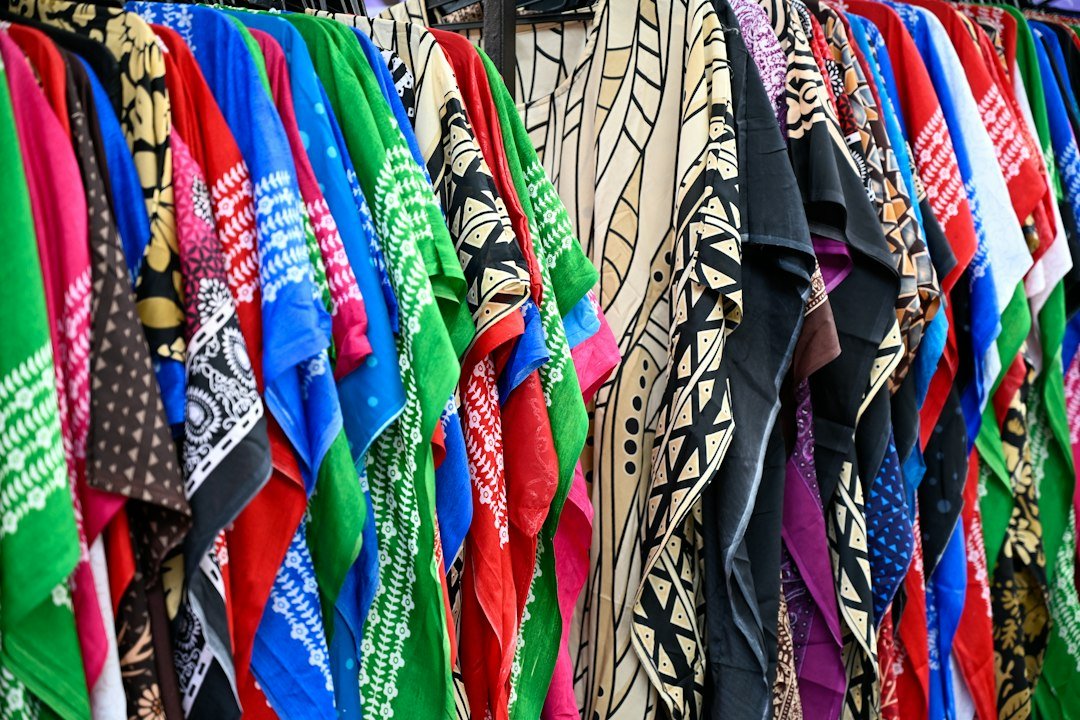
The sarong’s move into Western fashion tracks pretty closely with the history of tourism itself. As European and American travelers passed through Southeast Asia and the Pacific in the 20th century, they brought textiles and styles home as souvenirs, and designers picked up on the silhouette. Hollywood gave it another push — actresses photographed on tropical film sets in wrap skirts helped cement the sarong as shorthand for tropical glamour in the popular imagination, stripped of most of its original cultural context.
By the time the sarong became a beach cover-up staple in Europe and North America in the latter half of the century, it had been largely reinvented as a resortwear item: mass-produced, printed rather than hand-dyed, and sold as an accessory rather than a garment with regional meaning. That’s not necessarily a bad thing — clothing travels and evolves, and the sarong’s comfort and versatility earned its popularity honestly. But it’s worth knowing that the breezy beach piece in your suitcase has a much deeper backstory than the tag on it suggests.
What that history means for wearing one well
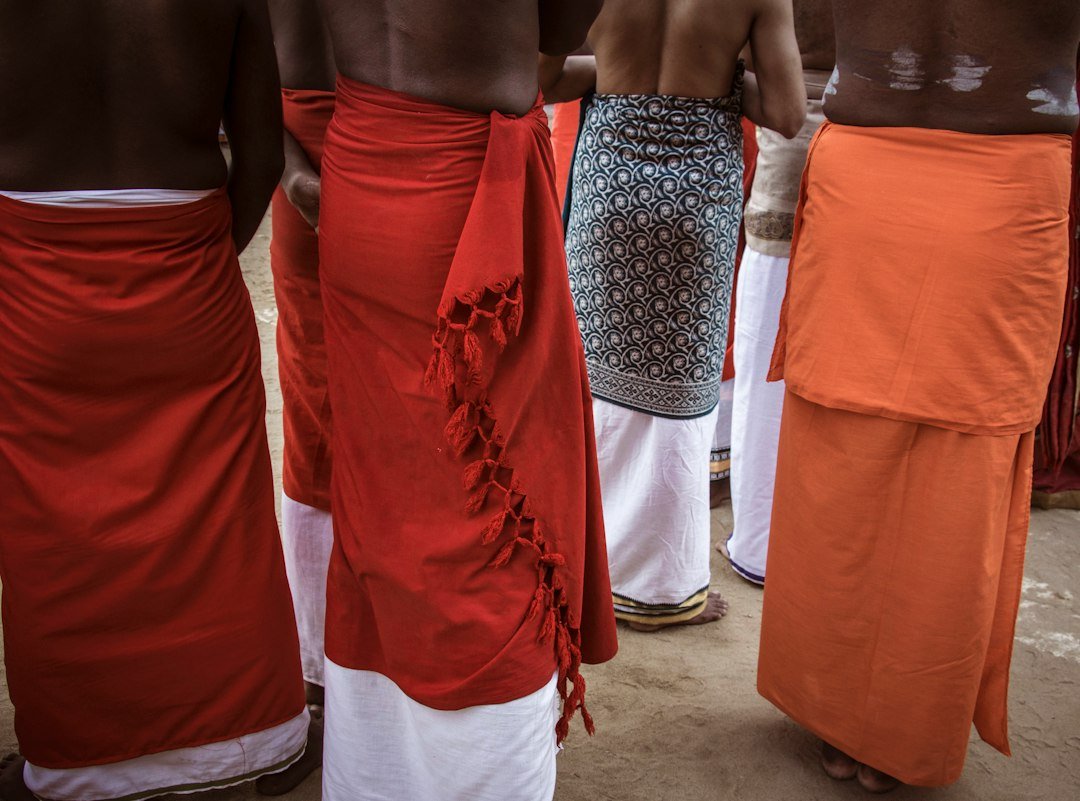
None of this means you need a history lesson before you can throw a sarong over your swimsuit. It does mean a few small choices are worth making thoughtfully. If you’re buying a sarong while traveling in Bali, Malaysia, or the Pacific Islands, consider buying from local makers or shops selling authentic batik or hand-woven pieces rather than mass-printed imports — it’s a better way to actually support the tradition you’re borrowing from. If you’re shopping at home, printed cotton or rayon sarongs sold as beachwear are fine and don’t require any particular ceremony to wear; they’re a different, more casual object than a ceremonial or formal wrap, and most sellers are clear about that distinction.
It’s also worth being a little careful about occasion. A sarong tied casually at the pool is one thing. Wearing one styled to closely mimic a specific ceremonial garment — for a costume party, for instance — is where things can tip into disrespectful territory. When in doubt, treat the sarong the way you’d treat any borrowed style: with a bit of curiosity about where it came from, rather than none at all.

Shop Batik-Print Sarong Wraps on Amazon →
Why the sarong earned its place in every beach bag
Set the history aside for a second and the sarong’s popularity makes obvious sense on practical terms. It’s one rectangle of fabric that adapts to almost any body without sizing, seams, or fit assumptions — you control exactly how loose, how long, and how much skin it shows by how you tie it. It packs down to almost nothing, dries fast, and does double duty as a beach blanket, a scarf against sun or air conditioning, or an emergency towel. Few pieces in a travel wardrobe offer that kind of return on a single square of cloth.
That flexibility is also why it’s stuck around as swimwear trends have cycled through decades of change. Bikinis, one-pieces, and cover-up styles have gone in and out of fashion, but the sarong’s job has never really changed: give you an easy way to move from wet sand to lunch table without a full outfit change. It’s less a trend than a piece of travel infrastructure.
Choosing fabric and print with the destination in mind
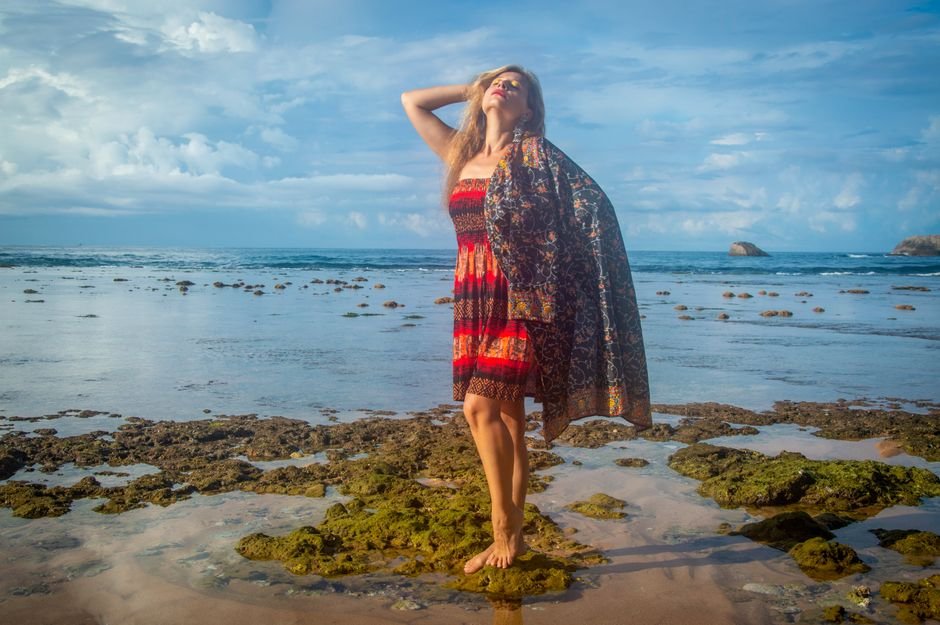
Because the sarong developed independently across so many different climates, there’s a real logic to matching fabric weight to where you’re headed. Lightweight rayon and viscose sarongs, similar in feel to the fabrics traditionally used across island Southeast Asia, drape well and dry quickly in humid, hot climates — ideal for Southeast Asia itself, the Caribbean, or anywhere the air is thick. A slightly heavier cotton sarong holds up better to wind and cooler evenings, which matters if you’re spending time somewhere like the Mediterranean coast where beach afternoons can turn breezy fast.
Print is where you can lean into personal taste more freely. Traditional batik patterns — geometric repeats, floral motifs, the deep indigo and brown palettes associated with Javanese batik — carry visual weight and read as more elevated for a beach-to-dinner transition. Bright, large-scale florals or ombré dye patterns feel more purely resort-casual. Solid colors are the most versatile if you want one sarong to match multiple swimsuits across a trip rather than packing a print for every look.

Shop Lightweight Rayon Beach Sarongs on Amazon →
A piece that lives beyond the beach
One reason the sarong has outlasted plenty of trendier beach accessories is that it doesn’t retire once the trip ends. Back home, a good sarong works as a lightweight throw over a couch or the end of a bed, a tablecloth for an outdoor dinner, a curtain panel in a pinch, or a wrap for a picnic. Some of the same qualities that made it useful to generations of people across Southeast Asia and the Pacific — durability, easy care, adaptability to different uses — are exactly what make it useful in a apartment or a carry-on bag now.
Treating it as a genuinely reusable piece rather than a single-trip souvenir is also the more sustainable way to think about swimwear accessories generally. A sarong bought once and used for years — at the beach, at home, as a gift wrap alternative, as a bag liner — does a lot more good than one bought for a single vacation and left in a drawer afterward.

Caring for the fabric so it lasts
Sarongs are low-maintenance by design, but a few habits keep the color and fabric intact through repeated sun, salt water, and sand. Hand-washing in cool water preserves both dye and fiber far better than a hot machine cycle, especially for batik and other hand-dyed pieces where color can be more prone to fading. Air-drying in shade rather than direct sun keeps prints from bleaching out over a season of beach days. Rinsing out chlorine or salt water as soon as possible after a swim also matters more than most people realize — left to dry in the fabric, both can weaken fibers and dull color over time.
None of this requires special products. It just means treating the sarong less like a disposable beach prop and more like the kind of textile it actually descends from — one meant to be used, washed, and worn for years, not one season.
Shop Cotton Sarong Cover-Ups on Amazon →
The takeaway
The sarong you tie over your swimsuit this summer is a distant descendant of centuries of textile tradition across Southeast Asia and the Pacific — a garment that carried real cultural and social meaning long before it became beach shorthand. That history doesn’t have to change what you pack. It’s just a reason to choose your next sarong a little more intentionally, wear it with some awareness of where it came from, and get more than one summer’s use out of it once you do.