
Menopause Swimwear: 7 Best Features
A friend of mine swam three laps at her local pool last July, climbed out, and had a hot flash so intense she had to sit on the pool deck fanning herself with her own towel. Her suit, a padded underwire one-piece she’d bought two years earlier, took forty minutes to dry and clung to her the entire time. That’s the exact problem nobody warns you about when your body starts changing in your 40s and 50s: the swimwear rules you learned in your 20s stop applying, and most swimsuit shopping guides never mention why.
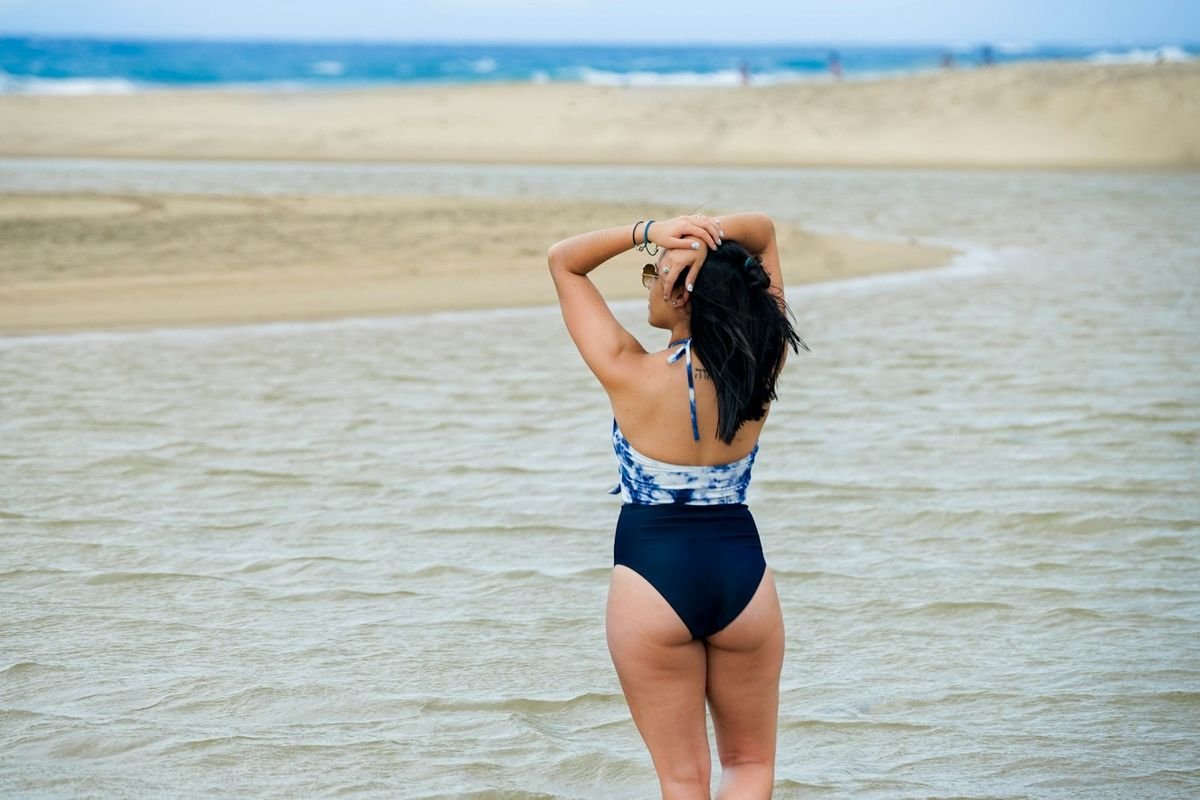
Why Your Old Swimsuit Stops Working in Menopause
Hot flashes hit somewhere between 75% and 80% of women going through menopause, according to a 2025 clinical review on vasomotor symptoms1, and swimwear fabric has a direct hand in how bad they feel. Cotton-blend linings and thick foam padding absorb moisture instead of moving it away from your skin, so once a flash passes and you start sweating, the suit stays wet and heavy for the rest of your swim. Add bloating, tender breasts, or skin that’s suddenly more reactive to synthetic fibers, and a suit that fit fine last summer can feel wrong in ways that are hard to pin down until you’re standing in a fitting room wondering what changed.
Mayo Clinic’s guidance on managing hot flashes specifically recommends breathable, light fabrics worn in layers rather than one heavy piece2 — advice built for everyday clothing that applies just as directly to swimwear. The fix isn’t a special “menopause swimsuit” category, because that barely exists yet. It’s knowing which features in a regular suit actually help and shopping for those on purpose.

One-Piece, Bikini, or Something In Between?
There’s no single right answer here, and most guides skip the question entirely. A full-coverage one-piece feels secure and handles sun exposure well, but the tradeoff is more fabric holding heat against your torso during a flash — exactly the scenario you’re trying to avoid. A bikini with a high-waisted bottom and a supportive top gives air direct access to more of your skin, which genuinely helps during a flash, though it means more fabric edges and seams to think about for chafing if you’re swimming laps rather than lounging.
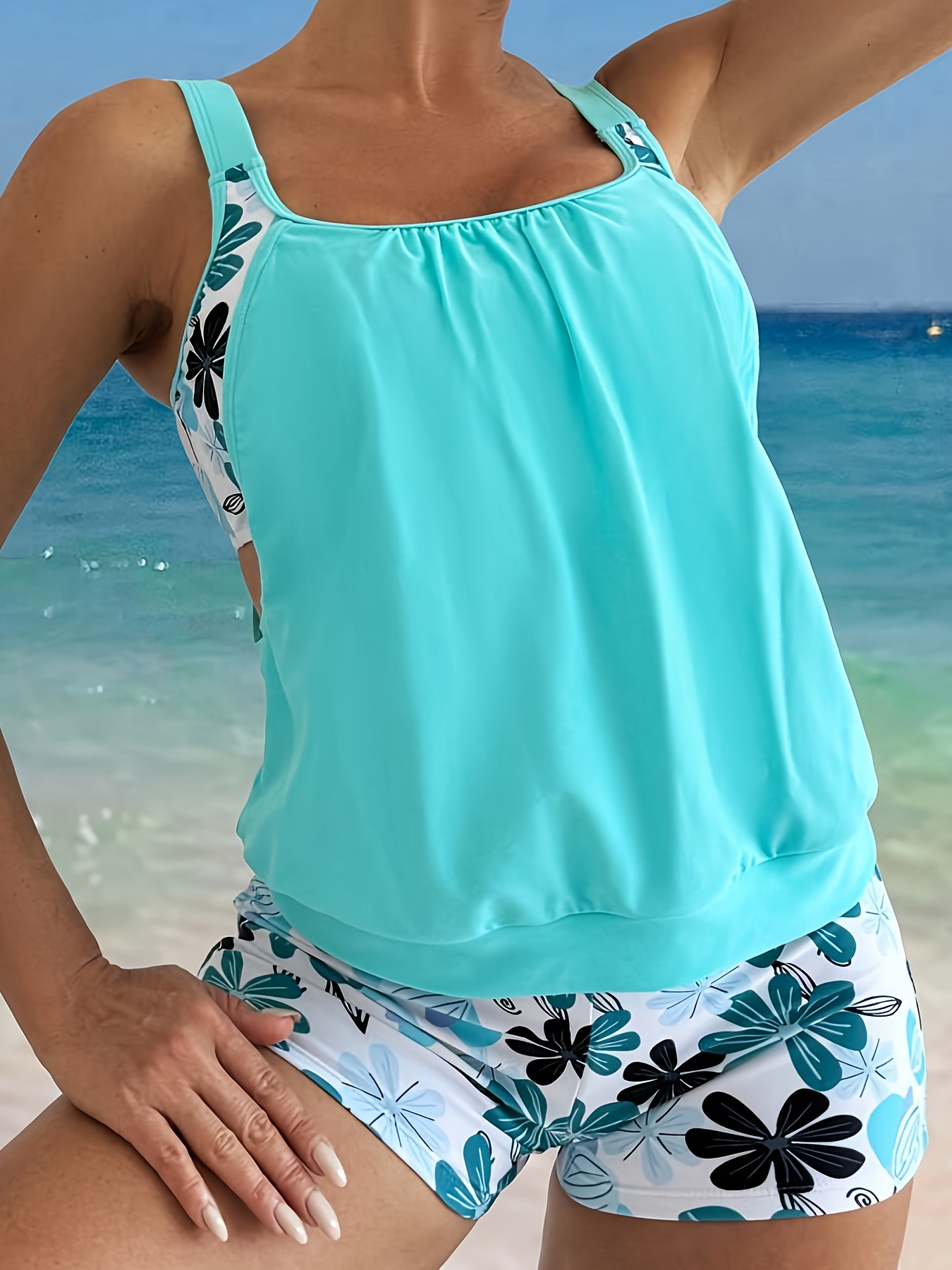
A tankini splits the difference reasonably well: a looser top that doesn’t cling through a sweat wave, paired with bottoms that don’t compress your midsection the way a one-piece’s built-in control panel sometimes does. If you run hot most of the summer, start with a bikini or tankini and reserve a one-piece for days when sun protection matters more than airflow — at the beach for hours versus thirty minutes in the hotel pool, say. The suit that works for a Tuesday lap swim isn’t necessarily the one you want for an all-day beach trip, and treating those as two different shopping decisions instead of one will save you from buying a suit that’s wrong for how you actually use it.
7 Features That Actually Matter When You’re Shopping
Forget “slimming” and “flattering” as your main search terms for a minute. These are the features that solve the actual problem — a body that runs hotter and sweats more unpredictably than it used to.
- Moisture-wicking synthetic fabric — nylon-spandex or polyester blends built for athletic wear pull sweat away from skin instead of holding it there, unlike cotton-lined suits.
- Breathable mesh panels — side or back mesh insets let air circulate during a flash instead of trapping heat against your torso.
- Quick-dry construction — thinner, tightly woven synthetics dry in under 20 minutes instead of the 40+ minutes padded suits often need.
- Wide, soft bands instead of tight elastic — bloating fluctuates day to day in perimenopause, and a band that digs in on a bad day will ruin the swim before you’re even in the water.
- Removable or no padding — foam cups trap heat and take forever to dry; a soft shelf bra or lining does the job without the downside.
- Coverage that doesn’t mean compression — tummy-coverage panels can help with confidence, but firm compression fabric raises your body temperature, so look for coverage through cut and color rather than squeeze.
- Darker colors or busy prints on the torso — sweat shows through light solids fast; a patterned or deep-toned suit hides it without sacrificing style.


The Fabric Tech Worth Paying Attention To
Not all “quick-dry” labels mean the same thing. Coolmax and similar polyester microfiber blends were engineered for athletes who sweat heavily and need fabric that releases moisture fast — the same property that makes them useful for hot flashes in the water. Tencel and bamboo-blend fabrics show up more in cover-ups and rash guards than in swimsuits themselves, but they’re worth seeking out for anything you layer over your suit, since they’re naturally more breathable than standard polyester3. If a product page lists its fabric composition, a blend leaning toward 80%+ synthetic with spandex for stretch is usually your best bet for drying speed, while heavier cotton-poly blends in beach cover-ups will hold onto sweat the longest.
One caveat: don’t assume “technical fabric” automatically means more expensive. Plenty of budget three-piece sets use the same quick-dry nylon-spandex blends as premium swim brands — the padding and lining construction matter more than the price tag.
Color plays a bigger role than most shoppers realize, too. Pale solids in light blue, white, or pastel pink show water spots and sweat marks within minutes, which is exactly the moment you don’t want to be self-conscious about your suit. Deep jewel tones, black, and busy prints like leopard or floral hide that same moisture completely, so if you’re choosing between two suits with identical fabric and only the color differs, let the color decision be about function for once instead of just which one looks better on the hanger.
Does Swimming Actually Help with Hot Flashes?

Yes, more than most people expect. A 2024 study covered by Medical News Today found that roughly 30% of women who took up regular cold-water swimming reported a reduction in hot flash severity, with the effect growing stronger the longer and more frequently they swam4. The temperature drop from submersion appears to reset the body’s thermoregulation window temporarily, which is the same mechanism some women describe informally as a “cold plunge” effect. That’s a real reason to swim through menopause rather than avoid the pool out of embarrassment about a suit that isn’t working for you — the water itself is doing something useful, provided what you’re wearing doesn’t undo the benefit by trapping heat the second you get out.
Dressing Around the Body Changes Nobody Warns You About
Bloating isn’t the only shift. Breast tenderness and size fluctuation are common enough in perimenopause that a suit with rigid underwire can genuinely hurt by the end of a swim, while skin that’s suddenly drier or more reactive can make rough seams and synthetic linings feel irritating in ways they never did before. If support without underwire is the priority, our guide to bikinis for a large bust covers wide-band and soft-cup options built for that specific problem. For the bloating side of things, a tummy control swimsuit doesn’t have to mean firm compression — several of the picks in that roundup use ruching and strategic panels instead of squeeze, which keeps you cooler.
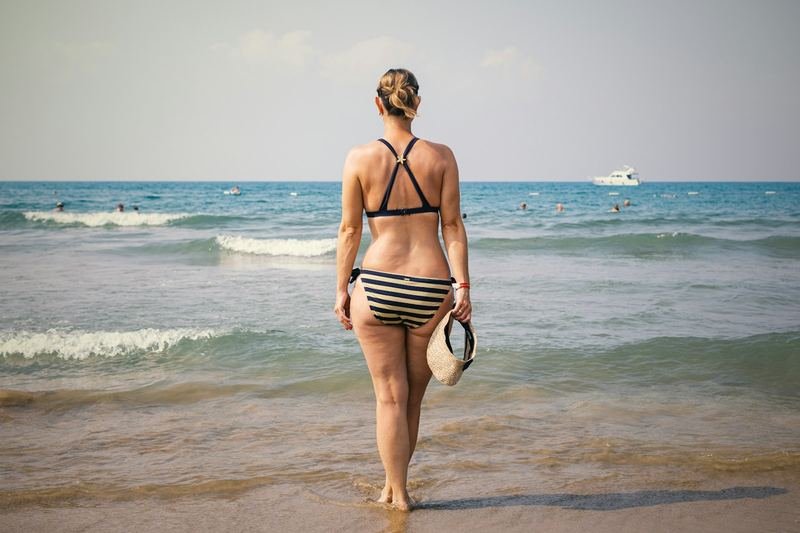
Age-specific style guides tend to focus on what looks flattering rather than what feels functional, and both things matter. Our roundup of swimsuits for women over 50 leans more style-first, so pair it with the fabric and construction advice here rather than picking a suit from looks alone.
What to Skip When You’re Shopping
Thick foam cups and bra-style underwire are the biggest offenders — they hold heat and take the longest to dry of anything in a typical suit. Heavy cotton-blend cover-ups look soft in photos but turn into a damp, clingy layer the moment you sweat through one, so save those for sitting in the shade rather than wearing them straight out of the pool. And resist the urge to size down for a “firmer” compression fit if your weight has shifted — tighter synthetic fabric against warm skin is one of the fastest ways to trigger overheating discomfort mid-swim.

A Cover-Up That Pulls Double Duty
The right cover-up matters almost as much as the suit itself, since it’s what you’ll reach for the second a flash hits on the pool deck or the walk back from the water. A lightweight, breathable layer you can throw on and take off fast beats a heavy kaftan you’ll end up carrying instead of wearing.

None of this means buying an entirely new wardrobe. It means reading fabric tags before checking the mirror, and treating “dries fast” as a real feature instead of an afterthought. The suit that gets you back in the pool three times a week instead of once a month is the one actually worth the money — and at this stage, that’s worth more than a flattering cut you only wear once.
Sources
- Vasomotor Symptoms in Menopause: Clinical Review — National Library of Medicine data on hot flash prevalence among menopausal women.
- Hot Flashes: Diagnosis and Treatment — Mayo Clinic guidance on breathable, layered clothing for symptom management.
- How to Dress for Hot Flashes — Health & Her on moisture-wicking fabric choices over cotton.
- Cold-Water Swimming and Menopause Symptom Relief — Medical News Today coverage of the 2024 swimming and hot flash severity study.