Boating Swimwear: 7 Best Picks for a Fun Day on the Water
Most swimwear guides treat a day on a boat like a day at the beach with a better view. It isn’t. A beach chair doesn’t move, and the wind off open water is stronger and steadier than anything you’ll feel on sand. A boat deck also throws three problems at a swimsuit that a towel never will: constant motion, sun reflecting off the water from below as well as above, and vinyl seating that grips wet fabric differently than a beach chair does. This guide is built around what actually survives that combination — not just what looks good standing still on the dock.
Boating Swimwear That Handles Wind, Spray, and a Moving Deck
The short version: prioritize fabric that’s mostly nylon or polyester blended with spandex, skip string-tie bottoms on anything faster than a pontoon, and pack one layer you can throw on when the boat gets moving and the wind chill kicks in. Quick-dry fabric matters more here than on a beach trip, since you’re often back in the suit and sitting on vinyl within minutes of climbing out of the water.

1. Tankini or Two-Piece Set With a Secure Bottom
A tankini or a two-piece with a wider waistband on the bottom is the default for a reason — it moves with you when you’re climbing back aboard over a swim platform or ladder, which is a different motion than walking up a beach. Avoid anything with a thin string tie on the bottom; the combination of wet fabric and a ladder rung is exactly when a loose tie gives out.


Shop: Halter Three-Piece Bikini Set, Cut-Out →
2. Triangle or Bandeau Bikini for Calm-Water Lounging
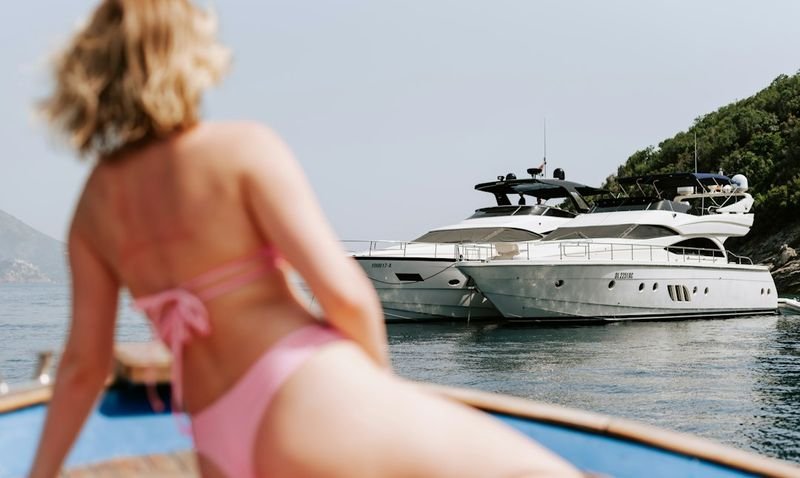
On a slow pontoon cruise or an anchored afternoon with the engine off, a triangle or bandeau bikini is fine — the risk a string tie poses on a fast ride mostly disappears once the boat stops moving. This is the pick for sunbathing on the bow or lounging at anchor, not for a ride where you’ll be hitting any kind of chop.

3. One-Piece for Swimming Off the Boat
If the plan includes jumping or diving off the boat to swim, a one-piece is the more practical choice — there’s nothing to come loose or shift on impact with the water, and climbing back up a ladder in a one-piece is a lot less fiddly than readjusting a bikini top mid-climb. It’s also the pick if the water near the boat drops off deep, since you want to be focused on swimming, not on your suit.

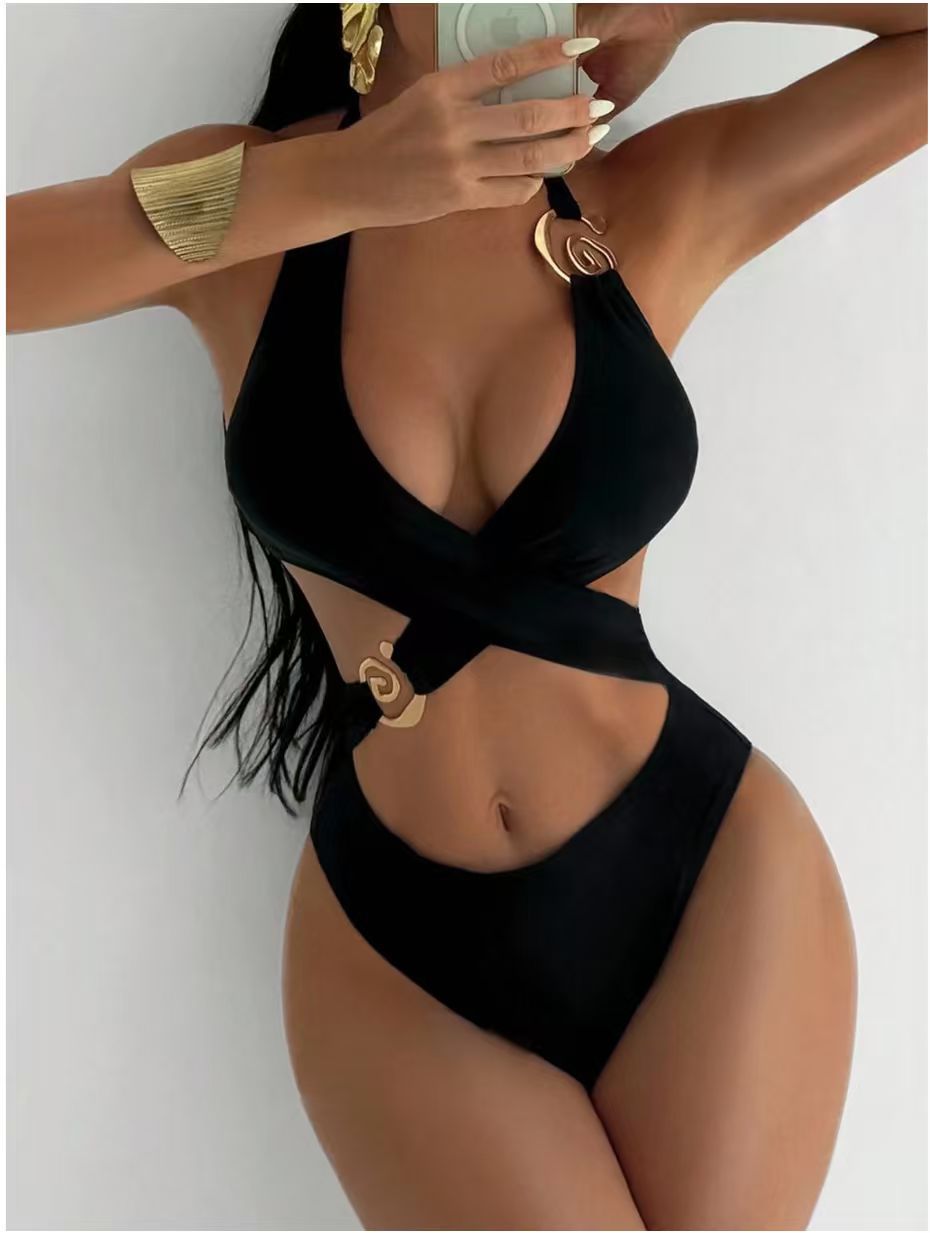
Shop: Lace One-Piece Swimsuit, Cut-Out →
4. High-Waisted Bottoms for Bow Sunbathing
Lying on the bow while the boat is underway puts more direct wind on a swimsuit than almost any other boating position. A high-waisted bottom stays put against that wind in a way a low-rise cut doesn’t, and it covers more of the lower back — the spot that takes the worst of the sun when you’re lying face-down on a reflective white deck.
5. Long-Sleeve Cover-Up for Wind and Spray
Pack a light, quick-dry cover-up you can throw on the moment the boat picks up speed. Open water is reliably cooler and windier once you’re moving than it feels standing at the dock, and a cover-up also doubles as sun protection for the hours spent just sitting and watching the shoreline go by rather than actively swimming.
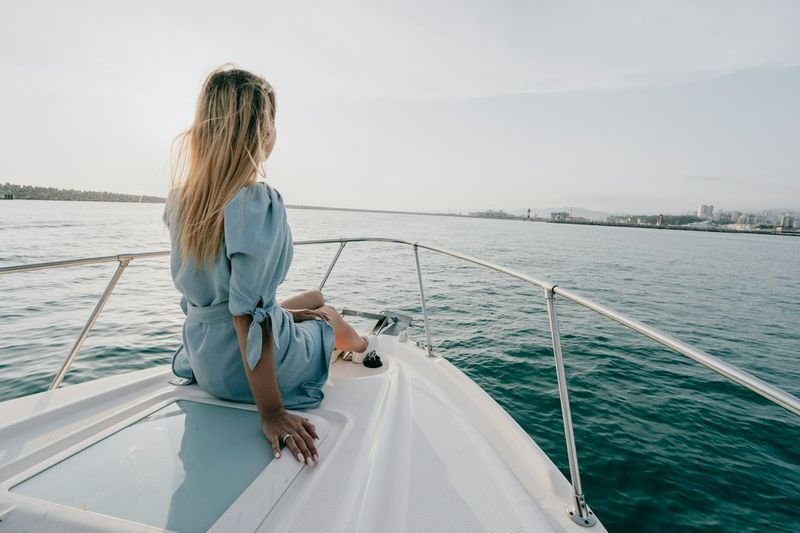

Shop: Mesh Three-Piece Bikini Set, Long Sleeve →
6. Quick-Dry Shorts Over the Suit
For the stretch of the day spent walking the deck, handling lines, or sitting somewhere other than a towel, a pair of quick-dry shorts over the suit beats sitting directly on vinyl in a wet bikini bottom. Vinyl seating holds heat and sunscreen residue, and bare wet skin on hot vinyl is its own kind of uncomfortable — boardshorts or swim shorts solve both problems at once.
7. Non-Slip Sandals Instead of Flip-Flops
Flip-flops are the one footwear choice that consistently causes problems on a boat — wet decks make them slide, and a flip-flop that comes off during a swim is one more thing drifting away from the boat. Rubber-soled sandals or water shoes with a back strap grip a wet deck and stay on your feet during a ladder climb.
Fabric and Fit: What Survives a Boat Deck
Two things decide whether a suit holds up on a boat specifically, beyond the general quick-dry rule that applies to any water sport. First, vinyl seating is rougher on fabric than sand or a pool deck chair — a suit that’s mostly nylon-spandex resists the friction and sunscreen residue that builds up on marine vinyl better than a cotton-blend suit, which pills and holds onto oils faster. Second, fit should be snug when dry, because the combination of wind, spray, and repeated wet-dry cycles loosens fabric over the course of a full day on the water more than a single swim session would.
UPF rating matters here too, and for a specific reason beyond general sun exposure: a white or light-colored boat deck reflects a significant amount of UV back up at you, on top of what’s coming down and bouncing off the water. UPF 50+ fabric blocks roughly 98% of that combined exposure, which adds up fast over a six- or eight-hour day where you’re rarely in full shade.
Sun Protection Beyond the Suit Itself
A wide-brim hat with a chin strap or a tight-fitting cord is worth the extra step — a hat that isn’t secured will blow off the moment the boat gets moving, and it’s usually gone for good once it hits the water behind you. Polarized sunglasses cut the glare coming off the water’s surface, which is sharper and more constant on a boat than anywhere else you’ll wear a swimsuit. Reapply mineral sunscreen every two hours, and don’t skip the tops of the feet — they sit flat and exposed on a sun-soaked deck for hours at a time and burn faster than most people expect.

Common Mistakes That Ruin a Day on the Water
- String-tie bottoms on a fast boat. Wind and prop wash loosen ties the same way current does on a kayak or paddleboard — it’s not a question of if, just when.
- No layer for when the boat picks up speed. Open water drops several degrees once you’re moving, even on a hot day; a packed cover-up costs nothing to bring and solves it instantly.
- Cotton cover-ups. They hold water weight, stay damp for hours, and don’t dry out between swim breaks the way a technical fabric does.
- Flip-flops on a wet deck. They slide on vinyl and wood alike, and one comes off easily during a ladder climb or a quick jump into the water.
- Skipping UPF because you’ll “mostly be sitting.” A reflective deck and open water both bounce UV back up at you even when you’re not actively swimming.
Boating vs. Other Water Sports: What Changes
Boating sits in a different category from kayaking or paddleboarding because most of the day is spent not in direct contact with the water at all — it’s closer to extended sunbathing with occasional swim breaks than to a sport where you’re wet the entire time. That shifts the priority toward wind resistance and fit security over the flexibility and seam comfort that matter most for paddling, and it’s why a bandeau or triangle bikini that would come apart on a kayak is perfectly fine for an anchored afternoon on a pontoon. The one overlap worth keeping: whatever you wear under a life jacket should sit flat against the skin, since a bulky knot or tie digs in under the strap the same way it does on a kayak.
Watch: What to Wear on a Boat for the First Time
For a broader rundown of boating attire beyond just the swimsuit — including what to layer on top once the boat is underway — this walkthrough from a sailing education channel covers the basics for a first trip out.
What to Pack Alongside the Suit
A dry bag matters more on a boat than it might seem — phones and keys get splashed by spray even when nobody’s swimming, and there’s rarely a dry spot on an open deck to just set things down. Bring a full change of clothes for the ride home, since sitting in a wet suit on a car seat for an hour is its own kind of miserable. A compact towel that packs smaller than a beach towel is worth the trade-off on a boat where storage space is limited.
If life jackets are required for any part of the trip — towing, tubing, or just boat rules — try it on over the actual suit you’re planning to wear before you’re on the water. A life jacket fitted over a bare shoulder sits differently than one fitted over a rash guard or cover-up, and that’s not something you want to discover mid-trip.
Frequently Asked Questions
Can you wear a regular bikini on a boat?
Yes, especially on a slower boat or at anchor. For anything moving fast or hitting chop, a bikini with a secure waistband or a one-piece holds up better than a string-tie style, which can loosen under wind and spray.
What should you not wear on a boat?
Flip-flops, cotton clothing, loose jewelry that can snag on hardware, and swimwear held on entirely by thin string ties all cause problems once you’re actually underway.
Do you need a cover-up on a boat even in summer?
Generally yes. Open water runs cooler than the shore once the boat is moving, and a light cover-up handles both the wind chill and the extra sun exposure from a reflective deck.
Sources
- What to Wear on a Boat (Besides Your Swimsuit, Obviously) — layering and fabric guidance for boating attire
- What to Wear on a Boat: The Complete Activity-by-Activity Guide — activity-specific boating outfit recommendations
- UV Protective Swim Leggings: Best Picks — related internal guide on UPF coverage for water sports