

How to Wash a Bikini: 9 Care Tips to Double Its Life
A swim school in San Diego ran a small experiment in 2024: 30 identical bikinis, half hand-washed after every pool session, half tossed in a hamper and washed once a week with regular detergent. After eight weeks, the hand-washed group still snapped back to shape. The hamper group had stretched-out elastic, faded colors, and a faint chlorine smell that never quite left. If you have ever pulled a favorite suit out of the drawer next May and wondered why it suddenly fits like a paper bag, the answer is almost always the wash. Learning how to wash a bikini correctly is the single highest-return care habit a swimwear owner can build, and it takes about four minutes per swim.

Why Most Bikinis Die Before Their Second Summer
Spandex (also sold as elastane or Lycra) is the rubbery thread that gives a bikini its stretch. It is also the most chemically fragile part of any swimsuit. Chlorine attacks the polyurethane bonds inside spandex on contact, and the damage compounds every hour the fiber sits wet. A single pool session is rarely the killer. The killer is leaving a chlorinated suit balled up in a wet towel until the next morning.
Saltwater is gentler but still corrosive once it dries, because the salt crystals re-form inside the fabric and cut microscopic notches in the fibers. Sunscreen is the third villain. Oxybenzone and avobenzone in chemical sunscreens bind to spandex and yellow it permanently, which is why white and pastel suits get blotchy at the bust line first. Add ocean sand grinding the seams, and a $60 bikini can age into a $60 rag in one careless weekend.
The fix is not exotic. It is a 60-second rinse, a four-minute hand wash, and a flat dry away from the sun. The detergent you use is less important than the heat you avoid.
How to Wash a Bikini: The 4-Step Hand Wash Method
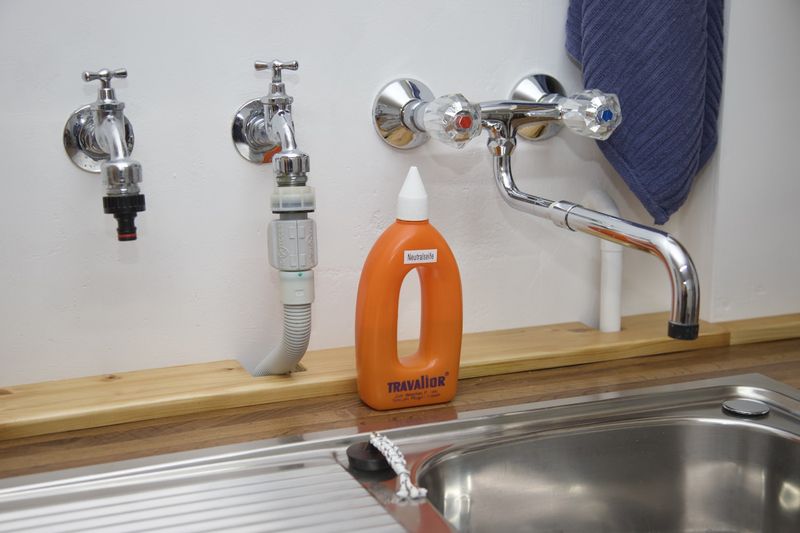
This is the method that actually works, refined down to the parts that matter. Skip the steps and you skip the lifespan.
Step 1. Fill a clean sink or basin with cool water — no warmer than 86°F (30°C). Hot water relaxes spandex permanently. Add one teaspoon of a pH-neutral detergent. Plain dish soap works in a pinch. Avoid anything labeled “ultra” or “stain-fighting” because the enzymes in those formulas digest protein and break elastane bonds.
Step 2. Submerge the bikini and gently press it under the water for 30 seconds. Do not scrub the cups or the bottoms. Twisting and wringing crushes the spandex fibers in a way they do not recover from. Just press and release for two to three minutes.
Step 3. Drain the soapy water and rinse with cool water until no suds come out when you squeeze the fabric between two flat palms. This usually takes three rinses. A trapped detergent residue makes the suit feel stiff once dry and accelerates UV breakdown the next time you wear it.
Step 4. Lay the suit flat on a clean dry towel, roll the towel into a tube, and press to absorb the water. Never wring. Then move on to the drying section below.

Can You Put a Bikini in the Washing Machine?
The honest answer: yes, but only if you do it right, and the lifespan cost is real. A washing machine cycle, even on delicate, exposes a bikini to three things hand washing avoids — agitation, hot rinse cycles, and detergent residue trapped in the fabric. Spandex loses an estimated 5 to 10% of its rebound for every machine cycle on a hot wash. After 20 to 30 machine washes, the suit is functionally dead.
If a hand wash is impossible (hotel trips, parents of three small kids, anyone with limited mobility), here are the rules. Use a mesh laundry bag. Set the machine to cold (under 86°F), delicate cycle, low spin. Use one quarter of the normal detergent dose. Skip fabric softener forever because it coats spandex and kills the rebound permanently. Pull the suit out the second the cycle finishes and lay it flat to dry. Air-dry only.
A machine wash now and then will not destroy a bikini. A machine wash every time will. The split between people who get one season out of a suit and people who get four is almost entirely down to this decision.
The 60-Second Rinse That Buys You Months

The single best thing a swimmer can do for a bikini is rinse it in fresh cool water within 60 seconds of stepping out of the pool or ocean. Not back at the hotel. Not after lunch. Sixty seconds.
Chlorine, salt, and sunscreen all need wet contact time to do their damage. A quick freshwater rinse at the pool deck shower flushes out 80 to 90% of the corrosive load before the suit even has time to dry. Most pool decks have a shower for exactly this reason. Wear the suit into the shower for one minute, then carry on with the day. The hand wash at home becomes a quick rinse instead of a salvage operation.
If a freshwater shower is not available, pack a small spray bottle with tap water and mist the suit before it dries. This is the trick beach swimmers in Bali and Da Nang use, and it works.
The Right Way to Dry a Bikini (Hint: Not on a Hook)
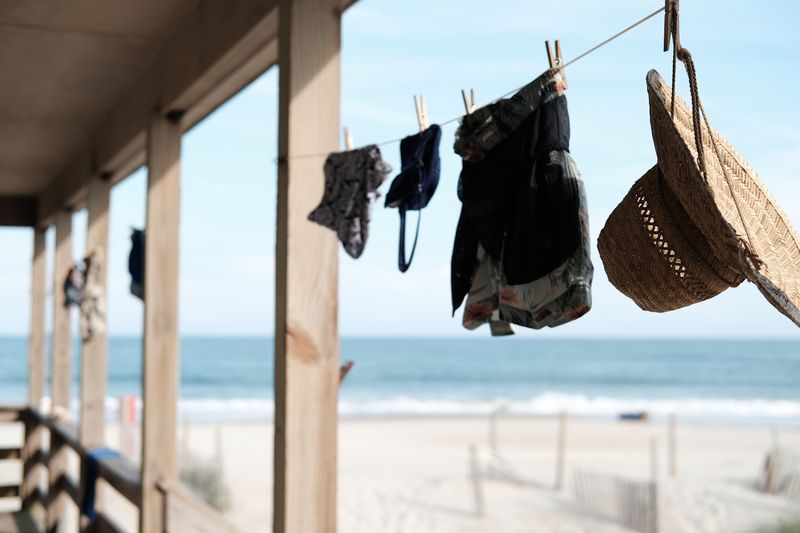
Drying is where the second wave of damage happens. Three rules cover almost everything.
Rule one: never use the dryer. The heat alone shrinks elastane fibers by 10 to 15% per cycle and makes the bond between spandex and nylon brittle. One trip through a tumble dryer is enough to ruin a $90 suit.
Rule two: do not hang the suit by the straps on a hook or hanger. Gravity plus wet weight drags the spandex down over six hours, and the straps come back stretched a quarter-inch longer every time. The cups sag, the bottom waistband loses snap, and the suit never fits the same way again. Hangers are fine for storage of a dry suit. They are terrible for drying.
Rule three: dry flat in the shade. Lay the suit on a clean towel on a horizontal surface, ideally outdoors in moving air but out of direct sunlight. UV breaks down spandex even faster than chlorine does, and dark colors fade in a single afternoon. A shaded porch, a bathroom drying rack, or a flat patch of grass under a tree all work. The suit should be fully dry in two to four hours.

How to Get Sunscreen, Salt, and Self-Tanner Out
Most stain trouble on a bikini is not really staining. It is residue. Sunscreen leaves an oily film that turns yellow under UV. Salt leaves white streaks. Self-tanner leaves orange shadows around the inner thigh and the bust line. Each one has a different fix.
For sunscreen marks, soak the suit in cool water with one tablespoon of baking soda for 30 minutes before the regular hand wash. The baking soda lifts the oil bond without bleaching. Skip this with chlorine-resistant suits that have a special coating, because baking soda can dull the finish.
Salt streaks come out with a simple longer rinse — five minutes of plain cool water before any detergent. The salt dissolves back into the water and washes away. Do not add vinegar to a saltwater rinse, even though some old guides recommend it; the acid attacks dye.
Self-tanner is the hardest. The DHA molecule in self-tanner reacts with the protein in skin to create a brown color, and the same reaction happens with any protein residue on swimwear. The trick is to wash the suit within 12 hours, before the reaction completes. Cool water plus a teaspoon of clear dish soap, soaked for an hour, lifts most of it. Once the stain sets in past 24 hours, it is usually permanent.
Bikini Storage: What to Do When the Season Ends
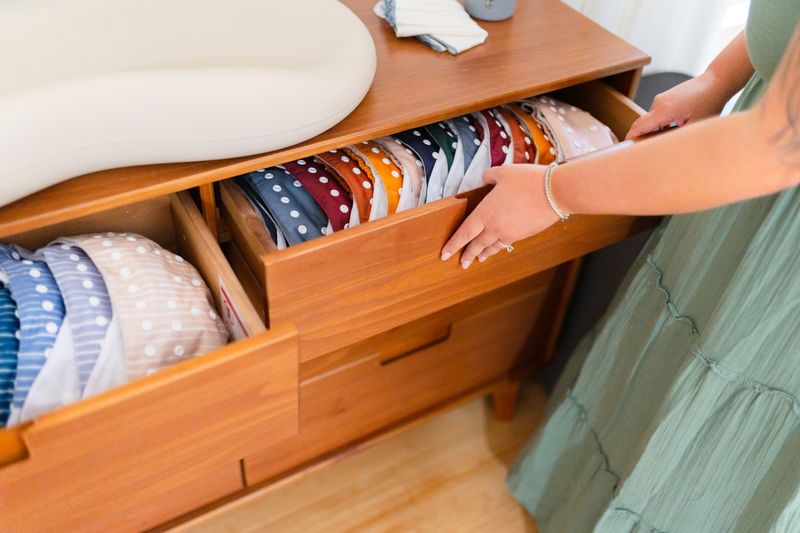
Spandex has a slow shelf life even when nobody wears it. Stored badly, a bikini can age more in a closet than in a summer of pool use. A few habits keep suits ready to wear next year.
Fully dry the suit before storage. Even slight dampness invites mildew, and mildew on swim fabric is a smell that does not come out. Fold the suit loosely — never tightly creased — and lay it flat in a drawer or on a shelf. Stacks are fine, but no more than four or five suits high, because the bottom ones get compressed and the cups deform.
Keep the drawer dark and below 75°F (24°C). Heat plus light is what kills elastane in storage, and a hot attic can ruin a wardrobe of suits in a single Taipei or Texas summer. Tissue paper between suits is overkill for most people, but it does help if a suit has metal hardware that can catch on the next one.
For longer storage between seasons, slip each suit into a cotton pillowcase. The cotton breathes, blocks light, and prevents transfer from any colored items nearby. Plastic bags are the opposite — they trap moisture and accelerate spandex breakdown.

Signs Your Bikini Is Past Saving

Even with perfect care, a swimsuit has a useful life of around 80 to 100 wears. Heavy chlorine swimmers wear suits out faster; ocean-only swimmers stretch closer to 150 wears. The end usually shows up in three places.
The first sign is in the cups. Hold the suit flat and check whether the bust molded shape still springs back when pressed. If it stays dented, the foam liner has collapsed and no amount of washing fixes it. The second sign is in the leg openings. If the elastic has lost its bite and the fabric pulls away from the skin when you walk, the spandex has aged out and the suit will ride up all day. The third sign is color. Once a bright suit has gone two shades off, the UV damage to the fiber itself is usually irreversible — the dye is still there, but the polymer underneath has degraded.
The honest move at that point is to retire the suit, donate it to a textile recycler, and replace it. Wearing a dead suit is not body confidence. It is a fit problem in disguise. A well-fitted new piece almost always feels more flattering than a worn-out favorite. Bodies change, suits wear out, and both are normal.
A Practical Routine You Will Actually Follow
Here is the version that survives real life. Rinse the suit in the pool deck shower or hotel sink within 60 seconds of swimming. Once back at the room, lay it flat on a towel. That night or the next morning, hand wash for four minutes in cool water and one teaspoon of mild soap. Roll in a clean towel to absorb water. Lay flat in the shade until dry. Fold loosely and stash in a drawer until the next wear.
Five minutes of work per swim, and a $60 bikini lasts three seasons instead of one. Care is not vanity, and it is not perfectionism. It is the cheapest way to keep something that already fits and flatters. The right suit, looked after right, is the one a swimmer reaches for first every summer. If a favorite is past its prime, browse the 2026 triangle bikini styles, the halter bikini fit guide, or the best one-piece swimsuits for 2026 to find the next one.
Sources
- The Spruce — How to Hand Wash a Bathing Suit — Textile-care guide on detergent selection, water temperature, and drying for swim fabrics.
- Real Simple — How to Clean a Bathing Suit — Practical breakdown of chlorine, salt, and sunscreen removal from swimwear.
- American Cleaning Institute — Laundry Care Symbols — Authority reference for reading and following care labels.
- Speedo — Swimsuit Care Guide — Manufacturer recommendations on rinsing, washing, and storing competition-grade swimwear.
Shop our full range of bikinis and swimwear at the BikiniCool store →