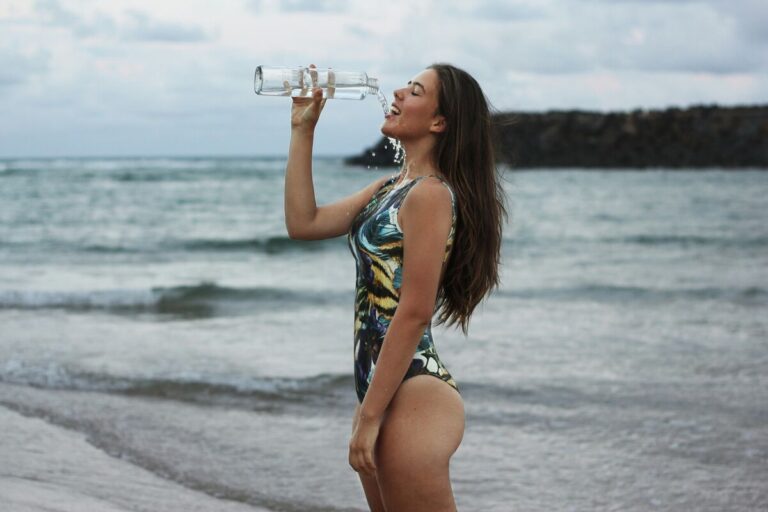
Monokini Guide: 7 Best Cut-Out One-Piece Styles for 2026
The monokini started life in 1964 as a topless swimsuit designed by Rudi Gernreich — a piece of garment provocation that sold 3,000 units in its first season and got the designer banned from the Vatican. Sixty years later, the word means something almost completely different. Today’s monokini is a one-piece swimsuit with strategic cut-outs at the sides, midriff, or back, and it has quietly become the most-requested swim silhouette of 2026. If you’ve been scrolling through swim brands and wondering why every “one-piece” suddenly has a hole carved out of it, this guide explains exactly what changed, which cuts actually work, and how to pick a monokini that flatters your specific shape rather than fighting it.

What Is a Monokini?
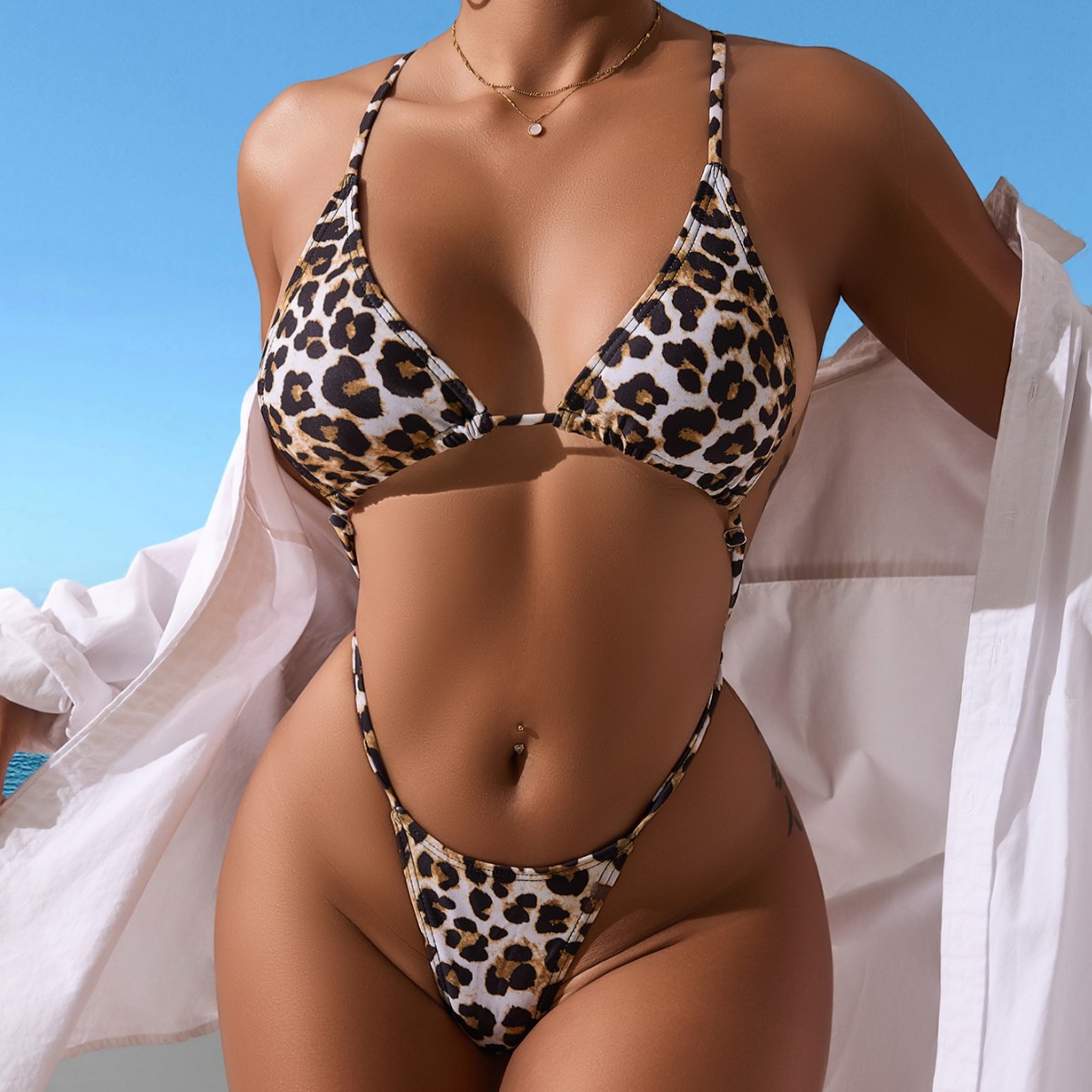
A monokini is a one-piece swimsuit with intentional skin-exposing cut-outs that give it the visual energy of a bikini while keeping the structure of a full suit. The original 1964 Gernreich version had no top at all, but the modern definition has evolved into something far more wearable — a connected swimsuit with negative space at the waist, sides, hips, or back. Most styles you’ll see in stores today connect the bust to the bottoms via a center panel, a side strap, or a series of geometric cut-outs, which means you get bikini-level skin without the security worry of a string coming undone in the surf.
The word is technically a portmanteau of “mono” (one) and “bikini” — even though “bikini” itself was named after Bikini Atoll and has no Greek prefix to subtract. Etymology pedants hate this. The rest of the swimwear industry has moved on.
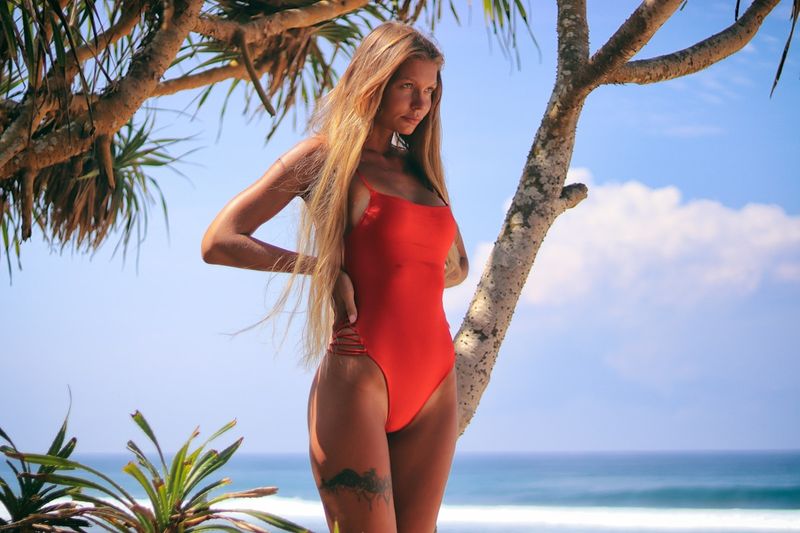
Monokini vs Bikini vs One-Piece: The Actual Differences
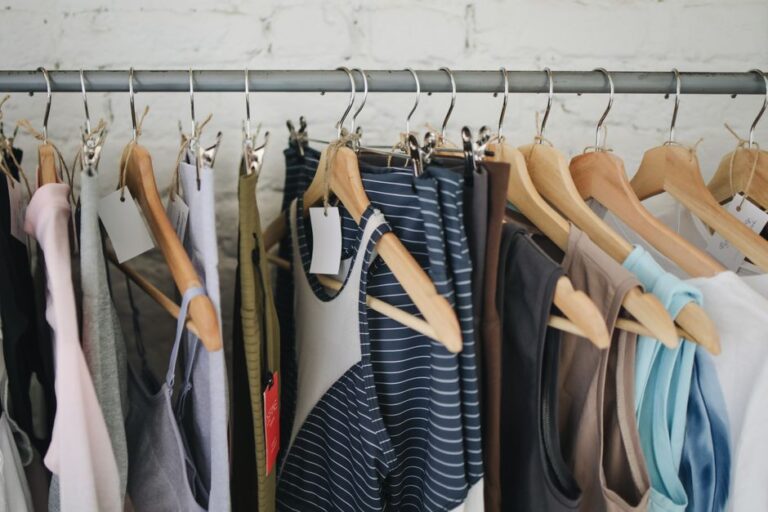
If you put a classic bikini, a traditional one-piece, and a cut-out monokini side by side on a hanger, the differences look obvious. On a body, they behave very differently — and that’s the part most shopping guides skip.
A bikini gives you two independent garments, which means tan lines in two places, two adjustments to make when a wave hits, and a structural weakness if a tie fails. A traditional one-piece gives you one continuous panel of fabric covering torso to hip, which is the most secure option but also the warmest and the hardest to get even tan coverage in. The cut-out style sits in between: the structural unity of a full suit, the skin exposure of a two-piece, and a single set of straps to worry about.
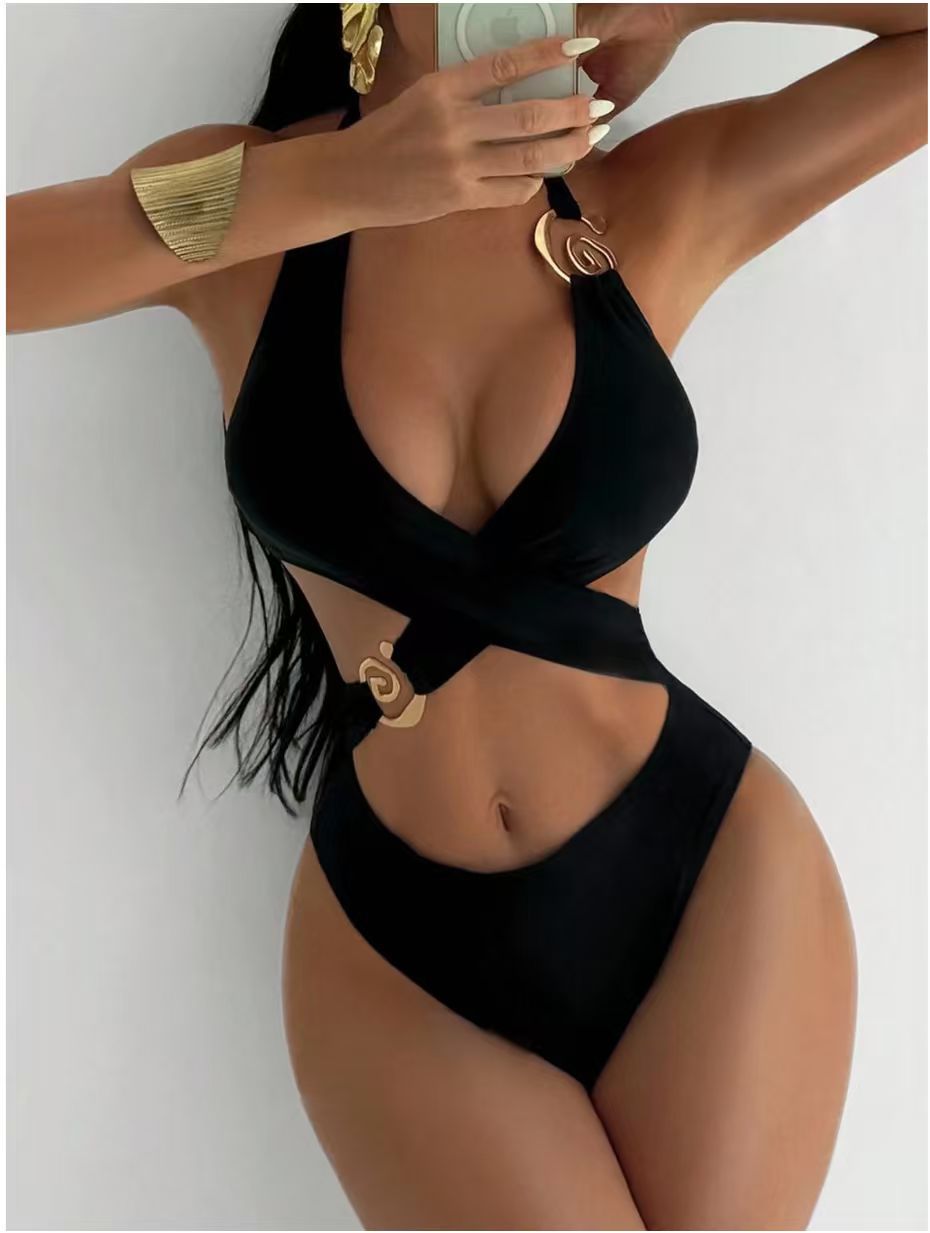
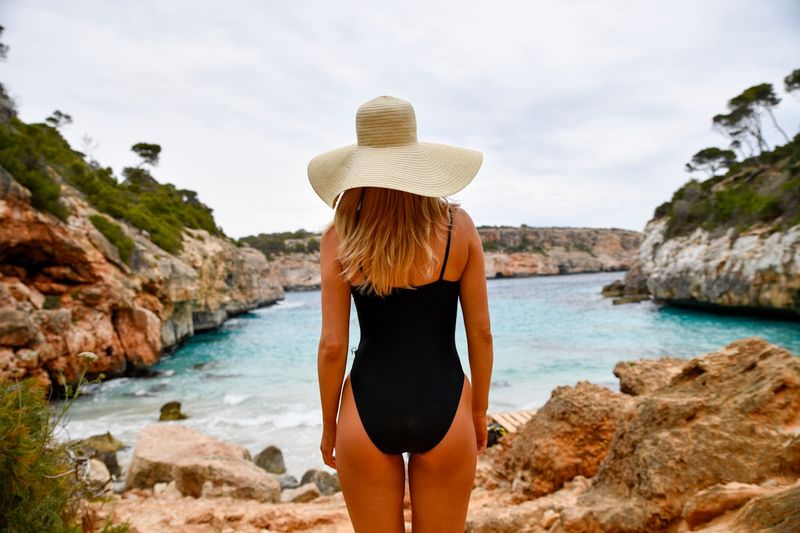
Here’s the part nobody admits — a well-cut version is usually more flattering than either alternative, because the openings draw the eye toward the narrowest parts of your torso instead of breaking your body at the waist with a horizontal line. A black design with side cut-outs creates a vertical visual line from shoulder to hip that even a structured one-piece can’t replicate.
Are Monokinis Actually Flattering?
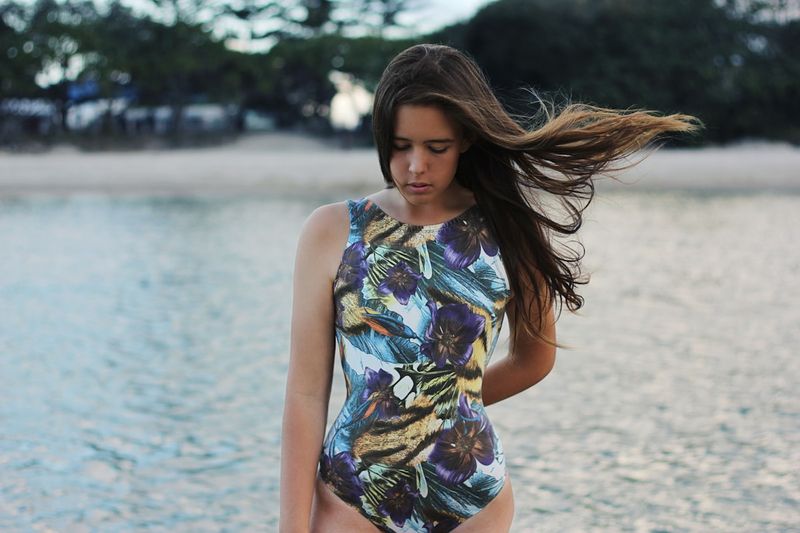
This question gets asked constantly and the standard answer is some version of “they flatter every body type!” — which is the kind of marketing-safe non-answer that helps nobody. The honest answer: cut-out suits are exceptionally flattering when the placement aligns with your narrowest natural points, and unflattering when it lands on the widest. That’s the whole rule.
For an hourglass figure, a side cut-out at the natural waist amplifies the hourglass shape. For a rectangular or athletic build, a diagonal or asymmetric cut-out creates the illusion of waist definition that the body doesn’t naturally produce. For a pear shape, a high-cut top with minimal hip cut-outs draws attention upward. For an apple shape, vertical side cut-outs that taper toward the hip create a slimmer silhouette than a horizontal waistband ever will.
The cut-outs you want to avoid, regardless of shape, are the ones positioned horizontally across the widest part of the torso. A horizontal line at the bust or hip emphasizes width — which is fine if that’s what you want, and terrible if it isn’t. Try the suit on, look in the mirror, and notice where your eye lands first. That’s where the cut-out is doing its work.
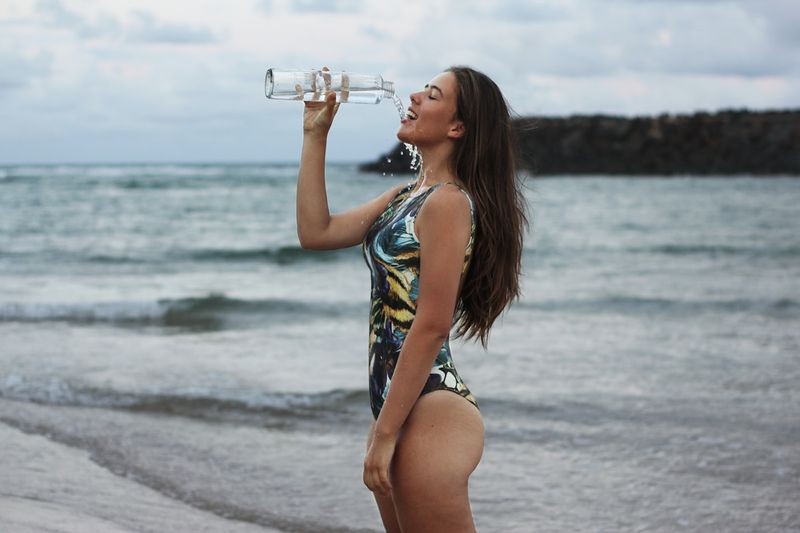
7 Monokini Styles Defining Summer 2026
Not every cut-out one-piece is created equal, and the silhouette has fragmented into roughly seven distinct cuts this season. Knowing the vocabulary helps you shop faster and avoid the rabbit hole of scrolling through 400 product photos looking for the right thing.
1. Side cut-out. The most common style — one or two oval or rectangular openings at the natural waist. Universally flattering on most builds, and the safest entry point if you’ve never owned this style of suit before.
2. Plunge-front. A deep V neckline that travels nearly to the navel, often held together with a horizontal band or chain detail. Gorgeous for smaller busts; needs careful fit checking for larger busts to avoid spillage.
3. Asymmetric one-shoulder. One strap across the body, with a diagonal cut-out below. Reads as architectural and intentional, photographs beautifully, and was the most-requested cut at Miami Swim Week 2026.
4. Lace-up. Corset-style lacing replaces fabric at the side or front. Adjustable across a wide size range, which makes it a top pick for people whose torso length doesn’t match standard sizing charts.
5. Strappy cage. Multiple thin straps cross the midriff, creating geometric negative space without losing structure. Works well for athletic builds because the straps create the illusion of waist taper.
6. Backless. Front looks like a high-coverage one-piece; the back drops nearly to the hip. Excellent for hiding stomach concerns while still showing skin.
7. Mesh-panel. Sheer mesh inserts at sides, midriff, or back. Looks daring on the rack, surprisingly modest on the body once the mesh shifts with movement.
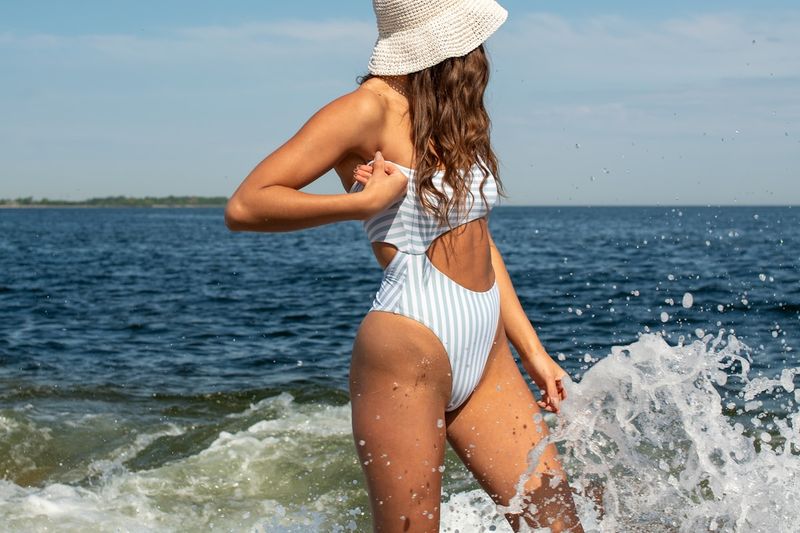
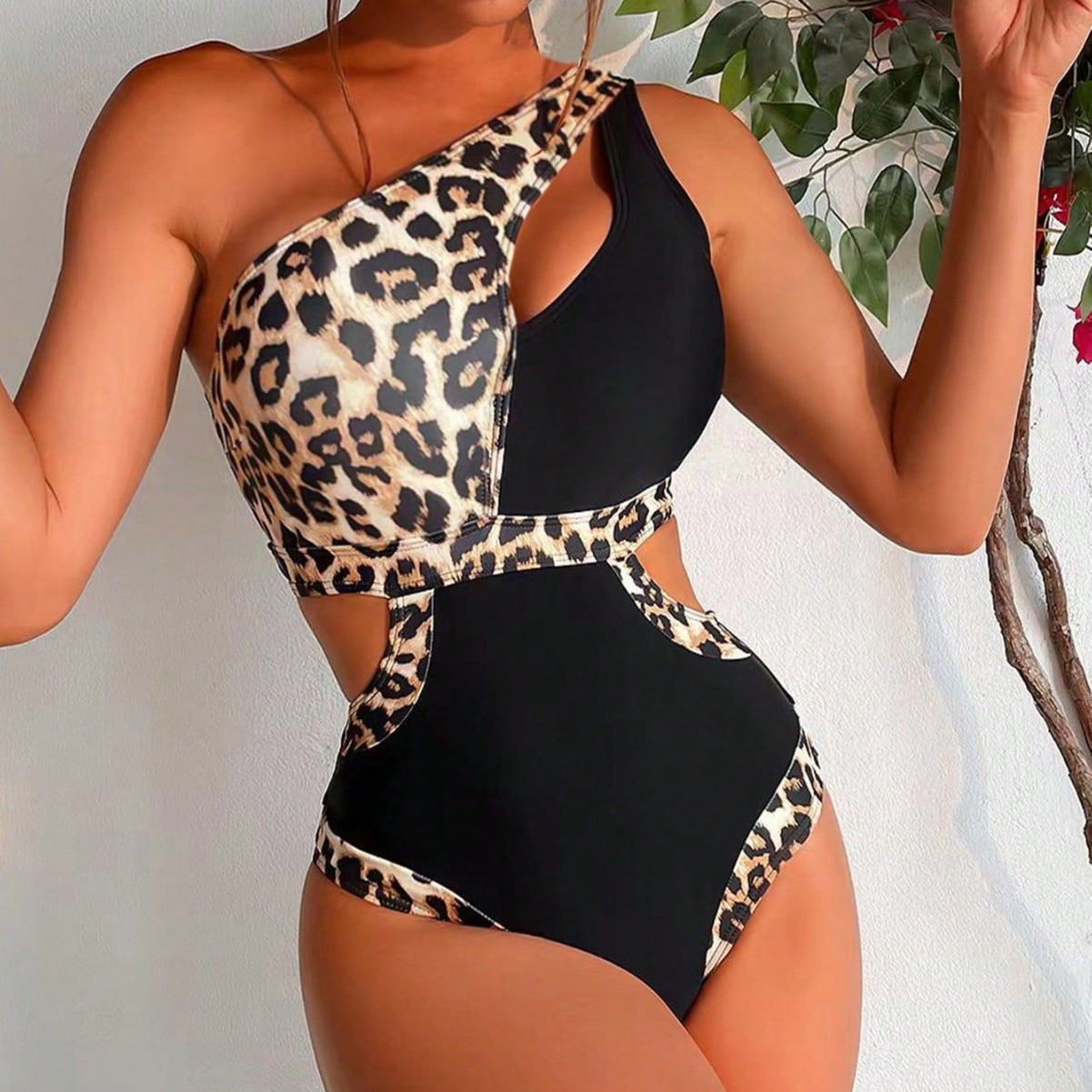
Monokini Fit Guide by Body Type
The fastest way to pick the wrong monokini is to buy based on a model photo. Models are usually 5’10” with a 24-inch torso, which means the cut-out that lands at her natural waist might land halfway across your rib cage. Measure your own torso length — armpit to hip bone — before you order anything online, then compare against the brand’s actual model height.
For larger busts: skip the plunge-front and strappy cage cuts. Look for suits with a built-in shelf bra, wide shoulder straps, and side cut-outs positioned below the bust line. A power-mesh lining adds structure without adding bulk. Our guide to the best bikinis for large busts goes deeper on the underwire and full-cup details that apply here as well.
For tummy concerns: the conventional wisdom says avoid cut-outs entirely. The conventional wisdom is wrong. Openings positioned at the sides of the rib cage — above the stomach — actually narrow the visual midsection. What you want to avoid is a cut-out directly over the navel. If midsection coverage is the priority, our tummy control swimsuit roundup covers ruched and compression options that pair this cut-out styling with shaping support.
For petite frames: a single large asymmetric cut-out elongates the body more than several small geometric ones. Avoid horizontal bands that visually shorten the torso.
For tall and athletic frames: almost anything works. Multi-cut and cage styles give you the most visual interest and the broadest design range.
Watch: A Real Monokini Try-On Haul
Reading about cut-out placement only gets you so far. Seeing how the same silhouette behaves on real movement helps more than any guide. This try-on covers eight different cut-out styles back-to-back and shows the practical differences in coverage, support, and stretch:
Styling a Monokini Beyond the Beach
One of the underrated advantages of a monokini is that it transitions out of the water more gracefully than a bikini ever will. A black or jewel-tone suit with high-waisted denim shorts and a linen overshirt reads as a complete outfit, not a beach-to-cafe compromise. Add gold hoops and a structured tote and you’ve got a vacation lunch look that doesn’t broadcast “I’m wearing swimwear under here.”
For evening wear, the same suit layered under a sheer maxi skirt creates the silhouette of a two-piece resort outfit. Wrap a sarong at the hips to highlight the cut-outs above. This is exactly the kind of low-effort styling that resort wear influencers charge consulting fees to teach — but it’s just sequencing colors and proportions in a way that lets the suit do the work.
The one styling trap to avoid: don’t pair a heavily cut-out top with a low-rise short. The combination creates so many visual breaks that the outfit loses its line. Either let the suit stand alone with a sarong, or cover it almost completely. The in-between never lands well.

Monokini Care and Longevity
A cut-out one-piece takes a beating that a regular swimsuit doesn’t. Every cut-out edge is a potential failure point — the elastic binding around openings stretches faster than the main fabric body, and chlorine attacks those bindings first. A suit that gets thrown in the washing machine after one pool session is usually toast by the third wear.
Rinse in cold water immediately after every wear, even if you only swam in the ocean. Saltwater dries to crystals inside the elastic binding and slowly cuts the fibers from inside. Hand wash with a mild detergent specifically formulated for swimwear — the Sunday Active wash and the original Forever New formula both work — and air dry flat. Never wring it out. The twist motion shears the seam tape around cut-out edges and creates the puckering you’ve seen on suits that lasted exactly one season.
If you’re investing in a higher-quality piece built from recycled materials, fabric care matters even more. We covered the full fabric breakdown in our sustainable bikini guide — the same wash rules apply, with one addition: ECONYL and other regenerated nylons need cold water only, no exceptions.

Should You Buy a Monokini in 2026?
If the only swimsuit in your drawer is a triangle bikini, a cut-out one-piece is the single most useful addition you can make this season. It covers the situations a bikini doesn’t — boat days where you’re worried about losing a top, photographs where you want a stronger silhouette, evenings where you need something that can pass as a bodysuit under a skirt. It also wears better with age. A monokini you bought in 2026 will still feel current in 2029. The same can’t be said for most micro-bikini trends.
The sweet spot for a first purchase is a black or dark jewel-tone suit with a single side cut-out. Boring? Maybe. But you’ll wear it 40 times. Save the lace-up cage cuts for the second purchase, after you know which cut-out placement makes you feel best in your own skin.
Sources
- Monokini — Wikipedia — historical background on Rudi Gernreich’s 1964 design and the term’s evolution
- What Is a Monokini? — Andie Swim — definition reference and modern silhouette overview
- Sun-Protective Clothing — Skin Cancer Foundation — guidance on swimwear fabric and UV exposure
- The Best One-Piece Swimsuits — Vogue — editorial reference on the 2026 cut-out swimwear trend
Shop our full range of bikinis and swimwear at the BikiniCool store →