Beach Dresses & Kaftans: A Styling Guide for Easy, Confident Summer Cover
A good beach cover-up earns its place in your bag the first time you walk straight from the water into a beachside cafe without a second thought. Beach dresses and kaftans do exactly that. They slip over a wet swimsuit, dry in minutes, and turn “I just got out of the ocean” into “I meant to look like this.” The trick most styling guides skip is that the right cover-up is less about the dress and more about how you wear it. Below is how to choose, layer, and style flowy beach dresses and kaftans so they actually work for your day, your shape, and the heat.
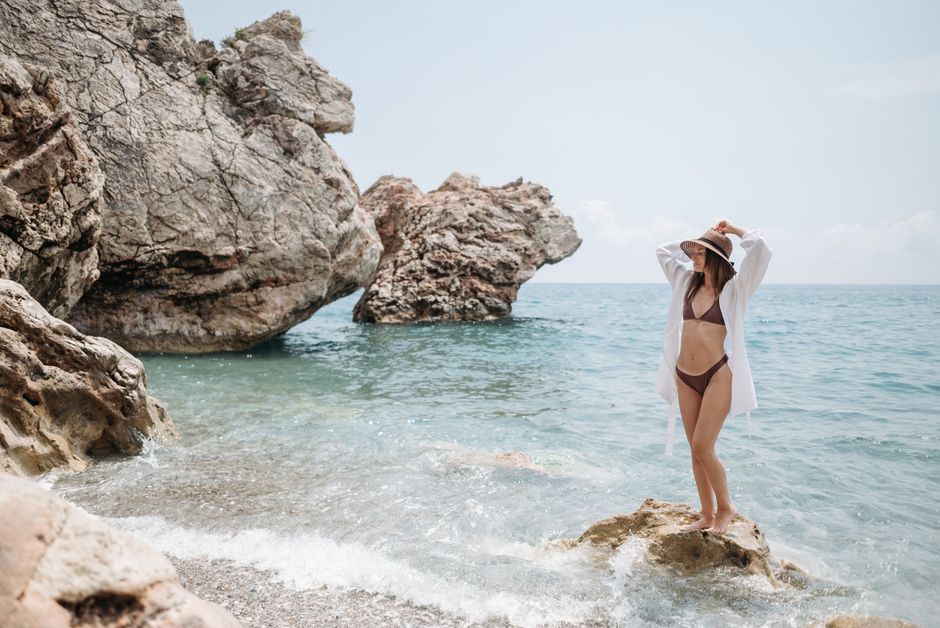
A sheer white cover-up over a simple bikini reads effortless because it is — one piece does all the work.
Beach Dresses vs Kaftans: What’s the Difference?
People use the two words like they mean the same thing, and most of the time it doesn’t matter. But there is a real distinction worth knowing before you shop. A beach dress is fitted enough to read as a dress on its own — a slip dress, a shirt dress, a ruffled maxi you could wear to dinner without a swimsuit underneath. A kaftan is looser, usually a single rectangle of fabric with an opening for your head, designed to float over whatever you have on. The kaftan came from North Africa and the Middle East, where loose robes kept people cool in real heat. That heritage is the whole point: it is built to move air, not hug skin.
If you want one piece that covers the most situations, a kaftan wins. It packs flat, fits a range of sizes as your body changes through the day, and never looks like you are wearing the wrong size. A beach dress gives you a more finished look but asks more of the fit.

A ruffled maxi reads as a dress on its own — finished enough to keep on for dinner.
How to Choose the Right Fabric
Fabric decides whether your cover-up is a joy or a sweaty regret by 2 p.m. The honest truth is that most disappointing beach dresses fail on fabric, not cut. Three materials do the heavy lifting on a hot day.
- Cotton gauze — breathable, soft, and it gets better the more it crumples. Forgiving of wrinkles, which matters when it lives balled up in a tote.
- Rayon and viscose — drapes beautifully and feels cool against skin, though it clings when wet, so size up.
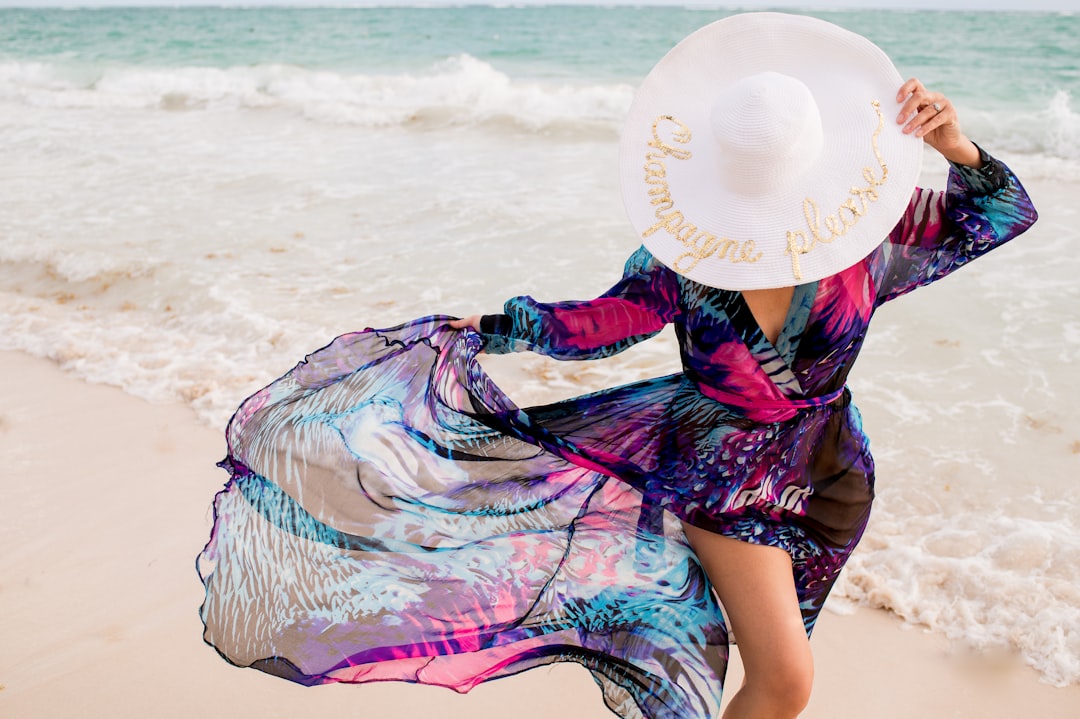
- Chiffon and georgette — the floaty, semi-sheer look. Dramatic on a breezy beach, but show your swimsuit clearly, so coordinate colors.
Skip anything with a high polyester count that isn’t a moisture-wicking blend. It traps heat and holds odor. One quick test before you buy: scrunch a handful of the fabric in your fist for five seconds and let go. If it springs back without deep creases, it will travel well.
What to Wear Underneath
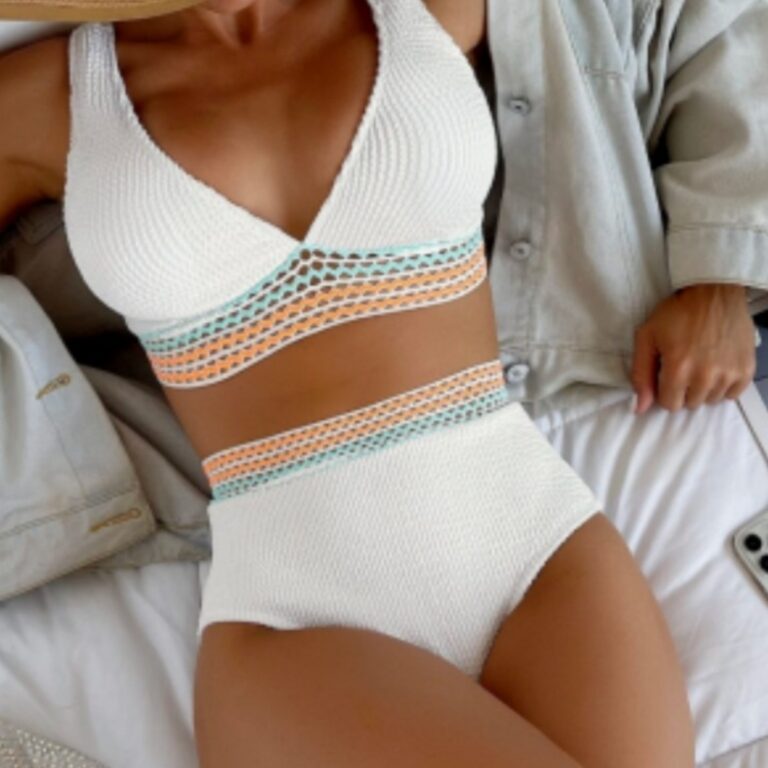
The cover-up is only half the outfit. What sits under it changes how the whole thing reads. For a sheer kaftan, a bold or printed swimsuit becomes the star, so pick a set you genuinely love rather than a basic. For a thicker beach dress you might wear all evening, a comfortable, supportive set matters more than how it photographs alone.
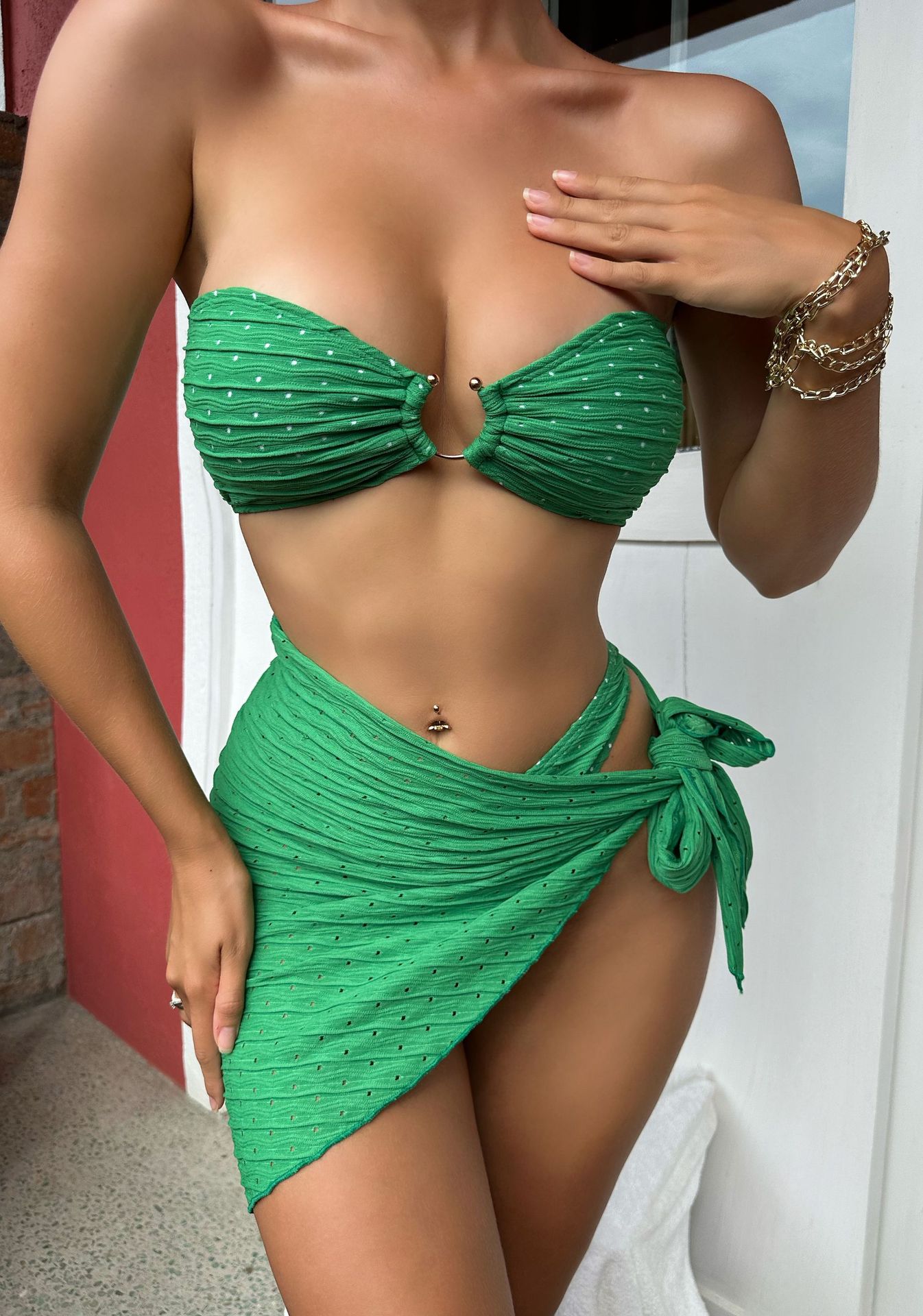
A three-piece set with its own skirt, like this strapless style, doubles as its own light cover-up.
A small styling note that makes a real difference: match your swimsuit’s neckline to your kaftan’s opening. A deep-V kaftan over a high-neck one-piece looks intentional. A halter bikini under a wide boat-neck cover-up shows straps in a way that can look accidental. It is a two-second check that separates “thrown together” from “put together.”

An off-shoulder tie-dye cover-up moves easily from the pool deck to a rooftop drink.
Styling for Your Body, Not Against It
Here is the position this guide will defend: the “what to hide” approach to beach dressing is backwards. A kaftan does not exist to conceal you. It exists to keep you cool and let you move. Once you drop the hiding mindset, the styling choices get simpler, because you are dressing for how you want to feel, not for an imaginary flaw.
That said, a few cuts genuinely flatter specific shapes. If you carry weight around the middle and want definition, a kaftan with a self-tie or a thin belt at the natural waist creates shape without squeezing. If you are petite, a midi length stops cropping you in half the way a full maxi can — or hem a maxi up. If you are tall, lean into the full-length kaftan most people can’t pull off; it is made for you. Fuller bust? A V-neck or button-front opens up the chest and balances the proportion better than a crew neck that cuts straight across.
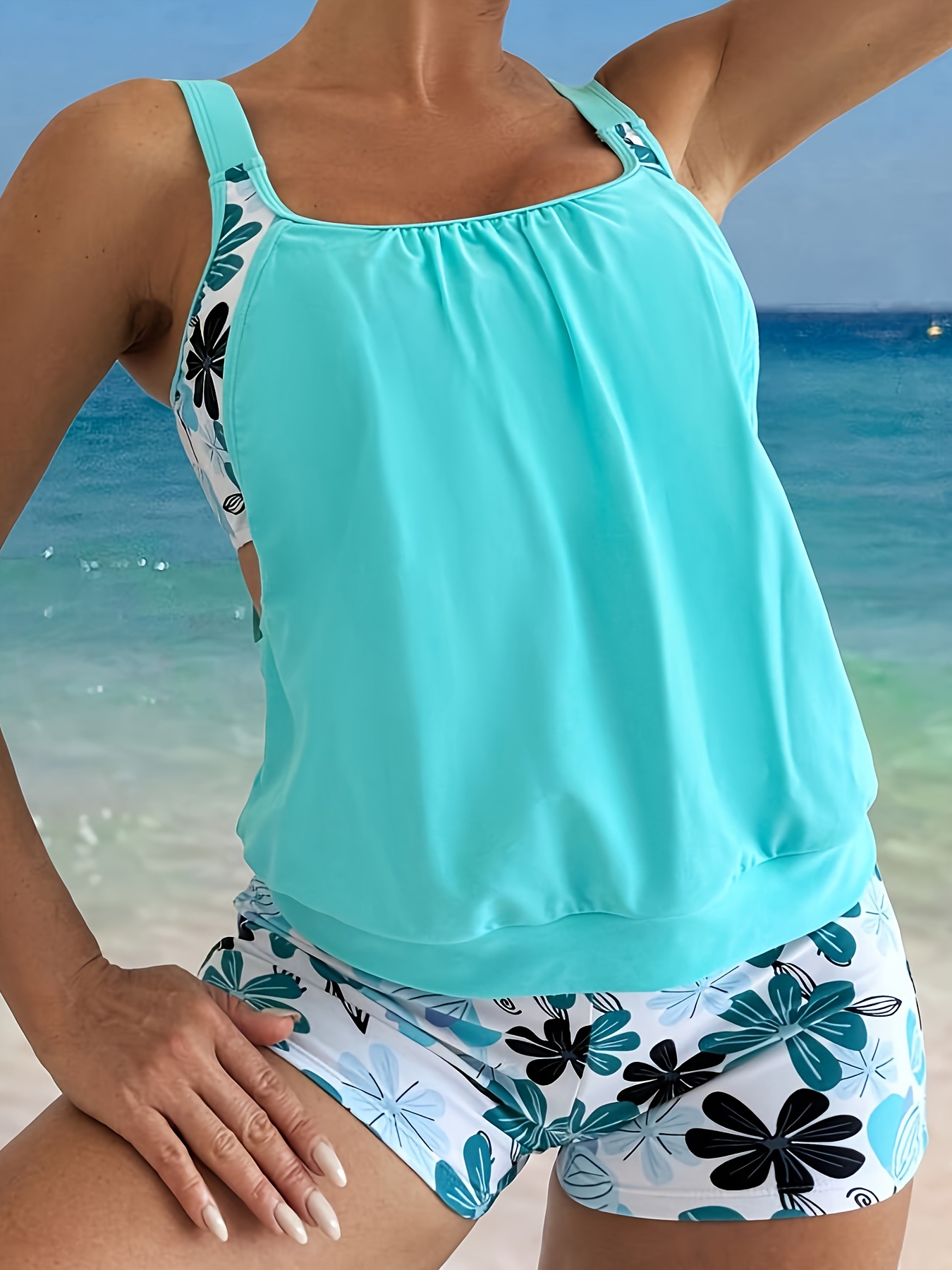
A supportive printed set, like this plus-size style, gives you a base you’ll keep on under any kaftan.
Color and Print: What Actually Works
Sand, sunscreen, and salt water are hard on light, solid fabrics. A pale linen dress shows every drip and smudge by mid-afternoon. Prints — florals, tie-dye, geometric patterns — hide all of it and photograph well in bright sun, where solid colors can blow out. If you want one practical rule: bring a print for the actual beach and save your crisp white cover-up for the pool deck or the boat, where it stays cleaner.
Color against skin matters too. Warm tones — coral, terracotta, gold, deep teal — flatter most skin tones in strong sunlight better than cool pastels, which can wash you out under a midday sun. Black is the quiet workhorse: it reads elegant, doesn’t show water marks, and shifts from beach to a beachfront restaurant without a thought.
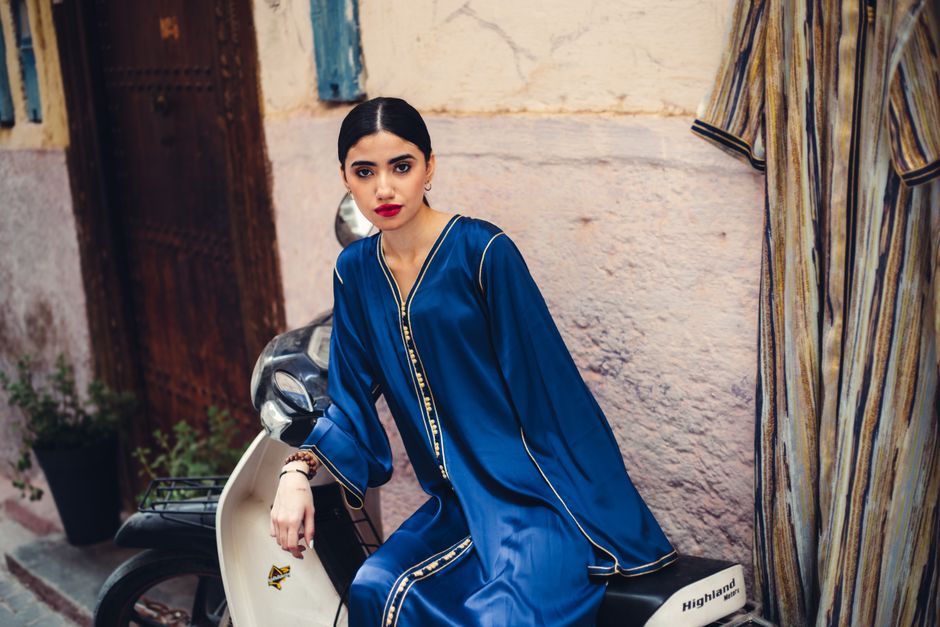
A structured blue kaftan with subtle trim works as far from the water as a town lunch.
From Beach to Dinner: Making One Dress Work All Day
The cover-up that earns its keep is the one you never have to change out of. The move is accessories, not outfit swaps. Arrive in flat sandals, a straw tote, and damp hair pulled back — pure beach. For an evening that starts at sunset, swap to a slim sandal with a small heel, add a long pendant or layered chains, switch the tote for a small clutch, and let your hair down. Same kaftan, completely different read. A wide-brim hat does double duty: sun cover by day, a finished accessory by early evening.
One thing that quietly upgrades the whole look is a belt. Cinching a loose kaftan at the waist for dinner turns a beach robe into something that looks deliberately styled. Carry a thin braided or metallic belt — it weighs nothing and changes everything.

A wide-brim straw hat is the one accessory that works from noon sun to evening drinks.
Sun Protection You Can Actually Wear
A cover-up is not just a style piece — it is the easiest sun protection you own. Tightly woven fabrics block more UV than loose, sheer ones, and a darker or brightly dyed fabric blocks more than a pale one. The American Academy of Dermatology notes that everyday fabrics offer real but limited protection, and that a piece labeled with a UPF rating gives you a measured, reliable number. If you burn easily or spend full days out, a long-sleeve kaftan in a tighter weave does more than reapplied sunscreen alone, and it never sweats off.
This is where the floaty chiffon kaftan loses to the cotton one. Pretty as the sheer fabric is, it lets UV straight through. For real sun days, reach for the weave you cannot see daylight through. If you want to go deeper on fabric and sun, our guide to UV protection for swimwear breaks down what the ratings actually mean.
Care: Making a Cover-Up Last More Than One Season
Salt and chlorine are the quiet killers of beach fabrics. Rinse your dress or kaftan in cool fresh water the same day you wear it — not three days later when it has dried stiff. Hand wash anything sheer or delicate; machine wash sturdier cotton on cold, inside out, and skip the dryer, which breaks down fibers and fades dye fast. Hang to dry in shade, because direct sun fades color on the very piece you bought for the sun. A linen or gauze dress treated this way looks good for years; the same dress wadded wet into a beach bag every day is done by August.

A floral maxi at golden hour — the kind of piece you keep on long after the swim is over.
Building a Small Beach Cover-Up Capsule
You do not need ten. Three pieces cover almost any trip. Start with one black kaftan that does everything and forgives every stain. Add one printed cotton dress for the actual sand days when sunscreen and salt are in play. Finish with one slightly dressier piece — a slip dress or an embellished kaftan — for the dinners and the photos. Between those three, layered over the swimsuits you already love, you are styled for a week without overpacking.
If you are still building your swimwear base underneath, our guides to choosing a swimsuit for your body type and finding a supportive bikini top pair naturally with everything here.
The One Rule Worth Keeping
If you remember nothing else, remember this: buy the cover-up you will actually reach for, not the one that photographs best on a hanger. The best beach dress is the one already on your body when you decide, on a whim, to stay for sunset. Comfort is what makes you keep it on, and keeping it on is the whole point.

Sources
- American Academy of Dermatology — How to protect your skin with clothing — guidance on how fabric weave, color, and UPF ratings affect sun protection.
- Skin Cancer Foundation — Sun-protective clothing — what makes a garment block UV and how UPF is measured.
- Encyclopedia entry — Kaftan — background on the garment’s origins as loose, heat-appropriate dress across North Africa and the Middle East.
Shop our full range of bikinis and swimwear at the BikiniCool store →