

Best Swimsuit Colors for Your Skin Tone (2026 Guide)
Roughly one in three women returns a swimsuit not because of the fit, but because it looked wrong on camera the second they stepped into the sun. The culprit is almost never the cut. It is the color. A suit that looks stunning on the hanger can drain your face the moment it sits against your skin, and a shade you would have walked past can make you look like you just got back from a week in the Maldives. Getting the color right is the cheapest upgrade you can make to how you feel on the sand.

Why Swimsuit Color Matters More Than the Cut
Cut controls where the eye goes. Color controls whether your skin looks alive or tired. You can own the most flattering high-waisted bottoms on the market, but if the shade fights your undertone, the first thing anyone notices is that you look a little grey around the shoulders. The right color does the opposite work for free, bouncing warmth back into your face so your skin reads healthy in every photo.
Here is the mildly unpopular opinion: chasing the “slimming black one-piece” is the most overrated advice in swimwear. Black is safe, but safe is not the same as flattering. A well-chosen emerald or coral will do more for how you look than another black suit ever will, because it works with your coloring instead of just hiding under it.
How to Find Your Undertone in 30 Seconds
Undertone is the quiet color underneath your skin, and it stays the same whether you are pale in January or bronzed in July. That is why “my skin tone changes with my tan” is a myth worth dropping — your undertone does not move. Three quick checks will tell you where you sit:
- The vein test: Look at the inside of your wrist in natural light. Blue or purple veins point to cool undertones. Green or olive veins point to warm. If you genuinely cannot tell, you are likely neutral.
- The jewelry test: Hold gold against your face, then silver. If gold makes your skin glow, you run warm. If silver looks cleaner and brighter, you run cool. If both look fine, welcome to neutral.
- The white paper test: Hold a plain white sheet up to your bare face. Skin that looks yellow or peachy next to it is warm; skin that looks pink or rosy is cool.
Two of the three tests agreeing is enough. You do not need a color consultant — you need thirty seconds and a window.

Best Swimsuit Colors for Warm Undertones
If you run warm, your skin already carries golden or peachy light, so you want colors that echo that heat without clashing with it. Coral is the standout — it flatters warm skin from the palest ivory to the deepest bronze. Golden yellow, tomato red, terracotta, and rust all sing on warm undertones, and earthy greens like olive and moss look expensive rather than muddy on you.
Steer clear of icy pastels and cold blue-based pinks; they tend to make warm skin look sallow. If you love blue, reach for turquoise or teal instead of a steely navy — the green in them keeps things warm. A coral or terracotta suit against a July tan is one of the most reliable looks in swimwear.

Best Swimsuit Colors for Cool Undertones
Cool undertones have a pink, red, or bluish base, and they come alive next to colors with the same crisp quality. Think cobalt and sapphire blue, emerald green, true red (the fire-engine kind, not orange-red), and berry shades like raspberry and magenta. Cool-toned pastels — lavender, icy blue, soft rose — read fresh and clean on you where they would wash out a warm complexion.
The colors to approach carefully are the muddy warm neutrals: mustard, olive, and orange can make cool skin look a little grey. If you want a neutral, go for stark white, charcoal, or a clean navy rather than beige or camel. A deep emerald or a proper true red is the fastest way for cool undertones to look camera-ready.

Best Swimsuit Colors for Neutral Undertones
Neutral undertones are the lucky middle, balancing warm and cool so that most of the spectrum is fair game. That freedom can be its own trap, though — with everything technically “allowed,” it is easy to default to safe beige and never find your best colors. Lean into jewel tones (teal, amethyst, ruby) and soft muted shades (dusty rose, sage, taupe) and you will rarely miss.
The one thing to watch is intensity. Neutral skin can be overpowered by neon, so if a color feels like it is wearing you rather than the other way around, drop down a shade. A dusty rose or a muted teal tends to flatter neutral undertones better than the loudest version of the same color.

The Colors That Flatter Almost Everyone
A few shades cross undertone lines and look good on nearly all skin. Teal sits right between warm and cool, so it works whether your veins run blue or green. True red — dialed slightly warm or slightly cool to match you — is another near-universal winner. And a deep, saturated emerald flatters far more people than most expect.
| Undertone | Best colors | Colors to skip |
|---|---|---|
| Warm | Coral, golden yellow, terracotta, olive, turquoise | Icy pastels, blue-based pink |
| Cool | Cobalt, emerald, true red, berry, lavender | Mustard, orange, camel |
| Neutral | Teal, jewel tones, dusty rose, sage | Neon at full strength |

Does Your Swimsuit Color Change How Tan You Look?
Yes, and this is where color earns its keep. High-contrast shades make skin read darker and more luminous by comparison. White is the classic example — a white suit against sun-kissed skin makes a tan look deeper than it is. Coral and rich blues do the same trick, throwing your color forward. If looking bronzed is the goal, contrast is your friend.
The reverse is worth knowing too. Colors that sit close to your own skin tone — beige, tan, pale peach on lighter skin — can blur the line between fabric and body and flatten the whole effect. That is fine if you want something understated, but do not expect a nude-toned suit to do any of the glow-boosting a contrasting color would.
Prints and Patterns, Not Just Solid Colors
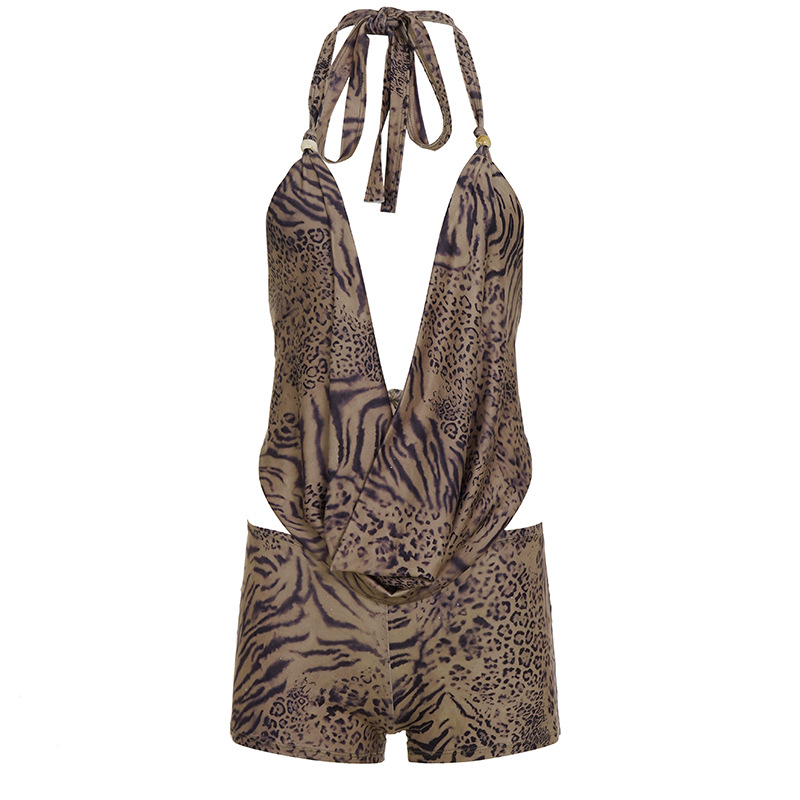
Undertone rules do not stop at solids. When you look at a print, find the dominant color — the one your eye lands on first — and judge it the same way you would a single shade. A floral that reads mostly coral behaves like a coral suit; a leopard print that reads golden-brown behaves like a warm neutral. Marble and abstract prints are forgiving because they blend several tones, so at least one of them usually flatters you.
Prints also give you a workaround if your best color is not one you feel confident wearing head to toe. A patterned suit lets you get a flattering shade near your face through the top while keeping the overall look busier and less bold than a solid block of the same color.
Common Mistakes When Picking a Swimsuit Color
The biggest one is buying for the lighting in the fitting room. Store light is yellow and dim; sunlight is blue and brutally honest. A shade that looked rich indoors can turn flat outside, so always picture the suit in full sun before you commit. The second mistake is matching your suit to your hair or eye color instead of your skin — pretty in theory, but your face is what sits next to the fabric all day.
The last trap is letting one bad experience write off a whole color. “Yellow makes me look ill” usually means the wrong yellow, not all yellow. A cool lemon and a warm mustard are different animals, and one of them is probably right for you even if the other was a disaster.
See It in Action
If you want a quick visual walkthrough of matching a suit to your coloring, this short guide covers the basics in a couple of minutes:
Your Next Step
Run the undertone tests this afternoon, then treat color as the first filter every time you shop — before cut, before price, before the sale tag. The number of suits worth trying on drops by half, and the ones left are the ones that will actually make you want to be in the photo. For more on getting the whole look right, our guide to choosing a swimsuit for your body type pairs perfectly with this one, and if you are still deciding on a shape, every bikini style explained breaks down the options. Curvier figures can also see our plus-size swimwear guide for shape and color together.
Sources
- Leonisa — What Color Swimsuit Is Most Flattering to Your Skin Tone — undertone-based color recommendations
- Moontide Swimwear — Best Swimwear Colours for Your Skin Tone — color-by-undertone guidance
- Beachlife — Which Bikini Color Matches Your Skin Tone — undertone tests and shade lists
Shop our full range of bikinis and swimwear at the BikiniCool store →