
Modest Swimwear Guide: 9 Best Styles for Women 2026
The modest swimwear market grew by an estimated 18% between 2020 and 2024, according to industry tracker NPD Group — driven by a mix of religious preference, sun sensitivity, and a growing rejection of the idea that the beach has a mandatory dress code. Whatever brings you here, you deserve real options that hold up in the water, dry quickly, and look good doing it. This guide covers the 9 styles worth knowing, with honest notes on what each one does well and where it falls short.
What Actually Counts as Modest Swimwear?
There is no official definition, but the practical standard in the swimwear market is coverage that goes beyond what a standard bikini or cutout one-piece provides. That includes swim dresses that fall to mid-thigh, tankini tops that sit below the hip, high-neck one-pieces, and full-coverage sets originally designed for religious observance but now worn widely for practical reasons.
Coverage is the baseline, but the better question is what kind of coverage. A swim dress that goes sheer when wet is not actually modest. A burkini-style set in double-layer chlorine-resistant fabric is. Before buying, check whether the fabric holds opacity when wet (hold it up to light), whether it has stretch in both directions, and whether the UPF rating is printed on the tag or just implied in the marketing copy. That last distinction matters more than most people realize.
Modest Swimwear Styles: The 9 Best Options
1. Swim Dress
A swim dress fits like a mini dress worn over a built-in brief or short. Lengths run from mid-thigh to just above the knee, and most versions have a ruched waist that works well across a wide range of body shapes. They are the easiest modest option to transition from beach to boardwalk — add sandals and you are done without a wardrobe change.
The trade-off is drag in the water. If you are doing laps or playing in strong surf, a loose skirt section will slow you down and can float up in ways you did not intend. For passive beach use and casual swimming, none of that is a real problem.
2. Tankini with Longer Top
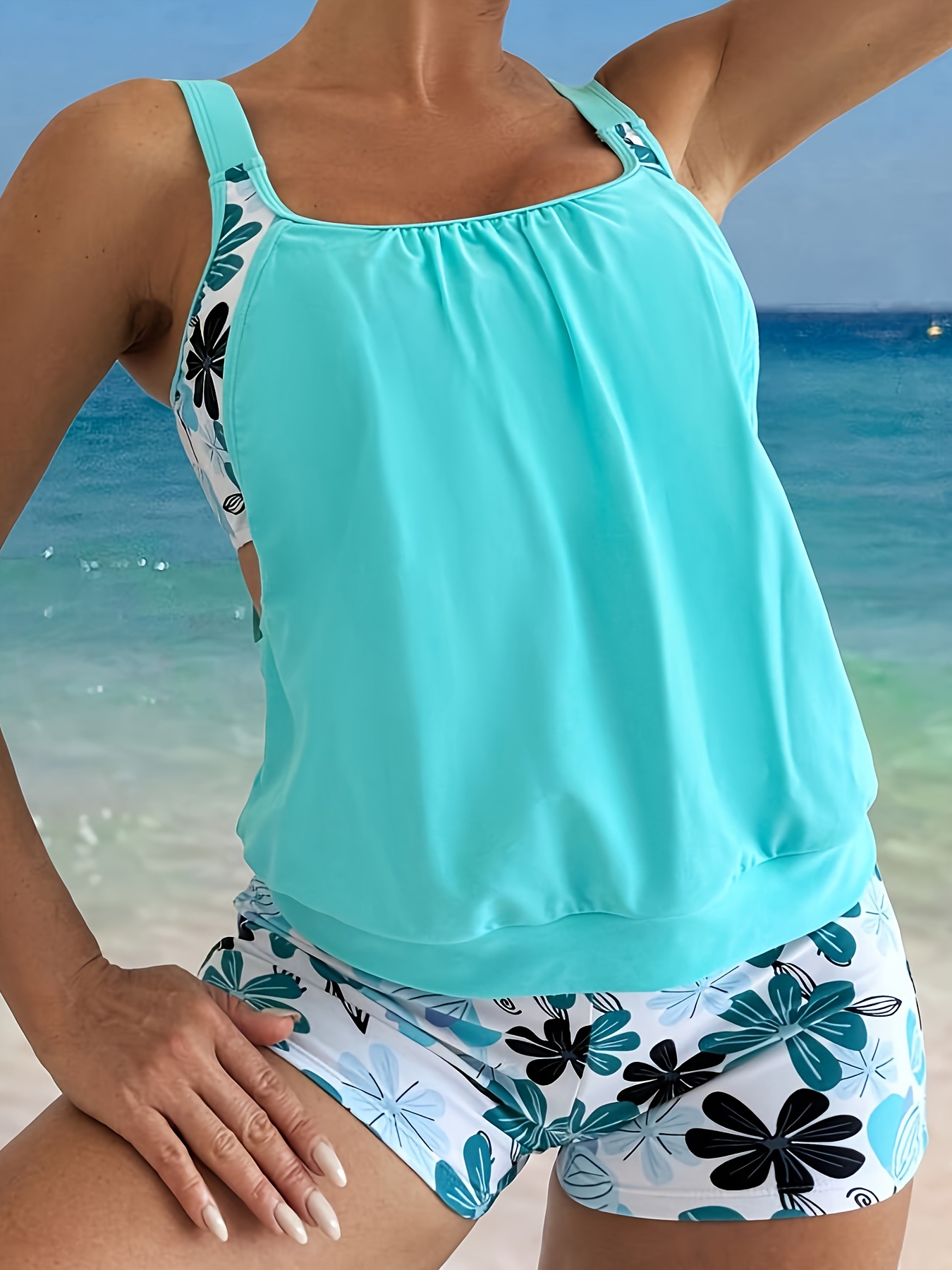
A tankini separates the swimsuit into a tank-style top and a separate bottom, giving you the torso coverage of a one-piece with the practical convenience of a two-piece when a bathroom break is involved. Longer-top versions that hit at the hip or below offer solid coverage without restricting your range of motion.
Look for a built-in shelf bra if you need chest support. Most budget tankinis skip this. Spending an extra $20-30 to get it is worth it — a tankini that rides up or loses support in the water is worse than a standard one-piece from a comfort standpoint.
3. One-Piece with High Neck
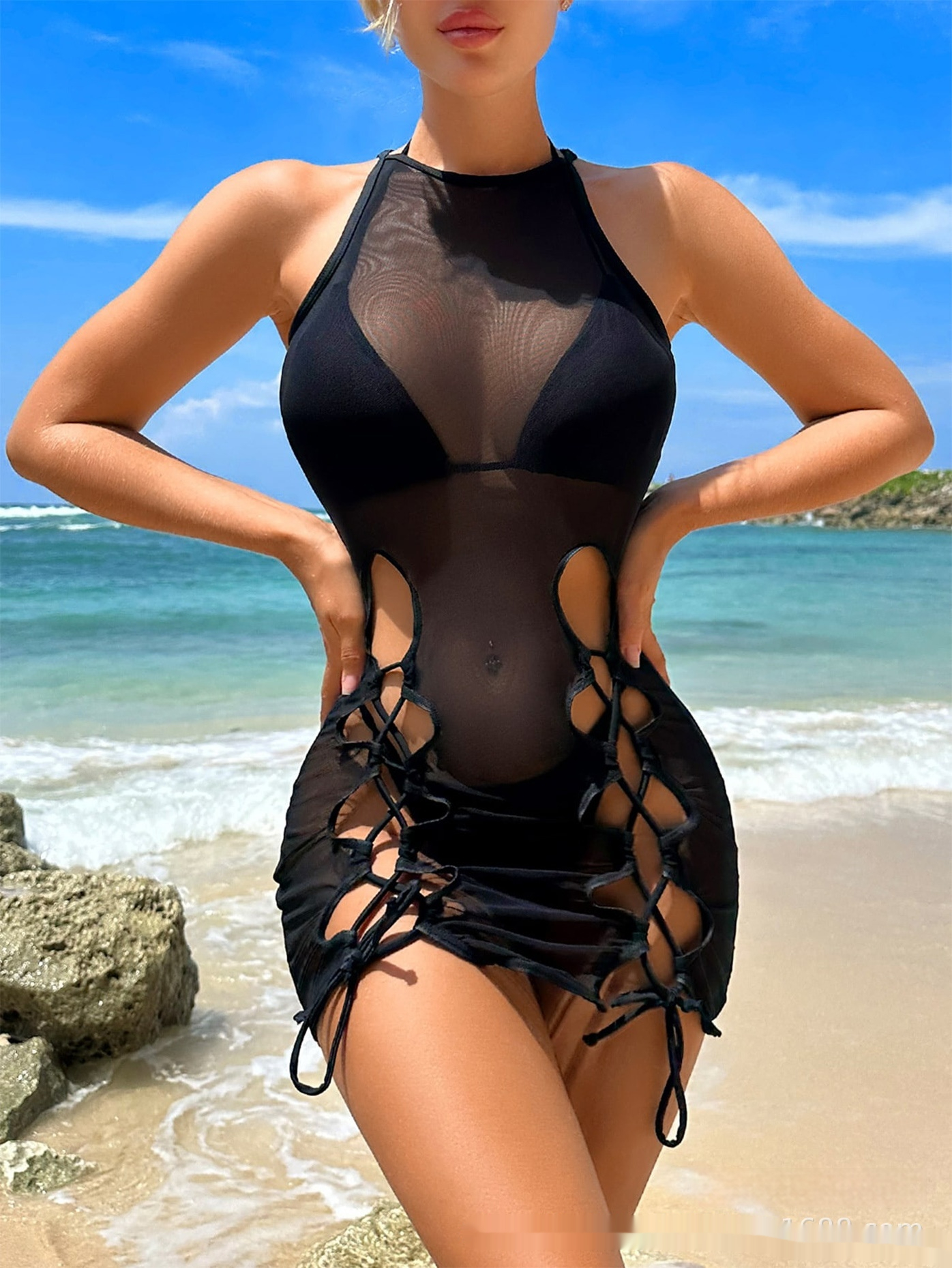
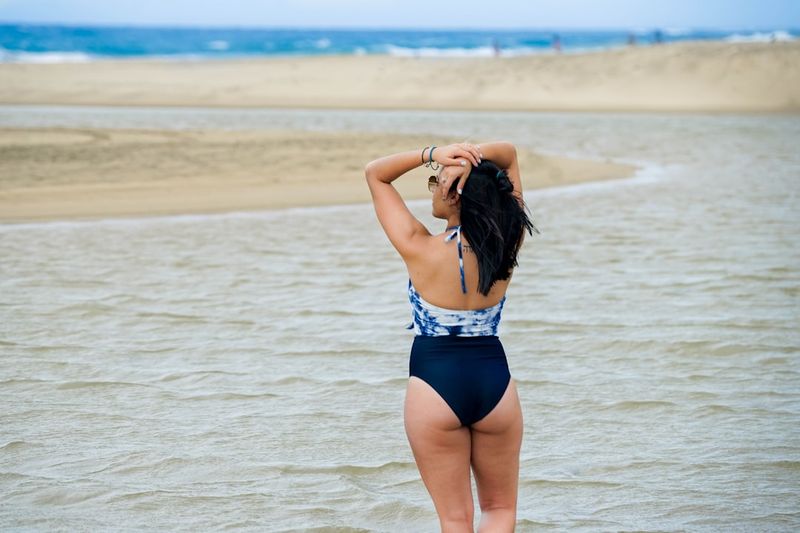
The high-neck one-piece hit mainstream fashion around 2016 and has never fully left. It provides complete torso coverage with a clean silhouette — no readjusting, no worrying about the neckline doing something unexpected when you dive in. Many versions now include a front zip or cross-back design that is significantly easier to get on and off than older tube-style one-pieces.
This is the strongest option for active swimming. Nothing moves. Nothing shifts. You can do a flip turn and surface exactly as you went in. It is also a popular choice for women who want coverage without the multi-piece complexity of a full burkini set.
4. Three-Piece Set with Cami Top
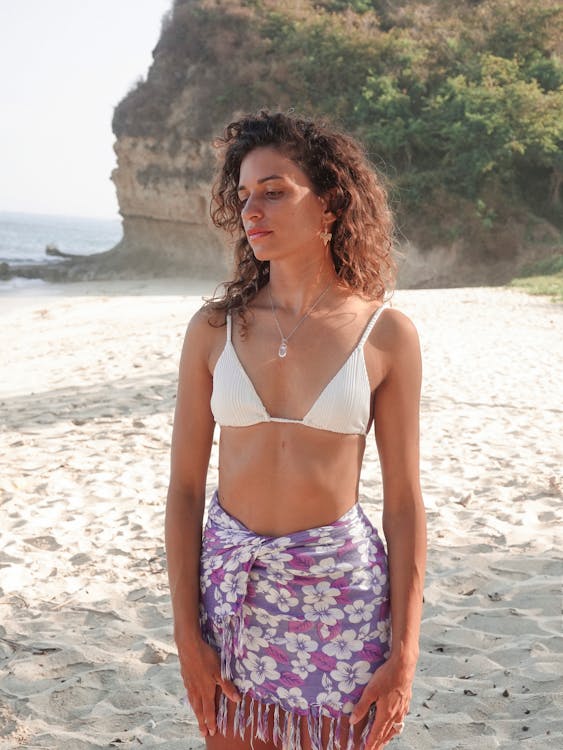
Three-piece sets — usually a cami or crop top, bikini bottom, and a cover-up kimono or sarong — give you more styling options than any other format on this list. Wear all three for full coverage, drop the outer layer for a different look, or mix pieces from different sets. For women who want flexibility rather than a locked-in uniform, this is the right format.
The cami top sits in a useful middle ground: it has the relaxed coverage of a rash guard without looking like athletic gear, and it works equally well poolside or at an outdoor dinner afterward.
5. Rash Guard + Board Shorts
Originally designed for surfers to prevent board friction, the rash guard and board shorts combination has become the default modest swimwear for outdoor water sports. A fitted rash guard creates almost no drag, and women’s board shorts have a slimmer cut than the men’s version while still covering mid-thigh. The fit is active, not shapeless.
This format offers the best sun protection of anything on this list. A quality rash guard rated UPF 50+ blocks 98% of UV radiation — far more reliably than sunscreen, which degrades in water and requires reapplication every 90 minutes. The Skin Cancer Foundation recommends UPF-rated clothing as the first line of UV defense, not sunscreen, particularly for extended outdoor exposure. For anyone with sun sensitivity or a personal or family history of skin cancer, this combination is the right call.
6. Full-Coverage One-Piece with UPF Rating
Not every one-piece is modest — plenty of fashion versions have high-cut legs, deep-plunge backs, or cutout panels that expose as much skin as a bikini. A genuinely full-coverage one-piece has a back that stays at the shoulder blades or higher, a modest leg cut at the outer hip, and, in better versions, a UPF 50+ certification printed on the label — not just implied in the product description.
Athletic swim brands — Speedo, TYR, arena — produce UPF-rated suits designed for competition use that happen to offer excellent coverage as a side effect. These fabrics are built to stay put at high speeds in the water, which also means they stay put during casual swimming without the shifting or riding that affects fashion-oriented swimwear in thinner fabrics.
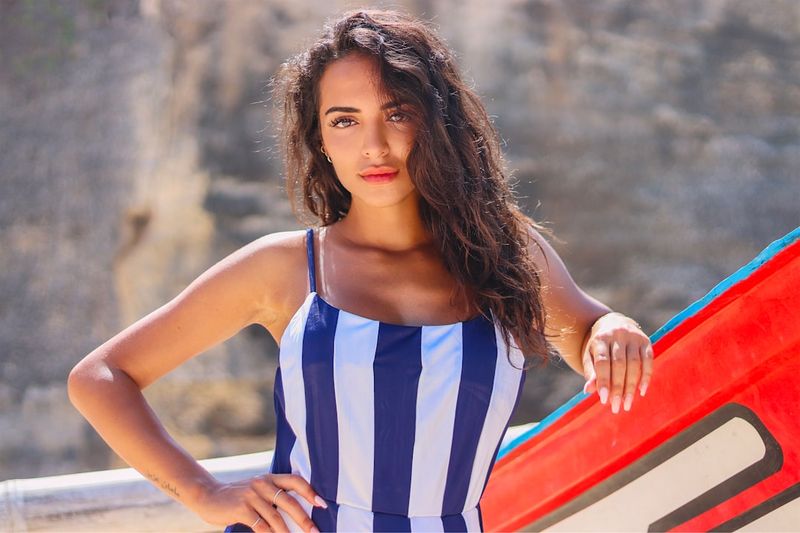
7. Swim Leggings Set
Swim leggings are made from the same chlorine-resistant polyester-spandex blend as competition swimsuits, so they hold their shape in the water, do not bag out, and do not go transparent. Paired with a long swim top or rash guard, you get full coverage from ankle to shoulder with no gaps and no bulk.
This format is widely used for Islamic modest swimwear, but it is equally common among women with vitiligo, post-surgical scarring, or a general preference for not being in direct sun. The coverage is complete without being heavy. Dry time is fast because the fabric stays thin under compression. It is, objectively, the most practical full-coverage format for active water use.
8. Burkini / Full-Coverage Set
The burkini — designed for Muslim women who want to swim in full religious coverage — consists of a long-sleeve top, full-length pants, and usually a hood or head covering. Modern versions are made from performance swimwear fabrics, not cotton or jersey, and are designed to be worn in the water, not just beside it. The quality difference between a 2015 burkini and a current-generation version is significant.
The American Academy of Dermatology notes that tightly woven, dark-colored fabrics with full-body coverage offer the highest UV protection of any clothing type. A well-made burkini set tops this entire category on sun protection by a wide margin.
9. Boy-Short Bikini Bottom + Long-Line Top
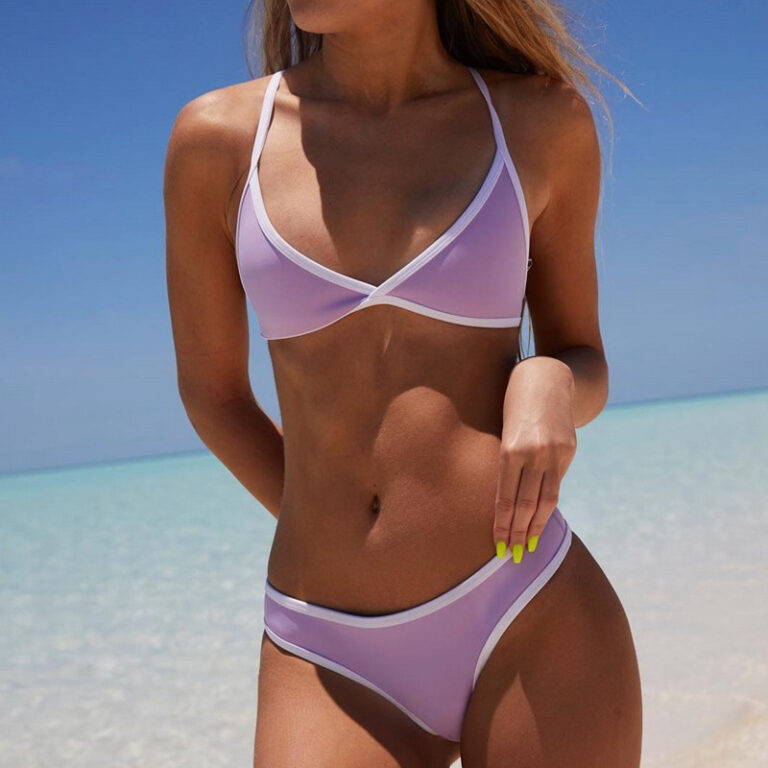
For women who want coverage specifically at the bottom — not full-suit coverage — the boy-short bikini bottom is the answer. A wide waistband, a cut that covers the full seat without riding up, and sides that hit at the outer hip rather than the inner hip. Pair it with a long-line cami bikini top that falls to the lower hip and you have real coverage where it counts without committing to a complete modest set.
This combination holds up well in rough water — there is simply more fabric to stay put than a standard bikini bottom. It is also the most accessible entry point for women transitioning toward more coverage who are not ready to change their entire swimwear approach at once.
The Sun Protection Advantage
Ultraviolet Protection Factor (UPF) measures how much UV radiation a fabric blocks. UPF 50 allows 1/50th of UV rays through — 98% blocked. A standard white cotton t-shirt rates approximately UPF 5. A well-made polyester-spandex modest swimwear set typically rates UPF 50+.
Sunscreen SPF 30 blocks about 97% of UVB rays — but only when applied correctly (2mg per square centimeter of skin) and reapplied every 90 minutes after swimming. The American Cancer Society reports that most people apply less than half the recommended amount, which brings real-world protection down to roughly SPF 8 to 10 in practice. UPF fabric does not wash off, does not degrade, and does not miss spots. If sun damage is a concern — and skin cancer is the most common cancer diagnosis in the United States — modest swimwear with a UPF rating is a practical health upgrade, not just a style choice.
Modest Swimwear for Every Activity
Lap swimming: High-neck one-piece or swim leggings with a fitted rash guard. Zero drag and nothing that shifts in the water. Avoid swim dresses for this use.
Beach vacation: Swim dress, three-piece cami set, or boy-short bikini with a long-line top. These all transition from the water to walking around without looking like you just got out of a lap lane. Choosing the right color for 2026 — neutral tones and soft earth shades are the strongest trend this season — keeps the look current without effort.
Water parks: Rash guard and board shorts or a fitted tankini. Slide friction can pull at loose swim skirt hems and cause a swim dress to bunch in uncomfortable ways. Fitted coverage is faster, easier, and more secure on water slides than any loose-hem option.
Snorkeling and diving: Rash guard and leggings is the standard across most tropical dive operations. Full coverage protects against jellyfish and reef scrapes alongside UV exposure, and many operations require UPF-rated coverage over swimsuits for reef protection reasons. Modest swimwear that meets this requirement is both practical and consistent with environmental best practices. If you are also managing a pregnancy, the maternity swimwear guide covers the specific coverage and support requirements by trimester.
Fabric — What Actually Matters
Polyester-spandex blends last longer than nylon-spandex blends in chlorinated pools. Polyester does not absorb chlorine the way nylon does, which means less fabric degradation over a season of regular pool use. For ocean use, both hold up about equally — saltwater is gentler on swimwear than chlorine regardless of fabric type.
Look for at least 15-20% elastane content. Below 10% and the fabric tends to bag out within a season. Check the full swimwear fabric guide for detailed breakdown by fiber type and activity. The short maintenance rule: rinse in cold fresh water immediately after every swim. Modest swimwear has more fabric surface area than a standard bikini, which means more exposure to residual chlorine or salt if you skip that rinse. The rinse takes 30 seconds. Replacing a degraded set takes $80.

Modest Swimwear Video Guide
Frequently Asked Questions
Is modest swimwear only for religious reasons?
No. Sun sensitivity, skin conditions, post-surgery recovery, personal comfort, and simple preference are all common reasons. The market has expanded well beyond its original religious-observance roots — athletic brands, mainstream department stores, and specialty swimwear retailers all carry dedicated modest swimwear lines now.
Can modest swimwear be worn in competitive swimming?
World Aquatics (FINA) competition rules set limits on maximum coverage in elite competition, but those rules apply only at sanctioned competitive events. Recreational lap swimming, masters swimming, and most organized swim leagues have no dress code restrictions. Full-coverage suits are legal in virtually all organized non-elite swimming.
Does dark-colored modest swimwear provide better UV protection?
Generally yes — darker dyes absorb UV radiation more effectively than lighter shades. But the UPF rating on the tag is a more reliable indicator than color alone. Fabric density and weave tightness matter as much as dye color in determining real-world UV protection.
How long does modest swimwear typically last?
A well-made polyester-spandex set should hold its shape and color through 150-200 pool sessions with proper care — cold rinse after each swim, hang dry, avoid machine washing when possible. That works out to roughly two to three summers of regular use for most people.
Sources
- Skin Cancer Foundation — UPF Clothing vs. Sunscreen — Expert guidance on UPF-rated clothing as the primary defense against UV exposure.
- American Academy of Dermatology — How to Select Sun-Protective Clothing — Guidelines on fabric coverage, weave density, and UV protection ratings.
- American Cancer Society — UV Protection — Data on real-world sunscreen application effectiveness versus clothing-based protection.