
How Salt, Chlorine, and Sun Destroy Bandeau Swimwear — and What to Do About It
You probably spent real time finding the right bandeau — the color, the coverage, how it sits across your chest. But once it’s purchased, most people treat strapless swimwear like it’s indestructible. Toss it in the beach bag wet. Let it bake on the pool deck. Run it through the washing machine on auto. The truth is that bandeau and strapless styles are structurally more delicate than almost any other swimsuit silhouette, and the three forces that quietly destroy them — salt, chlorine, and sun — are the exact same things we enjoy every single time we wear them.

Why Strapless Swimwear Wears Out Faster Than Other Styles
A standard bikini top distributes tension across shoulder straps, a back closure, and a supportive underband. A bandeau has none of that structure. The entire job of keeping the suit in place — and keeping you covered and comfortable — falls on the elastic built into the top and bottom edges of a fabric tube. No straps, no structural backup. Just Lycra doing all the work.
That Lycra — technically elastane or spandex, making up roughly 18 to 22 percent of most swimwear fabric — is what gives any bikini its stretch and snap-back. It’s also the first component to fail when a suit is handled carelessly. Because a bandeau depends on elastic tension alone for its hold, failure shows up sooner and more obviously than it would in a strapped or underwired style. The rolling-down bandeau isn’t a fitting problem. It’s usually an elastic problem — one that started long before the suit stopped working.
The Three Forces Working Against Your Bandeau
Chlorine
Chlorine is an oxidizing agent. In pool water, it reacts with elastane at a molecular level, breaking the polymer chains that give fabric its stretch and recovery. You won’t notice the change after one swim session, or even one full month of regular pool use. But the cumulative damage is real and progressive. It shows up as fabric that feels rough or papery instead of smooth, colors that shift from vibrant to chalky and dull, and a top that rolls down continuously rather than staying put. The heavier the pool use, the faster this degradation runs — and because a bandeau’s elastic has no backup support structure, the failure becomes visible sooner than it would in any other swimsuit style.
Salt Water
Salt water is less immediately aggressive than chlorine but works through a different mechanism. When you leave the ocean and let a suit dry in the sun without rinsing, salt crystals remain embedded in the fabric fibers. Those crystals are hygroscopic — they continuously draw moisture out of the elastic, stressing the polymer structure over time. More immediately, dry salt crystals create microscopic abrasion inside the fabric with every movement, wearing the elastic and the surrounding fabric down from the inside out, wash after wash, wear after wear.
UV Radiation
Elastane absorbs UV radiation directly. Each hour of direct sun exposure breaks down the polymer chains that give Lycra its stretch and recovery. This matters even when the suit is completely dry — a bandeau draped over a beach chair in full afternoon sun is aging just as surely as one worn in the water. UV degradation tends to be the least visible form of swimwear aging until it isn’t: the fabric looks fine, then one day it simply won’t hold its shape anymore. The loss of elasticity compounds with chlorine and salt damage, accelerating the end point for every suit that sees regular sun and water.

The Post-Swim Rinse: The Single Habit Worth More Than Any Detergent
If there is one habit worth building this summer, it is rinsing your bandeau in cold freshwater within a few minutes of leaving the water. Not later at the hotel, not when you get home and shower — within minutes, at the beach showers or the poolside tap.
Timing matters because chlorine and salt don’t stop working when you stop swimming. They continue breaking down elastic fibers for as long as they’re present in wet fabric. Every extra minute a salt-soaked or chlorine-saturated bandeau spends drying in the sun is additional, compounding exposure time. A two-minute cold rinse at the beach removes the majority of both agents before they can do that secondary round of damage.
Cold water is specifically better here. Warm water opens the fabric’s weave slightly, allowing residual chemicals to penetrate deeper before washing away. Cold keeps the fibers contracted and clears surface contaminants more efficiently. It’s a small detail that, over a summer’s worth of beach and pool days, adds up to meaningfully extended suit life. Build the habit early in the season and it becomes automatic.

Washing Your Bandeau Without Damaging the Elastic
Machine washing is the most common mistake strapless swimwear owners make. Even on a delicate cycle, the agitation and spin subjects elastic to mechanical stress it wasn’t designed to handle — random stretching in multiple directions that gradually reduces snap-back. After enough machine washes, a bandeau that once held firm will start rolling down at the first wave. The delicate setting is not delicate enough for swimwear elastic.
Hand washing is simple and takes about three minutes. Fill a basin with cool water, add a small amount of mild soap — baby shampoo or a dedicated swimwear wash both work well — and submerge the bandeau. Gently work the fabric between your fingers for a minute, paying attention to areas that trap sunscreen: the underband, between the cups if padded, and anywhere the fabric is ruched or layered. Rinse under cool running water until it runs clear.
👙 Shop Gentle Swimwear Wash on Amazon →
The Sunscreen Problem
Oil-based sunscreens are particularly destructive to swimwear elastic. They penetrate the fibers and don’t always wash out completely with water alone. If you notice yellowish staining building up on the inner lining of your bandeau’s underband over the course of a season, that’s sunscreen residue accumulating and degrading the elastic from the inside. It causes permanent discoloration that no wash will reverse.
Wherever possible, apply mineral sunscreen and let it absorb fully before putting on your swimwear. This isn’t always realistic at a packed beach, but it’s a worthwhile habit for pool days and resort mornings when you have a bit more time to prepare. The five minutes you spend waiting for SPF to absorb translates to less chemical residue working its way into your bandeau’s elastic all day.
Never Wring — Always Press
Wringing a wet bandeau — even once, even gently — stretches the elastic asymmetrically. The fabric twists in ways the elastic wasn’t designed for, and elastic doesn’t fully recover from that kind of distortion. Press the water out instead: lay the bandeau flat between your palms and apply gentle, even pressure. Or roll it briefly inside a clean dry towel to absorb excess water before moving to drying. It adds about thirty seconds to the process and prevents one of the more common forms of irreversible elastic distortion.
Drying Without Distorting the Shape
How you dry a bandeau matters as much as how you wash it. The two most common drying mistakes — hanging and direct sun — also cause the most permanent damage, and they’re both easy habits to break once you understand why they’re destructive.
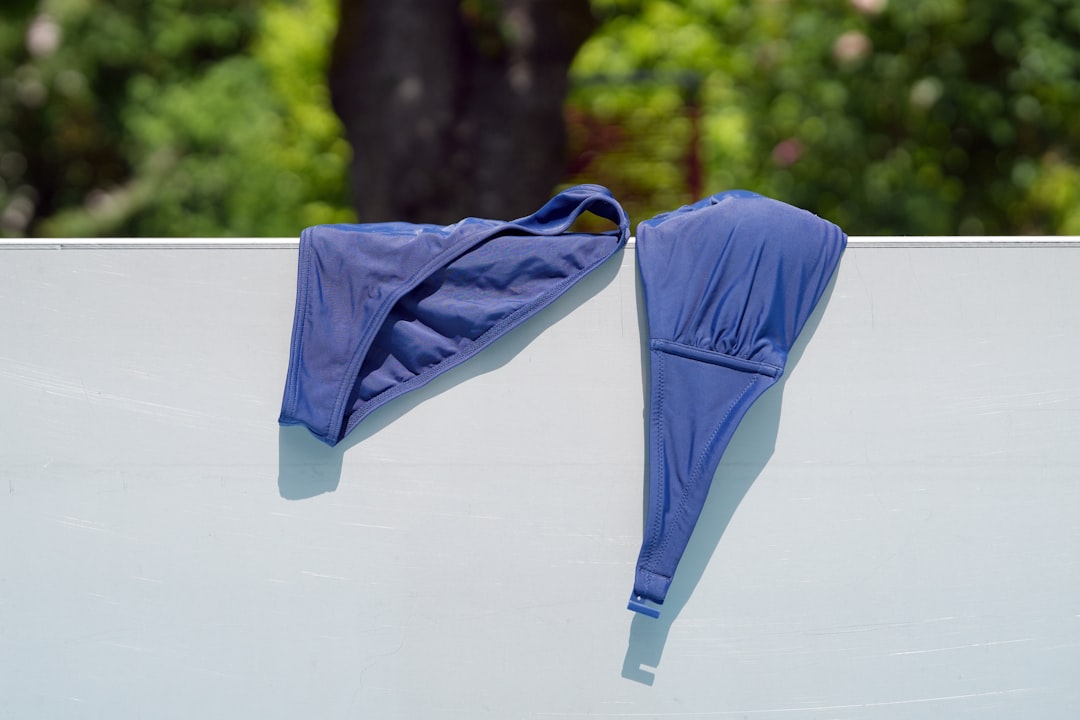
Hanging is the enemy of elastic swimwear. A wet bandeau hanging from a clip or edge subjects the elastic to continuous gravitational tension while the fabric is at its most saturated and pliable state. Over enough drying cycles, this stretches the elastic unevenly and reduces its recovery. Lay it flat always — on a clean dry towel, a flat drying rack, a bathroom shelf. The shape it dries in is the shape it holds.
Avoid direct sunlight for drying, even though it seems like the fastest and most natural option. After everything you’ve done to limit UV exposure in the water, finishing the care process with an hour of direct afternoon sun undoes some of that effort. A shaded, ventilated space is ideal: a covered patio, a bathroom with the window open, or a flat rack in the shade. Airflow matters more than warmth for drying swimwear efficiently without damage.
Never tumble dry. The combination of heat and mechanical tumbling will undo months of careful hand-washing in a single cycle. If you need to speed up drying, the roll-in-a-towel method followed by airflow from a fan is far better than any dryer setting.
Storing Your Bandeau Through the Off-Season
The way you store swimwear between summers — or even just between beach trips — is the final link in the care chain, and it’s the step most often skipped. Getting it right means your bandeau comes out of the drawer in spring with its elastic intact, its color rich, and its shape exactly as you left it.
Always Wash Before Storing
Never pack away a bandeau without washing it fully first, even if it smells clean. Residual salt, trace chlorine, and sunscreen continue degrading elastic slowly in storage. A suit that went into a drawer in September smelling faintly of coconut SPF can come out in May with yellowed bands, compromised stretch, and a shape it can’t recover. The damage happens in the dark, over months, with nothing to show for it until the first day you put it on.
Folded, Not Hung
All swimwear should be stored folded, never hung. Hanging over months allows elastic to slowly stretch under the suit’s own weight. A folded bandeau in a breathable fabric bag or a dedicated swimwear section of a drawer takes up almost no space and preserves its original elastic tension through the off-season.
Avoid packing bandeaus tightly under heavy items. Prolonged compression deforms the molded cups in padded styles and can cause permanent creasing in the fabric that no wash will remove. Keep them loosely folded with room to breathe. A small cotton or mesh drawstring pouch is ideal for each suit — it protects from dust, allows airflow, and prevents compression.
👙 Shop Swimwear Storage Organizers on Amazon →
Knowing When a Bandeau Has Done Its Job
Even with careful, consistent care, a bandeau has a natural lifespan. The elastane in most swimwear fabrics is generally rated for approximately 200 to 300 pool-hour exposures under normal conditions. Heavy chlorine exposure, sun drying, and machine washing all reduce that number. Ocean swimming, generous sunscreen application, and salt drying without rinsing accelerate wear on their own.
The signs are usually clear once you know what to look for: the underband rolls down continuously rather than requiring a tug to dislodge; the fabric feels rough or papery rather than smooth; the color has gone grey and ashy rather than simply faded; the cups no longer hold their shape after washing and drying flat. If your bandeau is doing any of these things, the elastane has lost its recovery, and no amount of careful washing will bring it back. The structure is gone.
Recognizing when to retire a suit is part of a body-positive approach to swimwear. A bandeau that has lost its elastic cannot support your body properly — full stop, regardless of size or shape. You deserve strapless styles that actually hold you with confidence, not ones you’re constantly adjusting and worrying about. Finding a replacement that fits the way it should — and then caring for it from the first wear — is exactly the point.
👙 Shop Bandeau Swimwear on Amazon →
Sources
- Elastane — Wikipedia
- Ultraviolet (UV) Radiation — U.S. Environmental Protection Agency
- UV Protection — The Skin Cancer Foundation