
High-Waisted Bikinis: How to Find Your Perfect Fit
Every few summers, someone declares the high-waisted bikini “back,” as if it ever fully left. The truth is simpler: this cut never stopped working, it just moved in and out of the spotlight. Right now it’s firmly back in the light, and for good reason — a higher rise gives you options that a low-rise triangle bottom simply doesn’t. It’s not about covering up. It’s about having a piece of swimwear that moves with your day instead of fighting it.
If you’ve only ever shopped bikinis by print and price, the rise height is the detail worth learning next. It changes how the suit sits when you sit down, how it photographs, and honestly how much you think about it once you’re actually at the beach instead of arranging yourself for a photo. Here’s what’s actually going on with this cut, and how to buy one that fits the way it’s supposed to.
Where the High Waist Actually Came From
High-waisted swimsuits aren’t a 2020s invention borrowed from Instagram — they’re closer to the original template. Swimwear in the 1940s and 1950s was almost universally higher-rise, partly for modesty norms of the era and partly because the fabric and construction technology of the time made a snug, structured high waist easier to engineer than the barely-there cuts that came later. The low-rise bikini boom of the late 1990s and 2000s was actually the outlier in swimwear history, not the default.
What’s different now is that the high waist isn’t tied to one decade’s silhouette anymore. Designers borrow the rise from mid-century swimwear and pair it with modern fabrics, cheeky or full-coverage backs, and prints that have nothing to do with pin-up styling. It’s a rise height, not a costume.

What “High-Waisted” Actually Means on a Rack
“High-waisted” gets used loosely by swimwear brands, so it helps to know there are really three tiers hiding under that one label.
- Mid-to-high rise: sits at or just above the belly button. This is the most common version and the easiest to wear with any bikini top.
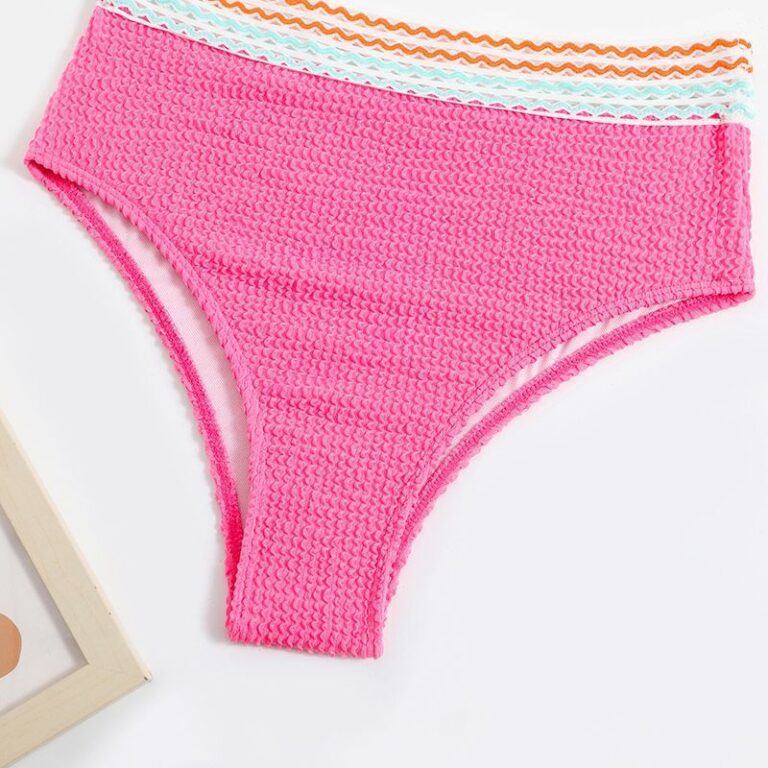
- High rise: sits a few inches above the navel, closer to natural waist. This is the cut most people picture when they hear “high-waisted.”
- Super-high or extra-high rise: can reach up near the ribcage, often marketed with retro or “pin-up” branding. This tier tends to run more structured, sometimes with boning or a wide waistband.
Why the Rise Height Matters More Than the Print
The print is the thing you notice first in a product photo. The rise is the thing that determines whether you actually reach for the suit again after one wear. A rise that’s too low relative to what you wanted rolls down when you sit. A rise that’s too high relative to your torso length can dig in under the ribs. Neither is a flaw in your body — it’s a mismatch between the garment’s proportions and yours, and it’s fixable by paying attention to rise height listed in the product description, not just the category name.
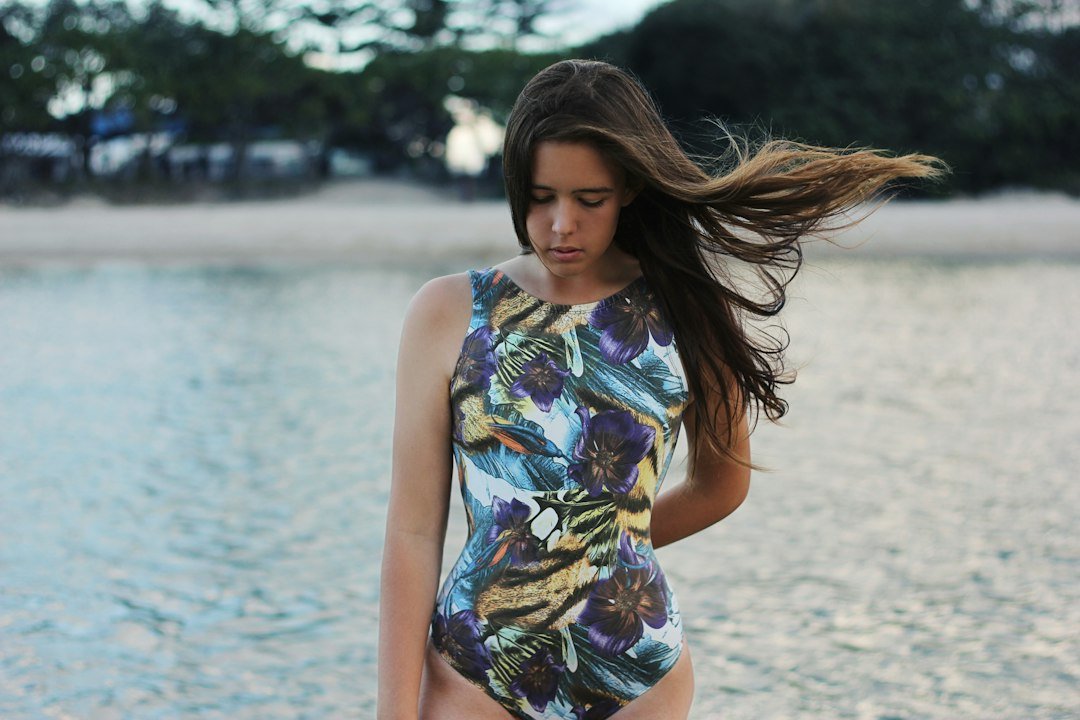
The Coverage Question, Answered Honestly
A lot of swimwear copy talks about high-waisted bottoms as something you reach for to “hide” your midsection. Skip that framing entirely. Coverage is a preference, not a consolation prize, and plenty of people with flat stomachs choose a high waist because it’s simply more comfortable to move, bend, and sit in without constant adjusting. Others like the way it elongates the leg line. Others just don’t want to think about their suit while they’re playing with their kids in the water. All of those are equally valid reasons to buy the exact same bottom.
What actually varies by body is where the waistband sits relative to your torso length, and that’s a proportion question, not a size question. Someone with a shorter torso may find a super-high rise hits uncomfortably close to the bust band of the top; someone with a longer torso may find the same rise sits perfectly at the natural waist. This is why trying a suit on, or at minimum checking the brand’s fit notes on torso length, matters more than trusting a size chart alone.
Shop High-Waisted Bikini Bottoms on Amazon →
How to Actually Try One On
A high-waisted bottom that looks right standing still in front of a mirror can behave completely differently once you move. Before you commit, run through three quick checks — in the fitting room if you can, or the moment it arrives if you’re ordering online with a return window.
- The sit test: sit down like you would on a towel or a lounge chair. The waistband shouldn’t roll, fold, or dig in sharply.
- The reach test: raise your arms overhead and bend side to side. A good high-waisted bottom stays put; a poorly fitted one slides down in the back.
- The walk test: take a few steps. Fabric that bunches at the hip crease usually means the size runs large on you, not that the style is wrong for your shape.
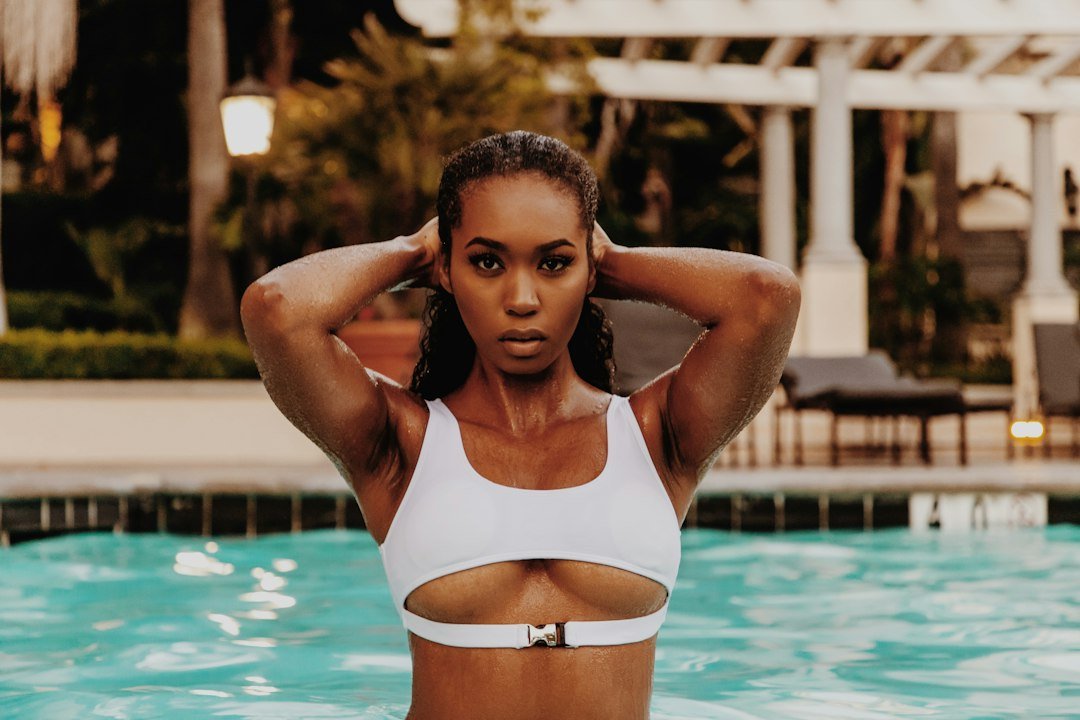
Styling It Beyond the Beach Towel
One underrated advantage of the high-waisted cut is how well it functions as a separate. Because the bottom already reads more like a garment than a strip of fabric, it pairs naturally with things a low-rise bikini bottom never could — a linen button-down worn open over it, high-waisted denim shorts thrown on top for a walk to grab lunch, or a cropped tank for a pool bar that doesn’t officially require a cover-up but appreciates one anyway.
Pairing Tops: Bandeau vs. Underwire vs. Halter
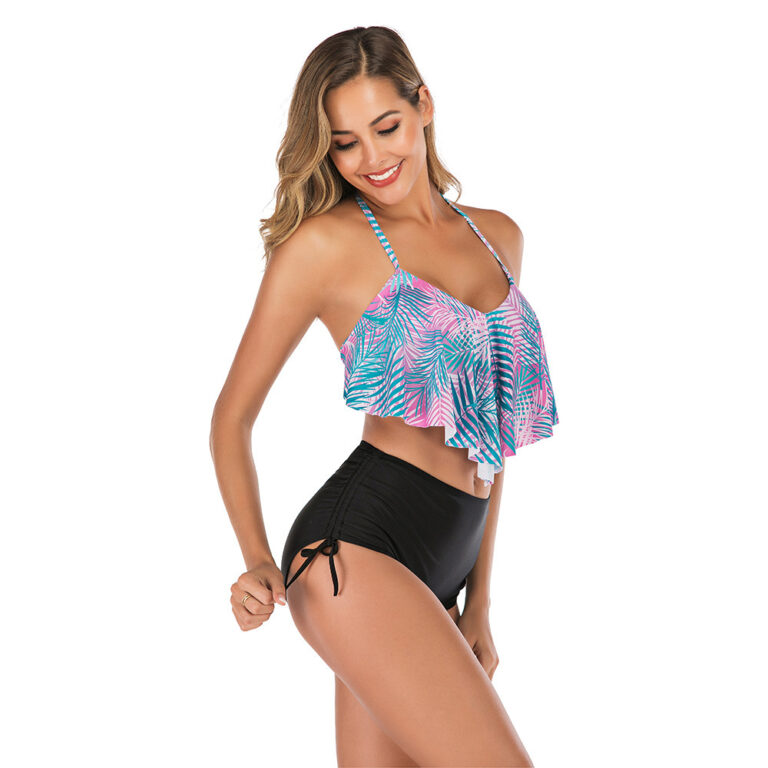
The top you pair with a high-waisted bottom changes the whole silhouette. A bandeau top keeps the look streamlined and works best if the waistband sits closer to the navel rather than the ribs, since you don’t want two horizontal lines competing for attention. An underwire or bralette-style top adds structure and support, and tends to balance a super-high rise nicely because both pieces read as more “engineered” rather than casual. A halter top draws the eye upward and elongates the torso, which pairs especially well with a mid-to-high rise for a proportion that doesn’t feel top- or bottom-heavy.

Shop High-Waisted Two-Piece Sets on Amazon →
Fabric and Construction Details Worth Checking
Not all high-waisted bottoms are built the same, and the construction matters more here than it does on a simple triangle cut, because there’s more fabric doing more work. A few things worth checking before you buy:
- Compression panel: some high-waisted bottoms include a lightly compressive inner panel at the front. This isn’t shapewear — it’s there to keep the waistband from folding when you sit.
- Boning or wide elastic banding: found mostly in super-high, retro-styled bottoms. It keeps the structured look but can feel stiff until the suit’s been worn a few times.
- Fabric blend: look for at least 18-22% spandex or elastane in the blend. Lower stretch percentages are more likely to lose shape after repeated chlorine or saltwater exposure.
- Lining: a fully lined high-waisted bottom holds its shape through a season of wear far better than an unlined one, especially in lighter prints.
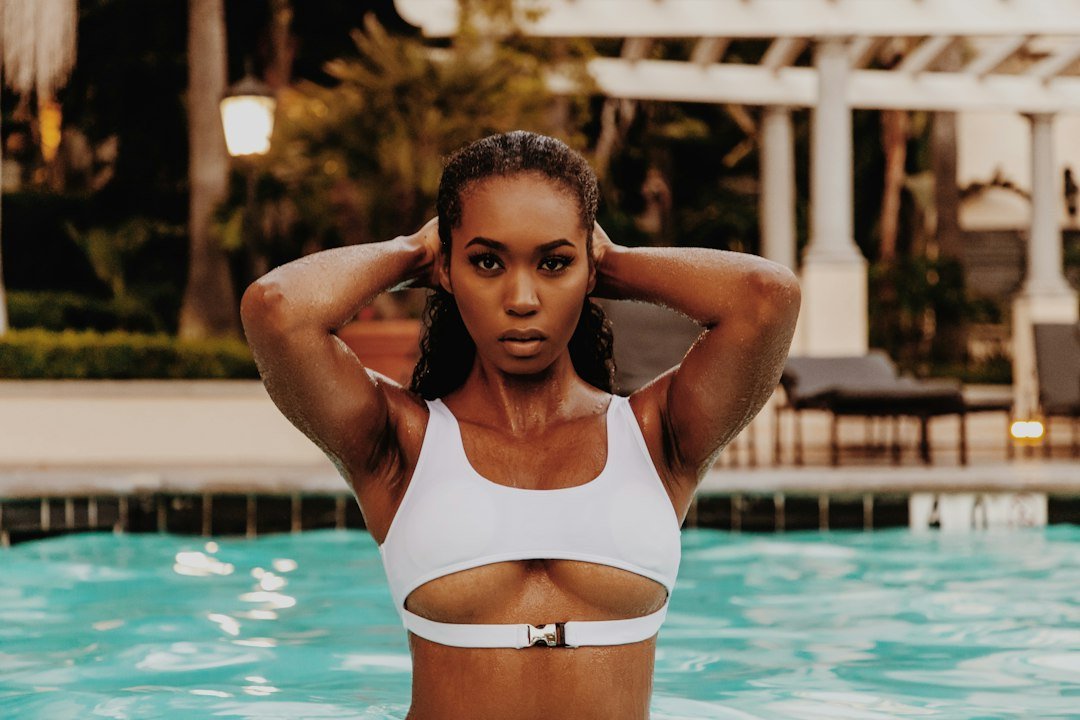
Caring for a High-Waisted Set So It Lasts
Because there’s more fabric and often more structure involved, a high-waisted bottom is more sensitive to heat and chemical damage than a small triangle cut — there’s simply more elastane exposed to chlorine and sun at once. Rinse it in cool fresh water immediately after swimming, before the chlorine or salt has a chance to sit in the fibers. Skip the washing machine and dryer entirely; both break down spandex fibers quickly through heat and friction. A gentle hand wash in cool water, laid flat to dry out of direct sun, will keep the waistband’s structure intact for far longer than tossing it in with a regular laundry load.
Rotate between two suits if you’re swimming regularly rather than wearing the same one daily. Elastane needs time to recover its shape between wears, and a suit that never gets that recovery time will stretch out at the waistband months before it otherwise would.
Shop High-Waisted Swim Bottoms (All Sizes) on Amazon →
The high-waisted bikini isn’t a trend you need to catch before it disappears again — it’s a cut that’s been in steady rotation for the better part of a century because it genuinely works for how people actually spend a day at the water. Get the rise right for your torso, pair it with a top that balances the proportion, and it’ll earn its spot as the suit you reach for without thinking twice.