Petite Beach Cover-Ups: 7 Best Picks
At 5’2″, I spent three summers buying the exact kaftans every swimwear blog recommended, then watching them swallow me whole in every beach photo. The problem was never the kaftan. It was that “one size drapes everyone the same” advice is written by people who are 5’7″ and have four extra inches of leg to spare. A cover-up cut for an average-height model lands at the knee on someone 5’4″ and under — and that single difference changes everything about how the outfit reads.
What Actually Works for a Petite Beach Cover-Up
The rule that matters most for a petite beach cover-up isn’t fabric or color. It’s where three points land on your body: the shoulder seam, the waist definition, and the hem. Move any one of those off its mark and the garment starts wearing you instead of the other way around. Brands that design specifically for women 5’4″ and under, like L’Animal Co, build cover-ups with shoulder seams set at the true shoulder point rather than dropped, and hemlines raised to hit mid-thigh instead of the knee — two adjustments most mainstream swimwear labels skip entirely because they grade down from a taller sample size.
That’s the gap this guide closes. Not “wear shorter things,” but the specific cuts, lengths, and styling moves that keep a cover-up from reading as borrowed clothing.

Where the Hem Needs to Land
Mid-thigh to just above the knee. That’s the window. A cover-up that falls past the knee stops reading as a cover-up and starts reading as a dress, and a dress on a 5’2″ frame shortens the visible leg line by several inches compared to the exact same body in a mid-thigh hem. It sounds like a small difference on a hanger. On a beach boardwalk next to taller friends, it’s the difference people notice.
A trick that costs nothing: if a cover-up you already own falls at the knee, tie a single knot at the hem. It shortens the length instantly without a tailor, and it adds a cinched detail at the hip that does double duty for shape.
7 Cover-Up Silhouettes Built for a Petite Frame
Not every style on a swimwear rack is working against you. These seven hold their shape on a shorter frame without needing alterations:
- Tunic or short shirtdress — hemmed at mid-thigh, button-front, with a defined waist so it doesn’t read as shapeless
- Mini wrap dress — the wrap closure creates the waistline a straight-cut tunic can’t
- Cropped kimono — hip-length or just past, worn open over a bikini so the vertical line of skin underneath keeps the eye traveling down
- Sarong or pareo — adjustable, tied high on the hip rather than low, which is the single biggest lever for proportion in a wrap garment
- Belted kaftan — the belt is non-negotiable; an unbelted kaftan is the single most common petite-frame mistake
- High-low hem dress — shorter in front, slightly longer in back, so you get coverage without the front-hem length working against your legs
- Maxi with a high slit — only works if the slit hits mid-thigh at minimum; anything lower and the maxi overwhelms a shorter frame
If you already own a petite swimwear set with a high-cut leg line, pair it with the belted kaftan or the cropped kimono from this list — both continue the leg line the swimsuit already started instead of cutting it off.


Fabric Choices That Hold Their Shape
Lightweight isn’t automatically better. A rayon cover-up feels right in the fitting room and then goes see-through the first time it gets splashed, which is a real problem when the whole point of the piece is coverage. Medium-weight polyester or nylon blends hold their shape wet and dry, and a cover-up with partial lining at the bust or hip solves the opacity problem without adding bulk. Cotton, linen, gauze, and voile are the better bet for dry-land styling — think café lunch after the beach, not the walk from towel to water.
Reinforced shoulder seams matter more on a petite cut too, since a smaller garment gets more wear relative to its size — it’s doing the same job as a size large with less fabric to distribute the stress.

Color, Print, and the One Vertical Line Trick
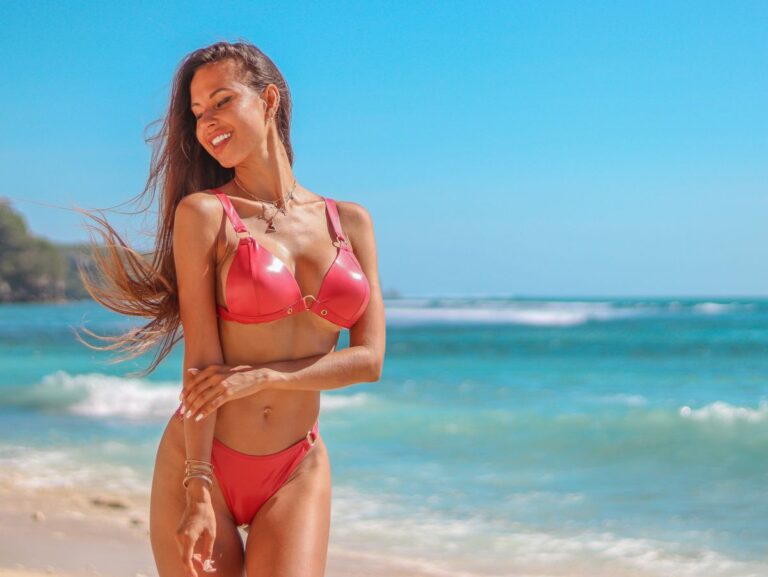
Vertical stripes get recommended so often they’ve become a cliché, but the reason behind them still holds: a stripe running top to bottom leads the eye the same direction, which reads as height. The more reliable version of the same trick is monochrome. Matching your cover-up to your swimsuit, or close to it, removes the horizontal break where one garment ends and the next begins — that break is what visually chops a shorter frame in half. A bright cover-up over a contrasting swimsuit photographs well on Instagram and does the opposite of what you want in person.
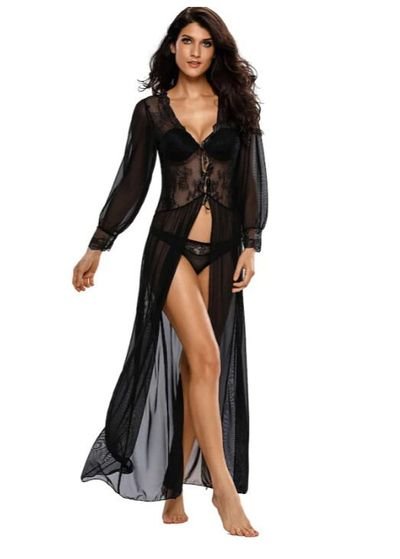
If you’d rather lean into a wrap piece than a dress, a styled sarong gives you the same monochrome continuity with more control over exactly where the color block starts and stops on your leg.

Styling Details: Belts, Shoes, and Sleeve Length
A belt at the natural waist is doing more work than any fabric choice in this guide. It creates the one waistline a straight-cut tunic or kaftan doesn’t have on its own, and it’s the fastest fix for a piece that’s otherwise shapeless on a shorter torso. Shoes matter more than people expect, too: ankle-strap sandals create a visual break right where you don’t want one, cutting the leg line at the ankle. Low-contrast sandals that match your skin tone or the hem color keep that line unbroken down to the sand.
Sleeves are the detail most petite buyers miss. A cover-up sized for an average torso usually has sleeves cut for longer arms, which bunch at the elbow on a shorter arm. If you can’t find a true petite cut, roll the sleeve once at the cuff — it reads as an intentional styling choice, not an ill fit.
Packing a Petite-Friendly Cover-Up Wardrobe for a Beach Trip
Two cover-ups cover almost every beach-trip scenario if you pick them right: one belted kaftan for sun protection and pool-to-lunch transitions, and one mini wrap dress for evenings when you want more structure than a swimsuit with a sarong thrown over it. Both pack flat, both work in the monochrome-to-your-swimsuit color logic above, and neither needs an iron. If you’re building the rest of the bag around them, the same proportion rules apply to how you drape a sarong for your height — high hip ties, not low ones.
Pack a wide-brim sun hat in a color that matches one of your two cover-ups rather than a third competing color. It keeps the top-to-bottom line going instead of adding a fourth visual break above the shoulders.


Watch: Petite Styling Tips in Action
Seeing the proportion rules on a moving body makes the hem-length and belting advice above click faster than any still photo can.
None of this requires a closet overhaul. Two correctly proportioned cover-ups will outperform six that were cut for someone four inches taller than you — the fit does more visual work than the quantity ever will.
Mistakes That Make a Petite Cover-Up Work Against You
The most common one isn’t length — it’s buying a cover-up a half-size up “for coverage.” Extra fabric on a smaller frame doesn’t add modesty, it adds bulk, and bulk is the one thing that fights every proportion trick in this guide. A cover-up should fit through the shoulder exactly where your shoulder actually is. If it’s sliding down toward your upper arm, it’s the wrong size regardless of what the label says.
Second mistake: treating every cover-up as one-size-fits-all because the tag says so. Check the model’s listed height against the garment length in actual inches, not the “mini” or “maxi” label on the product page — a mini on a 5’9″ model can land at the knee on someone 5’2″. Third, skipping the belt on a shapeless kaftan. An unbelted kaftan on a petite frame reads as a tent; the same kaftan belted at the natural waist reads as intentional. It’s a five-second fix most people skip because they assume the garment is supposed to hang loose.
Quick Answers
How long should a beach cover-up be for a petite woman? Mid-thigh to just above the knee. Past the knee, it starts reading as a dress and shortens your visible leg line.
What cover-up style is most flattering for a short frame? A belted kaftan or a mini wrap dress, both cinched at the natural waist, do the most consistent work across different body shapes.
Does color actually affect how tall a cover-up makes you look? Yes — a monochrome look from swimsuit to cover-up removes the horizontal break that visually cuts a shorter frame in half. Contrasting colors do the opposite.
Sources
- L’Animal Co — Designer Proportion Rules for Petite Cover-Ups — shoulder seam placement and mid-thigh hem specifications for women 5’4″ and under
- Sas For Short — Swimsuit Coverups That Look Great on Petites — fabric and silhouette recommendations for petite-height dressing