Wakeboarding Swimwear: 7 Best Picks
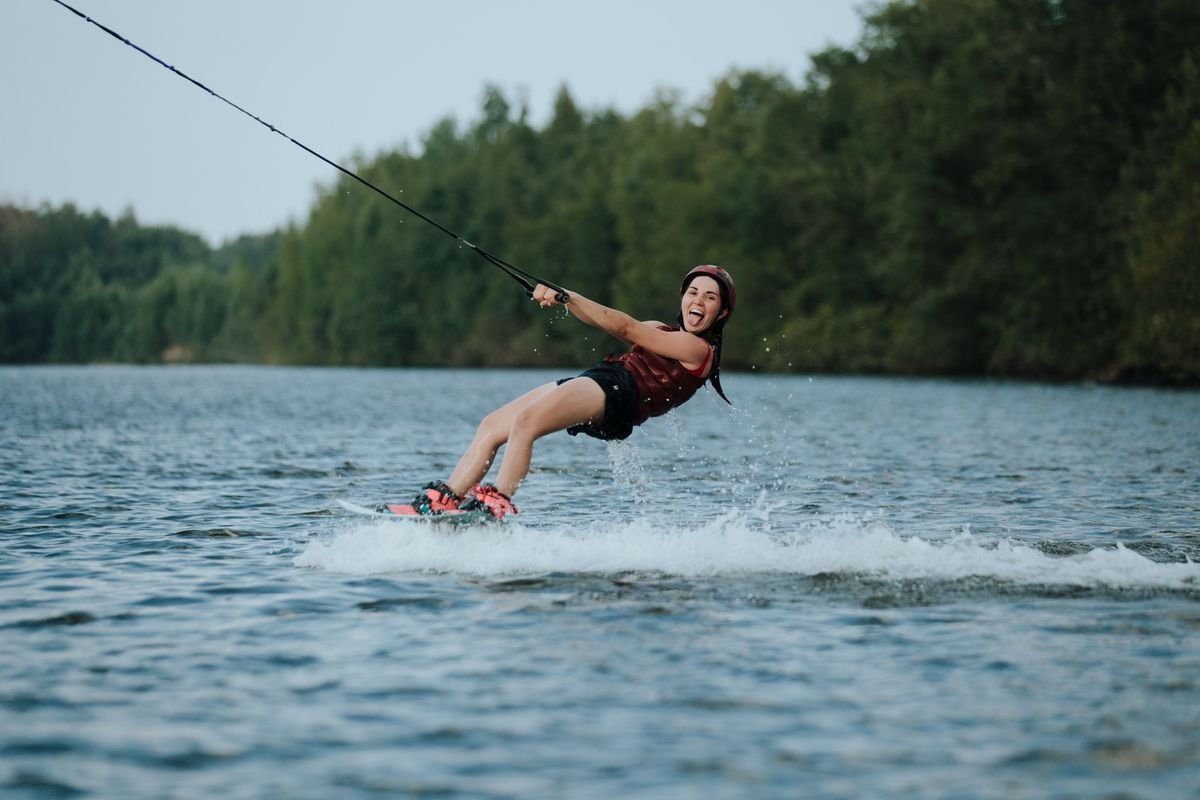
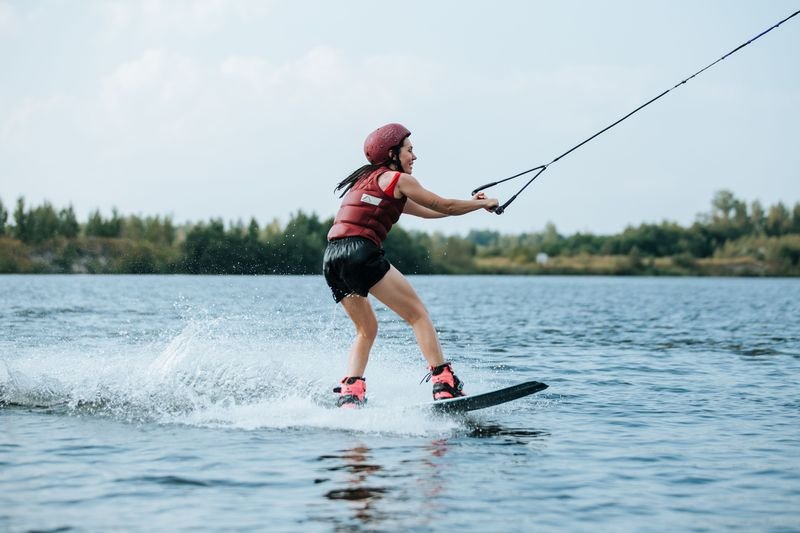
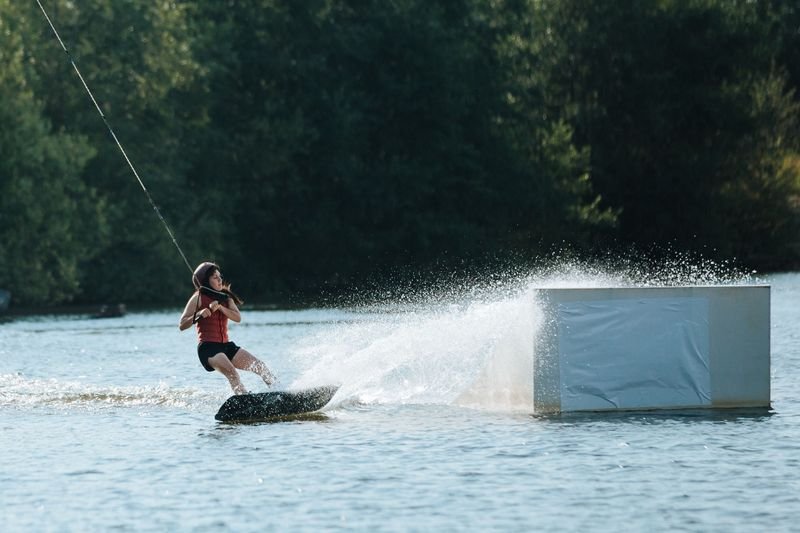
A wakeboarder being towed behind a boat hits the water at roughly the same speed the boat is pulling — typically 18 to 24 mph for an average rider — and a fall at that speed puts far more force on a swimsuit than anything a surfer or paddleboarder deals with. That’s not a wardrobe-malfunction joke, it’s physics: the drag on wet fabric at towing speed is enough to work a loose string tie free in a single hard cartwheel across the wake. Fabric and fit choices that work fine for lounging on a board don’t survive that kind of impact.
Wakeboarding Swimwear That Actually Survives a Fall
Most swimwear guides treat water sports as one category, but wakeboarding is its own problem. You’re not just wet and moving — you’re being pulled at a fixed speed by a rope, strapped into bindings you can’t kick off fast, and wearing a life vest or impact vest that needs to sit flush against your suit, not over folds of loose fabric. The picks below are built around that combination: fit that holds through a hard fall, a waistband that doesn’t fight with vest straps, and fabric that doesn’t trap water weight when you’re climbing back onto the platform for the tenth time.
1. One-Piece Swimsuit for High-Speed Falls
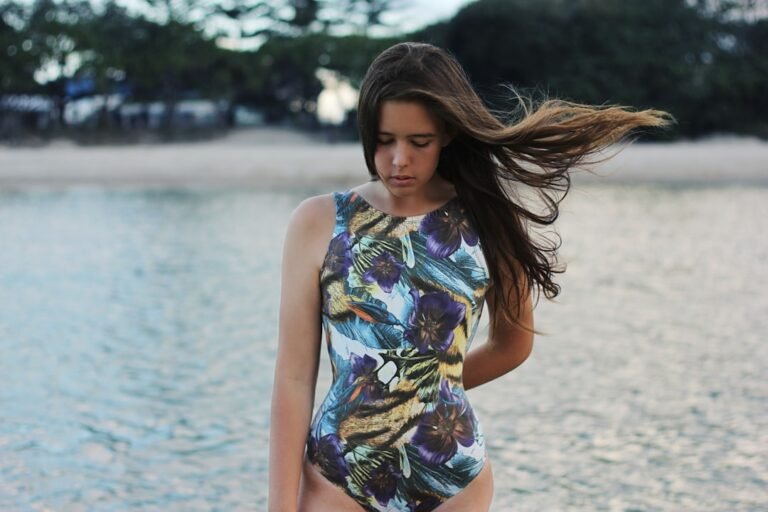
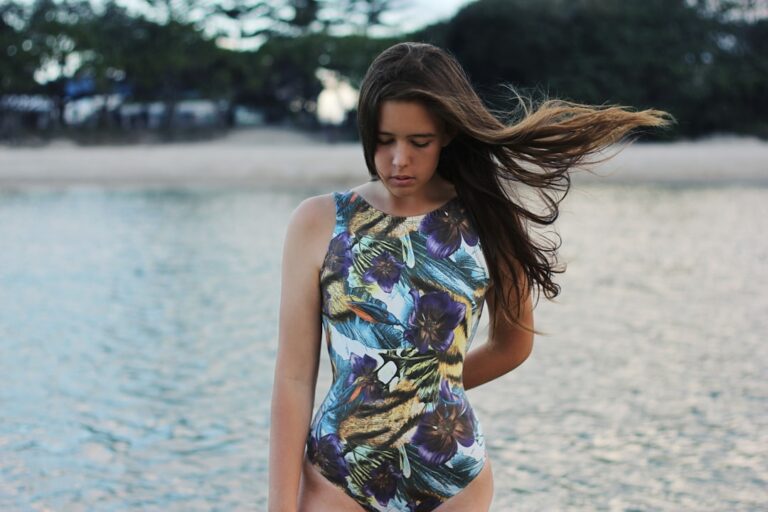
If you’re new to wakeboarding or riding at full boat speed, a one-piece is the safer default. There’s no tie to work loose and no gap for water pressure to find during a fall, which matters more here than in almost any other water sport — a face-first tumble at 20 mph generates enough drag to pull a loosely tied bikini bottom halfway down a leg. A one-piece in a compression-weight nylon-spandex blend also sits flatter under an impact vest, so the vest straps grip fabric instead of sliding on it. It’s also one less adjustment to make between runs, since a one-piece doesn’t shift the way a two-piece can while you’re being pulled back up onto the board after every fall.
2. Crinkle-Ribbed Two-Piece for Riders Who Want a Bikini
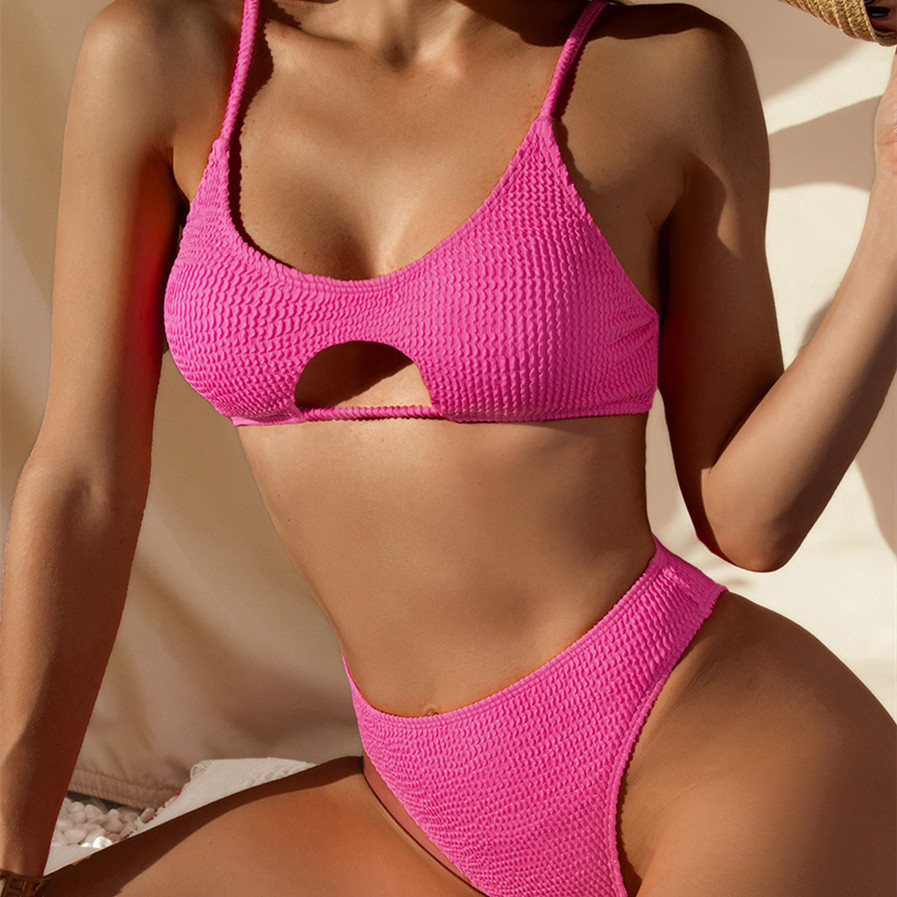
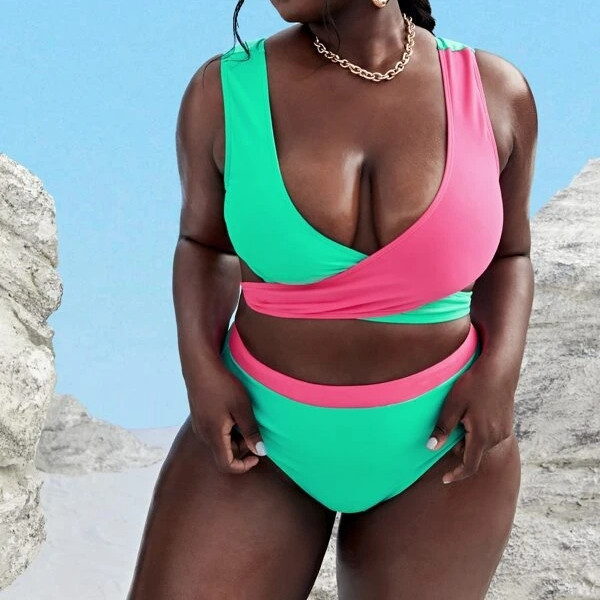
If you’re set on a two-piece, look for crinkle-ribbed or textured fabric over smooth nylon. The texture grips skin slightly more than a flat weave, which cuts down on the fabric sliding during the exact moment you’re bracing for impact. Combine it with a wide waistband bottom and a top that closes with a hook-and-eye or clip, not ties — a tie that’s wet and under tension from a fall loosens faster than most riders expect.

3. Racerback or Cross-Back Top for Rope Tension
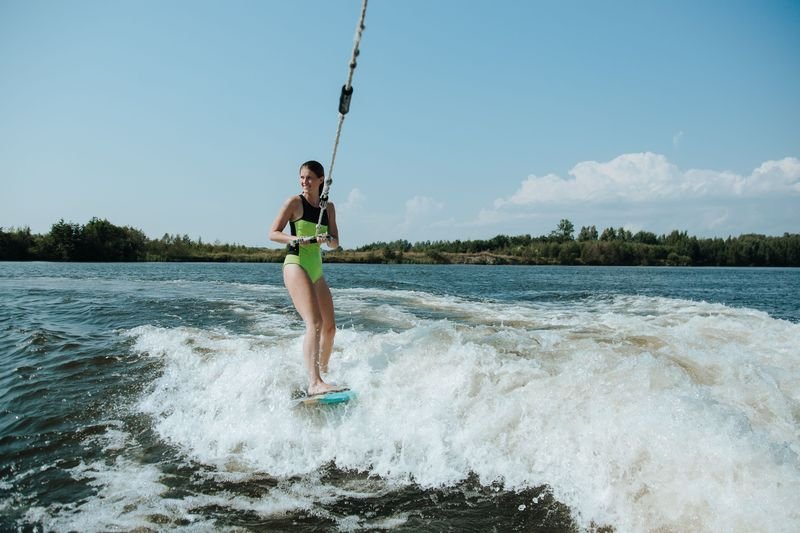
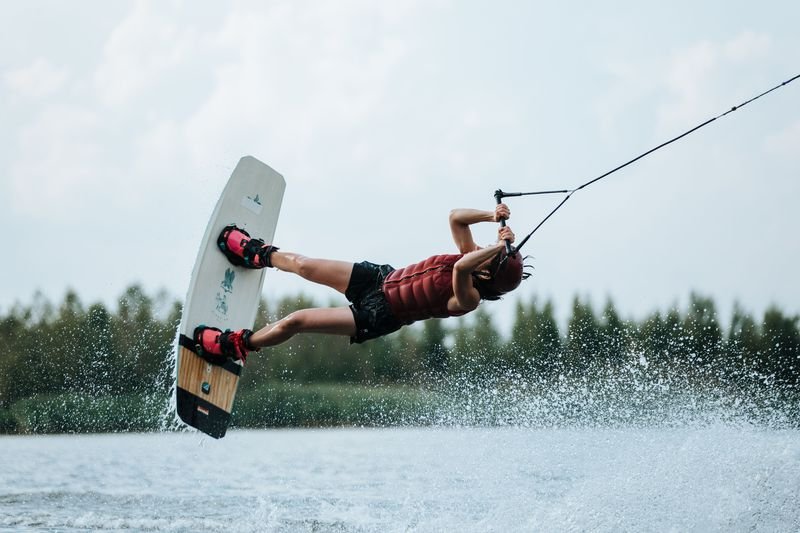
Your arms spend the entire ride either locked straight, holding the handle low near your hips, or bracing against rope tension — a thin-strap halter top shifts every time your shoulders move through that range. A racerback or cross-back design distributes the pull across your whole upper back instead of two thin strips at the shoulder, and it stays in place whether you’re crouched into a starting position or extended through a jump. Thin spaghetti straps are the first thing to slip down a shoulder when a rider gets pulled forward out of the water at the start of a run, which is exactly the moment you don’t want to be fixing a strap instead of finding your balance.
4. High-Waisted Bottoms for Impact Vest Fit
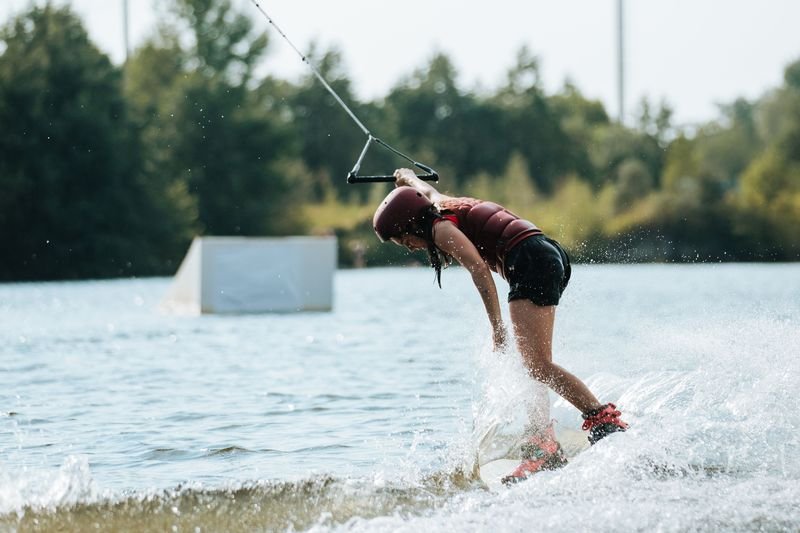
Most wakeboarders wear a Coast Guard-approved life vest or a dedicated impact vest, and that vest needs to sit snug against the bottom of your ribs without riding up when you hit the water. A low-rise bottom leaves a gap of bare skin between the suit and the vest hem — exactly where water forces its way in during a fall and exactly where a vest tends to ride up over slick skin. A high-waisted bottom closes that gap and gives the vest something to grip.
5. Back-Zip or Clip Closures Over String Ties
A string tie is the single weakest point on any piece of wakeboarding swimwear, and it’s worth repeating because it’s the most common reason riders lose part of a suit mid-session. Hook-and-eye closures, clip backs, and zip-front styles hold under the kind of sudden tension a hard fall produces, where a bow simply doesn’t. If a suit you already own only comes in a tie-back style, at minimum double-knot it and tuck the ends — it’s not as reliable as a hardware closure, but it’s better than a single loose bow.
6. Boyshort or Bike-Short Bottom for Ramp Tricks
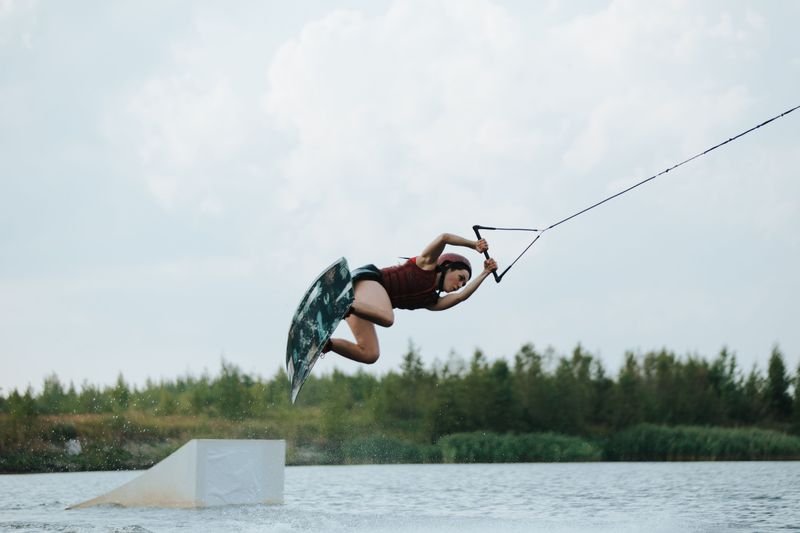
Cable parks and advanced riders working kickers and ramps need a bottom that stays put through inverted positions, not just forward falls. A boyshort or bike-short cut covers more of the hip and upper thigh, which matters when a trick attempt ends with you airborne and the wake park’s photo boat catching the angle. It also means one less thing to think about while you’re focused on landing clean instead of adjusting your suit mid-air.
7. Rash Guard Top for Rope Burn and Sun
A short or long-sleeve rash guard worn over or instead of a bikini top solves two problems at once: it protects your torso and underarms from rope burn if the handle slips through your grip, and it covers hours of direct sun exposure on a lake with almost no shade. Pick a snug, compression-fit rash guard rather than a loose one — loose fabric catches wind and water resistance the same way a baggy shirt does, which slows you down and tires your arms faster.
What to Skip
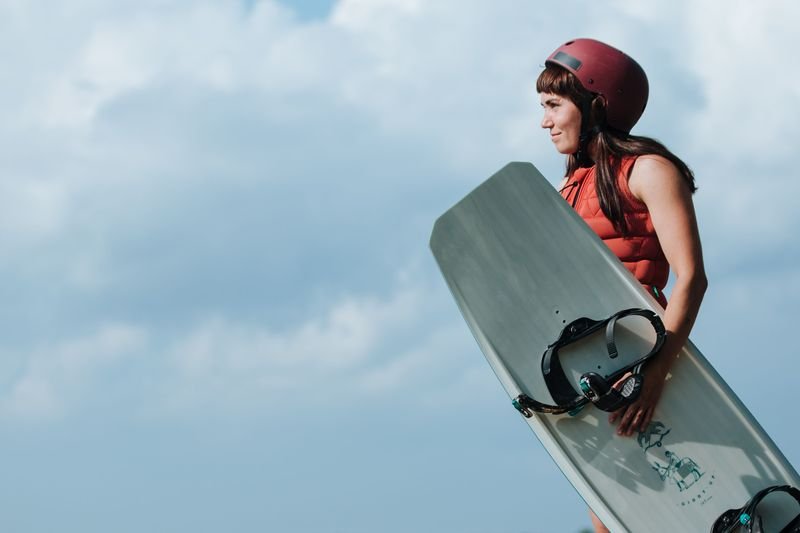
Skip anything described as “minimal coverage” or “string bikini” for actual riding — save those for the dock and the sandbar once the boat is anchored. Skip underwire tops too; the wire digs in under a tight vest and doesn’t flex the way foam-padded or wireless athletic cups do. And skip suits with heavy metal hardware like large rings or buckles near the chest, since a hard fall can drive that hardware into your sternum under a snug vest.
Fabric weight matters more than most riders expect, too. A suit made from thick cotton-blend material soaks up water and gets noticeably heavier within a few runs, which drags on your arms during every pull back up and slows you down climbing onto the platform. Stick to swim-specific nylon or polyester blends that shed water fast, and avoid anything with cotton lining even if the outer layer looks athletic.
Getting Comfortable on the Water First
Suit choice only matters once you’re actually riding, and the biggest wins for beginners come from technique, not gear. Keeping the handle low near your hips, bending your knees instead of your waist, and using a shorter rope all reduce how hard and how often you fall in the first place — which is also the simplest way to protect whatever you’re wearing. A shorter rope puts you closer to the boat’s wake, which sounds rougher but actually gives beginners a smaller, more predictable wake to ride instead of the bigger swells further back.
None of these habits replace a secure suit, but they cut down on how often you’re testing it. Riders who spend their first few sessions falling every thirty seconds put far more stress on a swimsuit’s closures and seams than someone who’s gotten comfortable enough to string together a full pass across the lake.
Pairing It With the Rest of Your Boat Day
Most wakeboarding sessions are one part of a longer day on the water, not the whole day. If you’re splitting time between riding and just hanging out on deck, our boating swimwear guide covers what holds up through wind and spray once the boat slows down. Riders who spend part of the day in current or chop instead of a flat lake wake should also check our whitewater rafting swimwear picks, since the impact-vest fit concerns overlap almost exactly. And if the compression-fit, stays-put aspect of this list appeals to you beyond the boat, our water aerobics swimwear guide has more on suits built to move with you instead of against you.
None of this is about looking a certain way on a wake park Instagram page. It’s about not spending your ride worrying whether your suit is still fully on, which is a distraction you don’t want when you’re also managing rope tension, board angle, and a boat pulling you forward at 20 mph. Get the fit right once and the rest of the session is just about riding.
Sources
- S2AS Wakeboard Impact Vest Buying Guide — fit guidance for impact vests worn over swimwear while riding.
- Wetsuit Wearhouse: What to Wear Wakeboarding — one-piece vs. two-piece recommendations for high-speed water sports.
- Wikipedia: Wakeboarding — background on boat speeds, towing, and equipment used in the sport.