How to Turn a Sarong Into a Dress, Skirt, or Top
One length of printed cotton, tied five different ways, can replace half a beach bag if you know which fold turns it into which garment. Most people buy a sarong, drape it over their shoulders on the walk to the pool, and never touch it again until the next vacation. But the same rectangle of fabric that covers a swimsuit on the sand can become a halter dress at sunset, a tailored-looking skirt for lunch, or an off-shoulder top for a boat afternoon. The difference isn’t the sarong. It’s the technique.
Why One Piece of Fabric Becomes Five Different Garments
A sarong works because it’s unstructured. Without darts, zippers, or fixed seams, the fabric can move around your body in ways a sewn garment can’t, which means the same two yards of material can sit as a dress, drop as a skirt, or wrap as a top depending on where you tuck, knot, or tie it. The trade-off is that unstructured fabric needs your hands to do the work a seamstress usually does. Every fold is a design decision: where the knot sits determines where the stress point is, and where the stress point is determines whether the garment holds its shape or slips.
This matters more on a body that curves in and out than on one that’s straight up and down, because every knot and tuck has to account for the places fabric wants to gap or bunch. That’s a feature, not a flaw. A wrap that molds to your actual shape, rather than a pre-cut garment built for an average that doesn’t exist, tends to sit better on more bodies than the mass-produced version ever could.
The Halter Dress
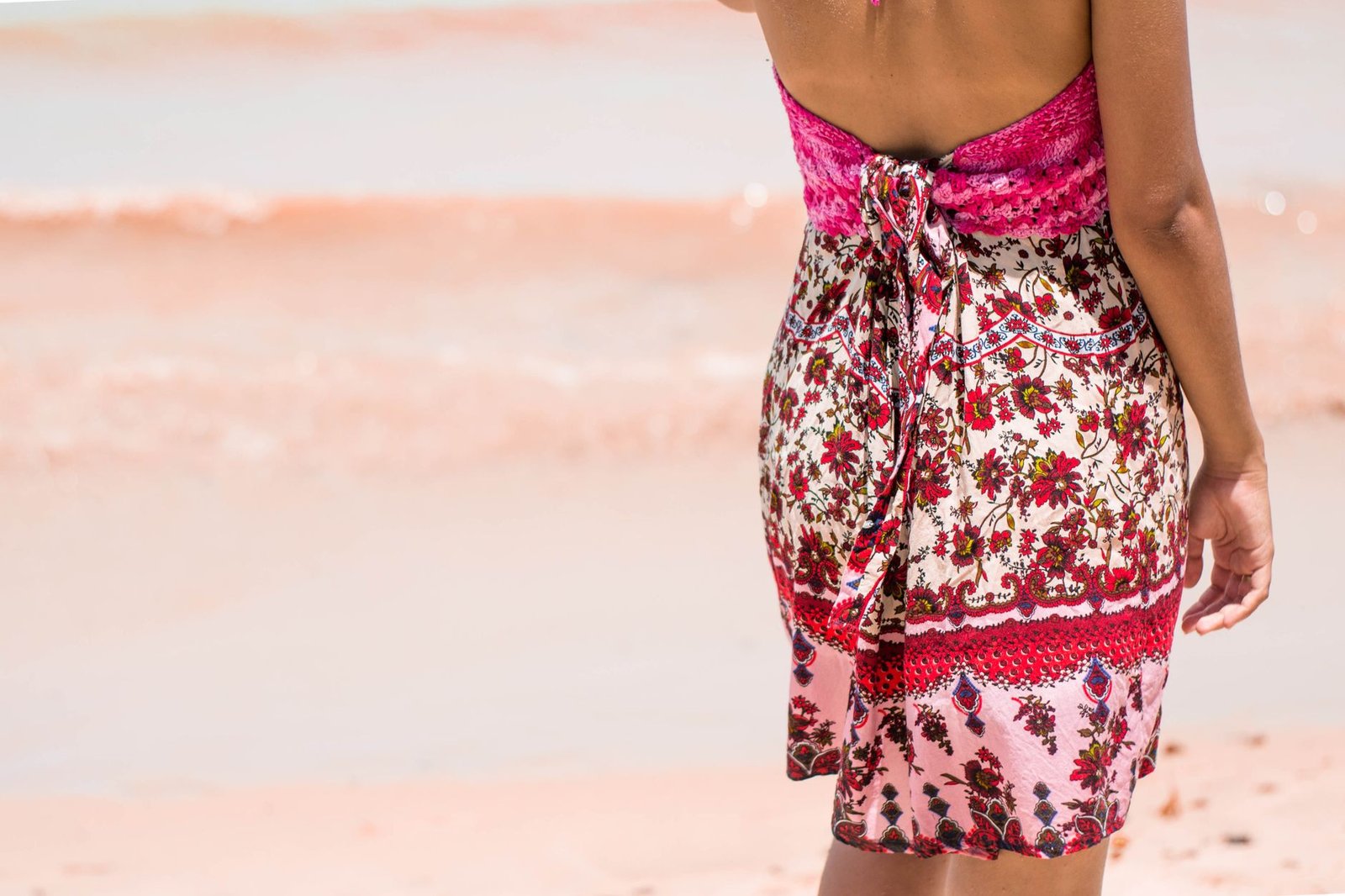
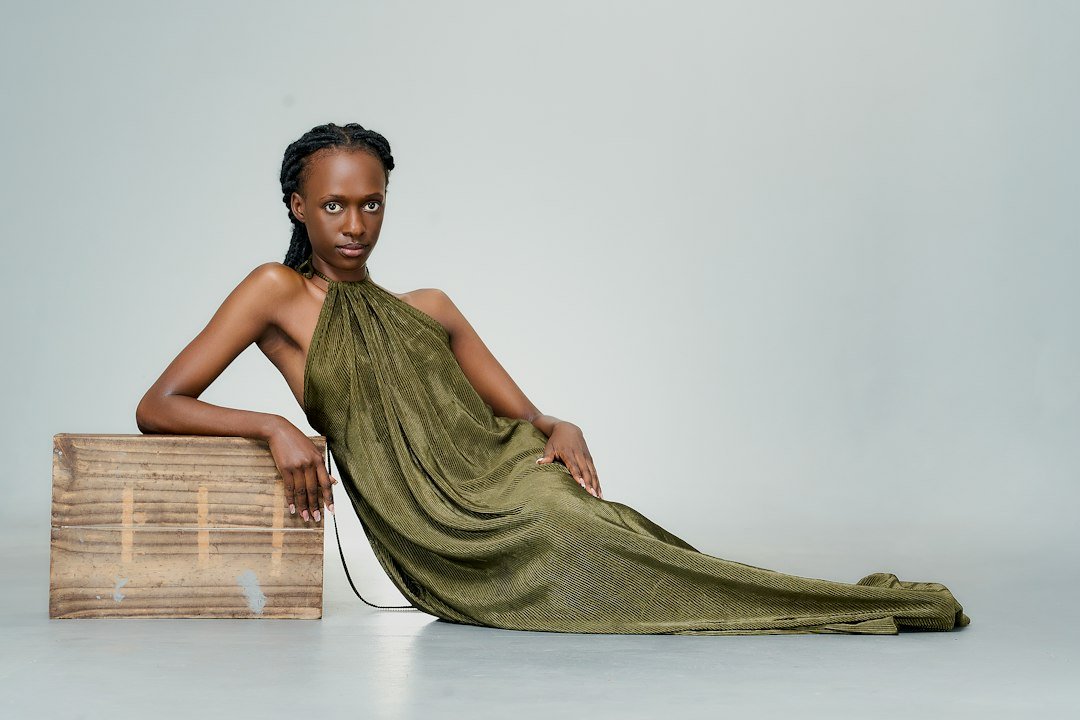
This is the transformation most people never attempt because it looks harder than it is. Hold the long edge of the sarong horizontally behind your back, at bra-band height, with even amounts of fabric on each side. Bring both ends up and over your shoulders, then cross them behind your neck and tie in a secure double knot. The fabric should fall in a straight column from the knot down, with enough length pooling at the hem that you can adjust the drop to your height before you tie off.
The failure point here is almost always the knot loosening under the weight of the fabric, so tie it tighter than feels necessary and test it with your arms raised before you leave the house. A sarong with some weight to it, like a cotton-rayon blend rather than a slippery synthetic, holds a halter knot far longer than a lightweight chiffon does.
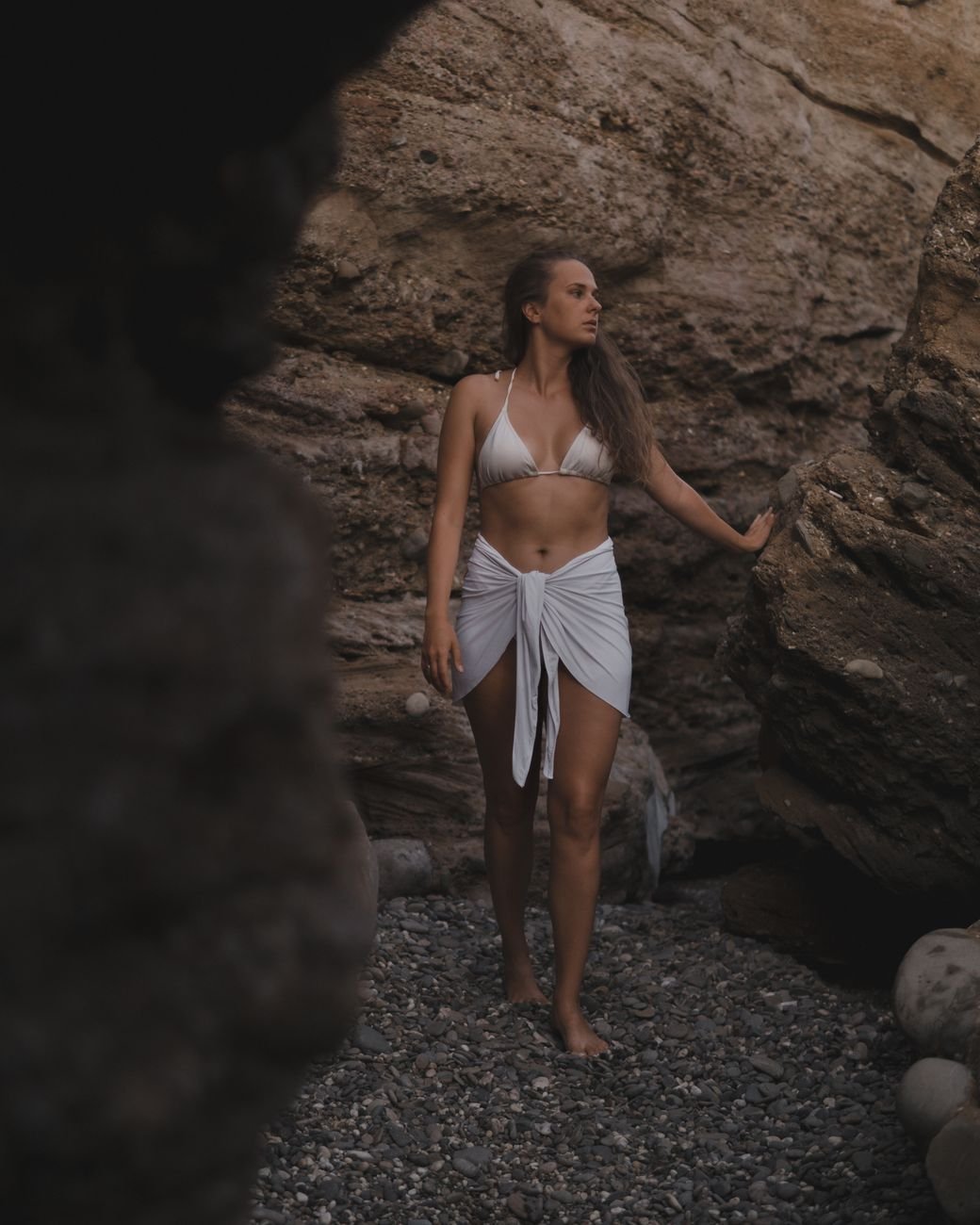
The Strapless Tube Dress
For a cleaner, more minimal silhouette than the halter, skip the shoulder ties entirely. Wrap the long edge around your torso at chest height, overlap the ends in front by several inches, and fold the top edge over once or twice to create a built-in band that grips without a knot. Secure the overlap with a small tuck rather than a visible tie, so the front stays smooth.
This style depends entirely on friction, so it works best with fabric that has a bit of texture. It’s also the version most likely to need a security assist for movement beyond standing and walking, which is where a set of fashion tape or small fabric clips earns its place in a beach bag.

The Wrap Skirt for Errands and Dinner
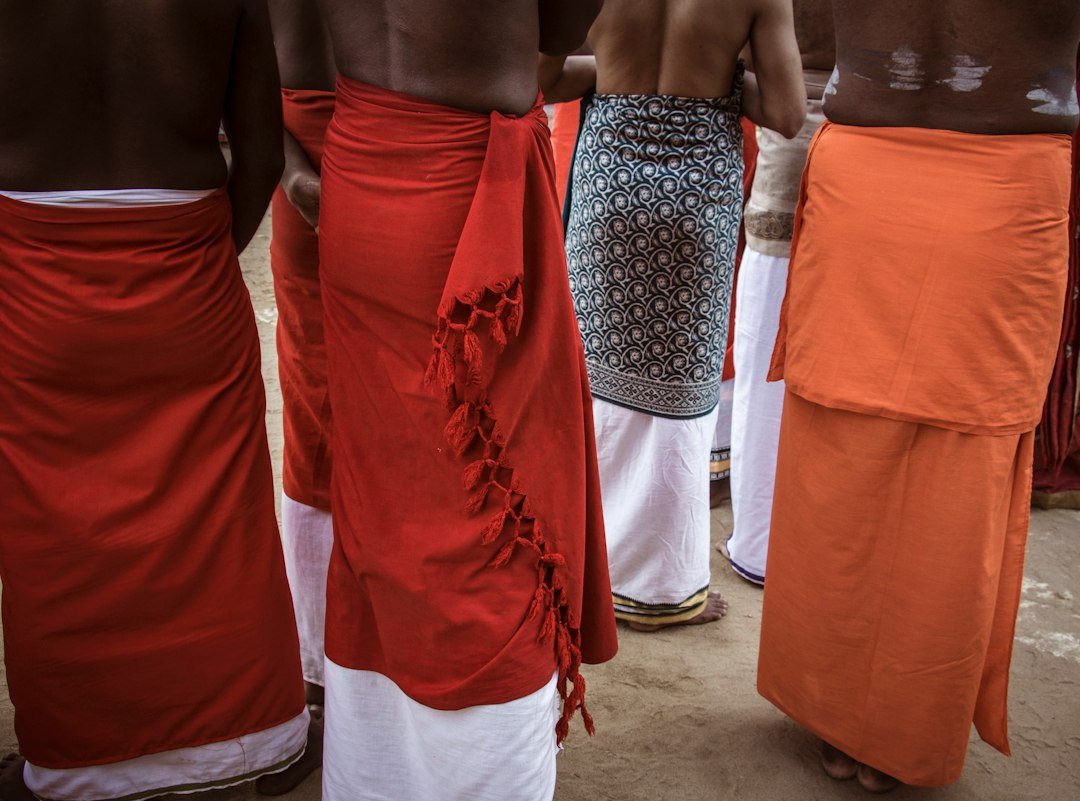
Fold the sarong in half lengthwise so you’re working with a narrower, longer piece, then wrap it around your waist like a towel, overlapping the front by a hand’s width. Fold the top edge down and tuck it into itself at the waistband, or knot it low on one hip if you want a bit of movement in the fabric. The result reads as a skirt rather than a beach cover-up, especially with the hem falling past the knee.
A wrap skirt is the version most likely to actually leave the beach with you, because it looks intentional over a t-shirt or a fitted tank. Keeping a couple of coordinating sarongs in different lengths means you can match the drop to whatever you’re doing after the water, from a market walk to a sunset dinner.
Shop Fabric Clips for Wrap Styling on Amazon →
The Off-Shoulder Top
Fold the sarong lengthwise into a band roughly the width you want covering your chest, then wrap it around your torso just below the collarbone, letting both ends come around to the front. Cross the ends and tuck them under the top edge of the wrap rather than knotting them, which keeps the line smooth across the shoulders. Pair it with high-waisted shorts or a maxi skirt and the beach fabric stops reading as a cover-up entirely.
This is the least secure of the styles here, since there’s no knot holding tension, only tucked fabric and gravity. It’s built for sitting at a beach bar or walking short distances, not for anything more active, and a light fabric clip at the side seam adds real staying power without showing.
The Maxi Skirt With a Side Slit
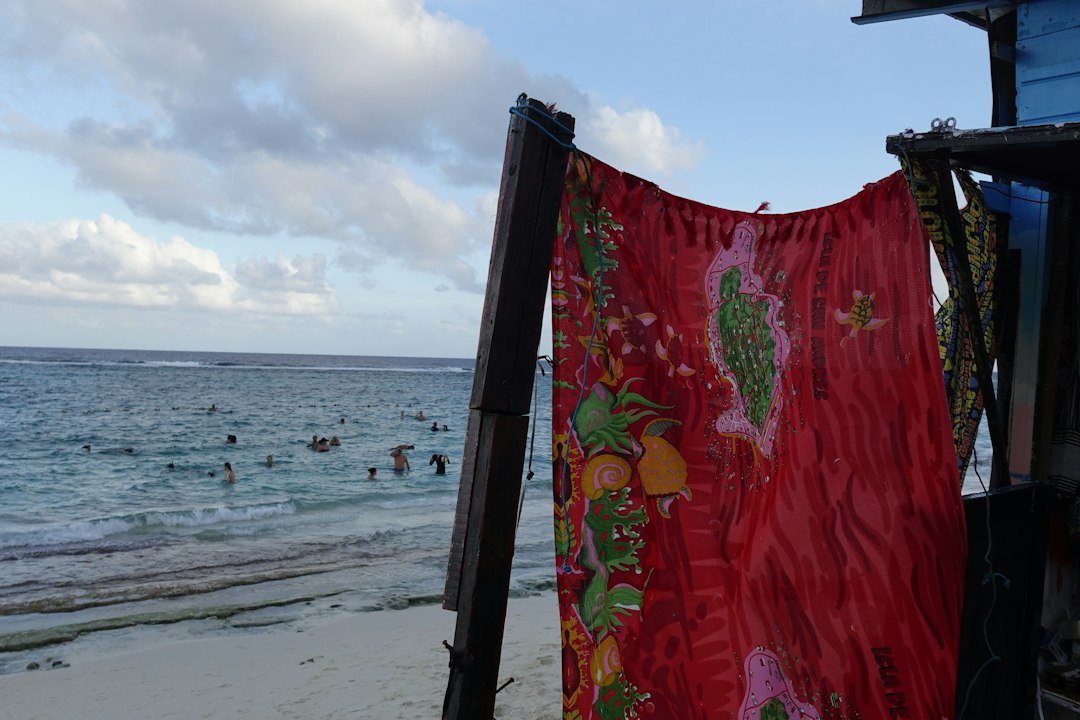
Wrap the full length of the sarong around your hips at natural waist height, letting the excess fabric fall to one side rather than distributing it evenly. Knot the corners at that hip, high enough that the opposite side of the skirt stays closed to the floor while the knotted side opens into a slit with every step. This is the version that photographs best in motion, since the fabric moves rather than hanging flat.
Because the slit is a byproduct of where you tie rather than a cut in the fabric, you control exactly how much leg shows just by moving the knot up or down before you tie it off.
Picking a Sarong That Actually Transforms Well
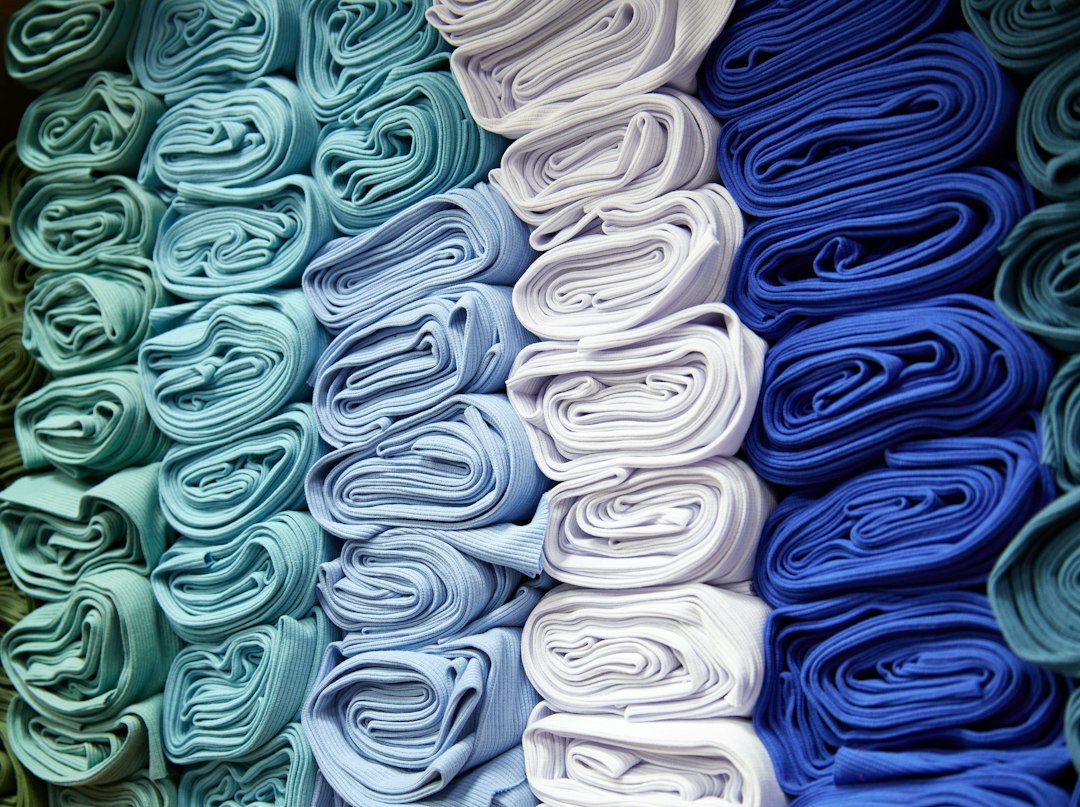
Not every sarong holds these five shapes equally well. A thin, high-shine polyester slides against skin and loosens within an hour, which is fine for a beach chair but frustrating for a dress you’re wearing to dinner. A cotton-rayon or cotton-viscose blend has enough grip to hold a knot and enough drape to fall like a real garment rather than a bedsheet. Size matters just as much as fabric: a rectangle under 60 inches long struggles to become a full-length skirt or a halter dress on anyone above average height, while anything past 70 inches gives you the range to try all five styles on most body types.
Print placement is worth checking before you buy, too. A large-scale pattern that looks intentional draped over a shoulder can end up off-center and strange once the fabric is folded into a narrower skirt or top, so a busy border print or an allover pattern without a strong focal motif tends to translate better across every style than a print built around one central image.
Shop Cotton-Rayon Sarong Wraps on Amazon →
Quick Fixes When a Style Won’t Hold
The most common complaint isn’t the knot slipping loose, it’s the fabric sliding against sunscreen or lotion on the skin underneath. A thin layer of setting powder or talc across the shoulders and chest before you wrap gives the fabric something to grip. Static cling from air conditioning is the second most common issue, especially with any synthetic blend, and a small anti-static spray or a fabric softener sheet tucked in your bag solves it in seconds.
If a style keeps bunching at one specific point, usually under the bust on the halter or tube version, the fix is almost always tension rather than a tighter knot. Pull the fabric flat and smooth from the sides toward the center before you tie, rather than tying first and adjusting after.
Shop Fashion Tape for Wrap Dresses on Amazon →
Wearing It With Confidence, Whatever Your Shape
None of these five transformations require a specific body type to work. A halter dress sits differently on broader shoulders than narrow ones, a wrap skirt drapes differently over curvier hips than straight ones, and that’s the point. The fabric moves to fit you, rather than asking you to fit a pattern someone else cut for a different body. The only real skill involved is practice: try each style at home, in front of a mirror, before you need it to work on vacation, so the first time you tie a halter dress isn’t five minutes before dinner reservations.
The sarong that’s been sitting folded in your beach bag is doing a fraction of its job if it only ever comes out as a cover-up. Learn two or three of these wraps well and it becomes the one piece of fabric that replaces an entire section of your suitcase.
Packing Two Sarongs Instead of One
If suitcase space allows, a second sarong in a different weight solves the biggest limitation of relying on just one. A lightweight cotton voile breathes better for daytime wear over a swimsuit, while a heavier cotton-rayon blend holds a halter knot or a tube dress shape through a full evening out. Packing both means you are never stuck choosing between comfort on the sand and structure at dinner, and the pair together still weighs and packs smaller than a single structured dress.