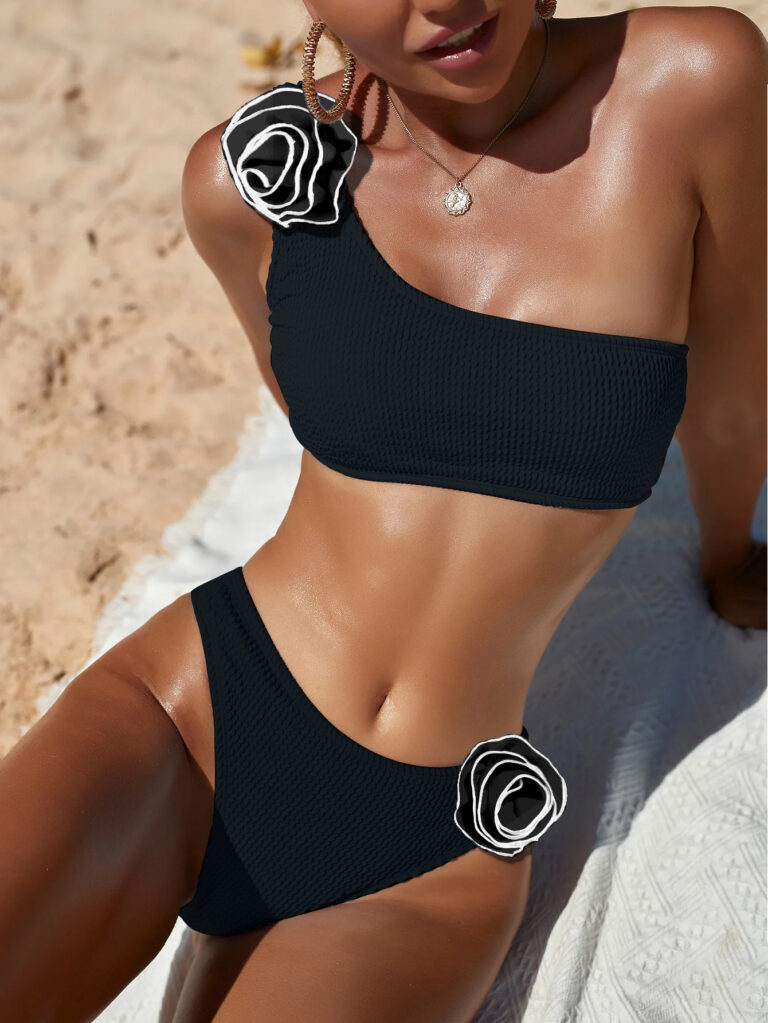

Surfing Swimwear: 7 Best Picks
A $38 triangle bikini from a mall rack came off a friend of mine during her third wipeout at Chun’s Reef last spring — not a dramatic loss, just a quiet one, drifting away while she duck-dove after it. She surfs in a high-waisted set with a sewn-in drawstring now. That’s the real dividing line in surf swimwear: not style, not print, but whether the suit was built to survive someone else’s wave hitting you while you’re upside down.
Surfing Swimwear That Survives Paddling, Duck Dives, and Wipeouts
Most swimwear buying guides treat “water sport” as one category, and that’s where they go wrong. Lounging in the shallows and getting rolled by a four-foot wave put completely different stress on a suit. Surfing swimwear has to stay put through three specific motions: the paddle-out (lying flat, arms cycling, chest pressed against the board), the pop-up (a fast twist from prone to standing), and the wipeout (getting tumbled underwater with no control over which way the suit gets pulled). A suit that passes none of those tests is a sand suit, not a surf suit.
That’s also why surfers default to one-piece or long-sleeve rash guard sets far more often than bikinis — not because bikinis can’t work, but because the margin for a wardrobe malfunction is so much higher once you’re committed to a wave.
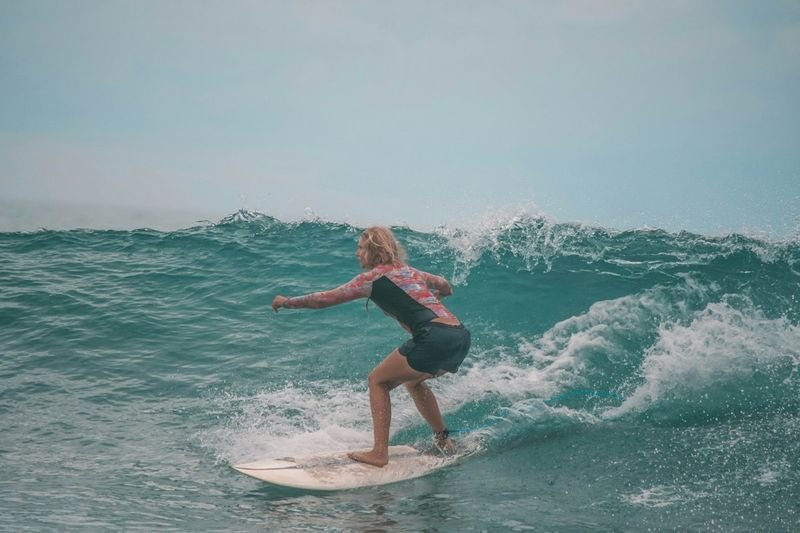
The Fit Test: How to Tell If a Suit Will Actually Stay On
You don’t need to paddle out to know if a suit will hold. Do this before you buy, or before you ever wear a new suit past the shorebreak: jump in place, bend forward at the waist and touch your toes, then reach both arms straight overhead. Watch for anything that shifts, rides up, or gaps. If a bottom slides down during the toe-touch or a top rotates during the overhead reach, it’s not built for surfing — it just hasn’t failed yet.
Tops get a second test specific to surfing: the duck dive. Pull your shoulders down and forward, like you’re pushing a board underwater nose-first. A string-tie halter will often loosen here in a way a scoop-neck or racerback won’t. That single difference is why most dedicated surf tops skip the halter tie entirely.
Bottoms should sit snug across the hip bone without digging in, with a fixed or drawcord waistband rather than thin side ties. Side-tie bottoms look fine standing on sand and come untied almost every time in whitewash — ask anyone who’s had to swim back for a bottom instead of a board.
One-Piece, Bikini, or Surf Suit: Choosing by How Active You’ll Be
The honest answer is that your swimwear should match your session, not your Instagram feed. A one-piece with a low back and high-cut leg gives zero points of failure — nothing to lose, nothing to readjust mid-wave — and it’s the default pick for beginners who are still falling often and unpredictably.
A high-waisted bikini with a fixed-tie or drawcord bottom works for intermediate surfers who’ve already dialed in their pop-up and spend less time getting rolled. Pair it with a scoop-neck or racerback top, never a triangle top with thin string ties, since those are the first thing to slip during a hard wipeout.
A long-sleeve surf suit or rash guard set is the move for longer sessions, fair skin, or reef breaks where board rash and sun exposure matter more than tan lines. Surfers who are out for two or three hours straight almost universally end up in long sleeves, not because it looks more technical, but because nobody wants sunburned shoulders on day three of a surf trip.
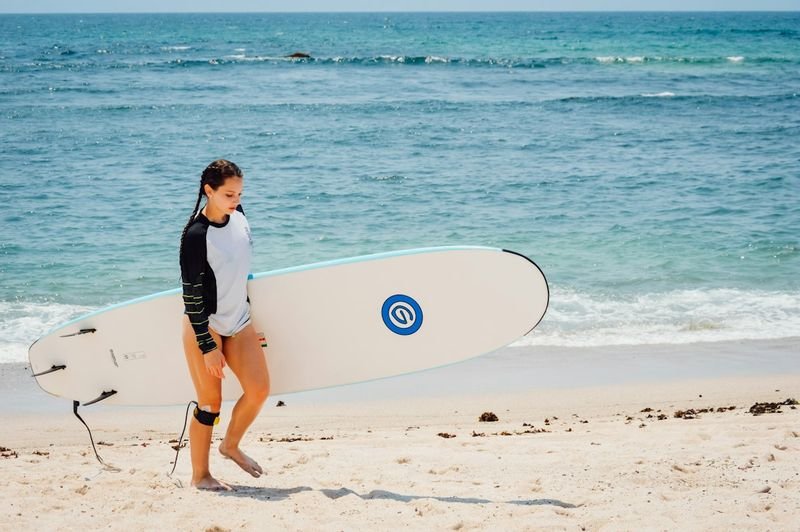

7 Best Surfing Swimwear Picks for 2026
These are the seven styles that consistently hold up in the water, ranked by what they’re actually built to handle rather than how they photograph on sand.
- High-waisted bikini with a drawcord bottom — the most secure bikini-style option; the drawcord cinches tighter as the fabric stretches when wet, instead of loosening like elastic-only waistbands.
- Scoop-neck or racerback bikini top — distributes pressure across both shoulders instead of a single neck tie, so it survives the duck-dive test described above.
- Long-sleeve rash guard and bottom set — the default for reef breaks, fair skin, or sessions longer than an hour; UPF 50+ fabric replaces sunscreen reapplication entirely on the torso and arms.
- High-cut one-piece with a low back — zero failure points, full range of motion for paddling, and the safest option for anyone still learning to pop up.
- Short-sleeve sporty two-piece with wide bands — a middle ground between coverage and mobility, good for summer sessions where full sleeves run too warm.
- Removable-pad bikini top — padding that stays put without a built-in shelf bra means less bulk and less shifting during repeated pop-ups.
- Boardshort-style bottom paired with a fitted rash guard top — the most coverage-forward combination, popular for longer trips where chafing from board wax is a bigger concern than sun exposure alone.

Fabric and Construction: What Actually Holds Up to Saltwater and Wax
Look for nylon-spandex or polyester-spandex blends over pure polyester — the spandex content is what keeps the suit from stretching out permanently after repeated soaking and drying in saltwater. A blend with at least 18-20% spandex holds its shape through a full week of daily sessions; cheaper polyester-only suits start sagging by day three.
Reinforced seams matter more here than on a suit meant for the pool or the sand. Flatlock or bonded seams resist the chafing that happens when a suit rubs against a waxed board for an hour straight, where a standard overlock seam will fray. UPF 50+ fabric isn’t a marketing add-on either — it blocks roughly 98% of UV radiation, compared to about 50% from an untreated cotton-blend tee, which matters when you’re face-down on a board reflecting sun off the water for most of a session.
Darker colors and busy prints also do quiet, practical work: board wax transfers onto swimwear constantly, and a solid white or pastel suit shows every smear within a session or two.


Common Mistakes That Get Suits Ripped Off in the Surf
Side-tie bottoms are the single most common mistake, and they’re everywhere in regular swimwear because they look good and fit a range of body types easily on land. In the water, a hard wipeout pulls on the knot from an angle it was never tied to resist, and it comes loose. If you already own side-tie bottoms you love, at minimum double-knot them and tuck the ends, but a fixed or drawcord waistband removes the risk entirely.
Underwired or heavily padded tops with a single halter tie are the second mistake. The wire adds weight that works against you in a wipeout, and the single tie point means the whole top can rotate off one shoulder when you’re tumbled. A wired bikini top belongs on the beach after the session, not during it.
Buying a suit a half-size too big “for comfort” backfires too — swimwear fabric stretches when wet, so a suit that’s slightly loose dry becomes genuinely loose once it’s soaked through from paddling.
Surfing vs. Other Water Sports: What Changes
Compared to boating swimwear, surfing demands far more range of motion through the shoulders and hips, since you’re constantly paddling, popping up, and crouching rather than standing on a stable deck. Compared to swimwear built for whitewater rafting, surfing involves repeated full submersion rather than intermittent splash exposure, which is why fixed waistbands matter so much more here than in rafting gear. If you’re deciding between a dedicated rash guard and a long-sleeve suit built specifically for surfing, our women’s rash guard guide breaks down the fit differences in more detail, and our guide to UPF swimwear explains exactly how that sun protection rating works.


Watch: Choosing a Surf Bathing Suit That Stays On
This walkthrough covers the same fit priorities from a surf instructor’s perspective, including what to check before you ever paddle out.

What to Pack Alongside Your Suit
A leash cuff that matches your suit’s ankle coverage sounds minor until a reef leash rubs a bare ankle raw after a two-hour session. Reef-safe sunscreen matters even under UPF fabric, since your face, hands, and feet are almost always left exposed. Pack a change of dry swimwear for a second session the same day — a suit that’s still damp from the morning never sits right on the second paddle-out, and the salt residue left behind actually speeds up fabric breakdown over a season.

Frequently Asked Questions
Can I surf in a regular bikini?
You can, but a standard triangle-top-and-side-tie bikini is the style most likely to shift or come off during a wipeout. If you’re surfing small, gentle waves and staying close to shore, it’s a lower-risk situation; for anything with real whitewash, a high-waisted drawcord bottom and scoop-neck top perform far better.
Do I need a rash guard if my bikini already has UPF protection?
Not always, but a rash guard adds a layer against board rub on the stomach and inner arms that a bikini top can’t prevent. For reef breaks or longer sessions, most surfers find the rash guard worth the extra layer even with a UPF-rated bikini underneath.
What’s the difference between a surf suit and a wetsuit top?
A surf suit is swimwear — thin, quick-dry fabric meant purely for sun and coverage. A wetsuit top is neoprene, meant for warmth in cold water. In water above roughly 75°F (24°C), most surfers skip neoprene entirely and wear a surf suit or rash guard instead.
How tight should surf swimwear actually fit?
Snug enough that it doesn’t move during the jump-bend-reach fit test, but not so tight it restricts your pop-up. If you can comfortably touch your toes and reach overhead without anything gapping or digging in, the fit is right.
Sources
- Roxy — Choosing a Surf Bikini: Women’s Guide — fit and construction guidance from a surf-specific swimwear brand.
- The Inertia — Best Women’s Rash Guards — fabric and fit standards for surf-specific rash guards.
- Billabong — How To Pick the Perfect Bikini for Surfing — bottom and top security criteria for active surf sessions.